
〜によって/〜により/〜による〜~ ni yotte / ~ ni yori / ~ ni yoru ~
Ni yotte (〜によって) means “cause and resulting effect”.
Due to the heavy rain, the river's water level is rising.
Use 〜によって or 〜により to state a cause and its result; use 〜による before a noun to modify it by cause.
In the course
How it works
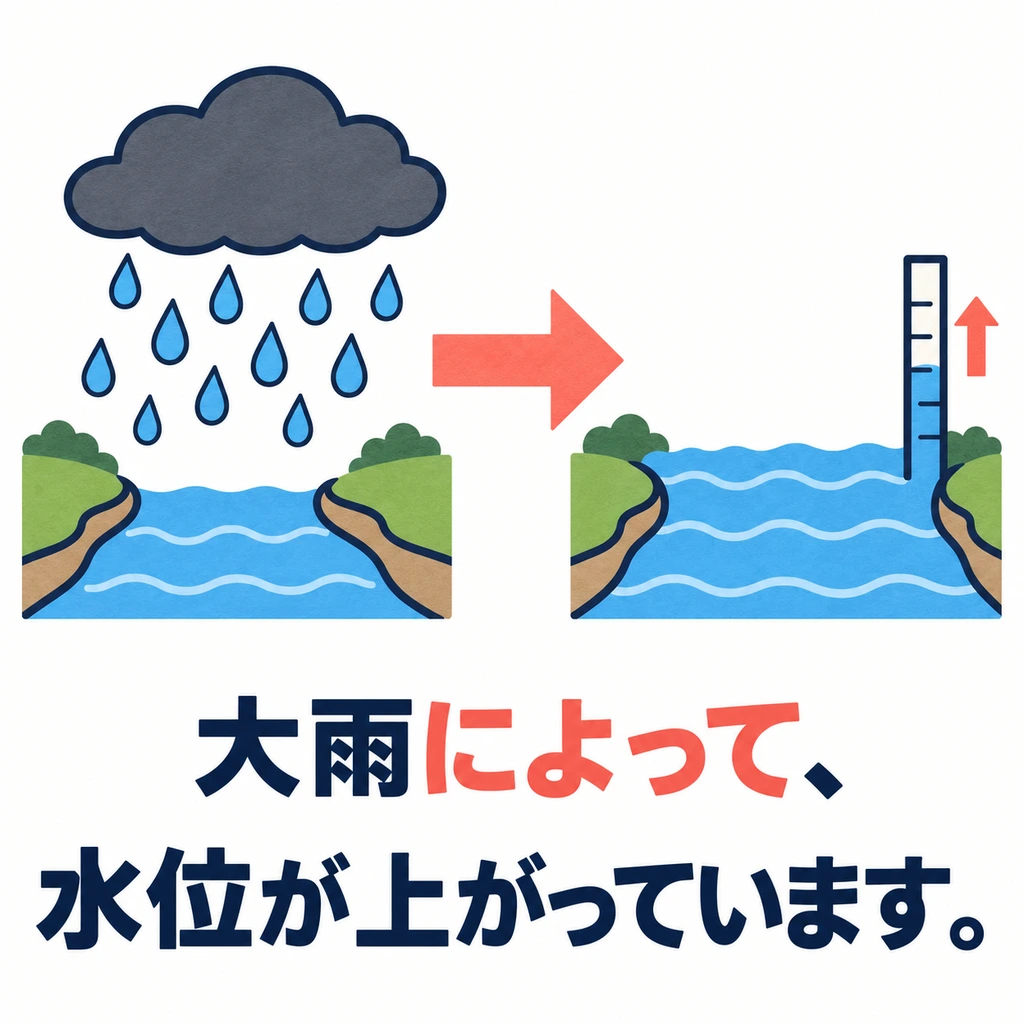
Why is the water level rising? The arrow from heavy rain to rising water shows cause and result.
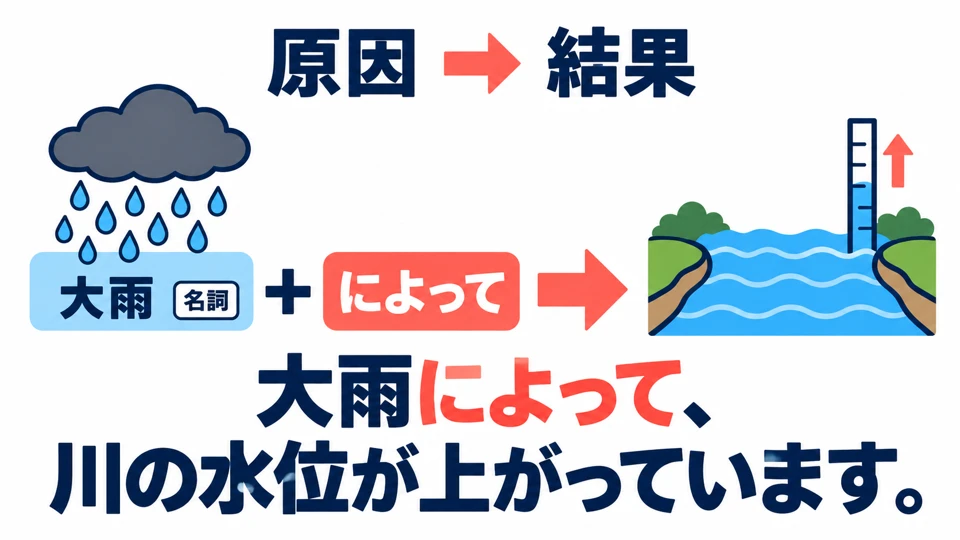
Express the cause with a noun followed by 「によって」. What comes next describes the result of that cause.
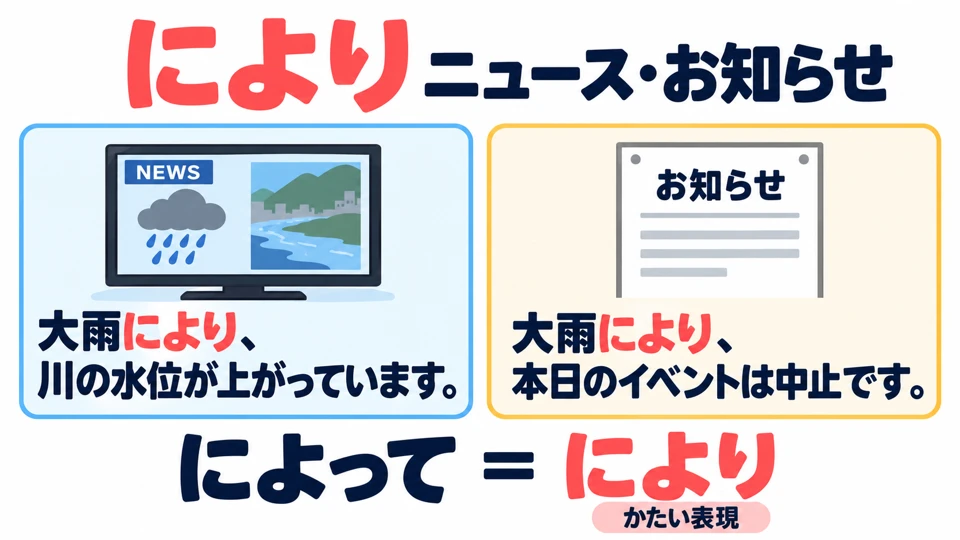
「により」 also expresses a cause. It is common in news reports and notices and sounds more formal.
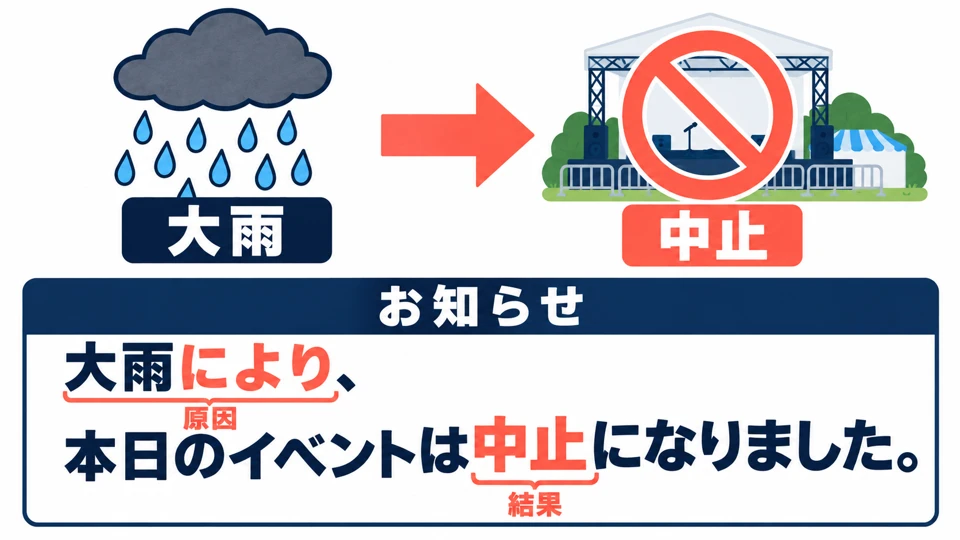
In a notice, 「大雨により」 explains why today’s event was canceled.
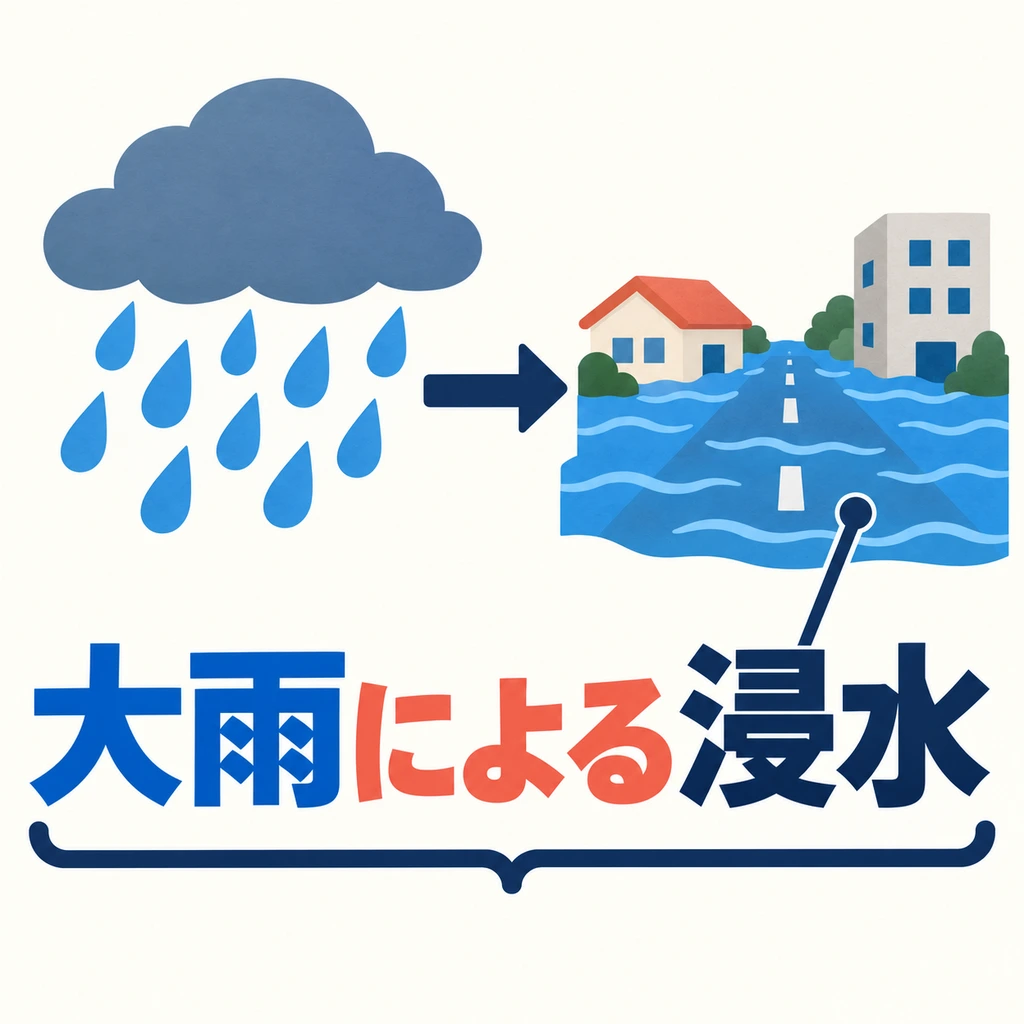
「大雨による浸水」 answers the question: what caused this flooding?
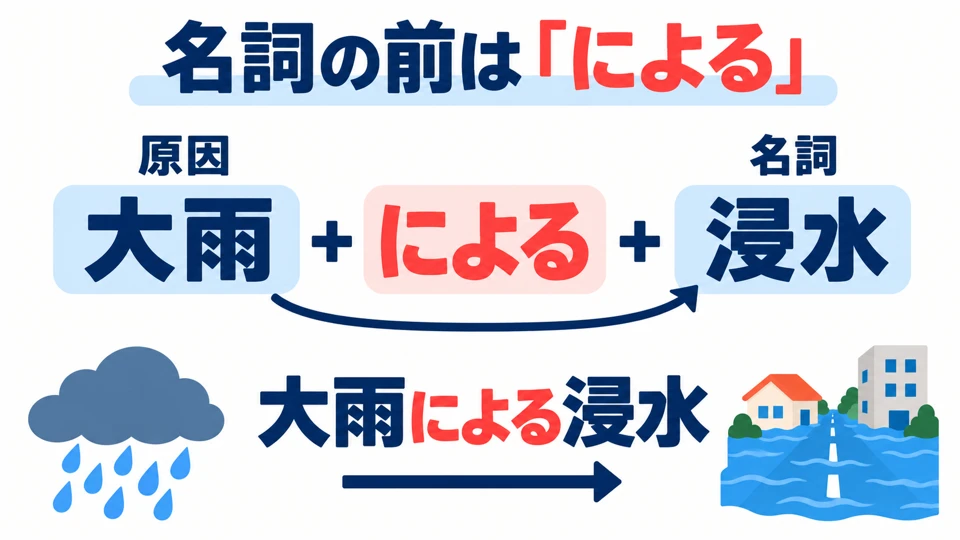
Use 「による」 when a noun follows. 「大雨による」 modifies the noun 「浸水」.
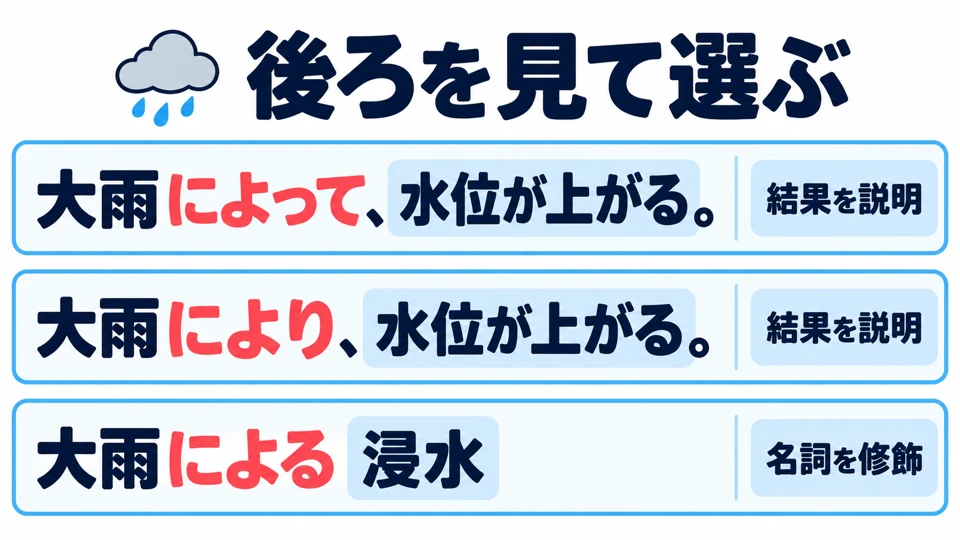
Look at what follows: use 「によって/により」 to describe a result, and 「による」 to modify a noun.
Example sentences
- 大雨ooameにniよっyotて、te、川kawaのno水位suiiがga上がっagaてteいます。imasu。
Due to the heavy rain, the river's water level is rising.
In a conversation

- A大雨による浸水で、近くの道路が冠水したそうですよ。
A: I heard that nearby roads were flooded due to inundation caused by heavy rain.
- B本当
Check yourself
Level 1 · Recognise
Which sentence is correct?
Level 1 · Recognise
Listen and choose the meaning
Level 2 · Build
Put the words in order
Due to the major earthquake, power outages are happening throughout the town.
Level 3 · Use
What goes in the blank?
大雨に____(会話などで使う形)、川の水位が上がっています。
Due to the heavy rain, the river water level is rising.
More grammar in this theme
- 〜によって/〜により/〜による〜cause and resulting effect