JPEDLAB iconJPEDLAB
Save history

Create an account and play

Explore first, then save your progress whenever you are ready. No email address is required.

Start free
Read as articleCards
See the whole course›Intermediate 2›Emergencies and Safety Actions

Japanese grammar · ≈ JLPT N3 · Intermediate 2

〜につれて~ni tsurete

gradual changes happening together

Use 〜につれて when one steady change progresses and another changes along with it, often gradually.

Start the interactive lessonIllustrated cards, audio and speaking practice

How it works

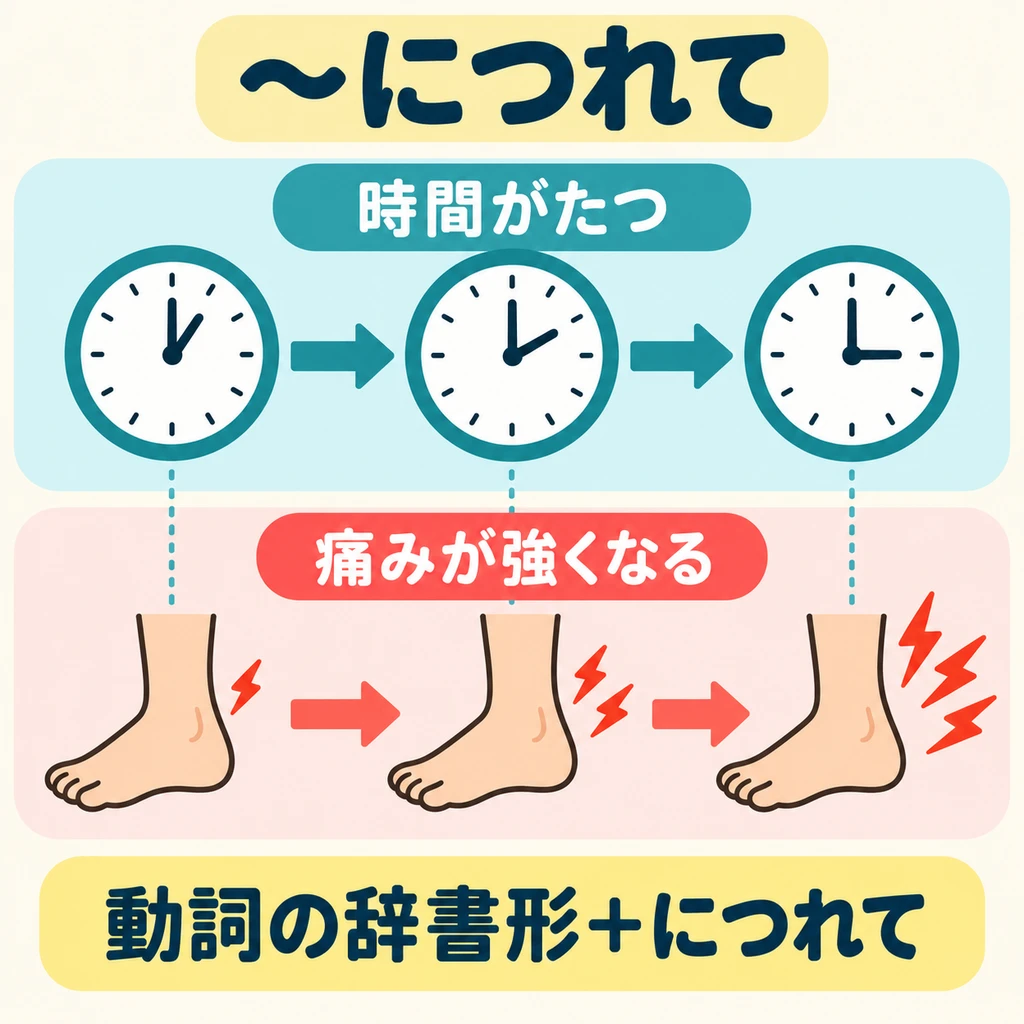
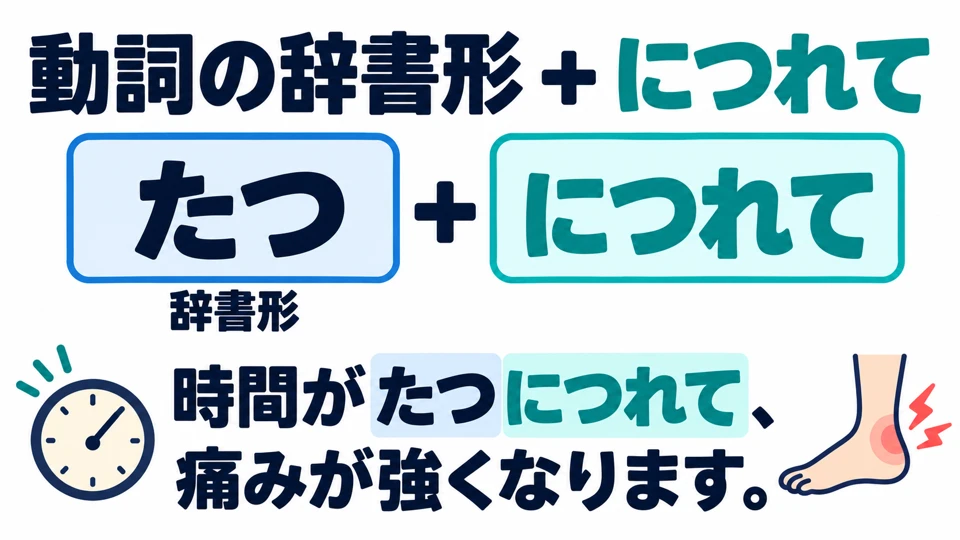
  1. Look at the two rows: as time passes, the pain gets stronger. The two changes progress together.
    Look at the two rows: as time passes, the pain gets stronger. The two changes progress together.

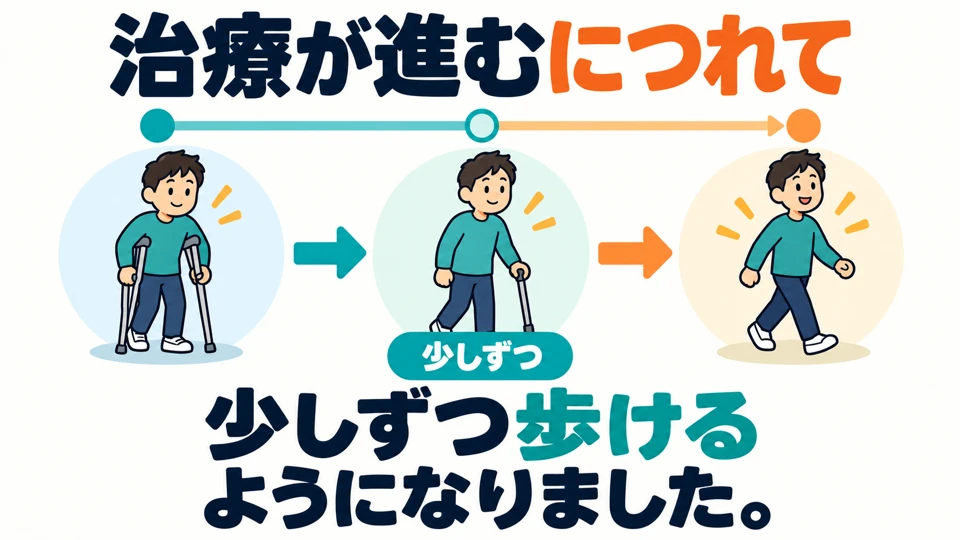
  2. As treatment progresses, the ability to walk gradually returns. This pattern also works for improvements that happen together.
    As treatment progresses, the ability to walk gradually returns. This pattern also works for improvements that happen together.

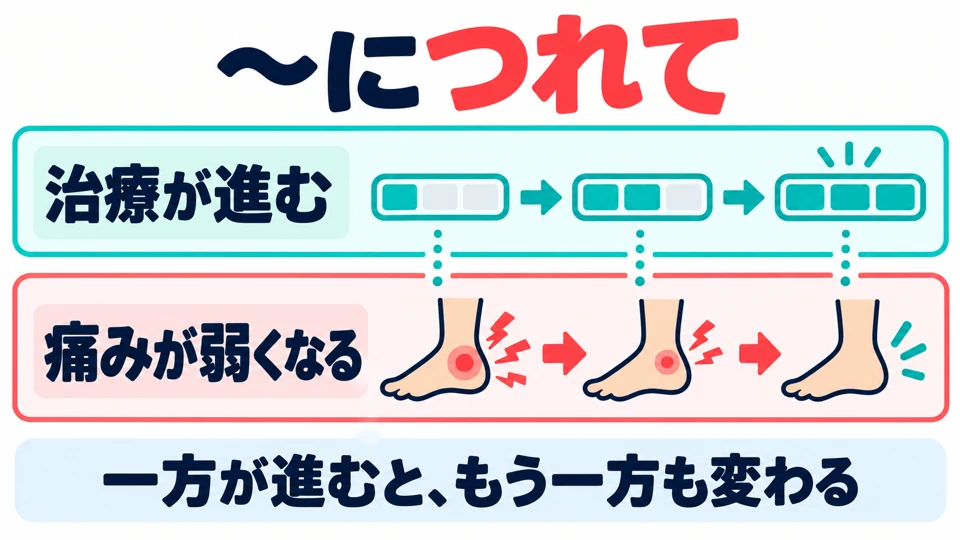
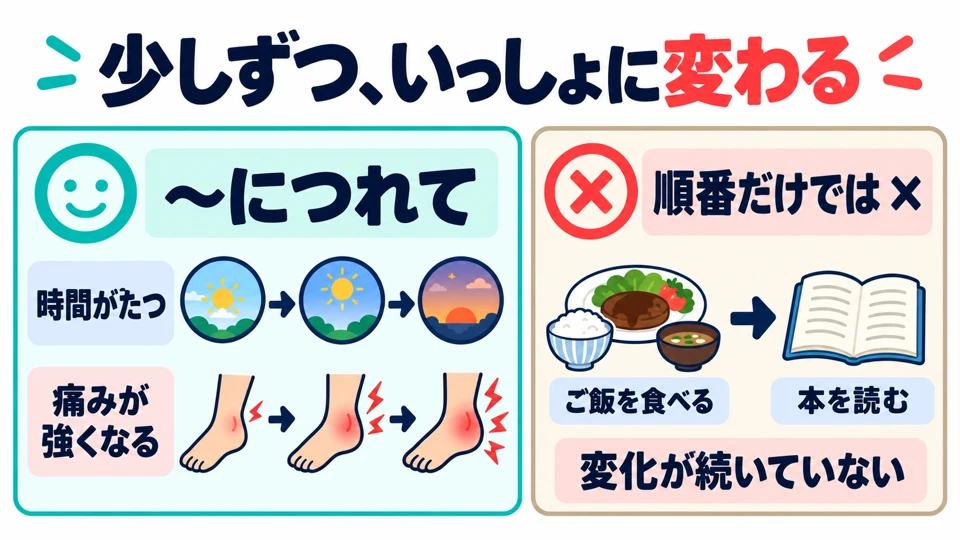
  3. The first part describes a steady change in one direction; the second changes along with it. They need not both increase or both decrease.
    The first part describes a steady change in one direction; the second changes along with it. They need not both increase or both decrease.

  4. Put the verb in the first part in its dictionary form, then add 「につれて」, as with 「たつ」 in the picture.
    Put the verb in the first part in its dictionary form, then add 「につれて」, as with 「たつ」 in the picture.

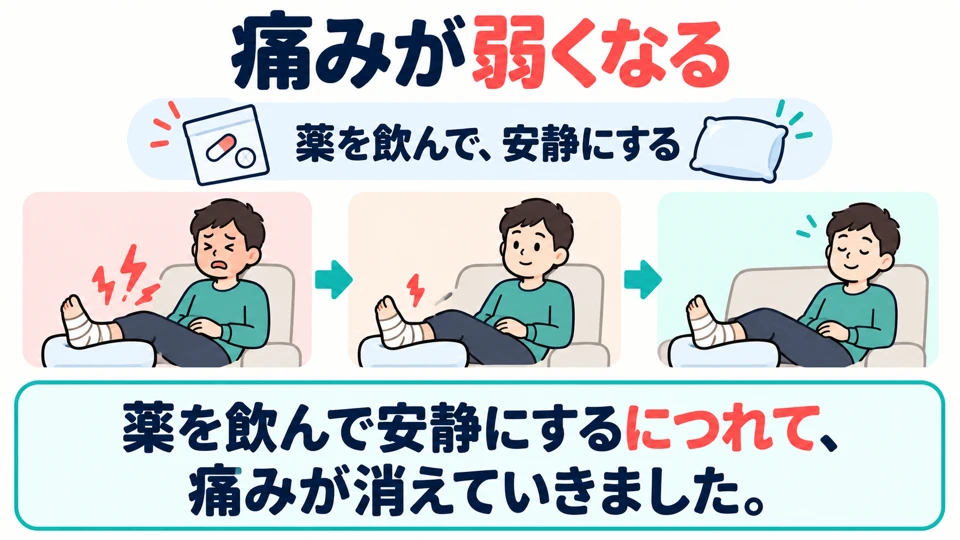
  5. As taking medicine and resting continues, the pain gradually fades. The second part can also describe something weakening.
    As taking medicine and resting continues, the pain gradually fades. The second part can also describe something weakening.

  6. The key is that changes happen gradually together. One event simply happening after another is not enough to use this pattern.

    The key is that changes happen gradually together. One event simply happening after another is not enough to use this pattern.

Example sentences

  • 時間じかんjikanがgaたつtatsuにniつれtsureて、te、足あしashiのno痛みいたみitamiがga強くつよくtsuyokuなっnat

In a conversation

Check yourself

  1. Level 1 · Recognise

    Which sentence is correct?

  2. Level 1 · Recognise

    Listen and choose the meaning

  3. Level 2 · Build

    Put the words in order

    As the affected area healed, the numbness gradually went away.

  4. Level 3 · Use

    What goes in the blank?

    時間がたつ____、足の痛みが強くなってきました。

    As time passed, the pain in my foot grew stronger.

More grammar in this theme

  • 〜につれてgradual changes happening together

Keep practising

Test your Japanese vocabulary12 adaptive questions, freeCheck your pronunciationRead aloud and get a scorePractise verb forms10-question conjugation quizSee the whole courseGrammar, vocabulary and quizzes by theme
てte
きました。kimashita。

As time passed, the pain in my foot grew stronger.

  • 「足首あしくびの捻挫ねんざはわどうですか。まだ痛みますいたみますか。」か。

    "How is your sprained ankle? Does it still hurt?"

  • 「いいえ、いいえ、薬くすりを飲んのんで安静あんせいにするにつれて、痛みいたみが消えきえていきました。」いきました。

    "No, as I took the medicine and rested, the pain gradually disappeared."

  • 治療ちりょうchiryouがga進むすすむsusumuにniつれtsureて、te、少しすこしsukoshiずつzutsu歩けるあるけるarukeruようになりました。youninarimashita。

    As the treatment progressed, I gradually became able to walk.

  • 「それそれはわ良かったですよかったですね。無理むりをしないでゆっくり休んやすんでください。」ください。

    "That's good to hear. Please don't overexert yourself and rest well."

  • 〜によって/〜により/〜による〜cause and resulting effect
    〜恐れがあるrisk of an unwanted event
    〜そうにないんですがunlikely; gently explain difficulty
    〜とかでpossible cause, or something
    〜てしまったようなんですinferred accident with regret
    〜ところへ・に・をan event at that moment
    〜ものだ・〜ものではないwhat one should or should not do
    〜とおりに・〜どおりにaccording to; just as
    〜際に・〜際はon the occasion of
    〜ことformal rule or instruction
    〜たままleaving a state unchanged
    〜だらけcovered with many unwanted things
    Previous〜ところへ・に・を
    Next〜ものだ・〜ものではない