
Japanese grammar · ≈ JLPT N3 · Intermediate 2
〜こと~koto
formal rule or instruction
Use verb dictionary or ない forms + 〜こと in notices and rules to require or prohibit an action.
How it works
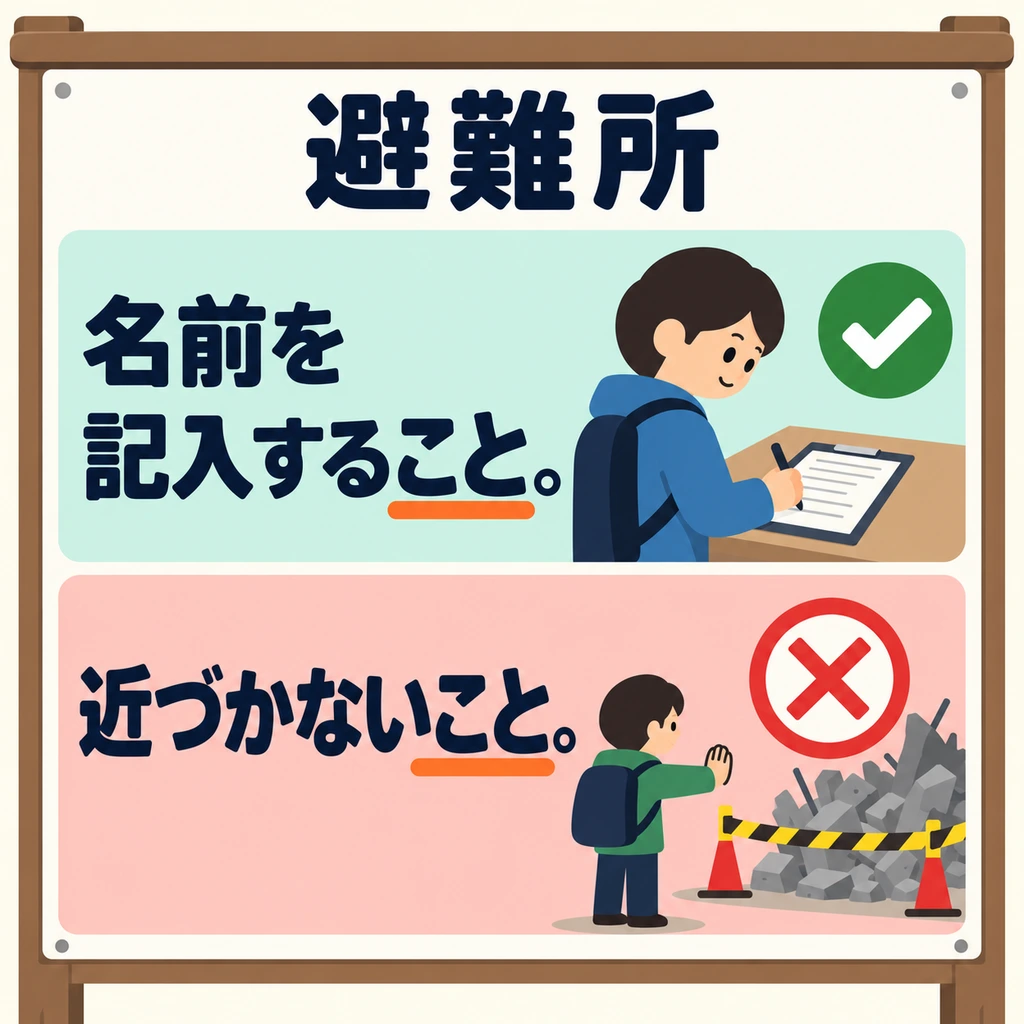
Look at the shelter notice. What do these sentences ending in 「こと」 ask readers to do?
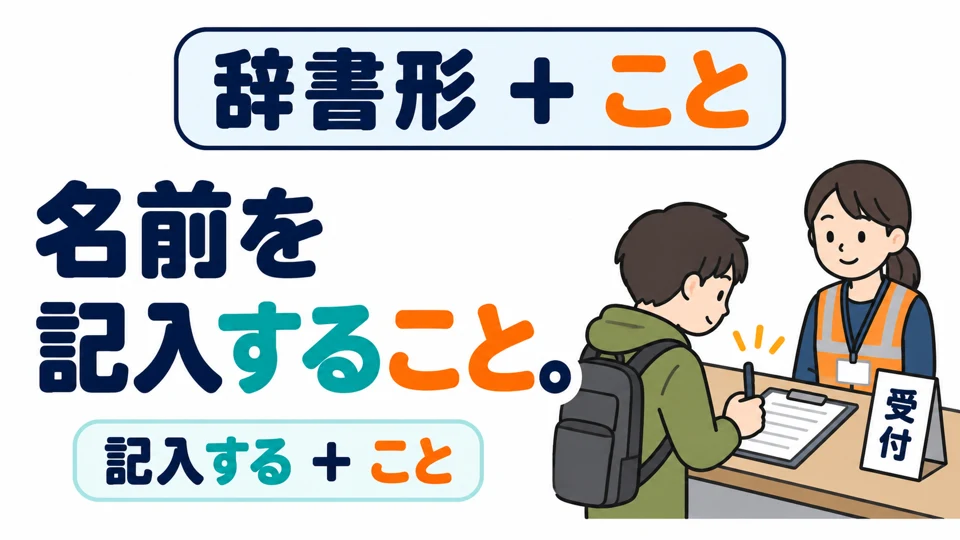
A verb in dictionary form + こと requires an action. The notice asks people to write down their names on arrival.
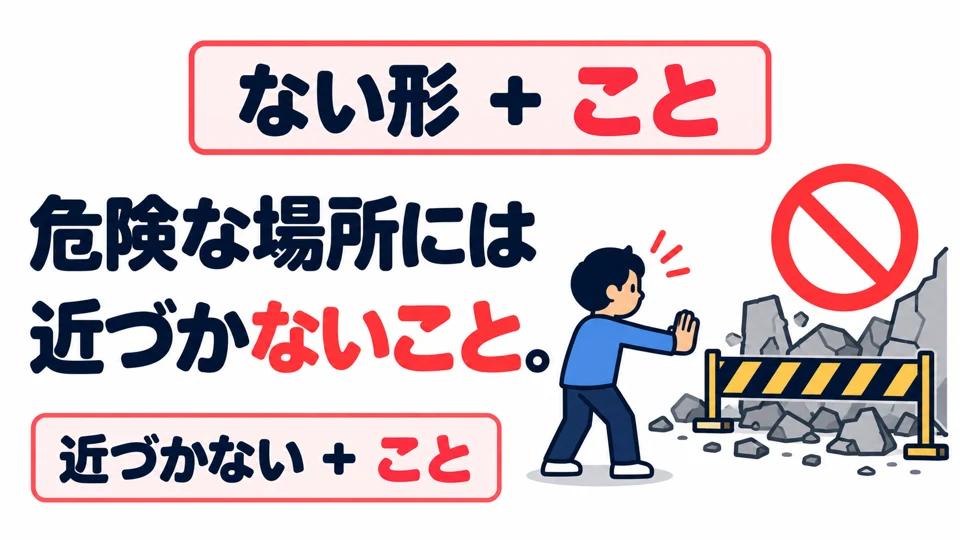
A verb in ない form + こと prohibits an action. The rule in the picture tells everyone to keep away from the danger area.
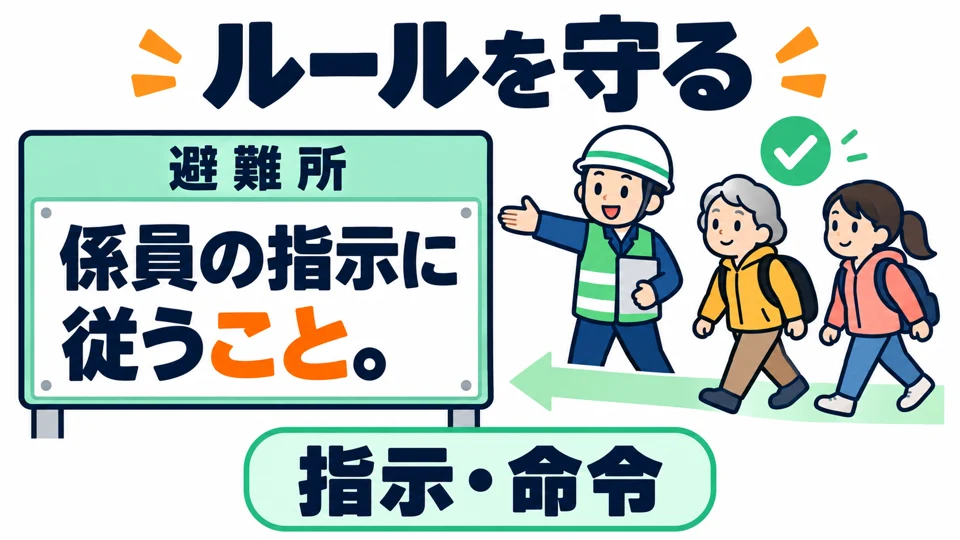
Here, 「こと」 gives an instruction or order. Readers must follow the rule; it is more than just a suggestion.
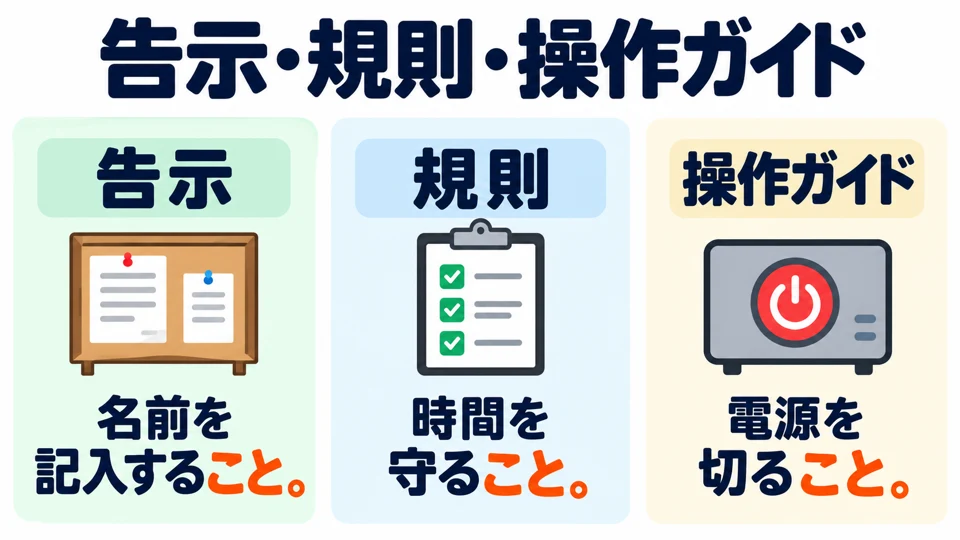
This sentence ending is common in notices, rules, and operating instructions. Its tone is concise and formal.
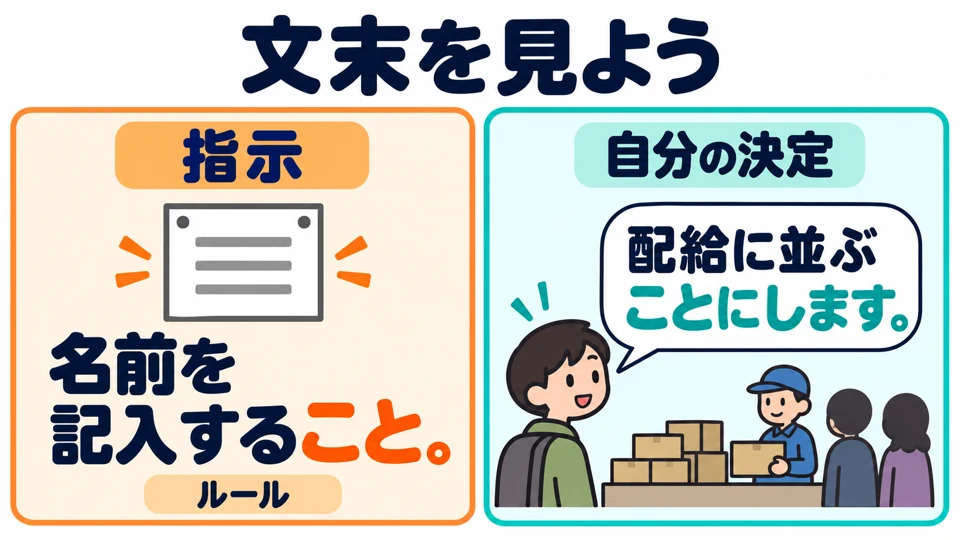
When reading a conversation, check the sentence ending: 「こと」 gives an instruction; 「ことにします」 states the speaker’s own decision.
Example sentences
- 避難hinanするsuru際saiは、wa、必ずkanarazu係員kakariinのno指示shijiにni従うshitagauこと。koto。
In a conversation

Check yourself
Level 1 · Recognise
Which sentence is correct?
Level 1 · Recognise
Listen and choose the meaning
Level 2 · Build
Put the words in order
When evacuating, be sure to follow the staff's instructions.
Level 3 · Use
What goes in the blank?
避難する際は、必ず係員の指示に従う____。
When evacuating, be sure to follow the instructions of the staff.
More grammar in this theme
- 〜ことformal rule or instruction