
JPEDLAB iconJPEDLAB
Save history

Create an account and play

Explore first, then save your progress whenever you are ready. No email address is required.

Start free
Read as articleCards
1/9

Look at the shelter notice. What do these sentences ending in 「こと」 ask readers to do?

››

Lesson notes · ≈ JLPT N3 · Intermediate 2

〜こと~koto

formal rule or instruction

Use verb dictionary or ない forms + 〜こと in notices and rules to require or prohibit an action.

How it works
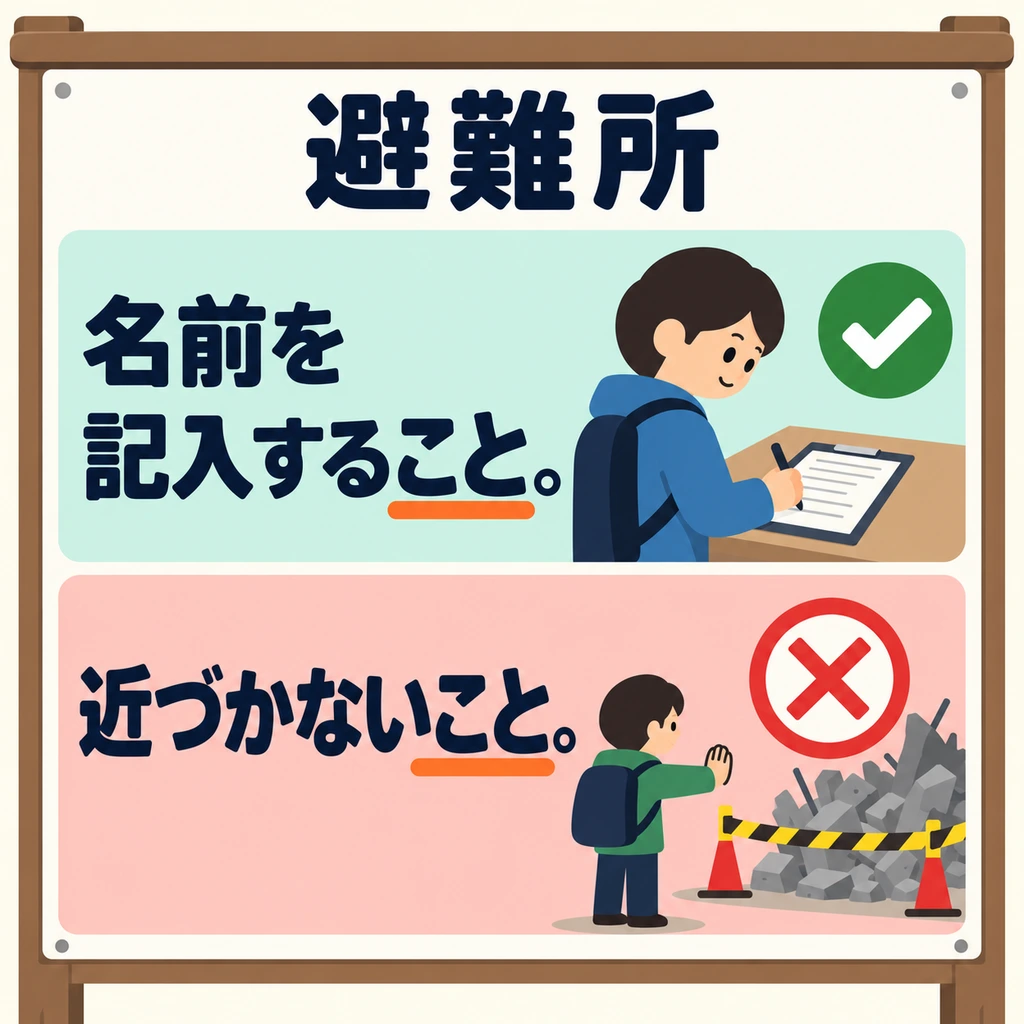
  1. Look at the shelter notice. What do these sentences ending in 「こと」 ask readers to do?
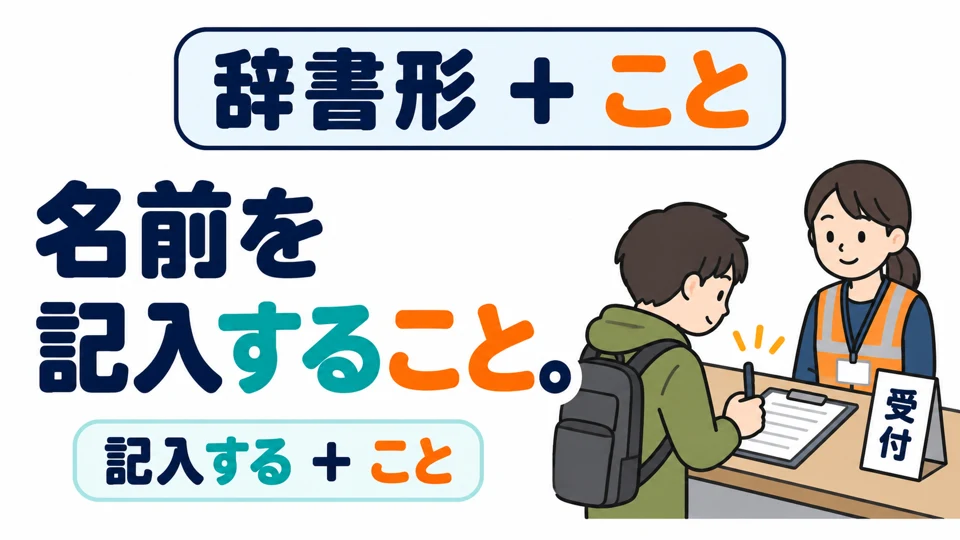
    Look at the shelter notice. What do these sentences ending in 「こと」 ask readers to do?

  2. A verb in dictionary form + こと requires an action. The notice asks people to write down their names on arrival.
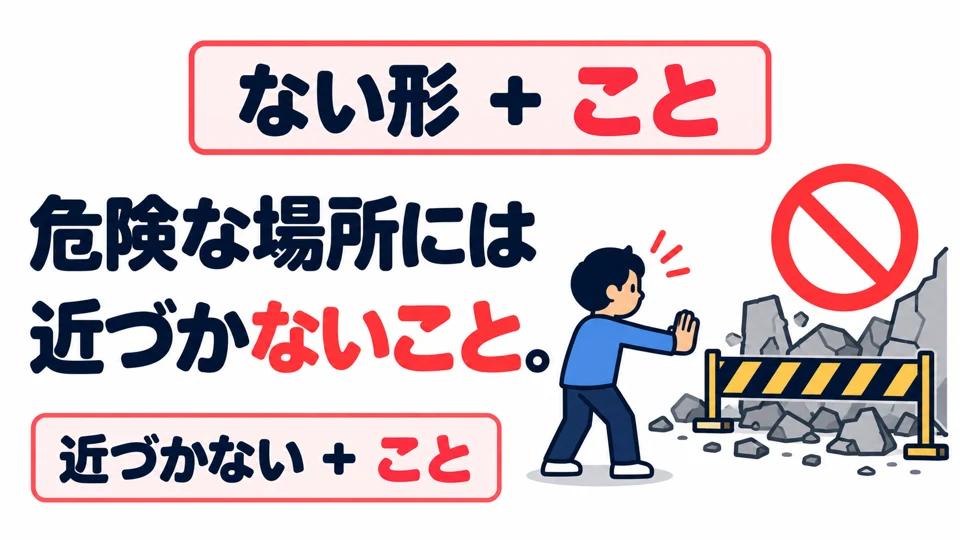
    A verb in dictionary form + こと requires an action. The notice asks people to write down their names on arrival.

  3. A verb in ない form + こと prohibits an action. The rule in the picture tells everyone to keep away from the danger area.
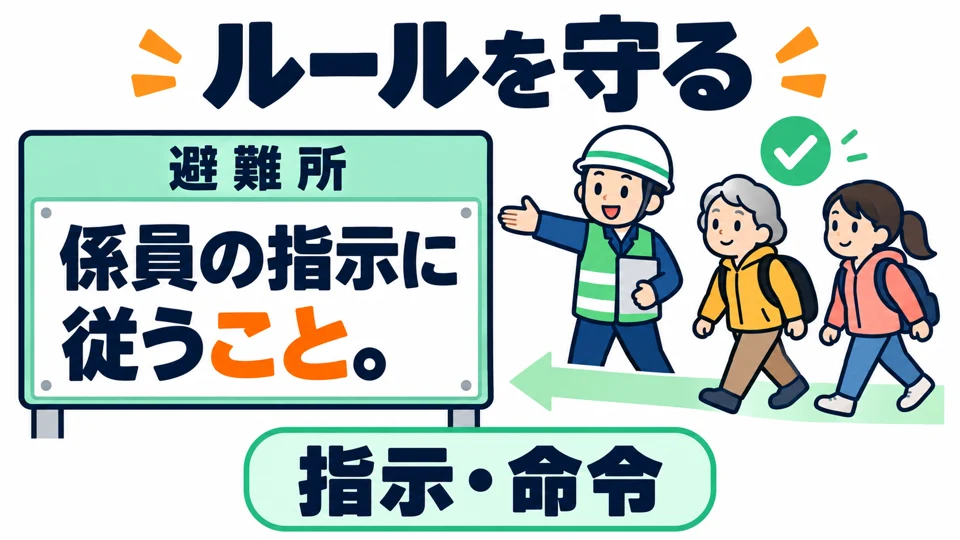
    A verb in ない form + こと prohibits an action. The rule in the picture tells everyone to keep away from the danger area.

  4. Here, 「こと」 gives an instruction or order. Readers must follow the rule; it is more than just a suggestion.
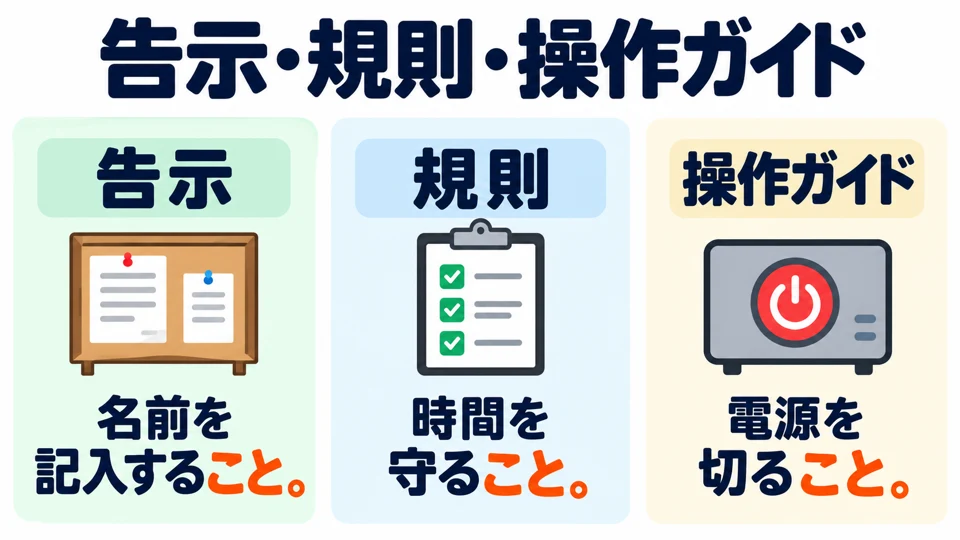
    Here, 「こと」 gives an instruction or order. Readers must follow the rule; it is more than just a suggestion.

  5. This sentence ending is common in notices, rules, and operating instructions. Its tone is concise and formal.

    This sentence ending is common in notices, rules, and operating instructions. Its tone is concise and formal.

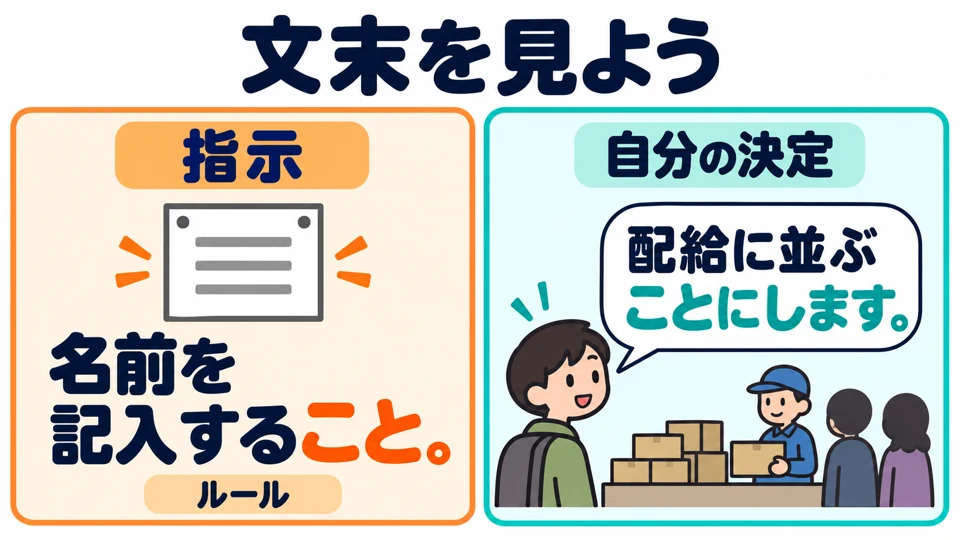
When reading a conversation, check the sentence ending: 「こと」 gives an instruction; 「ことにします」 states the speaker’s own decision.

When reading a conversation, check the sentence ending: 「こと」 gives an instruction; 「ことにします」 states the speaker’s own decision.

Example sentences

  • 避難ひなんhinanするsuru際さいsaiは、わ、wa、必ずかならずkanarazu係員かかりいんkakariinのno指示しじshijiにni従うしたがうshitagauこと。koto。

    Always follow the instructions of the staff when evacuating.

  • 危険きけんkikenな場所なばしょnabashoにniはわwa近づかないこと。ちかづかないこと。chikazukanaikoto。

    Do not approach dangerous areas.

In a conversation

  • A
    避難所ひなんしょでのルールるーるが書かれた掲示物かかれたけいじぶつがありますが、何なんて書いかいてありますか。

    A: There is a notice showing the rules of the shelter, what does it say?

  • B
    「避難所ひなんしょに到着とうちゃくしたら、速やかに受付すみやかにうけつけ名簿めいぼに名前なまえを記入きにゅうすること」ことと書いかいてありますよ。

    B: It says, "Upon arriving at the shelter, register your name on the reception list promptly."

  • A
    わかりました。では、わ、名前なまえを書いた後かいたあとに、あちらの支援しえん物資ぶっしの配給はいきゅうに並ぶならぶことにします。

    A: Understood. Then, after writing down my name, I'll go queue up for the distribution of relief supplies over there.

Check yourself

  1. Level 1 · Recognise

    Which sentence is correct?

  2. Level 1 · Recognise

    Listen and choose the meaning

  3. Level 2 · Build

    Put the words in order

    When evacuating, be sure to follow the staff's instructions.

  4. Level 3 · Use

    What goes in the blank?

    避難する際は、必ず係員の指示に従う____。

    When evacuating, be sure to follow the instructions of the staff.

More grammar in this theme

  • 〜によって/〜により/〜による〜cause and resulting effect
  • 〜恐れがあるrisk of an unwanted event
  • 〜そうにないんですがunlikely; gently explain difficulty
  • 〜とかでpossible cause, or something
  • 〜てしまったようなんですinferred accident with regret
  • 〜ところへ・に・をan event at that moment
  • 〜につれてgradual changes happening together
  • 〜ものだ・〜ものではないwhat one should or should not do
  • 〜とおりに・〜どおりにaccording to; just as
  • 〜際に・〜際はon the occasion of
  • 〜ことformal rule or instruction
  • 〜たままleaving a state unchanged
  • 〜だらけcovered with many unwanted things
Previous〜際に・〜際はNext〜たまま

Keep practising

Test your Japanese vocabulary12 adaptive questions, freeCheck your pronunciationRead aloud and get a scorePractise verb forms10-question conjugation quizSee the whole courseGrammar, vocabulary and quizzes by theme
See the whole course
Intermediate 2
Emergencies and Safety Actions