Japanese grammar · ≈ JLPT N4 · Intermediate 2
〜たまま~ta mama
leaving a state unchanged
Use 〜たまま when a state created by an action remains unchanged while something else happens.
How it works
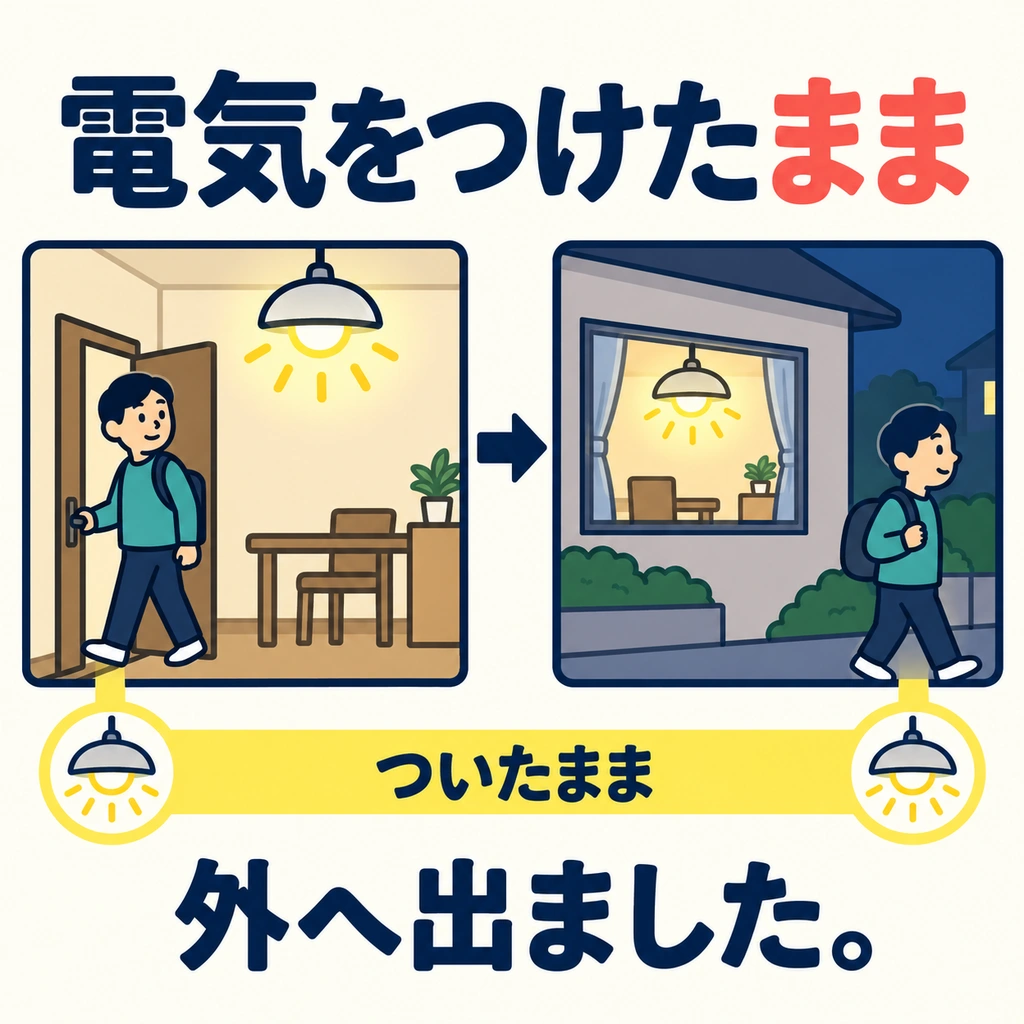
The person has gone out, but the light is still on. Look at the yellow link: what state stays the same?
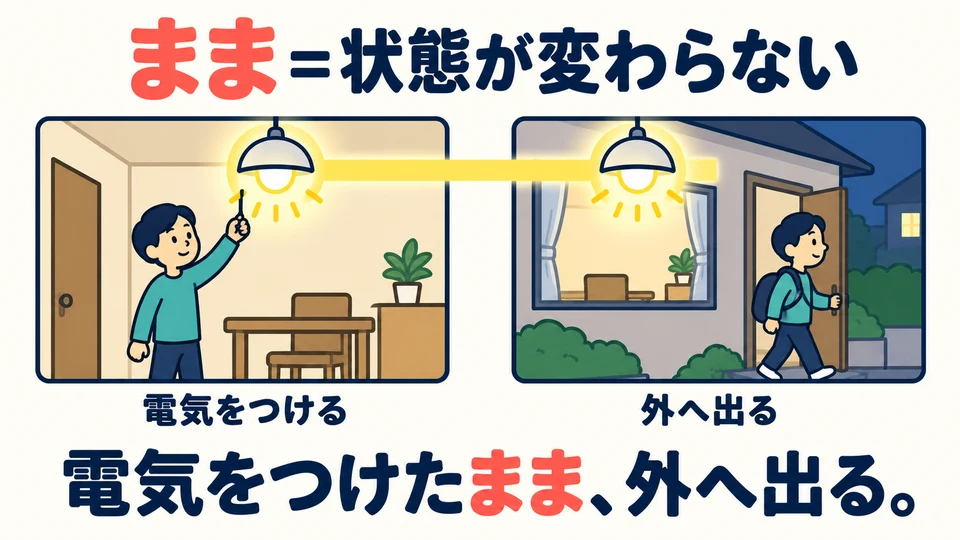
「まま」 means a state stays unchanged. The light is turned on, then the person goes out, leaving it on.
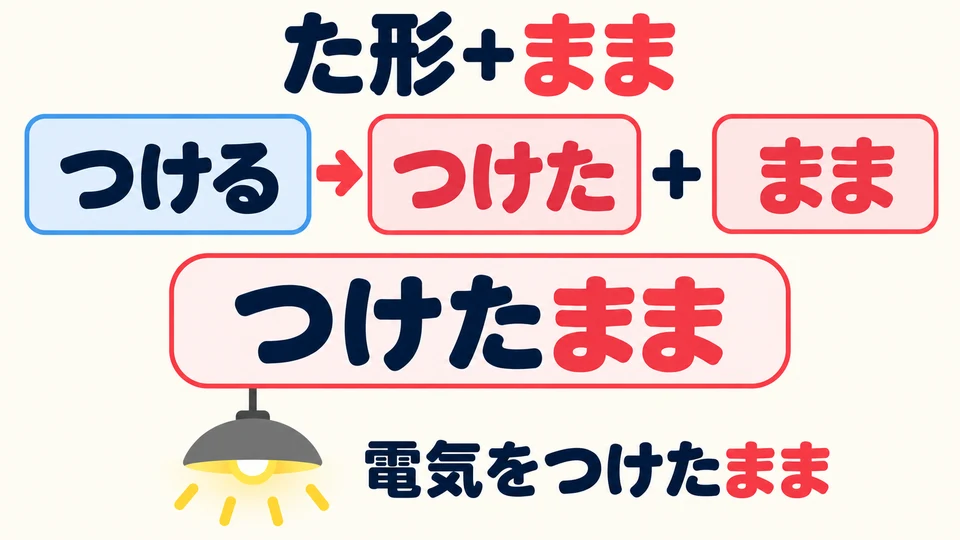
Here, attach 「まま」 to the verb’s た-form: つける→つけたまま, meaning “left on.”
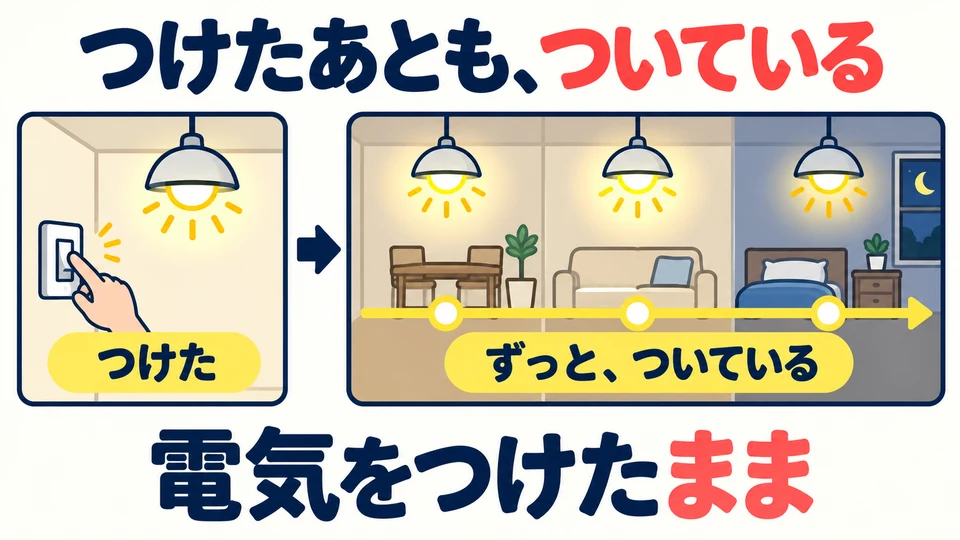
「つけた」 refers to the state left after turning on the light. The point is that it stays on, not that someone keeps switching it on.
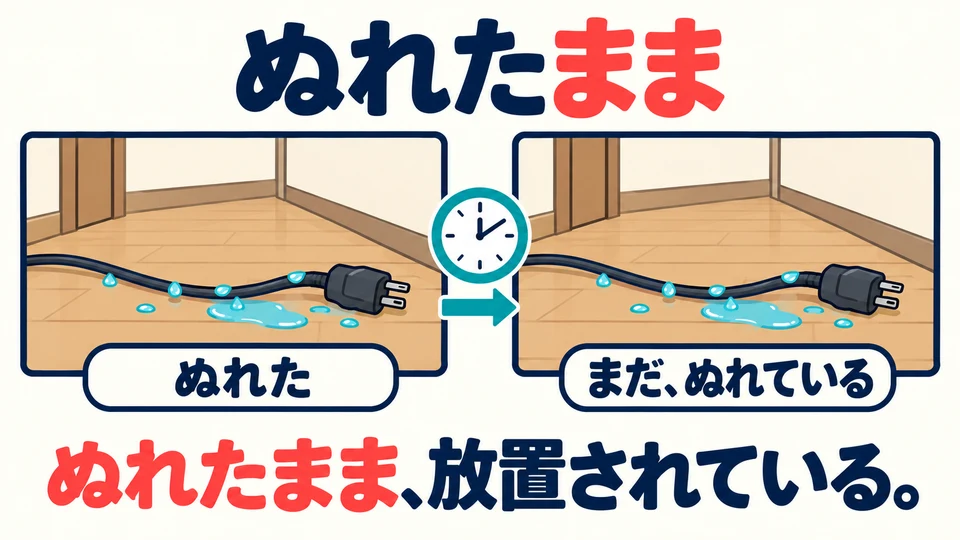
「ぬれたまま」 means “still wet.” The power cord is left that way, with its state unchanged.
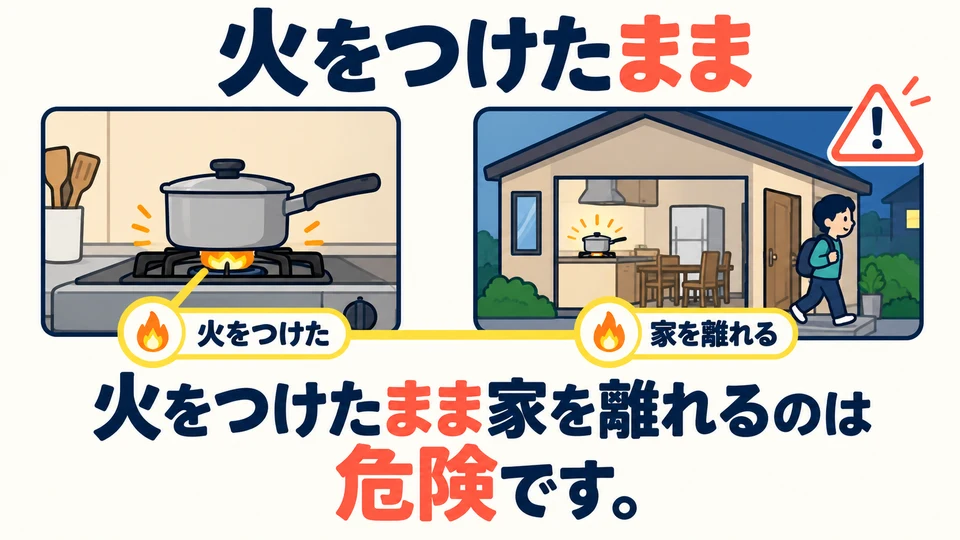
「火をつけたまま」 means the flame is still burning. The person leaves home without putting it out, so the example warns of danger.
Example sentences
- 火hiをoつけたままtsuketamama家ieをo離れるhanareruのnoはwa危険kikenです。desu。
It is dangerous to leave the house with the fire left on.
In a conversation
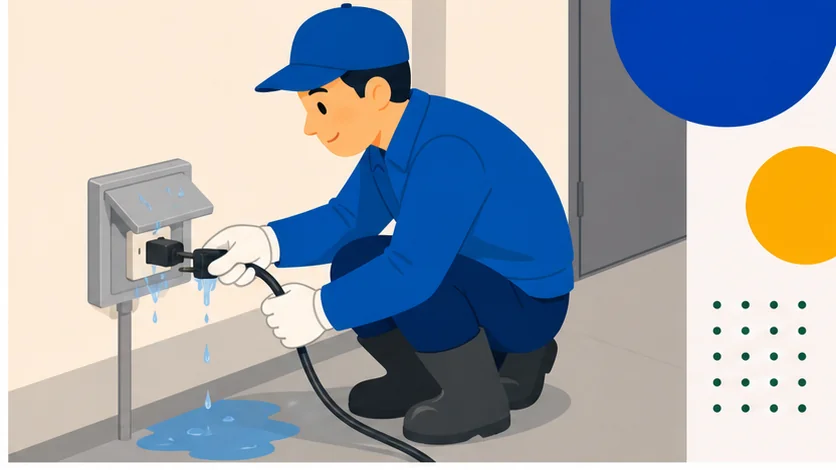
- A管理人さん、廊下の電源コードがぬれたまま放置されていますよ。
A: Janitor, the power cord in the hallway has been left wet.
- B本当
Check yourself
Level 1 · Recognise
Which sentence is correct?
Level 1 · Recognise
Listen and choose the meaning
Level 2 · Build
Put the words in order
It is dangerous to leave the house with a fire left burning.
Level 3 · Use
What goes in the blank?
火をつけた____家を離れるのは危険です。
It's dangerous to leave home with the fire on.
More grammar in this theme
- 〜たままleaving a state unchanged