
Japanese grammar · ≈ JLPT N3 · Intermediate 2
〜だらけ~darake
covered with many unwanted things
Attach 〜だらけ directly to a noun to describe something covered with many unwanted things, usually negatively.
How it works
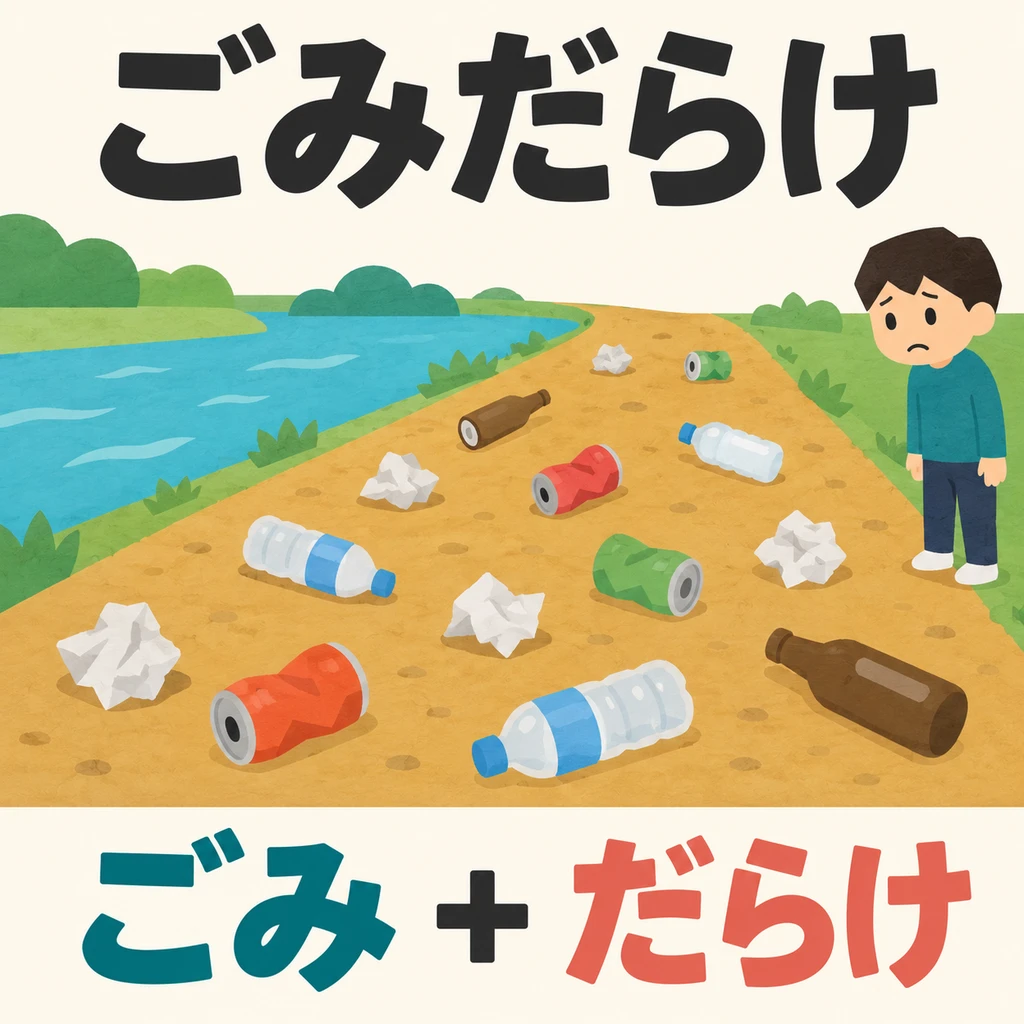
Look at this road: litter is scattered everywhere. 「ごみだらけ」 describes a place full of litter.
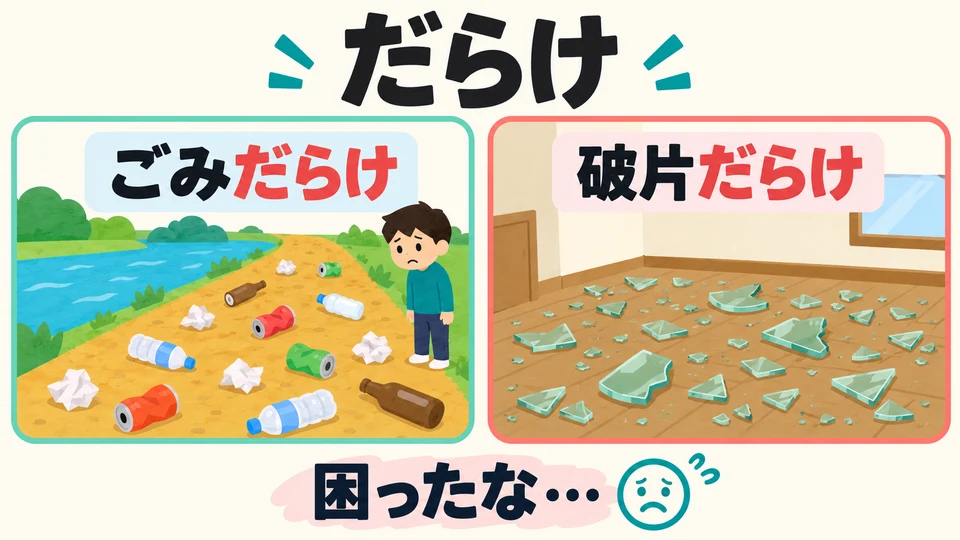
「だらけ」 usually conveys a negative feeling. It describes something full of unwanted things, such as litter or broken pieces.
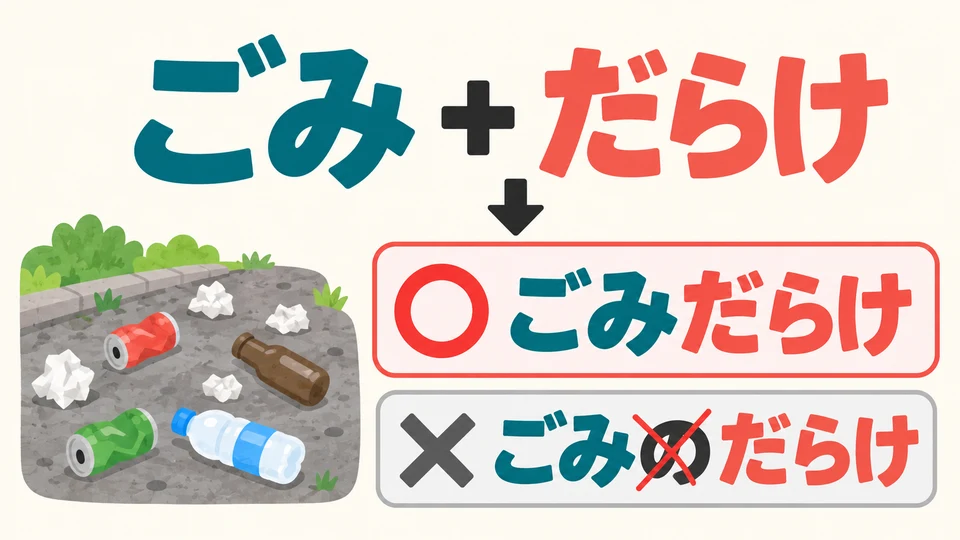
Attach it directly to a noun, without 「の」: ごみ+だらけ. The noun tells us what is everywhere.
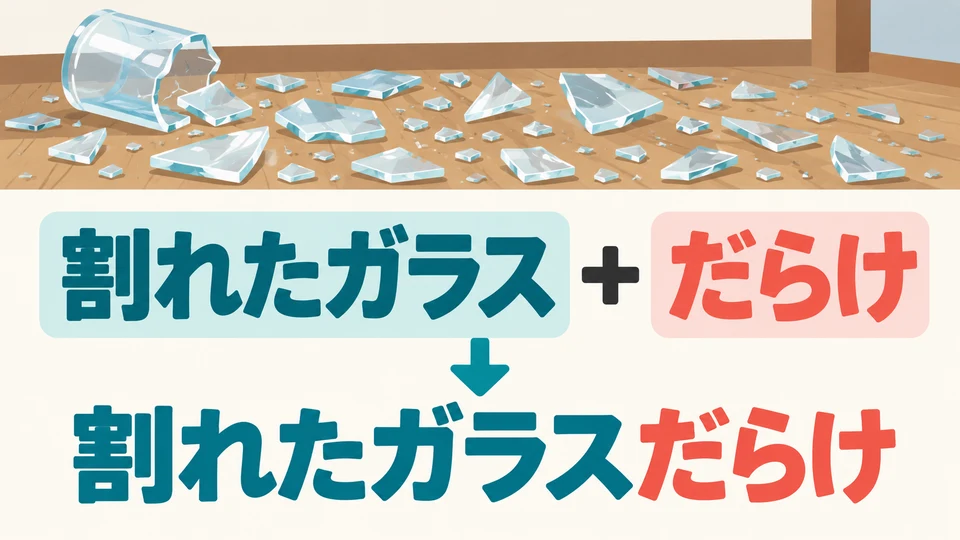
In 「割れたガラスだらけ」, the whole phrase 「割れたガラス」 means broken glass. 「だらけ」 follows that phrase.
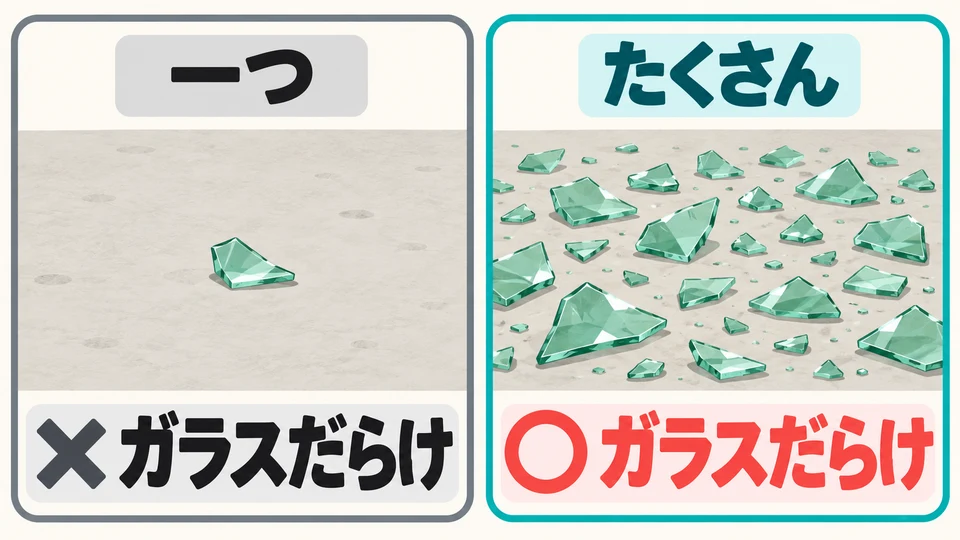
We don't use 「だらけ」 for just one piece of broken glass. It emphasizes a large number spread everywhere.
Example sentences
- 地震jishinのnoあと、ato、部屋heyaのno中nakaはwa割れたガラスだらけwaretagarasudarakeでした。deshita。
After the earthquake, the room was covered in broken glass.
In a conversation
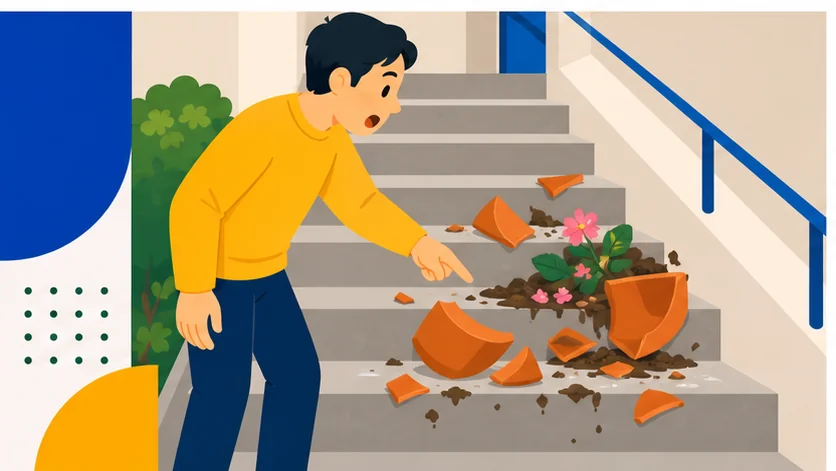
- A地震のあと、マンションの共用階段は落ちてきた植木鉢の破片だらけですね。
Check yourself
Level 1 · Recognise
Which sentence is correct?
Level 1 · Recognise
Listen and choose the meaning
Level 2 · Build
Put the words in order
After the typhoon, the path is covered with broken tree branches and fallen leaves.
Level 3 · Use
What goes in the blank?
地震のあと、部屋の中は割れたガラス____でした。
After the earthquake, the room was full of broken glass.
More grammar in this theme
- 〜だらけcovered with many unwanted things