
JPEDLAB iconJPEDLAB
Save history

Create an account and play

Explore first, then save your progress whenever you are ready. No email address is required.

Start free
Read as articleCards
1/8

Look at this road: litter is scattered everywhere. 「ごみだらけ」 describes a place full of litter.

››

Lesson notes · ≈ JLPT N3 · Intermediate 2

〜だらけ~darake

covered with many unwanted things

Attach 〜だらけ directly to a noun to describe something covered with many unwanted things, usually negatively.

How it works
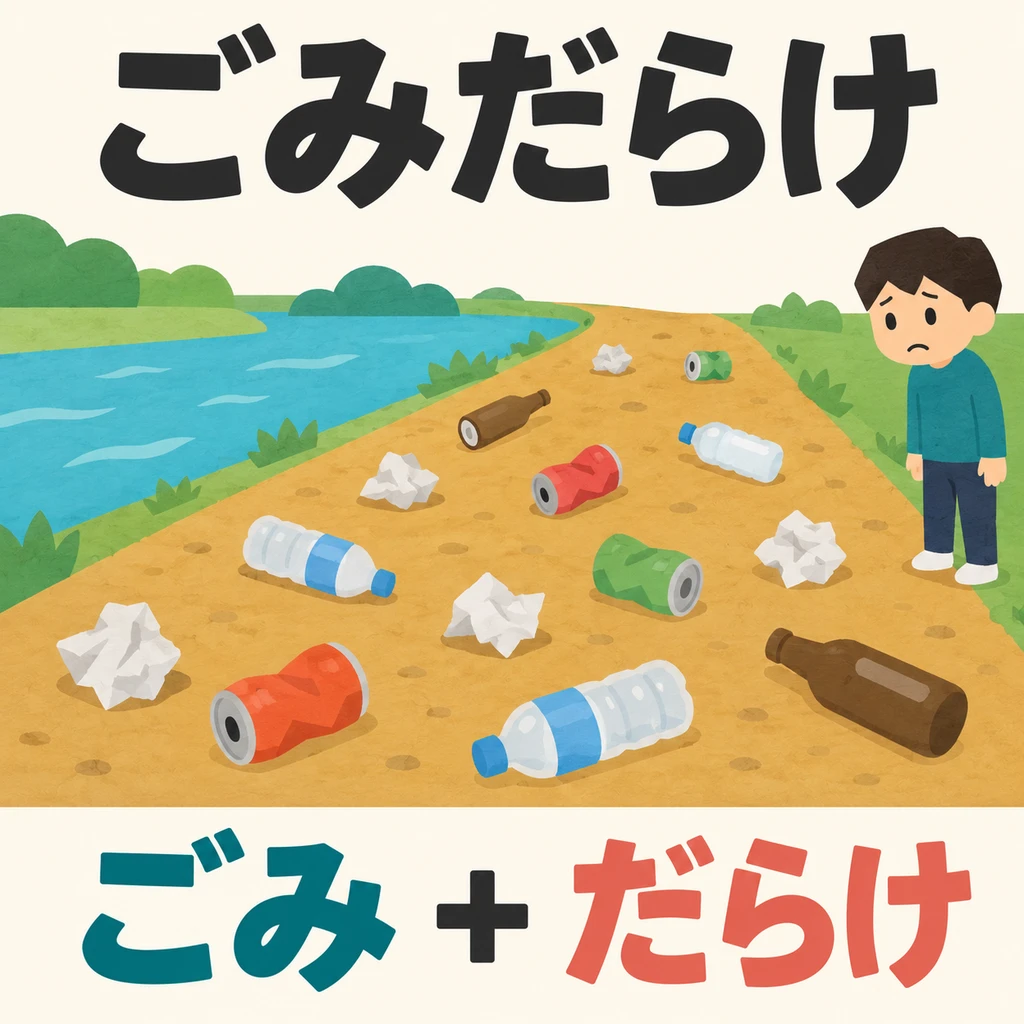
  1. Look at this road: litter is scattered everywhere. 「ごみだらけ」 describes a place full of litter.
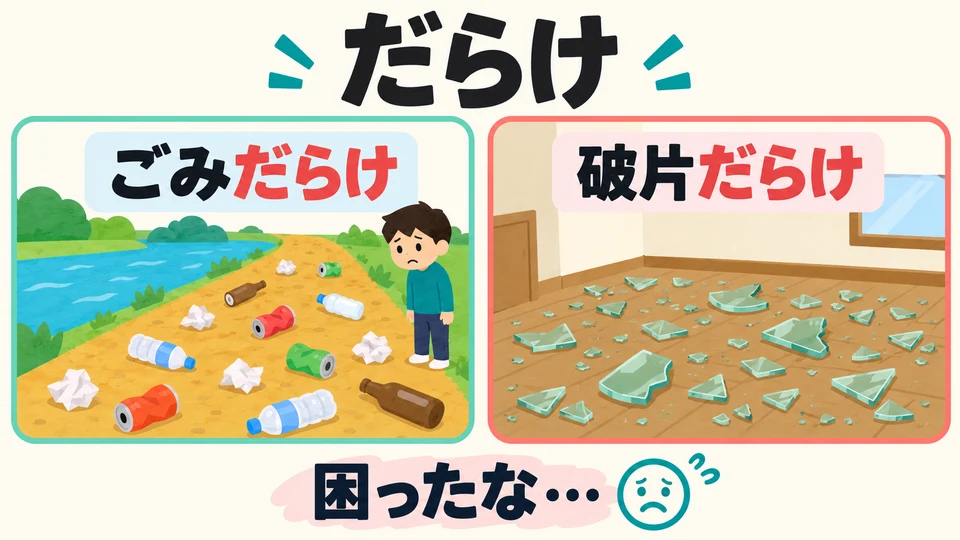
    Look at this road: litter is scattered everywhere. 「ごみだらけ」 describes a place full of litter.

  2. 「だらけ」 usually conveys a negative feeling. It describes something full of unwanted things, such as litter or broken pieces.
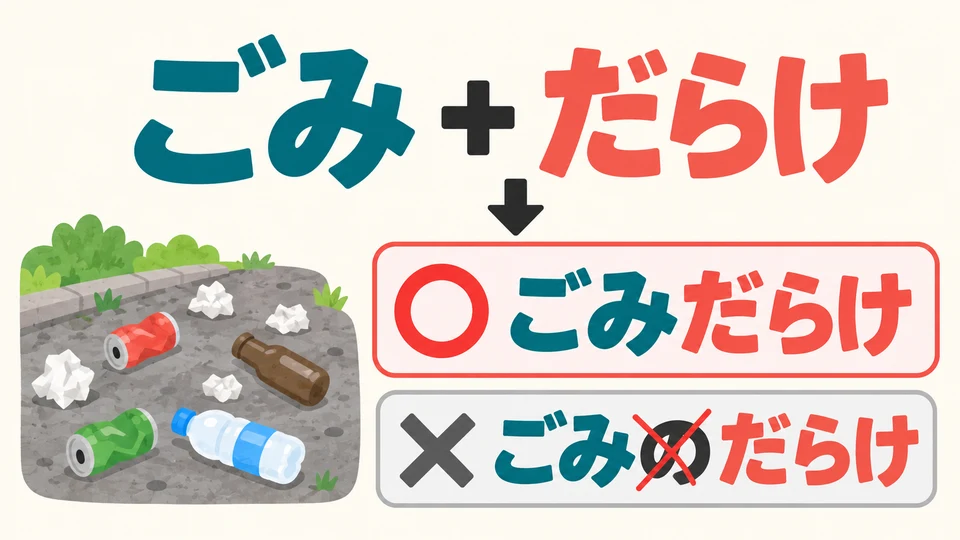
    「だらけ」 usually conveys a negative feeling. It describes something full of unwanted things, such as litter or broken pieces.

  3. Attach it directly to a noun, without 「の」: ごみ+だらけ. The noun tells us what is everywhere.
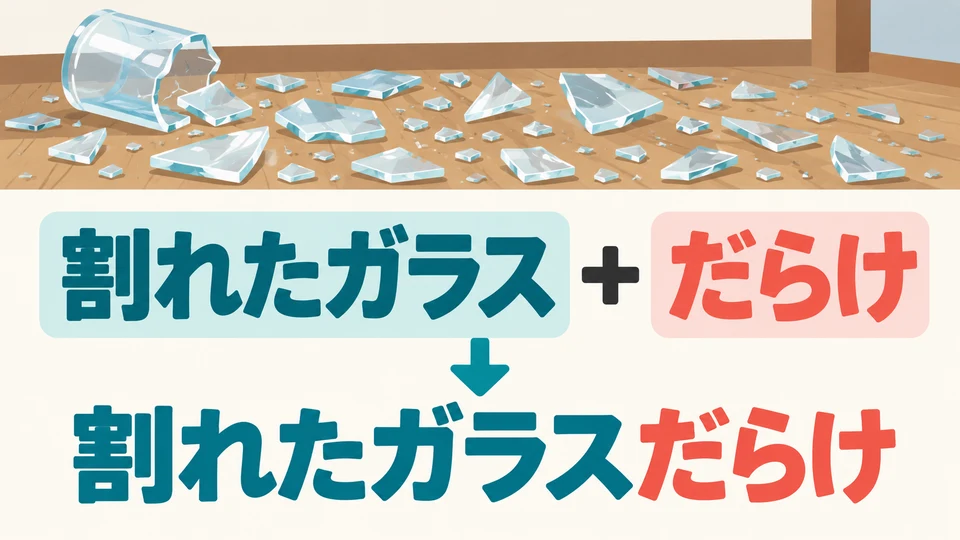
    Attach it directly to a noun, without 「の」: ごみ+だらけ. The noun tells us what is everywhere.

  4. In 「割れたガラスだらけ」, the whole phrase 「割れたガラス」 means broken glass. 「だらけ」 follows that phrase.
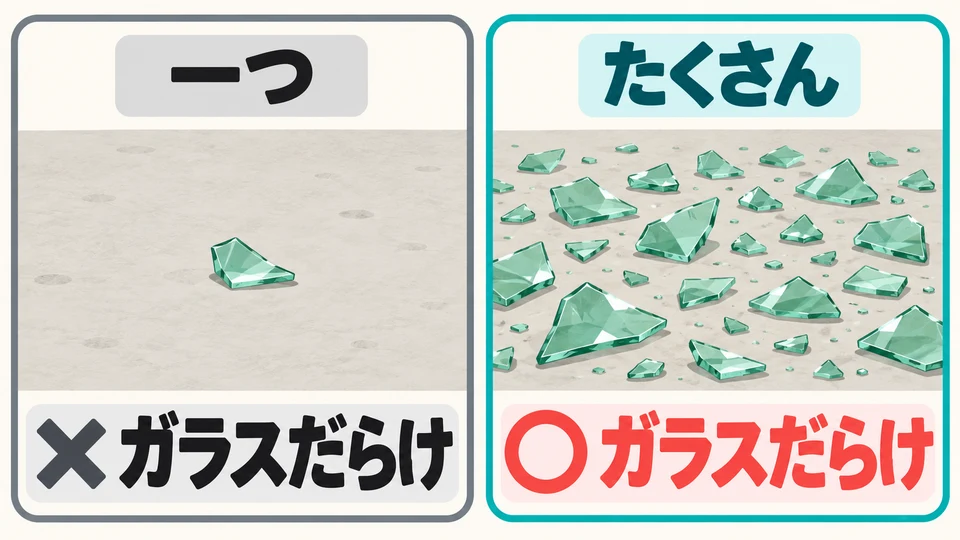
    In 「割れたガラスだらけ」, the whole phrase 「割れたガラス」 means broken glass. 「だらけ」 follows that phrase.

  5. We don't use 「だらけ」 for just one piece of broken glass. It emphasizes a large number spread everywhere.
    We don't use 「だらけ」 for just one piece of broken glass. It emphasizes a large number spread everywhere.

Example sentences

  • 地震じしんjishinのnoあと、ato、部屋へやheyaのno中なかnakaはわwa割れたガラスだらけわれたがらすだらけwaretagarasudarakeでした。deshita。

    After the earthquake, the room was covered in broken glass.

  • 川かわkawaのno近くちかくchikakuのno道みちmichiはわwaごみだらけgomidarakeになっninaてteいました。imashita。

    The road near the river was covered in litter.

In a conversation

  • A
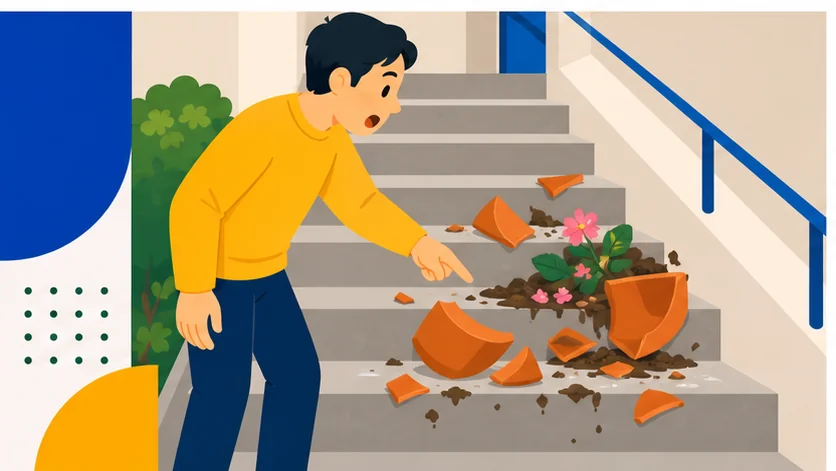
    地震じしんのあと、マンションまんしょんの共用きょうよう階段かいだんはわ落ちおちてきた植木きたうえき鉢ばちの破片だらけはへんだらけですね。

    A: After the earthquake, the apartment's common stairs are covered in fragments of fallen flowerpots.

  • B
    はい、とても不安定ふあんていな足元なあしもとになっていますから、気きをつけてください。

    B: Yes, the footing is very unstable, so please be careful.

  • A
    ありがとうございます。落ちおち着いついて行動こうどうします。

    A: Thank you. I will act calmly.

Check yourself

  1. Level 1 · Recognise

    Which sentence is correct?

  2. Level 1 · Recognise

    Listen and choose the meaning

  3. Level 2 · Build

    Put the words in order

    After the typhoon, the path is covered with broken tree branches and fallen leaves.

  4. Level 3 · Use

    What goes in the blank?

    地震のあと、部屋の中は割れたガラス____でした。

    After the earthquake, the room was full of broken glass.

More grammar in this theme

  • 〜によって/〜により/〜による〜cause and resulting effect
  • 〜恐れがあるrisk of an unwanted event
  • 〜そうにないんですがunlikely; gently explain difficulty
  • 〜とかでpossible cause, or something
  • 〜てしまったようなんですinferred accident with regret
  • 〜ところへ・に・をan event at that moment
  • 〜につれてgradual changes happening together
  • 〜ものだ・〜ものではないwhat one should or should not do
  • 〜とおりに・〜どおりにaccording to; just as
  • 〜際に・〜際はon the occasion of
  • 〜ことformal rule or instruction
  • 〜たままleaving a state unchanged
  • 〜だらけcovered with many unwanted things
Previous〜たまま

Keep practising

Test your Japanese vocabulary12 adaptive questions, freeCheck your pronunciationRead aloud and get a scorePractise verb forms10-question conjugation quizSee the whole courseGrammar, vocabulary and quizzes by theme
See the whole course
Intermediate 2
Emergencies and Safety Actions