
JPEDLAB iconJPEDLAB
Save history

Create an account and play

Explore first, then save your progress whenever you are ready. No email address is required.

Start free
Read as articleCards
See the whole course›Intermediate 2›Emergencies and Safety Actions

Japanese grammar · ≈ JLPT N3 · Intermediate 2

〜そうにないんですが~ sou ni nai n desu ga

unlikely; gently explain difficulty

Use 〜そうにないんですが to say a result seems very unlikely from the current situation and gently open a discussion.

Start the interactive lessonIllustrated cards, audio and speaking practiceTake the quiz
Pattern
〜そうにないんですが
Romaji
~ sou ni nai n desu ga
JLPT (approx.)
≈ N3
Course level
Intermediate 2
Theme
Emergencies and Safety Actions

How it works
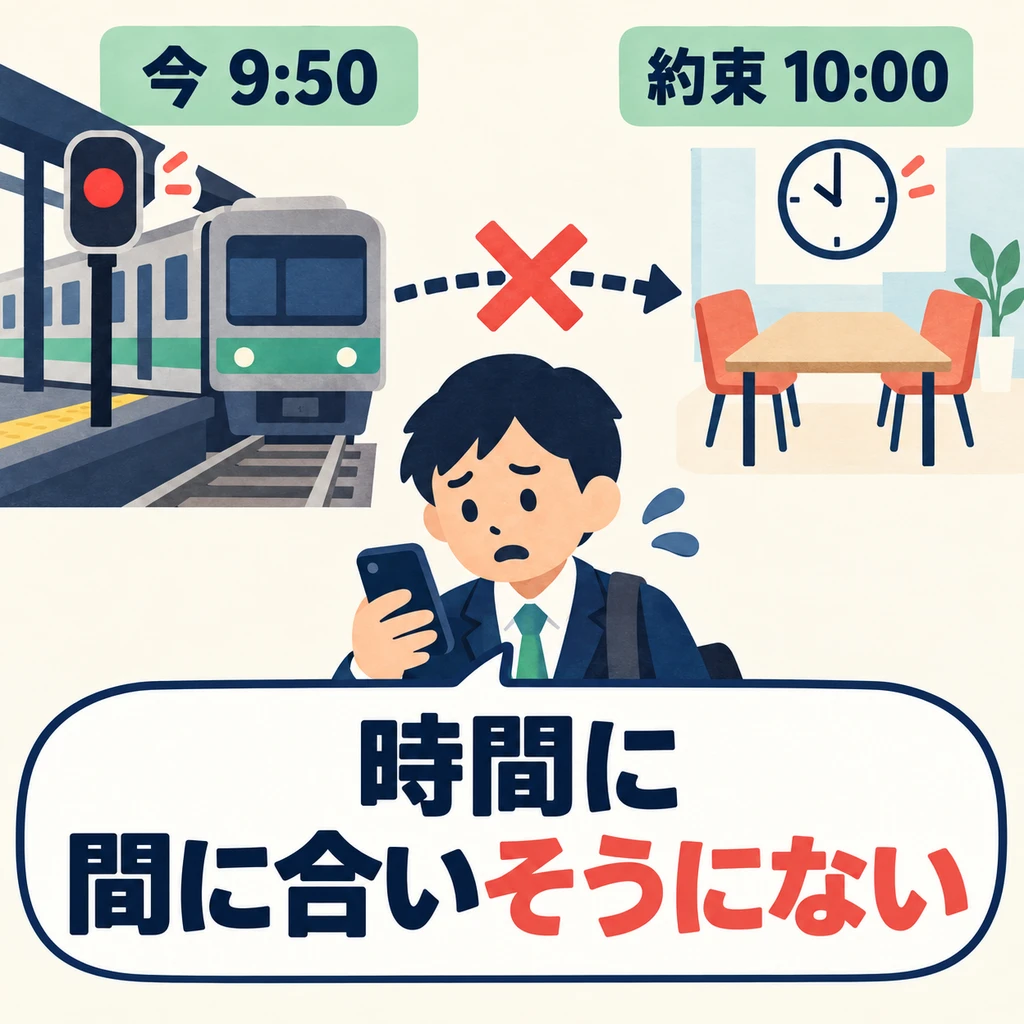
  1. The train is still stopped, with only ten minutes until the appointment. Does arriving on time look likely?
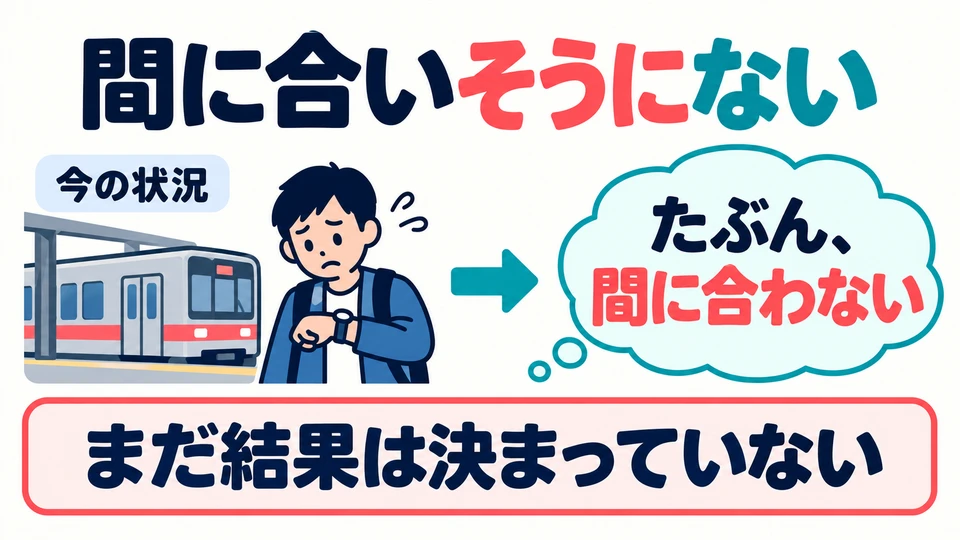
    The train is still stopped, with only ten minutes until the appointment. Does arriving on time look likely?

  2. The current situation suggests that something is very unlikely to happen. The outcome is not certain yet.
    The current situation suggests that something is very unlikely to happen. The outcome is not certain yet.

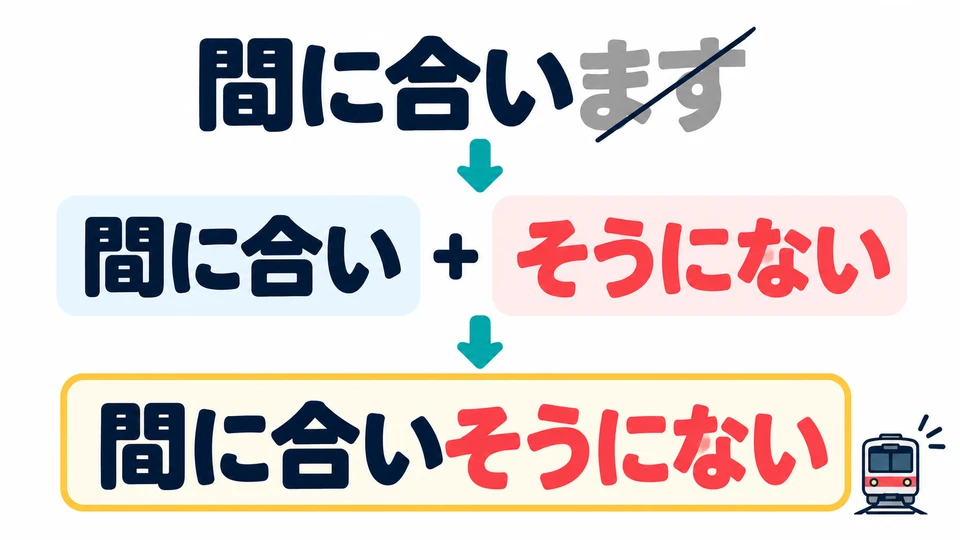
  3. Remove 「ます」 from 「間に合います」 and add 「そうにない」: “It looks like I won’t make it in time.”
    Remove 「ます」 from 「間に合います」 and add 「そうにない」: “It looks like I won’t make it in time.”

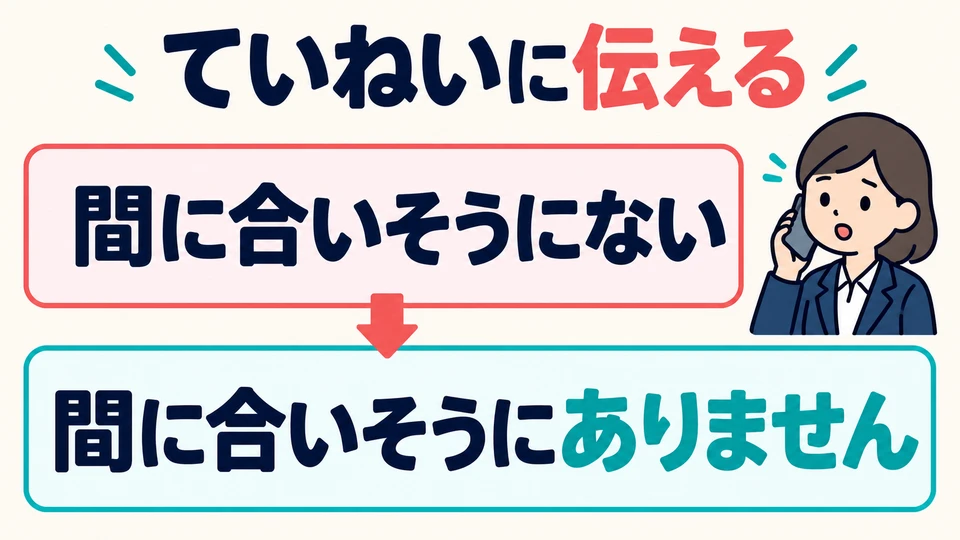
  4. To explain politely, you can replace 「そうにない」 with 「そうにありません」.
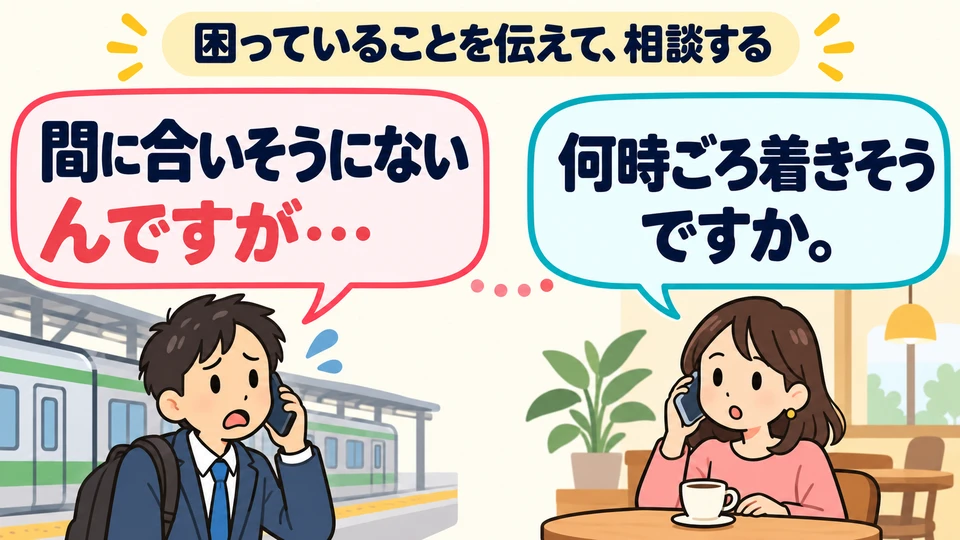
    To explain politely, you can replace 「そうにない」 with 「そうにありません」.

  5. Add 「んですが」 at the end to explain a difficulty gently and invite a response or a discussion.
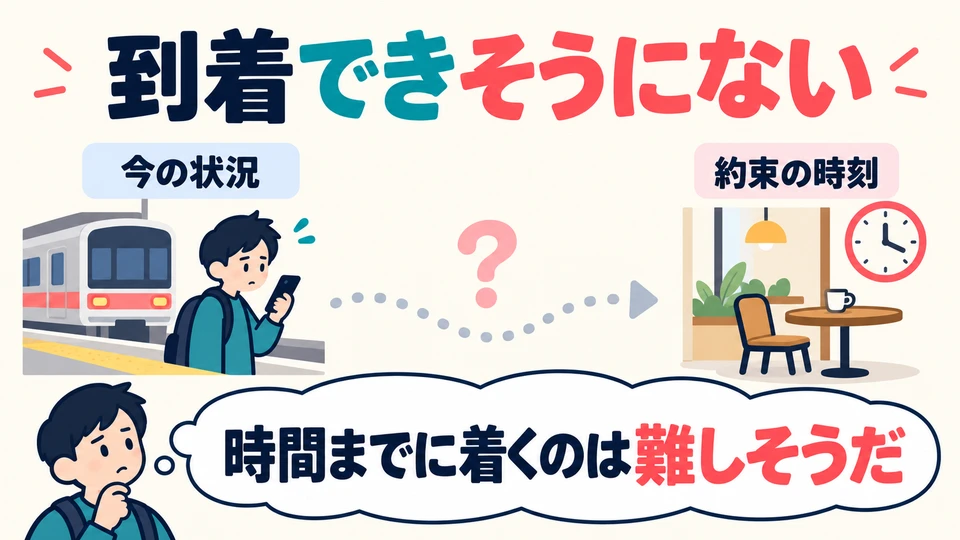
    Add 「んですが」 at the end to explain a difficulty gently and invite a response or a discussion.

  6. 「到着できそうにない」: judging from the current situation, I’m afraid I won’t be able to arrive on time.
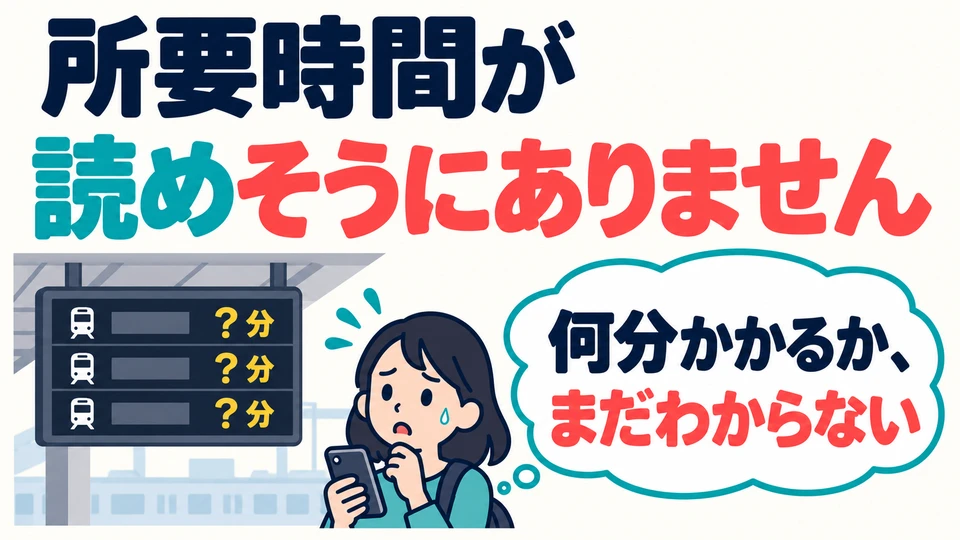
    「到着できそうにない」: judging from the current situation, I’m afraid I won’t be able to arrive on time.

  7. 「所要時間が読めそうにありません」: things are so uncertain that it looks difficult to estimate how long it will take.

    「所要時間が読めそうにありません」: things are so uncertain that it looks difficult to estimate how long it will take.

Example sentences

  • すみません、sumimasen、電車でんしゃdenshaがga止まっとまっtomatてteいiて、te、時間じかんjikanにni間に合いまにあいmaniaiそうにないsouninaiん

In a conversation
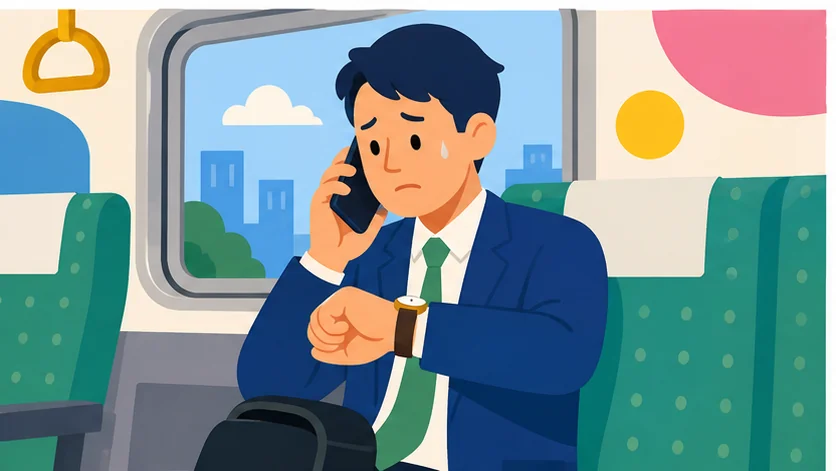
  • A
    すみません、事故じこで足止めあしどめされていて、約束やくそくの時刻じこくに到着とうちゃくできそうにないんですが。

Check yourself

  1. Which sentence is correct?

    1. 道路が大幅に混み合っており、迂回ルートを経由しても約束の到着予定時刻には着きそうにないんですが。
    2. 道路が大幅に混み合っており、迂回ルートを経由しても約束の到着予定時刻には着くそうにないんですが。
    3. 道路が大幅に混み合っており、迂回ルートを経由しても約束の到着予定時刻には着いてそうにないんですが。
    4. 道路が大幅に混み合っており、迂回ルートを経由しても約束の到着予定時刻には着いたそうにないんですが。
    Show answer

    Answer: A 道路が大幅に混み合っており、迂回ルートを経由しても約束の到着予定時刻には着きそうにないんですが。

  2. Which sentence is correct?

    1. 振替輸送の代行バスを待つ人で駅前が混み合っており、予定の電車にはぎりぎりでも乗れそうにありません。
    2. 振替輸送の代行バスを待つ人で駅前が混み合っており、予定の電車にはぎりぎりでも乗れるそうにありません。
    3. 振替輸送の代行バスを待つ人で駅前が混み合っており、予定の電車にはぎりぎりでも乗れてそうにありません。
    4. 振替輸送の代行バスを待つ人で駅前が混み合っており、予定の電車にはぎりぎりでも乗れたそうにありません。
    Show answer

    Answer: A 振替輸送の代行バスを待つ人で駅前が混み合っており、予定の電車にはぎりぎりでも乗れそうにありません。

  3. Which sentence is correct?

    1. ダイヤの乱れが続いていて、到着予定の時刻には着きそうにありません。
    2. ダイヤの乱れが続いていて、到着予定の時刻には着くそうにありません。
    3. ダイヤの乱れが続いていて、到着予定の時刻には着いてそうにありません。
    4. ダイヤの乱れが続いていて、到着予定の時刻には着いたそうにありません。
    Show answer

    Answer: A ダイヤの乱れが続いていて、到着予定の時刻には着きそうにありません。

More grammar in this theme

  • 〜そうにないんですがunlikely; gently explain difficulty

Keep practising

Test your Japanese vocabulary12 adaptive questions, freeCheck your pronunciationRead aloud and get a scorePractise verb forms10-question conjugation quizSee the whole courseGrammar, vocabulary and quizzes by theme
n
ですdesu
が。ga。

I'm sorry, the train has stopped, and it doesn't look like I'll make it on time.

  • すみません、sumimasen、今いまimaのno状況じょうきょうjoukyouだdaと、to、約束やくそくyakusokuのno時間じかんjikanにniはわwa間に合いまにあいmaniaiそうにありません。souniarimasen。

    I'm sorry, but in the current situation, it doesn't look like I'll make it on time for our appointment.

  • A: I'm sorry, I'm held up due to an accident, and it doesn't look like I will be able to arrive at the scheduled time.

  • B
    そうですか。到着とうちゃく予定よていの目安めやすはわどのくらいになりそうですか。

    B: I see. Roughly when do you think you will arrive?

  • A
    ダイヤだいやの乱れみだれが大きくおおきくて、まだ所要しょよう時間じかんが読めよめそうにありません。

    A: The timetable is severely disrupted, and it doesn't look like I can estimate the travel time yet.

  • Take the quiz
    〜によって/〜により/〜による〜cause and resulting effect
    〜恐れがあるrisk of an unwanted event
    〜とかでpossible cause, or something
    〜てしまったようなんですinferred accident with regret
    〜ところへ・に・をan event at that moment
    〜につれてgradual changes happening together
    〜ものだ・〜ものではないwhat one should or should not do
    〜とおりに・〜どおりにaccording to; just as
    〜際に・〜際はon the occasion of
    〜ことformal rule or instruction
    〜たままleaving a state unchanged
    〜だらけcovered with many unwanted things
    Previous〜恐れがある
    Next〜とかで