JPEDLAB iconJPEDLAB
Save history

Create an account and play

Explore first, then save your progress whenever you are ready. No email address is required.

Start free
Read as articleCards
See the whole course›Intermediate 2›Emergencies and Safety Actions

Japanese grammar · ≈ JLPT N4 · Intermediate 2

〜てしまったようなんです~te shimatta you nan desu

inferred accident with regret

Use 〜てしまったようなんです to explain an unintended past result you infer from symptoms, with a regretful tone.

Start the interactive lessonIllustrated cards, audio and speaking practice

How it works

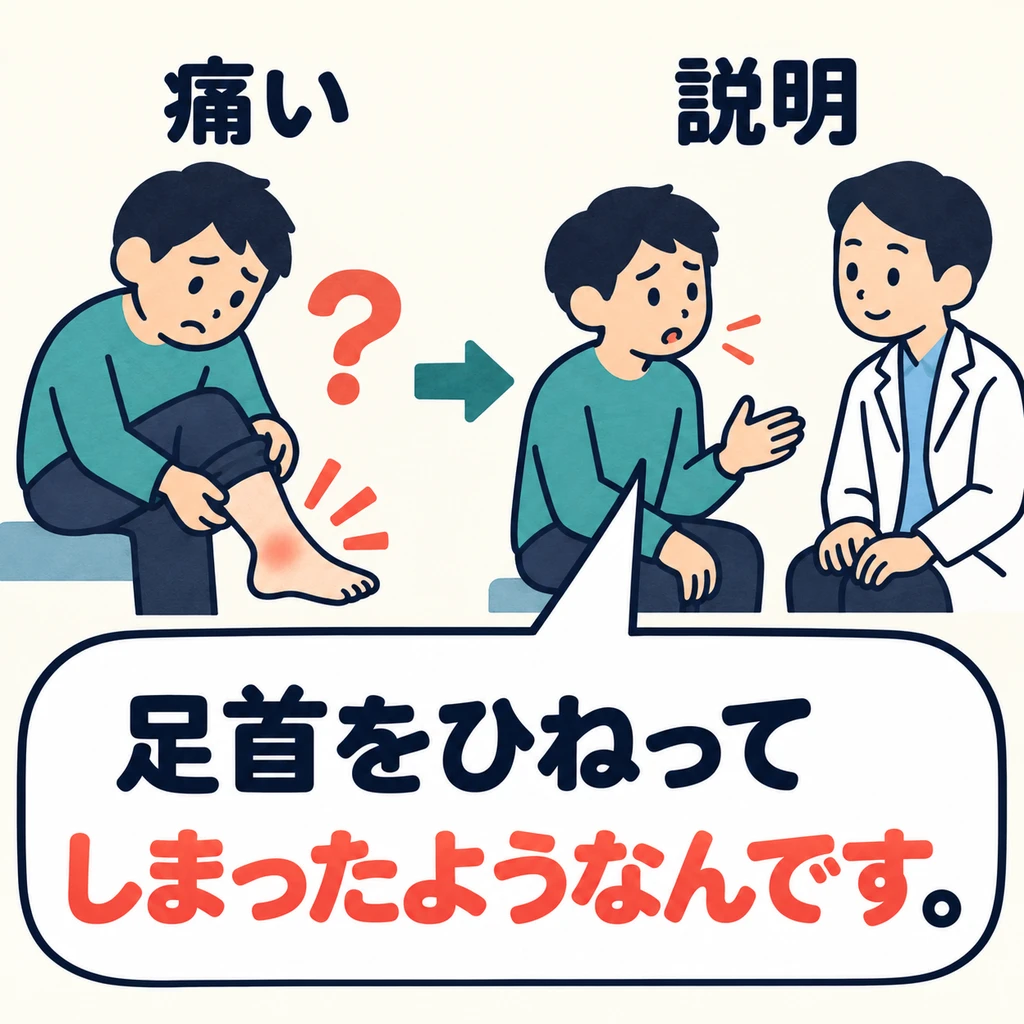
  1. Your ankle hurts. Could you have twisted it? Infer what happened from the symptoms and explain your situation to someone.
    Your ankle hurts. Could you have twisted it? Infer what happened from the symptoms and explain your situation to someone.

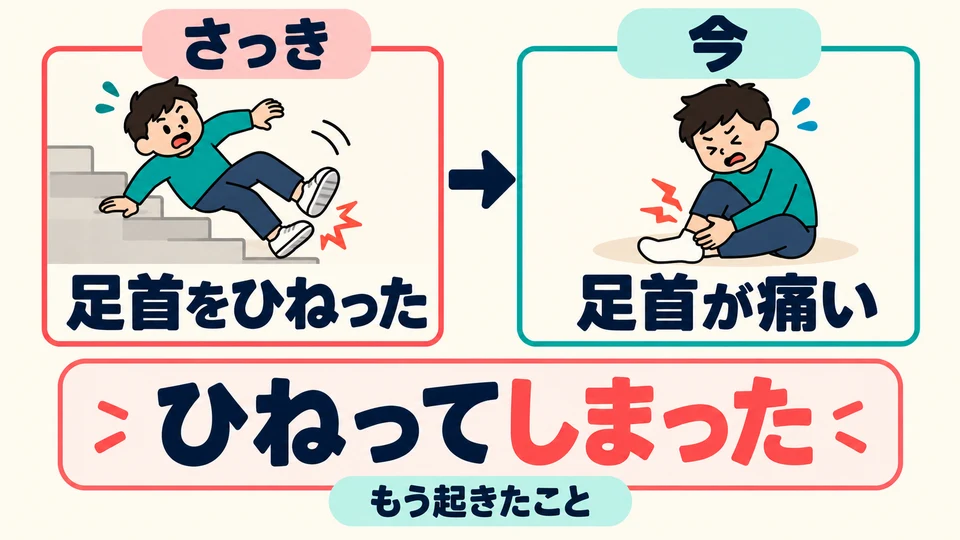
  2. The inference concerns something that has already happened. The past form in 「しまった」 refers to an earlier result.
    The inference concerns something that has already happened. The past form in 「しまった」 refers to an earlier result.

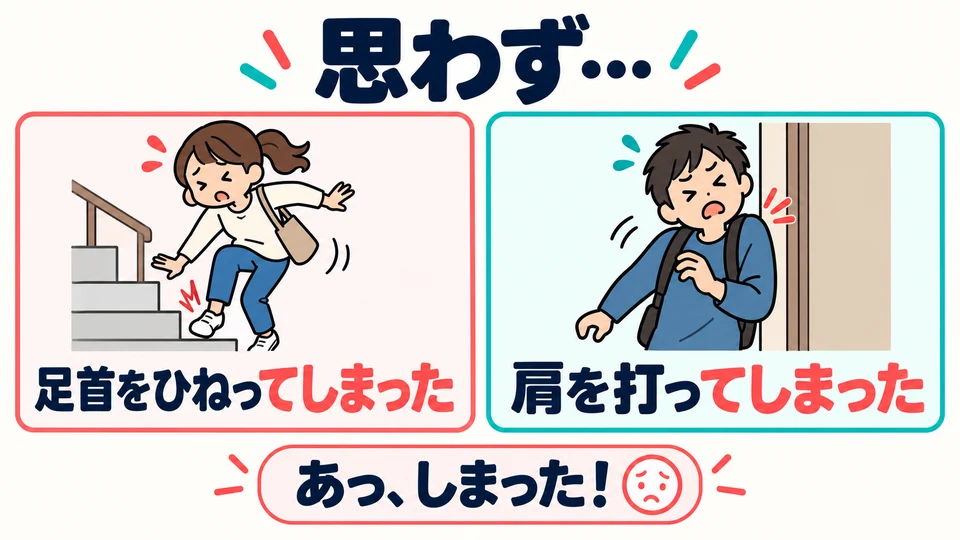
  3. A sprain or an injury from a bump was not intended. Here, 「てしまった」 conveys an accident and regret.
    A sprain or an injury from a bump was not intended. Here, 「てしまった」 conveys an accident and regret.

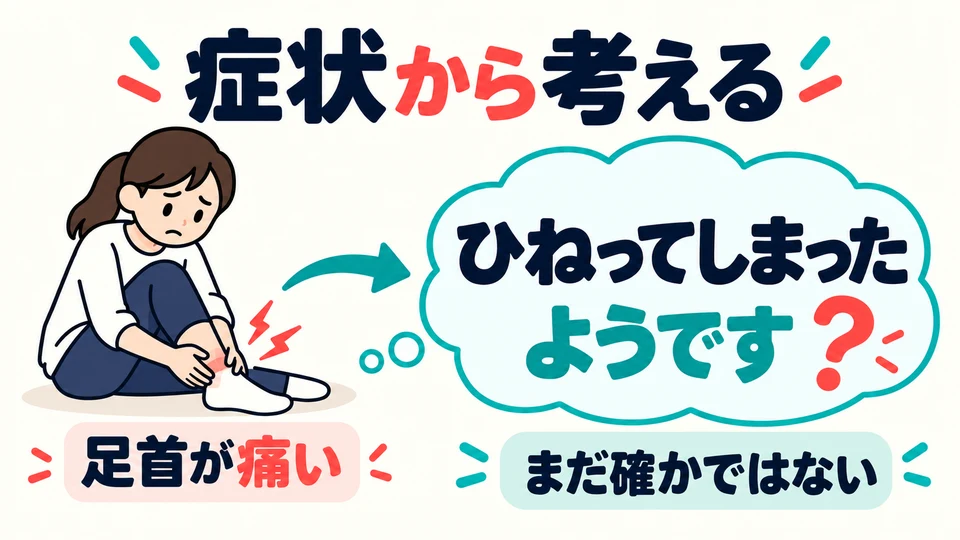
  4. Clues such as pain suggest that you may be injured. 「よう」 expresses an inference, so it is not yet certain.
    Clues such as pain suggest that you may be injured. 「よう」 expresses an inference, so it is not yet certain.

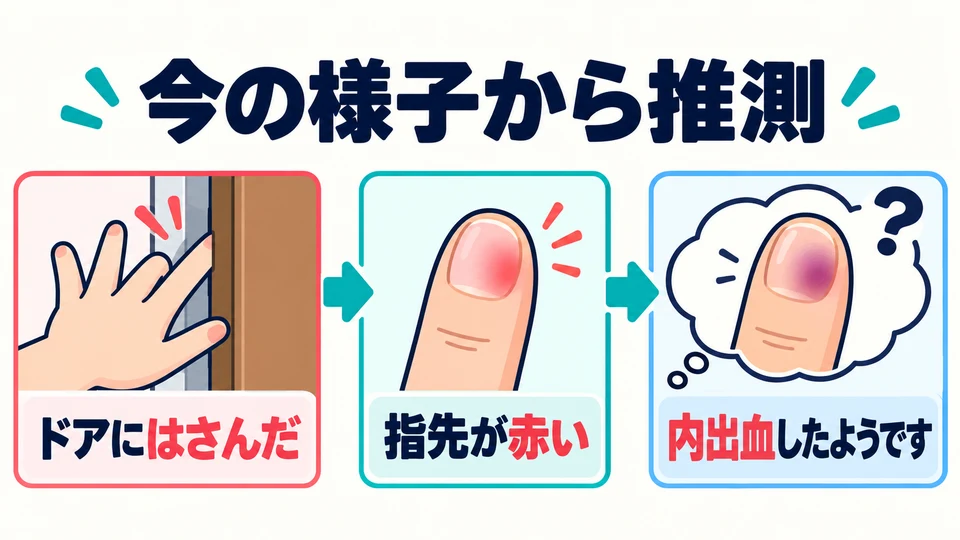
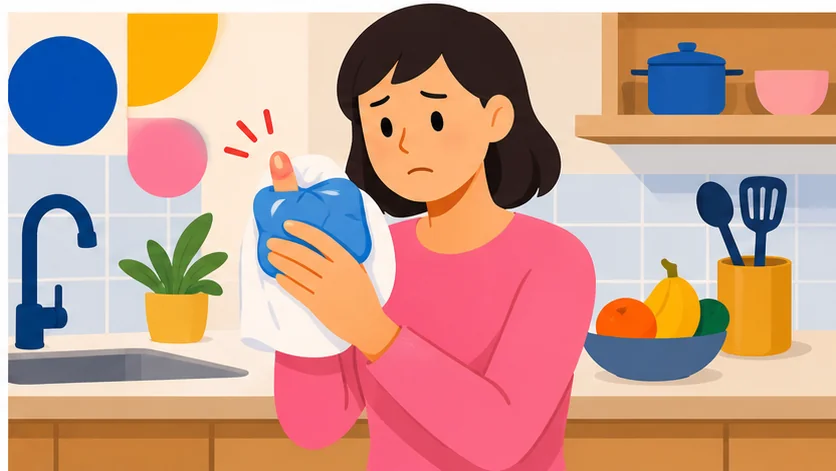
  5. Your fingertip was caught in a door and is now red. From the symptoms you see, you infer that bleeding under the skin may have occurred.
    Your fingertip was caught in a door and is now red. From the symptoms you see, you infer that bleeding under the skin may have occurred.

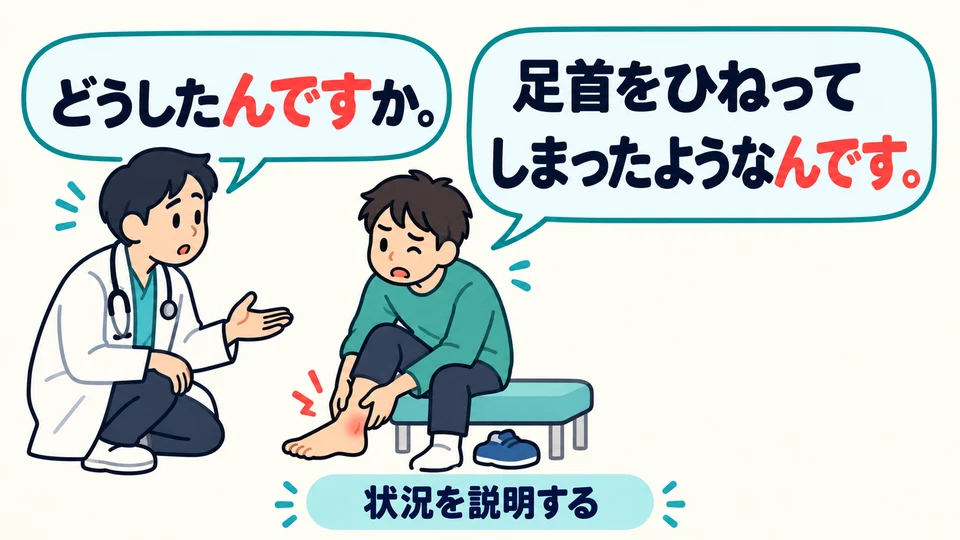
  6. When someone asks what is wrong, use 「んです」 to explain the situation. You can also use it to describe discomfort to a doctor.
    When someone asks what is wrong, use 「んです」 to explain the situation. You can also use it to describe discomfort to a doctor.

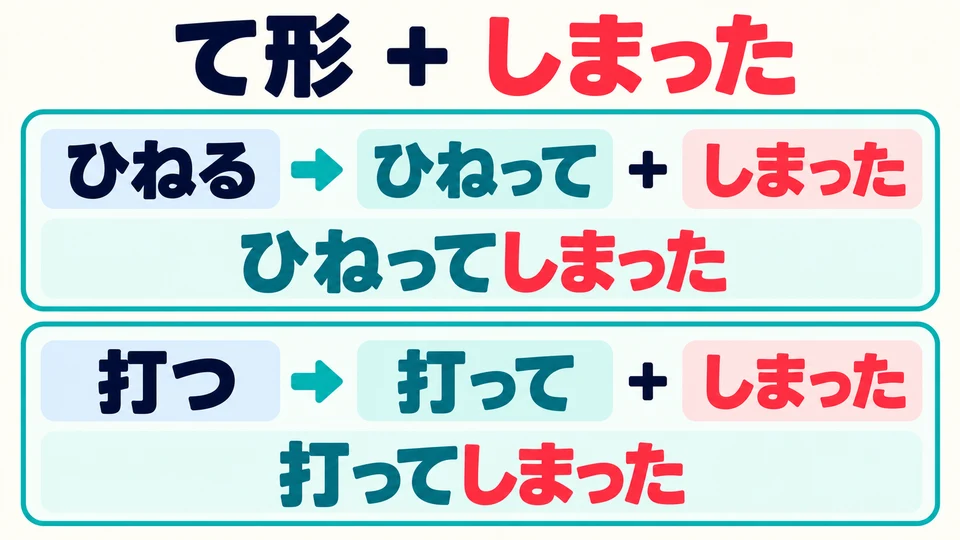
  7. Attach 「しまった」 to the verb’s て-form: ひねってしまった、打ってしまった。
    Attach 「しまった」 to the verb’s て-form: ひねってしまった、打ってしまった。

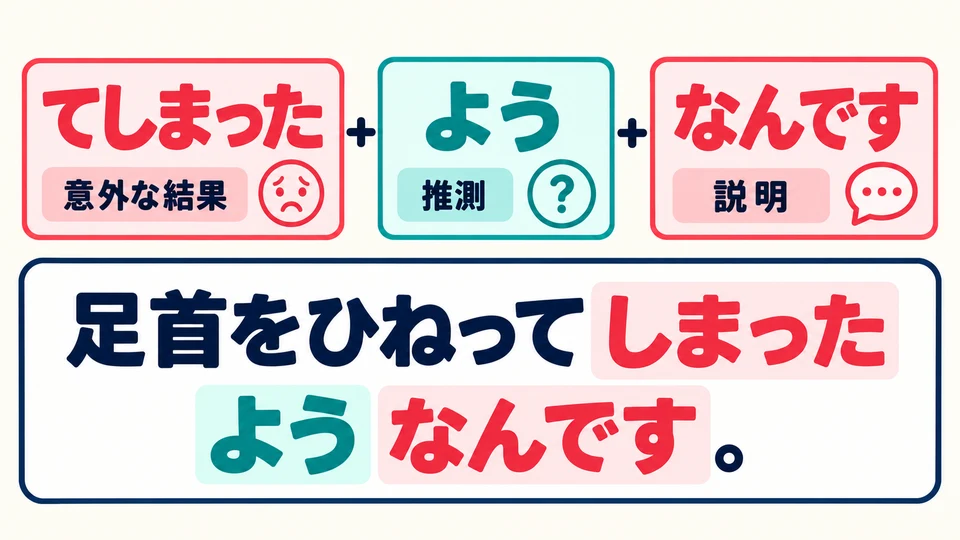
  8. The full expression 「てしまったようなんです」 explains to someone an unintended result that you have inferred.

    The full expression 「てしまったようなんです」 explains to someone an unintended result that you have inferred.

Example sentences

  • 階段かいだんkaidanでde足あしashiをoすべらせsuberaseて、te、足首あしくびashikubiをoひねっhinettてteしまったようなshimattayounaんn

In a conversation
Check yourself

  1. Level 1 · Recognise

    Which sentence is correct?

  2. Level 1 · Recognise

    Listen and choose the meaning

  3. Level 2 · Build

    Put the words in order

    It seems that I lost my balance while running and ended up falling.

  4. Level 3 · Use

    What goes in the blank?

    足首をひねっ____。

    It seems I've sprained my ankle.

More grammar in this theme

  • 〜てしまったようなんですinferred accident with regret

Keep practising

Test your Japanese vocabulary12 adaptive questions, freeCheck your pronunciationRead aloud and get a scorePractise verb forms10-question conjugation quizSee the whole courseGrammar, vocabulary and quizzes by theme
です。desu。

It seems like I slipped on the stairs and twisted my ankle.

  • 「どうどうしたんですか。指先ゆびさきが赤くあかくなっていますよ。」よ。

    "What's the matter? Your fingertips are red."

  • 「ドアどあに指先ゆびさきをはさんで、内出血ないしゅっけつしてしまったようなんです。」です。

    "I caught my fingertip in the door, and it seems to have bled internally."

  • ぶつかったときbutsukattatokiに、ni、肩かたkataをo強くつよくtsuyoku打っうっutてteしまったようなshimattayounaんnです。desu。

    It seems like I hit my shoulder hard when I bumped into something.

  • 「それそれはわ痛いたそうですね。すぐに患部かんぶを冷やしひやしてください。」ください。

    "That looks painful. Please cool the affected area immediately."

  • 〜によって/〜により/〜による〜cause and resulting effect
    〜恐れがあるrisk of an unwanted event
    〜そうにないんですがunlikely; gently explain difficulty
    〜とかでpossible cause, or something
    〜ところへ・に・をan event at that moment
    〜につれてgradual changes happening together
    〜ものだ・〜ものではないwhat one should or should not do
    〜とおりに・〜どおりにaccording to; just as
    〜際に・〜際はon the occasion of
    〜ことformal rule or instruction
    〜たままleaving a state unchanged
    〜だらけcovered with many unwanted things
    Previous〜とかで
    Next〜ところへ・に・を