JPEDLAB iconJPEDLAB
Save history

Create an account and play

Explore first, then save your progress whenever you are ready. No email address is required.

Start free
Read as articleCards
See the whole course›Intermediate 2›Emergencies and Safety Actions

Japanese grammar · ≈ JLPT N4 · Intermediate 2

〜たまま~ta mama

leaving a state unchanged

Use 〜たまま when a state created by an action remains unchanged while something else happens.

Start the interactive lessonIllustrated cards, audio and speaking practice

How it works

  1. The person has gone out, but the light is still on. Look at the yellow link: what state stays the same?
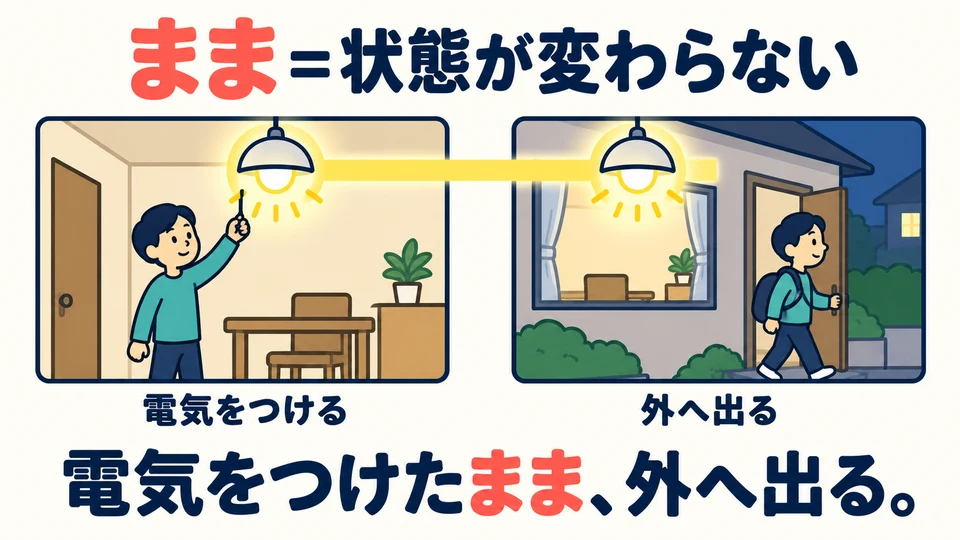
    The person has gone out, but the light is still on. Look at the yellow link: what state stays the same?

  2. 「まま」 means a state stays unchanged. The light is turned on, then the person goes out, leaving it on.
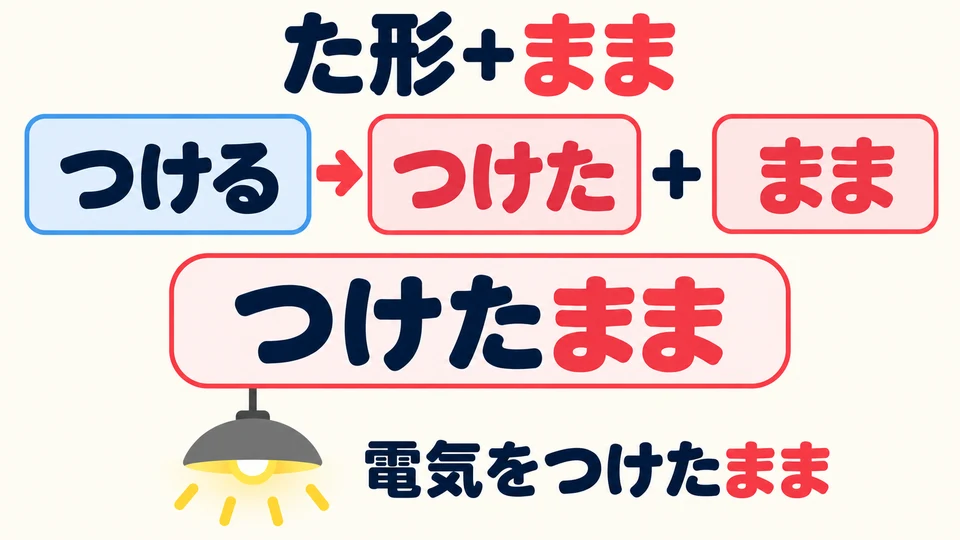
    「まま」 means a state stays unchanged. The light is turned on, then the person goes out, leaving it on.

  3. Here, attach 「まま」 to the verb’s た-form: つける→つけたまま, meaning “left on.”
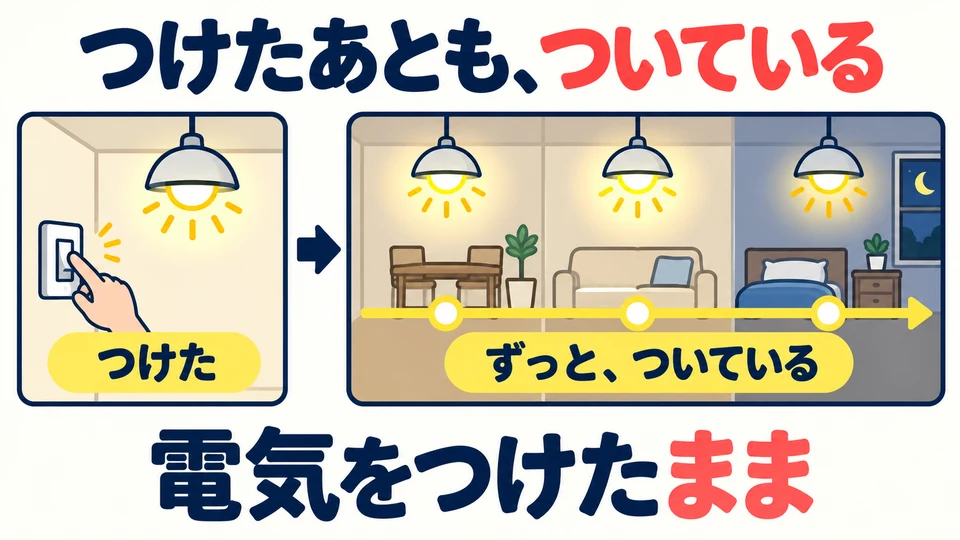
    Here, attach 「まま」 to the verb’s た-form: つける→つけたまま, meaning “left on.”

  4. 「つけた」 refers to the state left after turning on the light. The point is that it stays on, not that someone keeps switching it on.
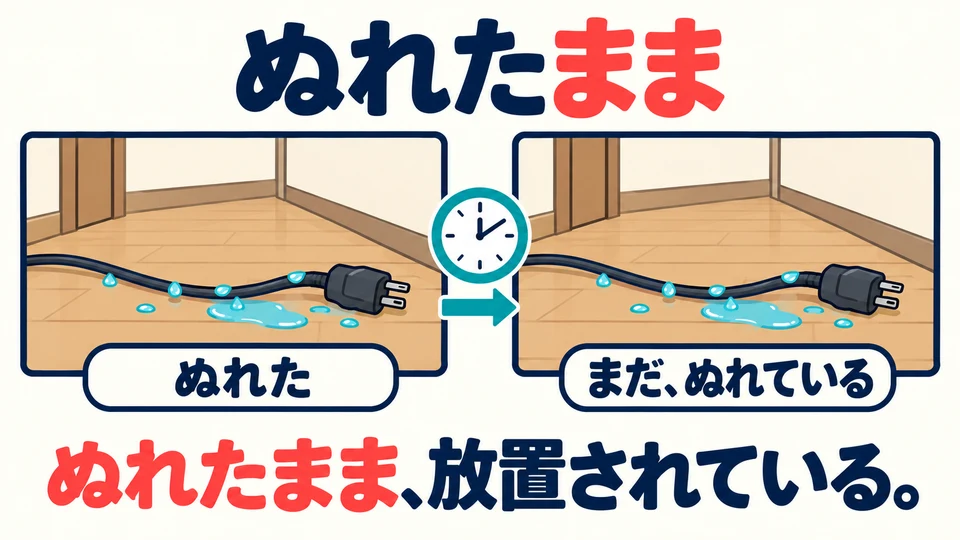
    「つけた」 refers to the state left after turning on the light. The point is that it stays on, not that someone keeps switching it on.

  5. 「ぬれたまま」 means “still wet.” The power cord is left that way, with its state unchanged.
    「ぬれたまま」 means “still wet.” The power cord is left that way, with its state unchanged.

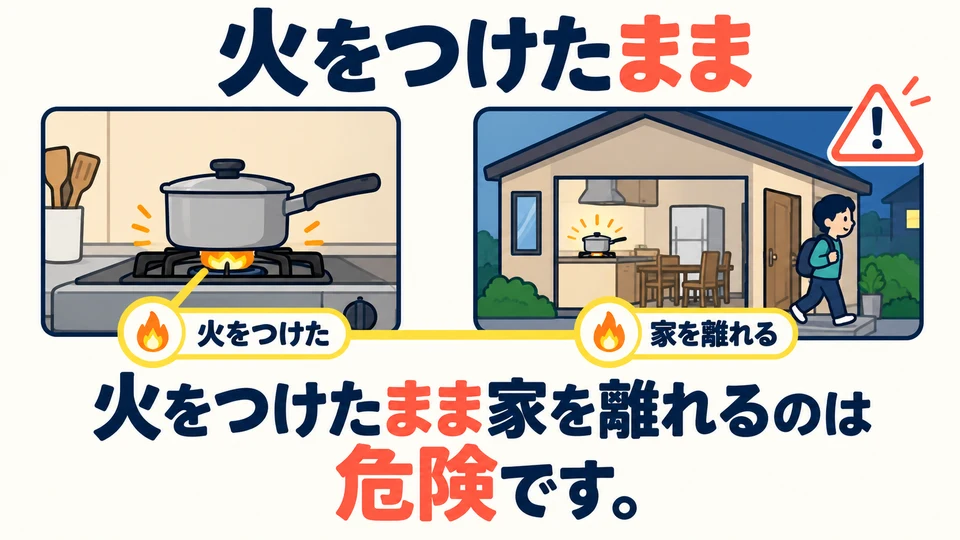
  6. 「火をつけたまま」 means the flame is still burning. The person leaves home without putting it out, so the example warns of danger.

    「火をつけたまま」 means the flame is still burning. The person leaves home without putting it out, so the example warns of danger.

Example sentences

  • 火ひhiをoつけたままtsuketamama家いえieをo離れるはなれるhanareruのnoはわwa危険きけんkikenです。desu。

    It is dangerous to leave the house with the fire left on.

In a conversation
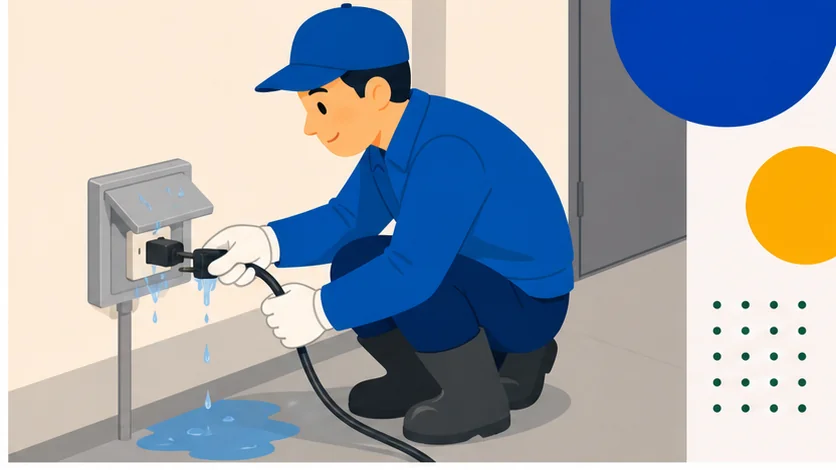
  • A
    管理人さん、かんりにんさん、廊下ろうかの電源でんげんコードこーどがぬれたまま放置ほうちされていますよ。

    A: Janitor, the power cord in the hallway has been left wet.

  • B
    本当ほんとう

Check yourself

  1. Level 1 · Recognise

    Which sentence is correct?

  2. Level 1 · Recognise

    Listen and choose the meaning

  3. Level 2 · Build

    Put the words in order

    It is dangerous to leave the house with a fire left burning.

  4. Level 3 · Use

    What goes in the blank?

    火をつけた____家を離れるのは危険です。

    It's dangerous to leave home with the fire on.

More grammar in this theme

  • 〜たままleaving a state unchanged

Keep practising

Test your Japanese vocabulary12 adaptive questions, freeCheck your pronunciationRead aloud and get a scorePractise verb forms10-question conjugation quizSee the whole courseGrammar, vocabulary and quizzes by theme
  • 地震じしんjishinのnoあと、ato、電気でんきdenkiをoつけたままtsuketamama外そとsotoへえe出でdeてteしまいました。shimaimashita。

    After the earthquake, I went outside with the lights left on.

  • です
    か。
    危ないですあぶないです
    から、
    すぐ
    に
    電源でんげん
    を
    切っきっ
    て
    片付けますかたづけます
    ね。

    B: Really? That's dangerous, so I'll turn off the power and clean it up right away.

  • A
    よろしくお願いおねがいします。

    A: Yes, please.

  • 〜によって/〜により/〜による〜cause and resulting effect
    〜恐れがあるrisk of an unwanted event
    〜そうにないんですがunlikely; gently explain difficulty
    〜とかでpossible cause, or something
    〜てしまったようなんですinferred accident with regret
    〜ところへ・に・をan event at that moment
    〜につれてgradual changes happening together
    〜ものだ・〜ものではないwhat one should or should not do
    〜とおりに・〜どおりにaccording to; just as
    〜際に・〜際はon the occasion of
    〜ことformal rule or instruction
    〜だらけcovered with many unwanted things
    Previous〜こと
    Next〜だらけ