JPEdLab iconJPEdLab
Save history

Create an account and play

Explore first, then save your progress whenever you are ready. No email address is required.

Start free
  1. Japanese grammar
  2. JLPT N3 grammar
  3. 〜がち

〜がち~gachi

Gachi (〜がち) means “often tends to”.

観光かんこうkankou地ちchiでdeは、わ、wa、休日きゅうじつkyuujitsuにniなるnaruとto道みちmichiがga混みがちこみがちkomigachiです。desu。

In tourist areas, roads tend to get crowded on holidays.

「〜がち」 describes a frequent tendency, often an undesirable one, without saying it happens every time.

In the course›

How it works

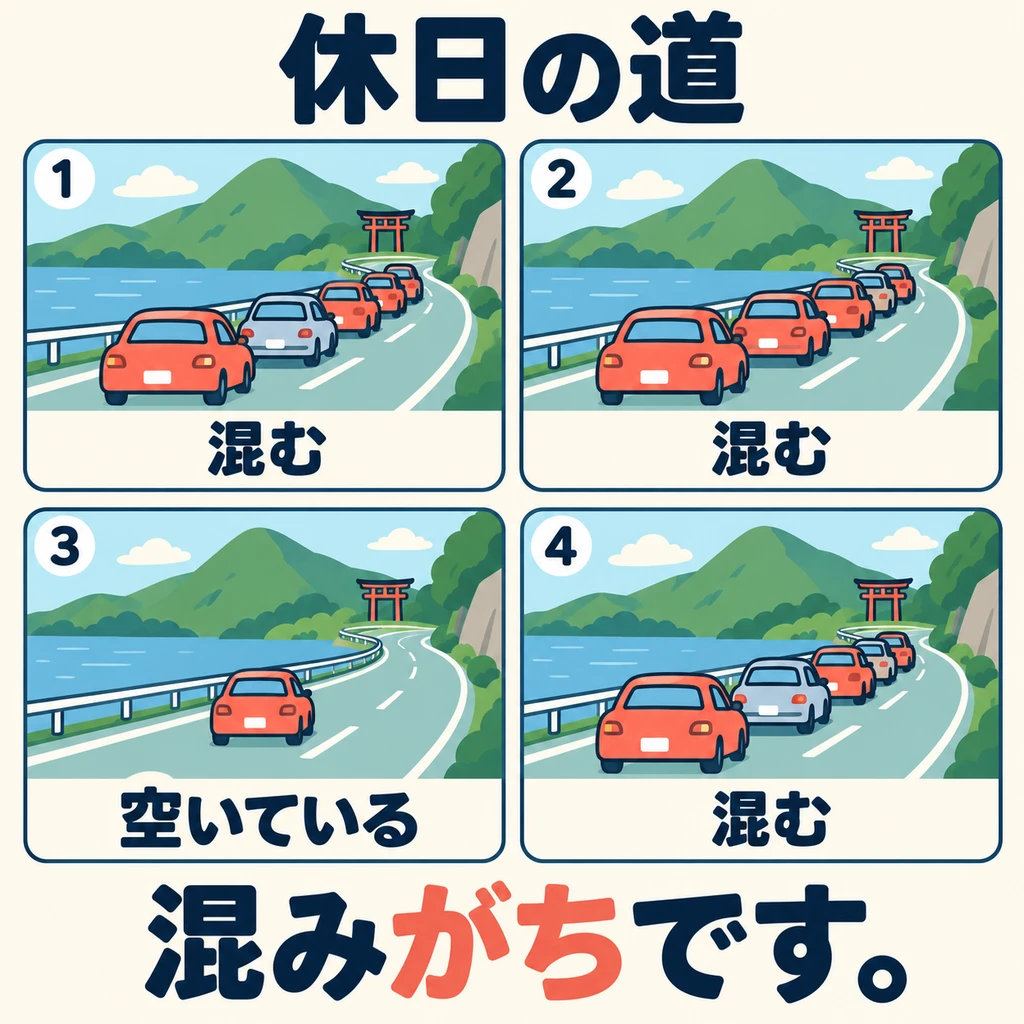
  1. The road is jammed on three of four days off, but sometimes clear. 「がち」 describes a common tendency, not something that happens every time.
    The road is jammed on three of four days off, but sometimes clear. 「がち」 describes a common tendency, not something that happens every time.

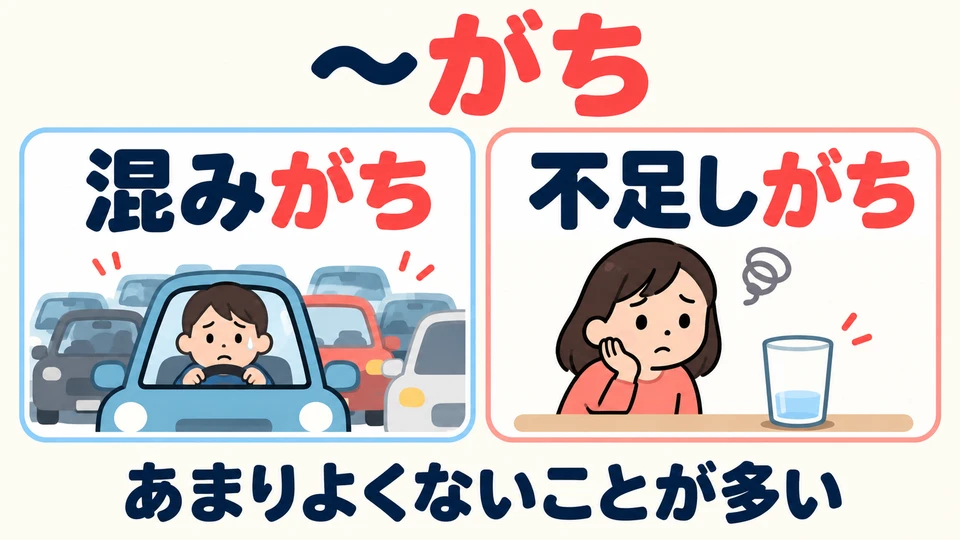
  2. It is often used for undesirable situations, such as congestion or shortages, to express a tendency the speaker sees as unfavorable.
    It is often used for undesirable situations, such as congestion or shortages, to express a tendency the speaker sees as unfavorable.

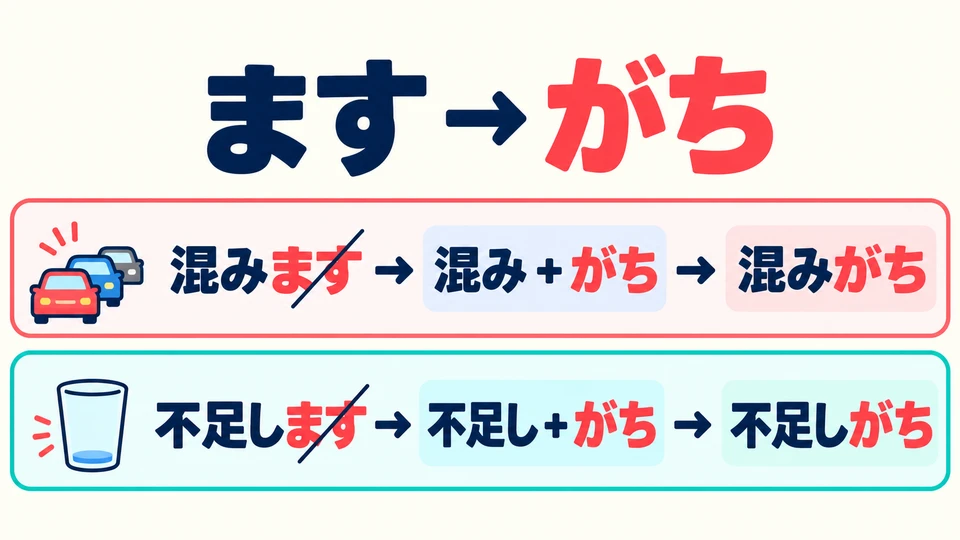
  3. Remove 「ます」 from the verb and add 「がち」: 混みます→混みがち, 不足します→不足しがち.
    Remove 「ます」 from the verb and add 「がち」: 混みます→混みがち, 不足します→不足しがち.

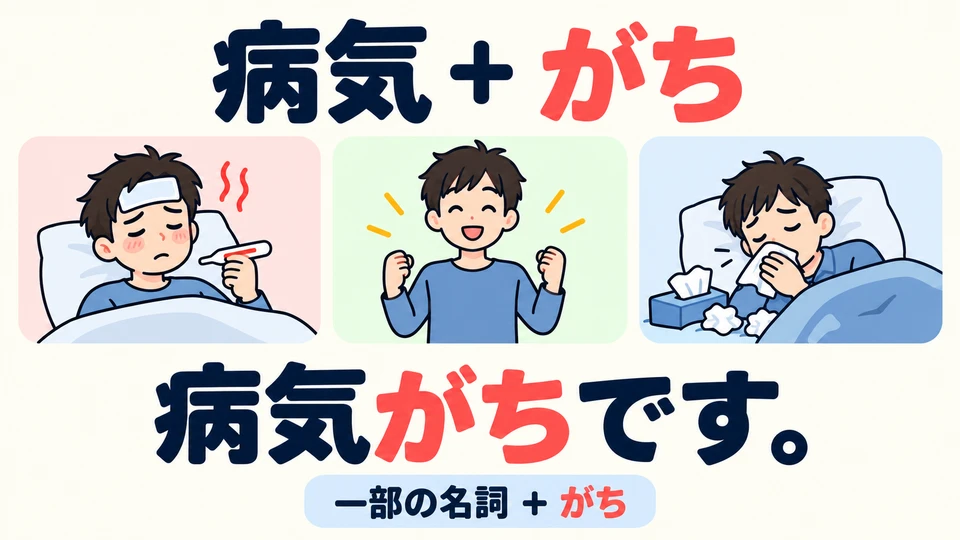
  4. It also attaches to certain nouns: 「病気がち」 means often being ill. This does not work with every noun.
    It also attaches to certain nouns: 「病気がち」 means often being ill. This does not work with every noun.

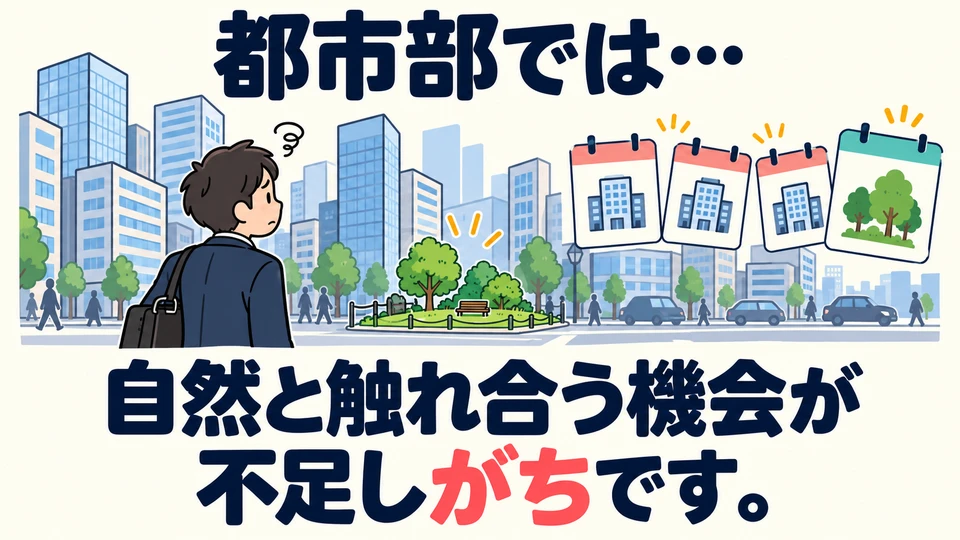
  5. In the city, opportunities to spend time in nature are often lacking. 「不足しがち」 sums up this tendency toward a shortage.
    In the city, opportunities to spend time in nature are often lacking. 「不足しがち」 sums up this tendency toward a shortage.

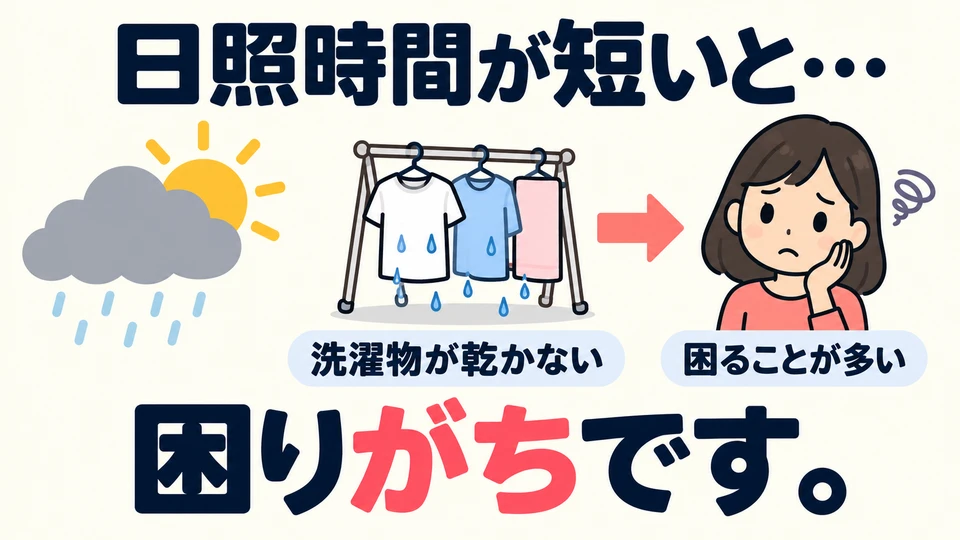
  6. With few hours of sunshine, clothes often fail to dry. 「困りがち」 expresses a tendency to feel troubled by this.

    With few hours of sunshine, clothes often fail to dry. 「困りがち」 expresses a tendency to feel troubled by this.

Example sentences

  • 観光かんこうkankou地ちchiでdeは、わ、wa、休日きゅうじつkyuujitsuにniなるnaruとto道みちmichiがga混みがちこみがちkomigachiです。desu。

In a conversation

  • A
    最近さいきんはわ天気てんきが悪くわるくて、毎日まいにち雨あめばかり降っふっていますね。

    A: The weather has been bad lately, and it's been raining every day.

  • B
    ええ、

Check yourself

  1. Level 1 · Recognise

    Which sentence is correct?

  2. Level 1 · Recognise

    Listen and choose the meaning

  3. Level 2 · Build

    Put the words in order

    In tourist areas, the roads tend to get crowded on holidays.

  4. Level 3 · Use

    What goes in the blank?

    観光地では、休日になると道が混み____です。

    At tourist spots, roads tend to get crowded on holidays.

More grammar in this theme

  • 〜がちoften tends to

More JLPT N3 grammar

Keep practising

Test your Japanese vocabulary12 adaptive questions, freeCheck your pronunciationRead aloud and get a scorePractise verb forms10-question conjugation quizSee the whole courseGrammar, vocabulary and quizzes by theme

In tourist areas, roads tend to get crowded on holidays.

  • 都市としtoshi部ぶbuでdeは、わ、wa、自然しぜんshizenとto触れふれfure合うあうau機会きかいkikaiがga不足ふそくfusokuしがちshigachiです。desu。

    In urban areas, opportunities to interact with nature tend to be insufficient.

  • 日照にっしょう
    時間じかん
    が
    短いみじかい
    と、
    洗濯せんたく
    物もの
    が
    乾かなくかわかなく
    て
    困りがちこまりがち
    です
    よ
    ね。

    B: Yes, when daylight hours are short, laundry doesn't dry easily, which tends to be troublesome.

  • A
    本当ほんとうですね。早くはやく太陽たいようが出でてほしいものです。

    A: Indeed. I hope the sun comes out soon.

  • Intermediate 2
    Geography, Climate, and Local Life
    More quizzesOpen this lesson’s quizzes in the course
    〜に囲まれている・〜に囲まれたbe surrounded by
    〜が〜を占める・〜が占めるaccount for a share
    〜に比べてcompared with
    〜に備えてin preparation for
    〜に代わって・〜に代わりin place of
    〜のような・〜のようにexamples such as
    〜としてin the role of
    〜に限るnothing beats
    〜を中心にcentered around
    〜をはじめとしてincluding ... as a leading example
    〜を通して・〜を通じてthrough a means
    〜ことからbased on the fact
    〜といえばspeaking of
    〜というとspeaking of; brings to mind
    Previous〜が〜を占める・〜が占める
    Next〜に比べて
    See all 114
    〜とおりに・〜どおりにaccording to; just as
    〜際に・〜際はon the occasion of
    〜ことformal rule or instruction
    〜だらけcovered with many unwanted things
    〜たところdid…and found that
    〜かなと思ってthinking maybe; so I
    〜にしてはfor; contrary to expectation
    〜につきper; for each