JPEDLAB iconJPEDLAB
Save history

Create an account and play

Explore first, then save your progress whenever you are ready. No email address is required.

Start free
Read as articleCards
See the whole course›Intermediate 2›Geography, Climate, and Local Life

Japanese grammar · ≈ JLPT N4 · Intermediate 2

〜のような・〜のように~no you na / ~no you ni

examples such as

「〜のような・〜のように」 gives examples from a category, before a noun or an explanation respectively.

Start the interactive lessonIllustrated cards, audio and speaking practice

How it works

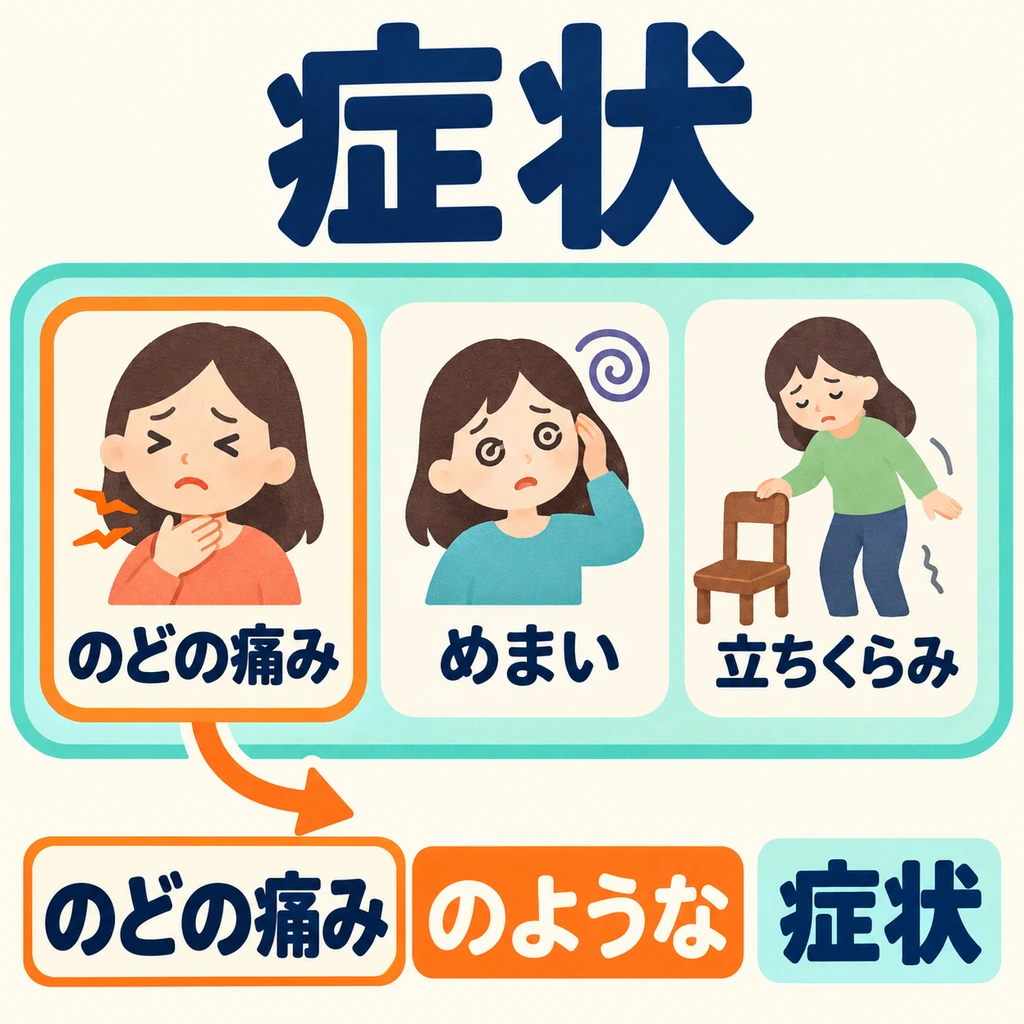
  1. Look at the picture: which category does a sore throat belong to? A specific symptom illustrates the category ‘symptoms.’
    Look at the picture: which category does a sore throat belong to? A specific symptom illustrates the category ‘symptoms.’

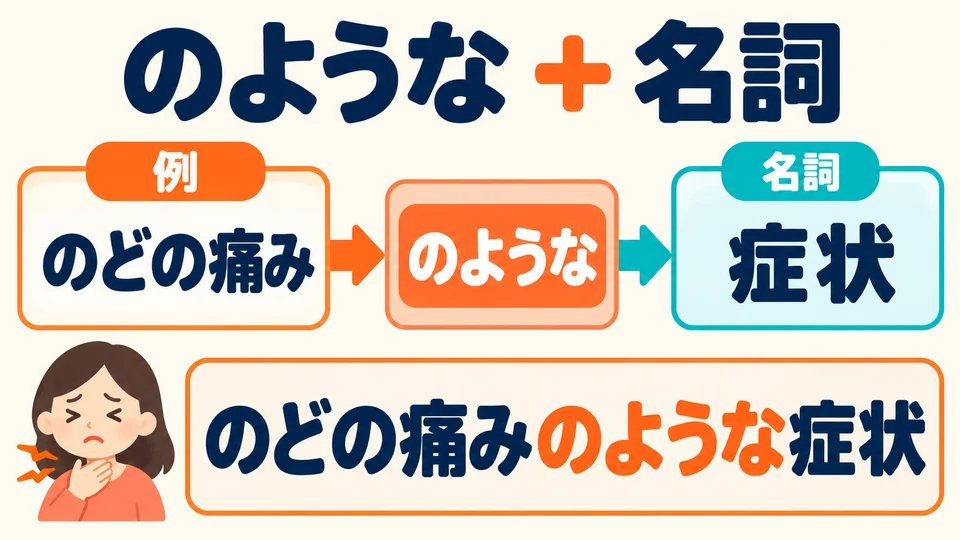
  2. ‘のような’ is followed by a noun: のどの痛みのような症状. Give an example first, then name its category.
    ‘のような’ is followed by a noun: のどの痛みのような症状. Give an example first, then name its category.

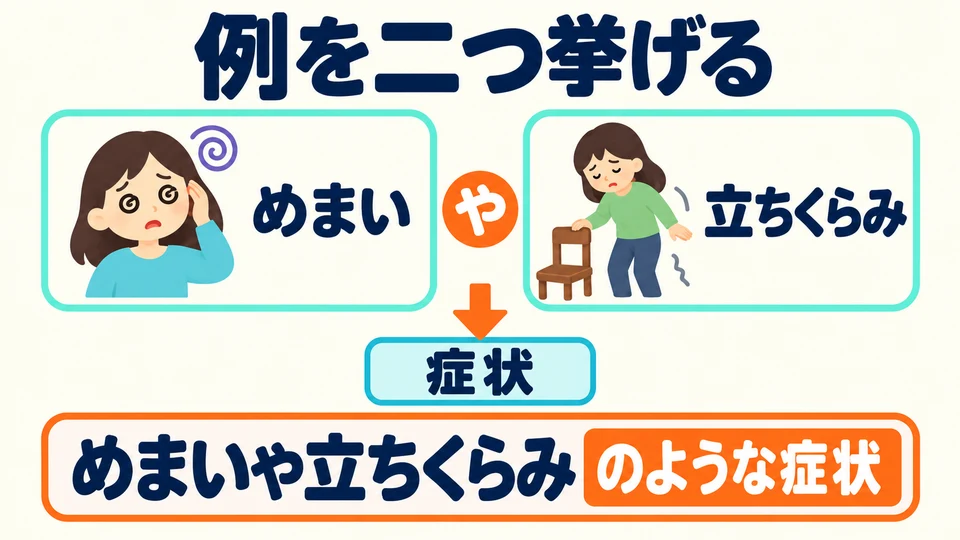
  3. When describing feeling unwell, ‘めまいや立ちくらみのような症状’ lets you give several examples.
    When describing feeling unwell, ‘めまいや立ちくらみのような症状’ lets you give several examples.

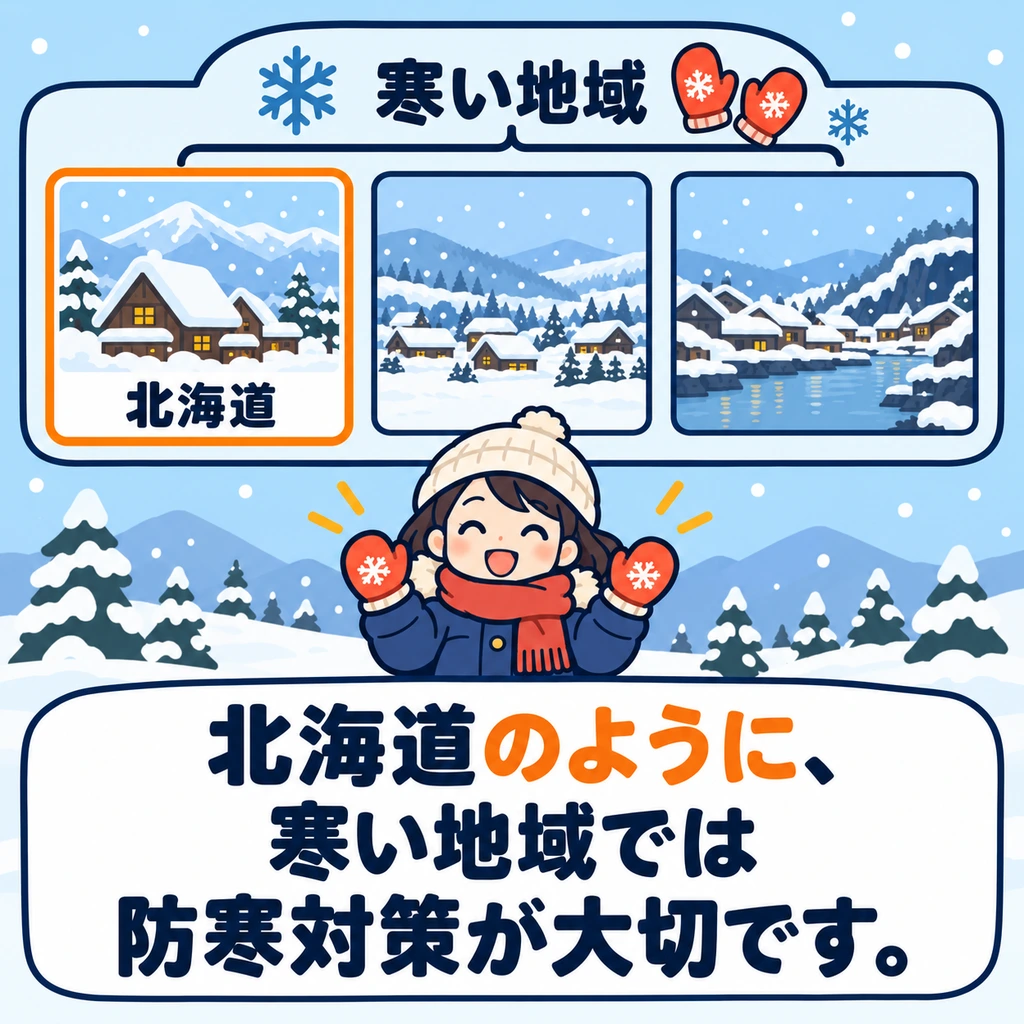
  4. When discussing protection from the cold, use Hokkaido as an example first to bring to mind cold regions in general.
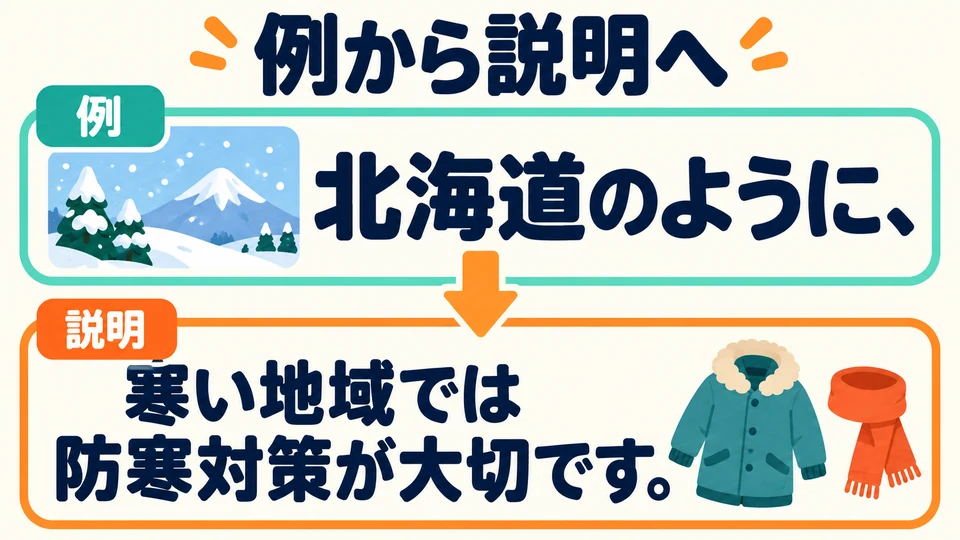
    When discussing protection from the cold, use Hokkaido as an example first to bring to mind cold regions in general.

  5. ‘のように’ is followed by an explanation: first name Hokkaido as an example, then explain what to keep in mind in cold regions.
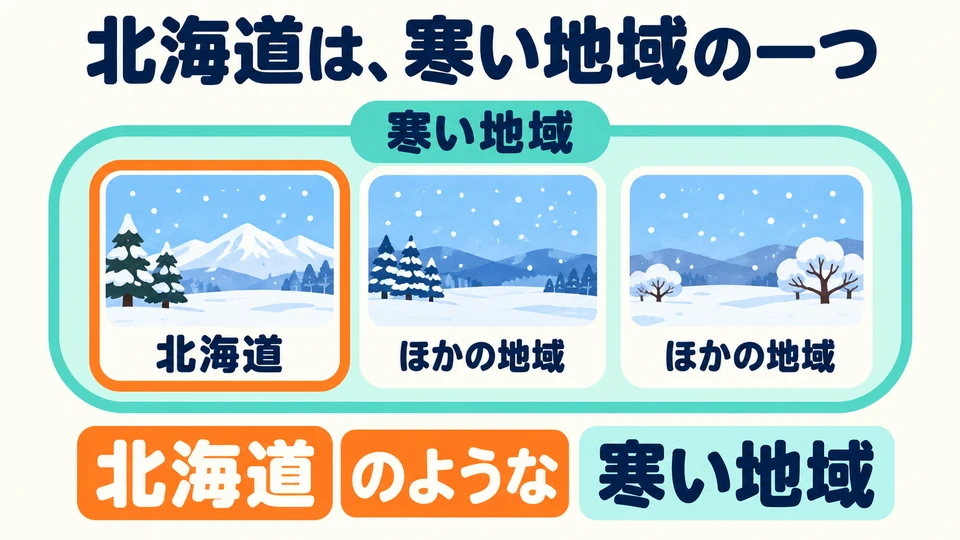
    ‘のように’ is followed by an explanation: first name Hokkaido as an example, then explain what to keep in mind in cold regions.

  6. Here, Hokkaido is an example of a cold region. The point is belonging to the same category, rather than looking alike.
    Here, Hokkaido is an example of a cold region. The point is belonging to the same category, rather than looking alike.

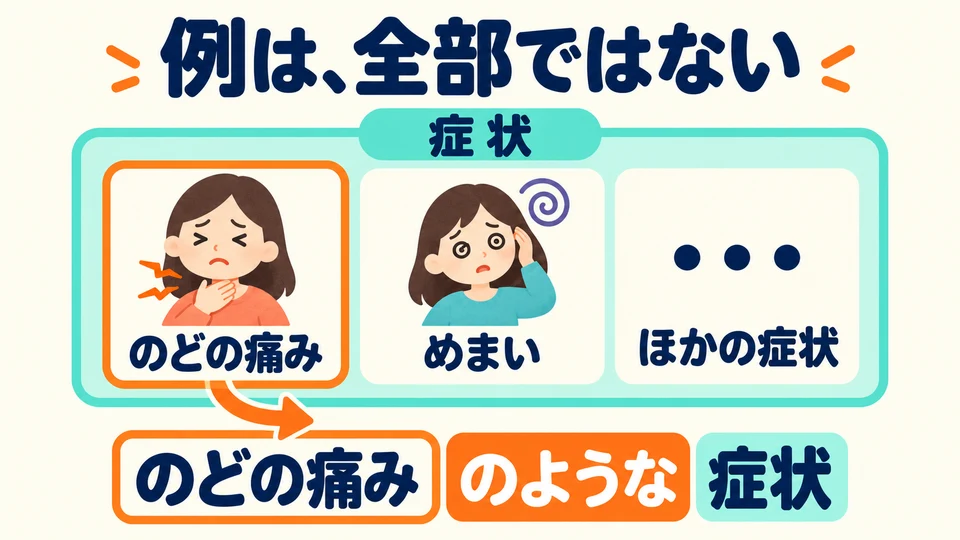
  7. Giving examples does not mean listing everything. ‘Symptoms such as a sore throat’ may include other symptoms of the same kind.

    Giving examples does not mean listing everything. ‘Symptoms such as a sore throat’ may include other symptoms of the same kind.

Example sentences

  • 北海道ほっかいどうhokkaidouのnoような寒いようなさむいyounasamui地域ちいきchiikiでdeは、わ、wa、防寒ぼうかんboukan対策たいさくtaisakuがga大切です。たいせつです。taisetsudesu。

In a conversation

Check yourself

  1. Level 1 · Recognise

    Which sentence is correct?

  2. Level 1 · Recognise

    Listen and choose the meaning

  3. Level 2 · Build

    Put the words in order

    People who are not used to the heat like me tend to suffer from summer fatigue easily.

  4. Level 3 · Use

    What goes in the blank?

    北海道____寒い地域では、防寒対策が大切です。

    In cold regions like Hokkaido, cold protection measures are important.

More grammar in this theme

  • 〜のような・〜のようにexamples such as

Keep practising

Test your Japanese vocabulary12 adaptive questions, freeCheck your pronunciationRead aloud and get a scorePractise verb forms10-question conjugation quizSee the whole courseGrammar, vocabulary and quizzes by theme

In cold regions like Hokkaido, taking measures against the cold is important.

  • A
    最近、さいきん、めまいや立ちくらみたちくらみのような症状ようなしょうじょうがあるんですが。

    A: Lately, I've had symptoms like dizziness and lightheadedness.

  • B
    それはわ心配しんぱいですね。熱中症ねっちゅうしょうかもしれないので、日陰ひかげで休憩きゅうけいを取っとってください。

    B: That is concerning. It might be heatstroke, so please take a rest in the shade.

  • 乾燥かんそうkansouした地域したちいきshitachiikiでdeは、わ、wa、のどnodoのno痛みいたみitamiのnoような症状ようなしょうじょうyounashoujouがga出るでるderuことkotoがgaあります。arimasu。

    In dry areas, symptoms like a sore throat may occur.

  • A
    はい、経口けいこう補水ほすい液えきを飲んのんで、早めはやめに対処にたいしょするようにします。

    A: Yes, I will drink some oral rehydration solution and try to handle it early.

  • 〜に囲まれている・〜に囲まれたbe surrounded by
    〜が〜を占める・〜が占めるaccount for a share
    〜がちoften tends to
    〜に比べてcompared with
    〜に備えてin preparation for
    〜に代わって・〜に代わりin place of
    〜としてin the role of
    〜に限るnothing beats
    〜を中心にcentered around
    〜をはじめとしてincluding ... as a leading example
    〜を通して・〜を通じてthrough a means
    〜ことからbased on the fact
    〜といえばspeaking of
    〜というとspeaking of; brings to mind
    Previous〜に代わって・〜に代わり
    Next〜として