
Japanese grammar · ≈ JLPT N3 · Intermediate 2
〜に代わって・〜に代わり~ni kawatte / ~ni kawari
in place of
「〜に代わって・〜に代わり」 follows a noun to show who or what replaces it.
How it works
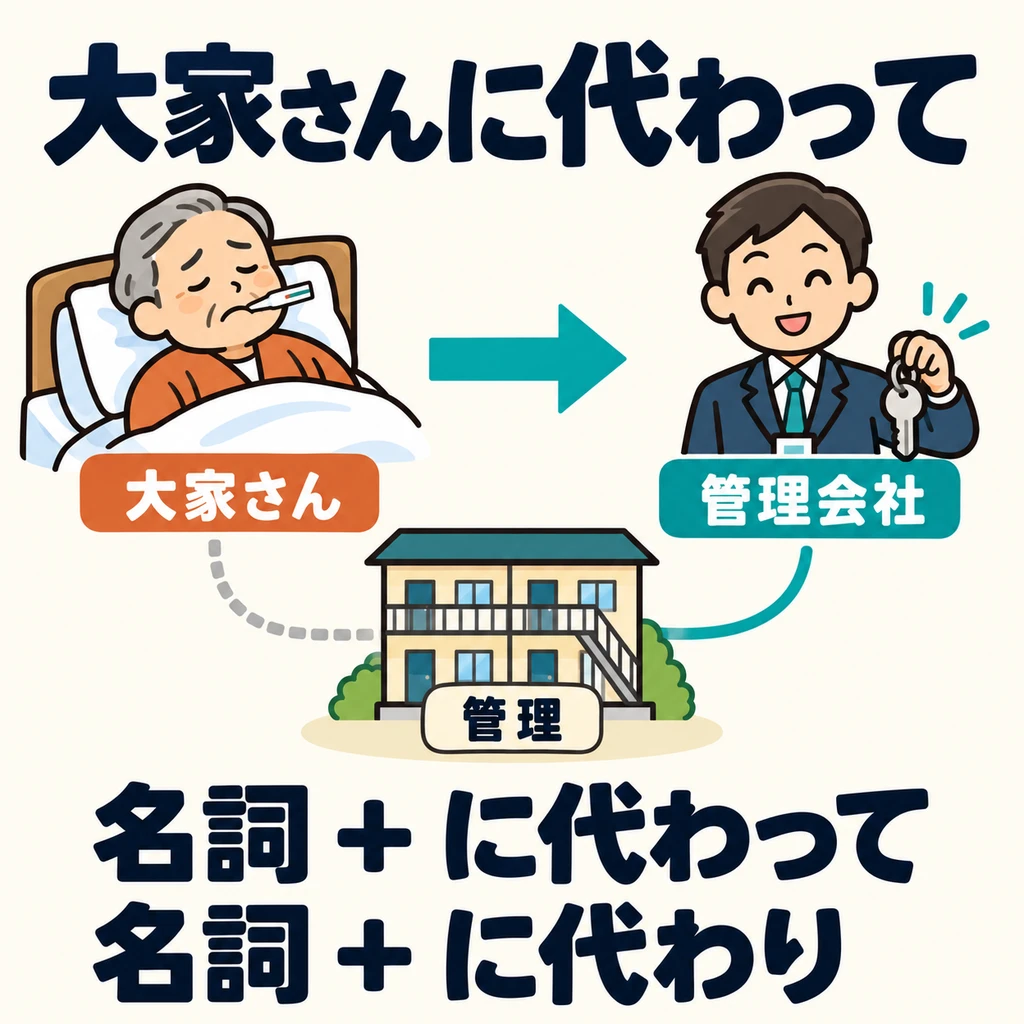
The landlord is ill. Who will manage the building? A management company takes his place and handles the same work.
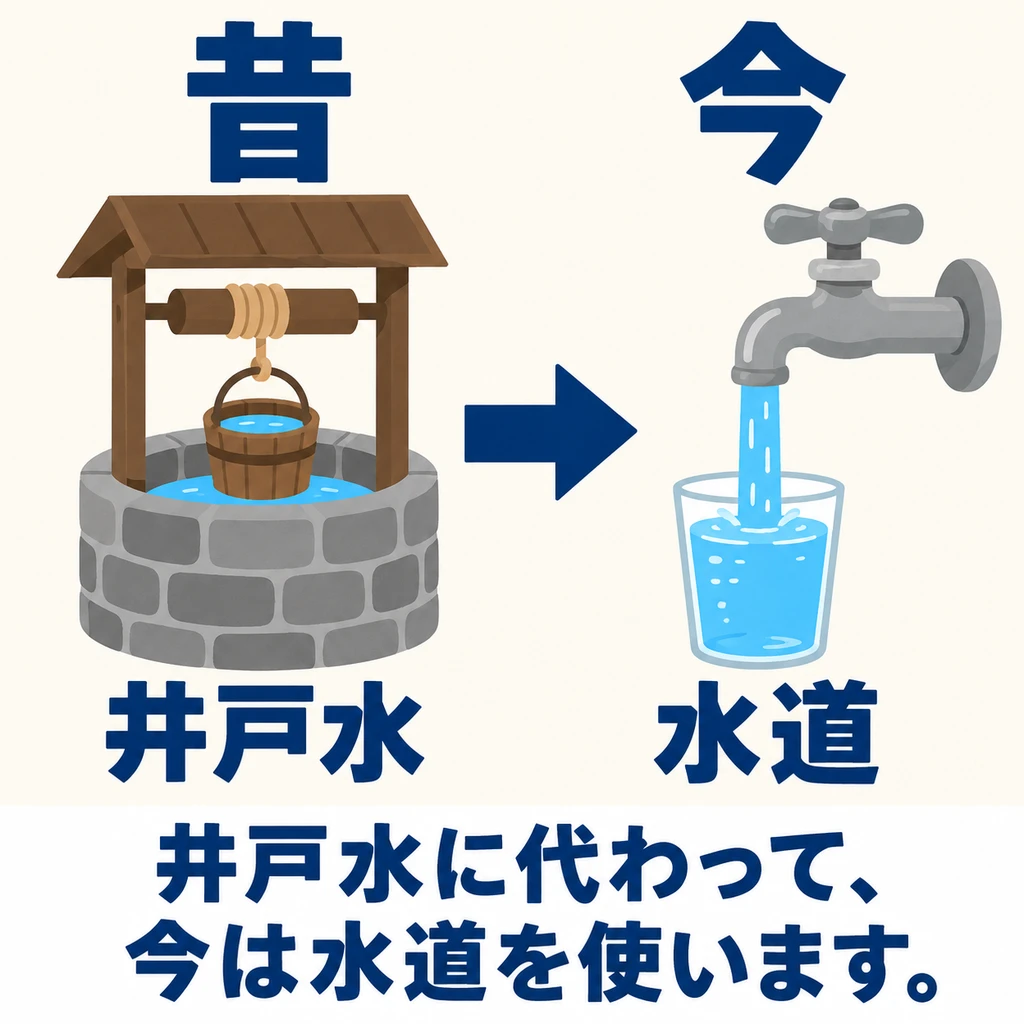
People used well water before and use tap water now: something new replaces something old and serves the same purpose.
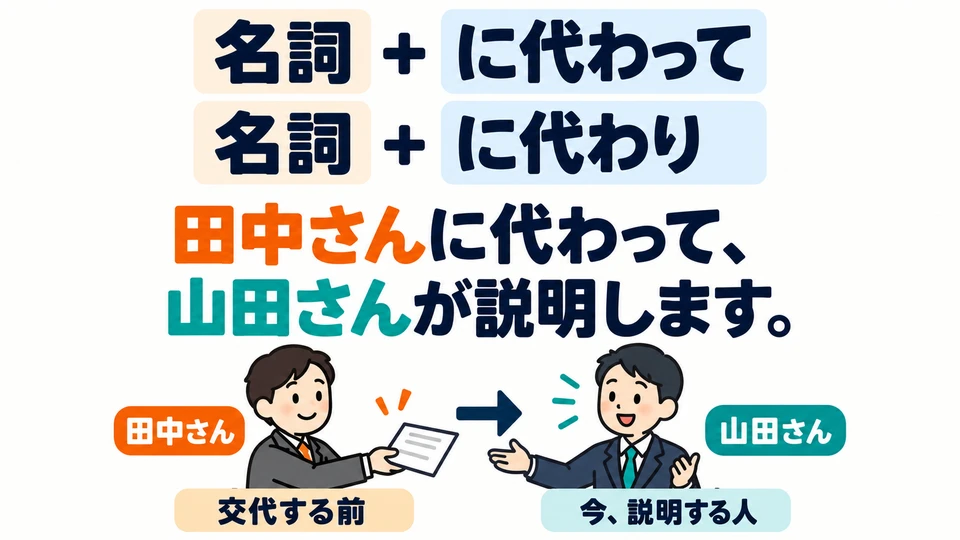
It follows a noun. The noun names the person or thing being replaced; what follows says who or what takes its place.
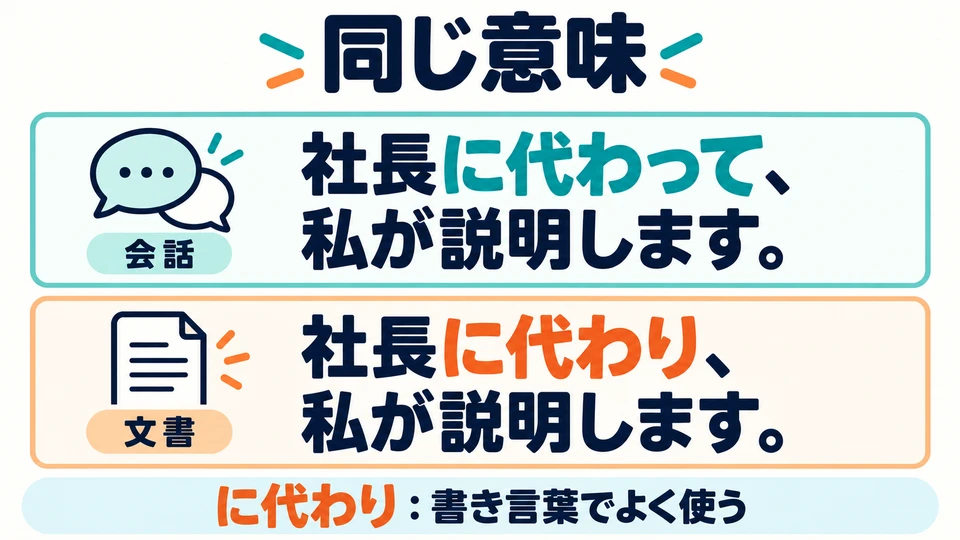
「に代わり」 and 「に代わって」 have the same meaning. The former is more common in writing.
Example sentences
- 昔mukashiのno井戸ido水mizuにni代わっkawaて、te、今imaはwa水道suidouをo
In a conversation

Check yourself
Level 1 · Recognise
Which sentence is correct?
Level 1 · Recognise
Listen and choose the meaning
Level 2 · Build
Put the words in order
Replacing the well water used in the past, many areas now use tap water.
Level 3 · Use
What goes in the blank?
昔の井戸水____、今は水道を使う地域が多いです。
Replacing the old well water, many areas now use tap water.
More grammar in this theme
- 〜に代わって・〜に代わりin place of