JPEDLAB iconJPEDLAB
Save history

Create an account and play

Explore first, then save your progress whenever you are ready. No email address is required.

Start free
Read as articleCards
See the whole course›Intermediate 2›Geography, Climate, and Local Life

Japanese grammar · ≈ JLPT N3 · Intermediate 2

〜に代わって・〜に代わり~ni kawatte / ~ni kawari

in place of

「〜に代わって・〜に代わり」 follows a noun to show who or what replaces it.

Start the interactive lessonIllustrated cards, audio and speaking practice

How it works

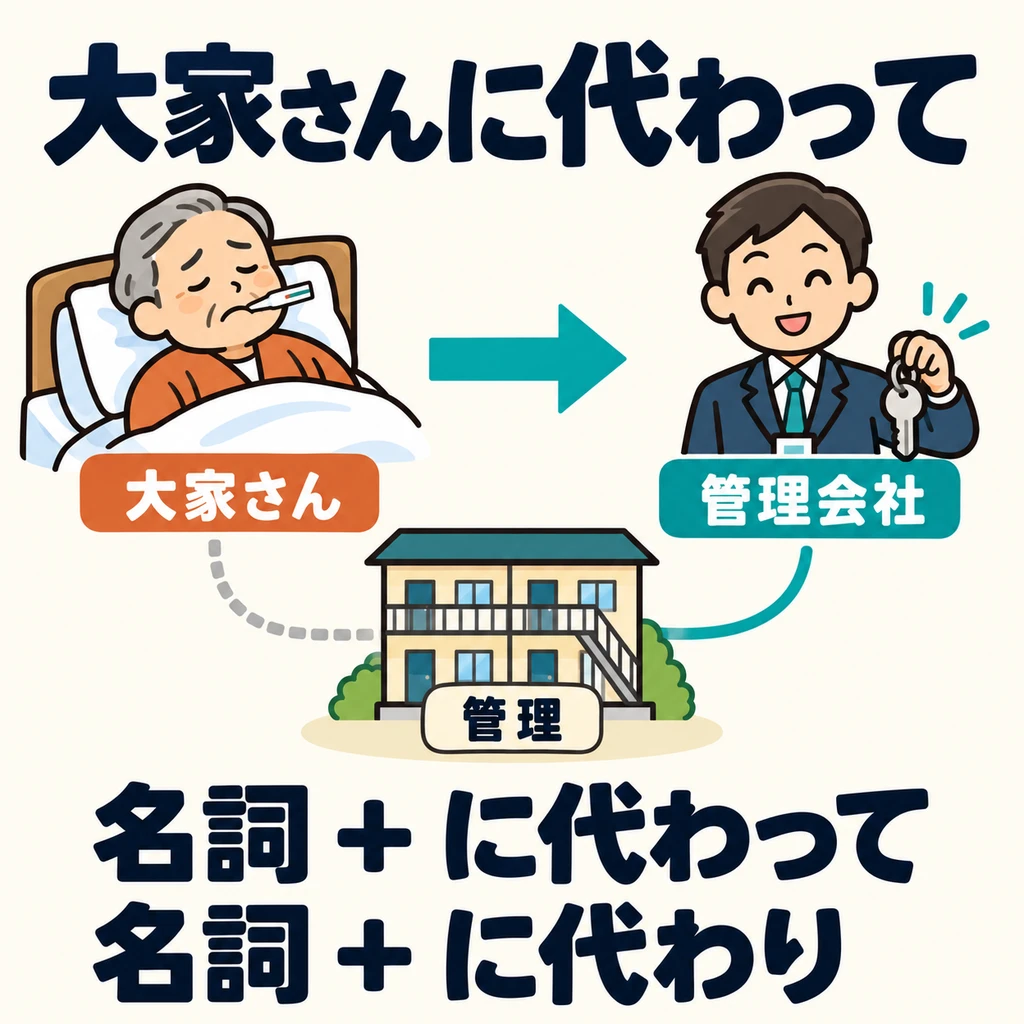
  1. The landlord is ill. Who will manage the building? A management company takes his place and handles the same work.
    The landlord is ill. Who will manage the building? A management company takes his place and handles the same work.

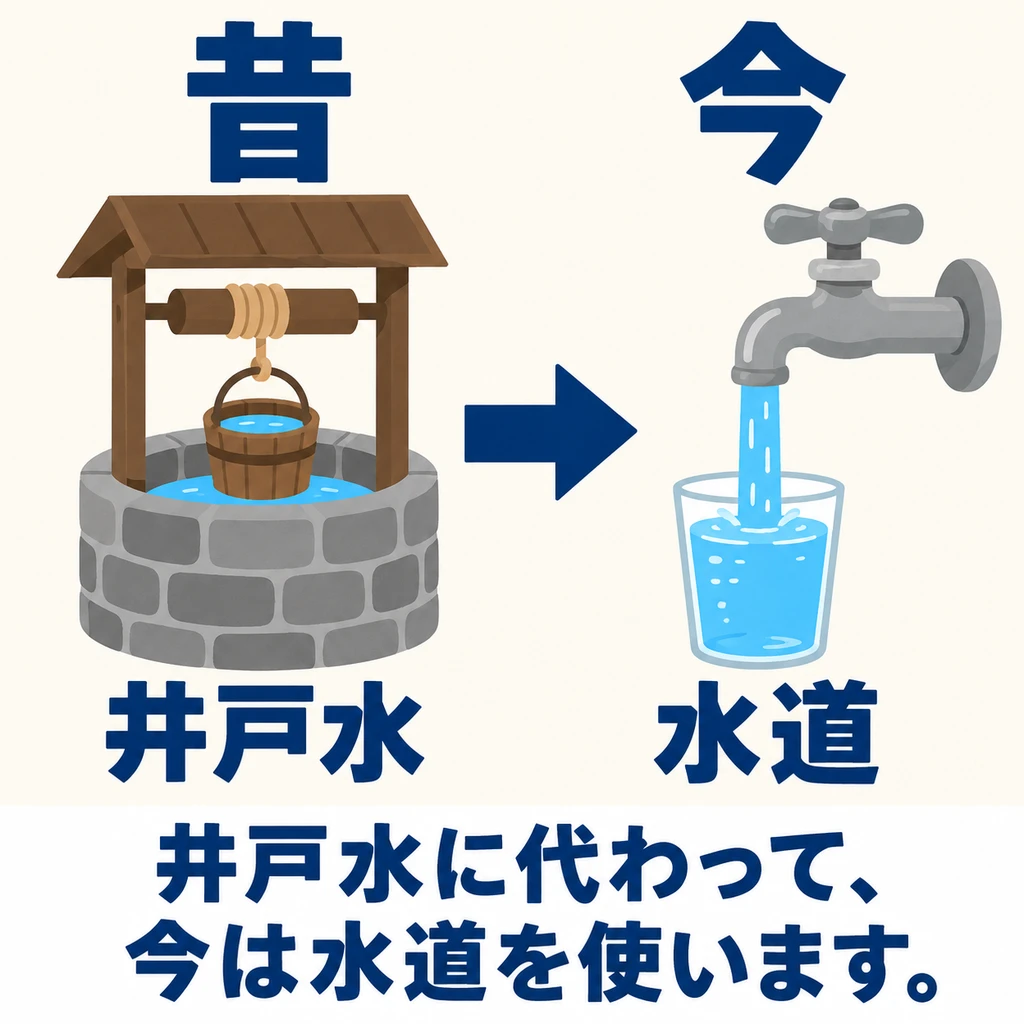
  2. People used well water before and use tap water now: something new replaces something old and serves the same purpose.
    People used well water before and use tap water now: something new replaces something old and serves the same purpose.

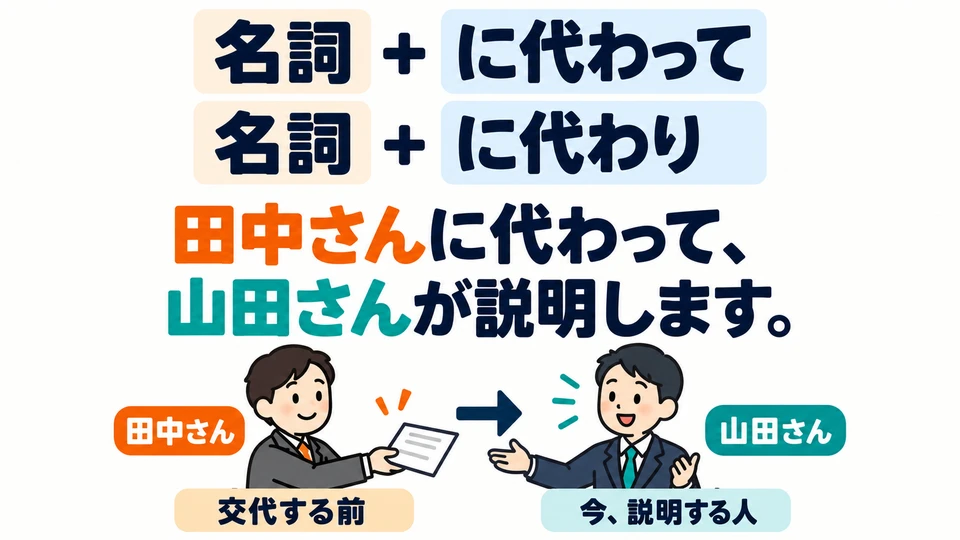
  3. It follows a noun. The noun names the person or thing being replaced; what follows says who or what takes its place.
    It follows a noun. The noun names the person or thing being replaced; what follows says who or what takes its place.

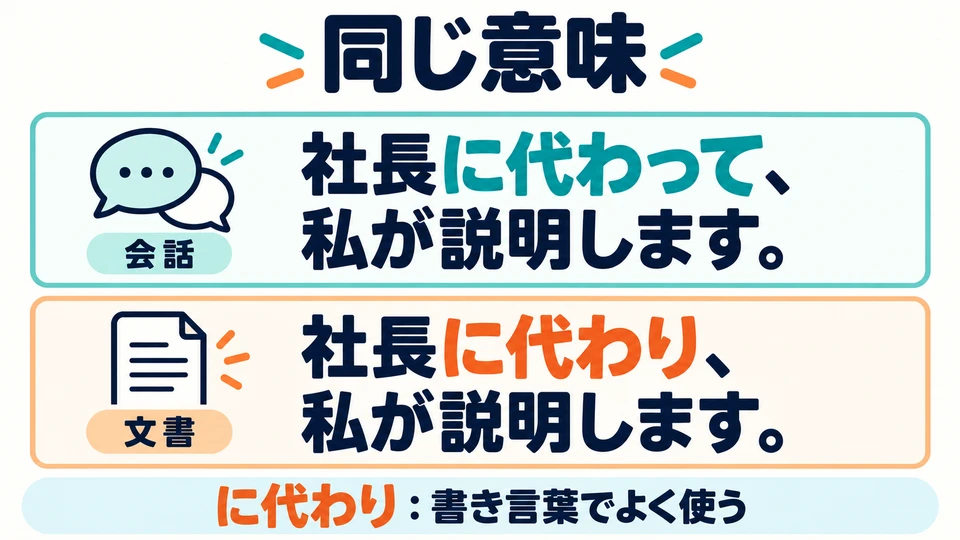
  4. 「に代わり」 and 「に代わって」 have the same meaning. The former is more common in writing.

    「に代わり」 and 「に代わって」 have the same meaning. The former is more common in writing.

Example sentences

  • 昔むかしmukashiのno井戸いどido水みずmizuにni代わっかわっkawaて、te、今いまimaはわwa水道すいどうsuidouをo

In a conversation

Check yourself

  1. Level 1 · Recognise

    Which sentence is correct?

  2. Level 1 · Recognise

    Listen and choose the meaning

  3. Level 2 · Build

    Put the words in order

    Replacing the well water used in the past, many areas now use tap water.

  4. Level 3 · Use

    What goes in the blank?

    昔の井戸水____、今は水道を使う地域が多いです。

    Replacing the old well water, many areas now use tap water.

More grammar in this theme

  • 〜に代わって・〜に代わりin place of

Keep practising

Test your Japanese vocabulary12 adaptive questions, freeCheck your pronunciationRead aloud and get a scorePractise verb forms10-question conjugation quizSee the whole courseGrammar, vocabulary and quizzes by theme
使うつかうtsukau
地域ちいきchiiki
がga
多いです。おおいです。ooidesu。

Many areas now use tap water instead of the well water of the past.

  • 「最近、さいきん、このアパートあぱーとの大家さんおおやさんをあまり見みかけませんね。」ね。

    I haven't seen the landlord of this apartment much lately.

  • 「ええ、ええ、病気びょうきの大家さんおおやさんに代わっかわって、今いまはわ管理かんり会社かいしゃが建物たてものの管理かんりを行っおこなっています。」います。

    Yes, in place of the sick landlord, a management company is now managing the building.

  • 最近さいきんsaikinは、わ、wa、昔むかしmukashiのno木きkiのno窓まどmadoにni代わっかわっkawaて、te、断熱性だんねつせいdannetsuseiのno高いたかいtakai窓まどmadoがga使われつかわれtsukawareてteいます。imasu。

    Recently, highly insulated windows are being used instead of the wooden windows of the past.

  • 「そうそうなんですか。何なんか不具合ふぐあいがあったら、管理かんり会社かいしゃに連絡れんらくすればいいんですね。」ね。

    Oh, really? So if there is any problem, I should just contact the management company, right?

  • 〜に囲まれている・〜に囲まれたbe surrounded by
    〜が〜を占める・〜が占めるaccount for a share
    〜がちoften tends to
    〜に比べてcompared with
    〜に備えてin preparation for
    〜のような・〜のようにexamples such as
    〜としてin the role of
    〜に限るnothing beats
    〜を中心にcentered around
    〜をはじめとしてincluding ... as a leading example
    〜を通して・〜を通じてthrough a means
    〜ことからbased on the fact
    〜といえばspeaking of
    〜というとspeaking of; brings to mind
    Previous〜に備えて
    Next〜のような・〜のように