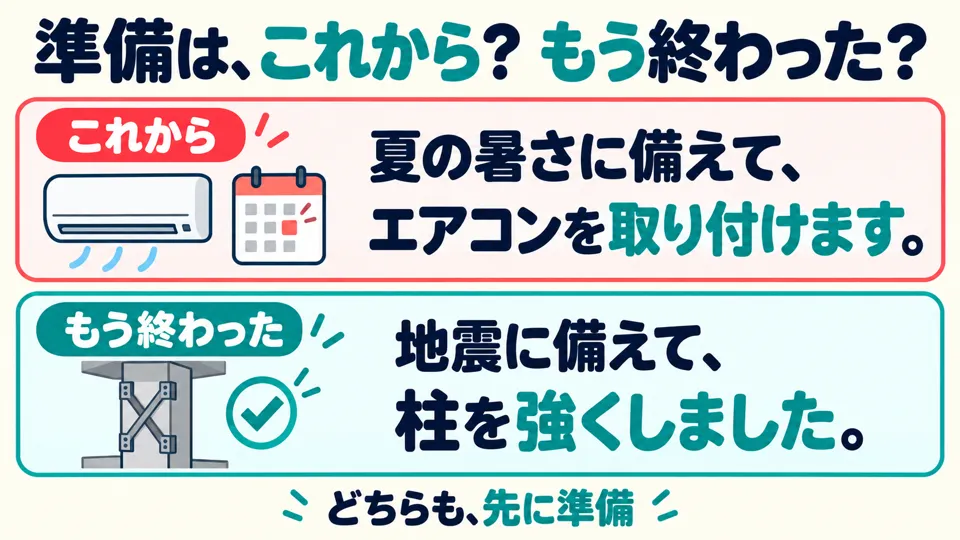
Lesson notes · ≈ JLPT N2 · Intermediate 2
〜に備えて~ni sonaete
in preparation for
Use 「〜に備えて」 after a noun for preparations made before a possible future situation.
How it works
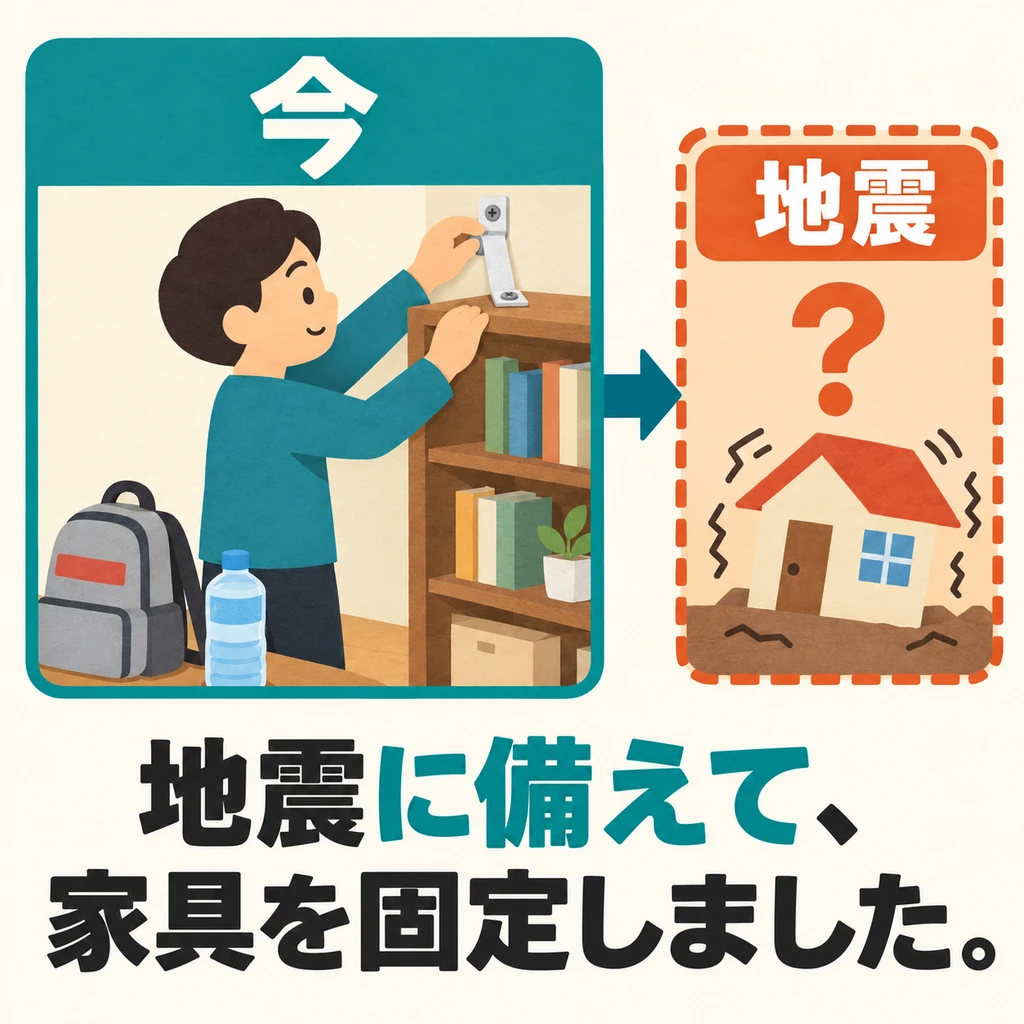
The earthquake has not happened yet. Why secure the furniture now? Look at the picture: which comes first, the preparation or the earthquake?
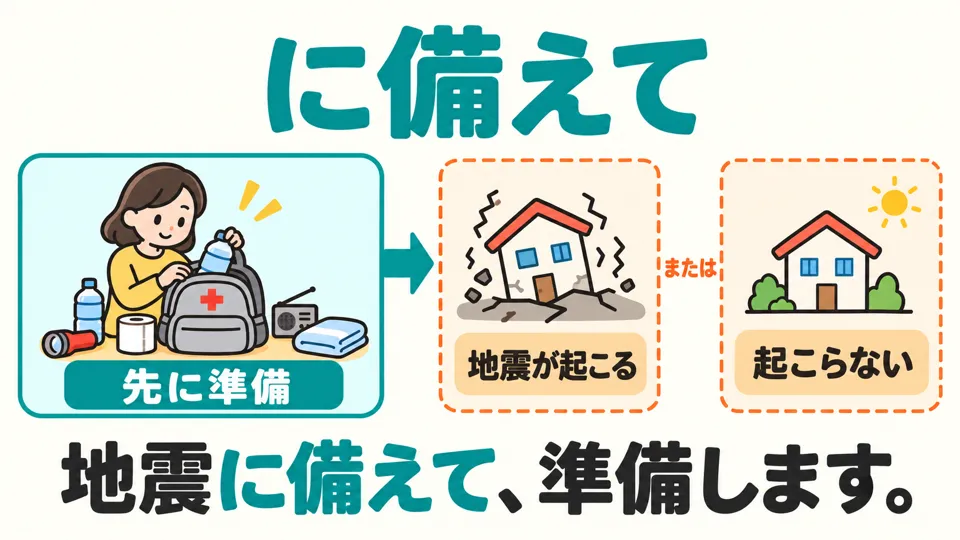
「に備えて」 means preparing in advance for a future situation. That situation may not actually occur.
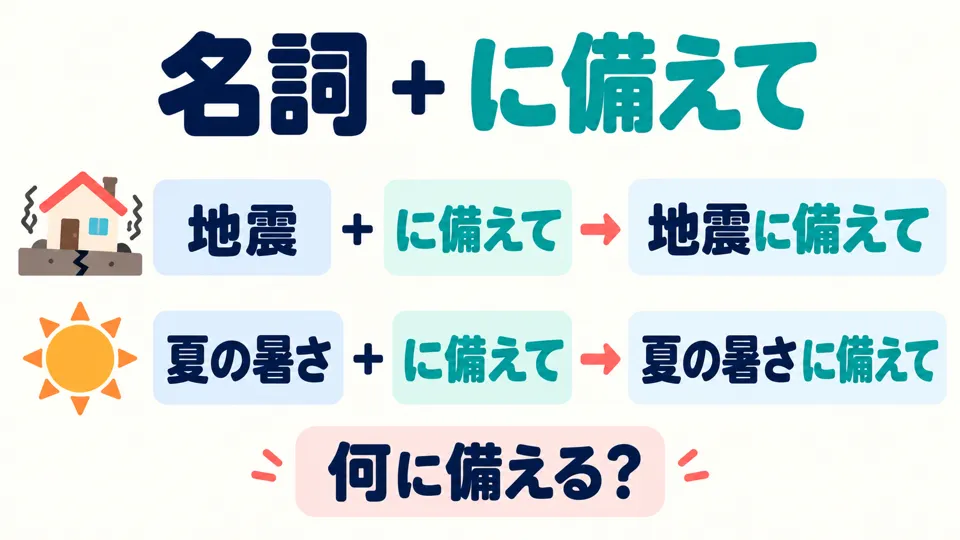
It follows a noun, as in 「地震に備えて」. The noun names the situation you are preparing for.
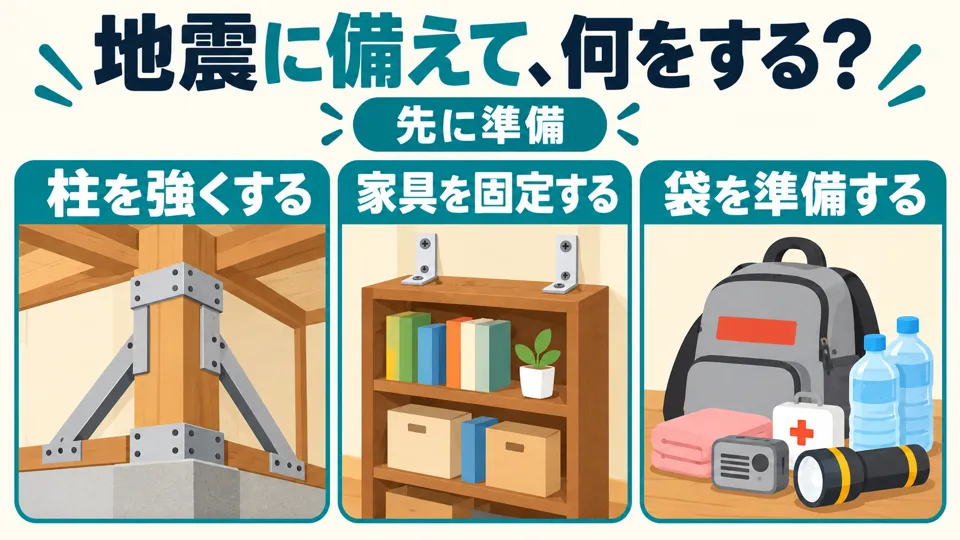
The second half states the preparations: reinforcing pillars, securing furniture, or packing an emergency bag—all to prepare for an earthquake.
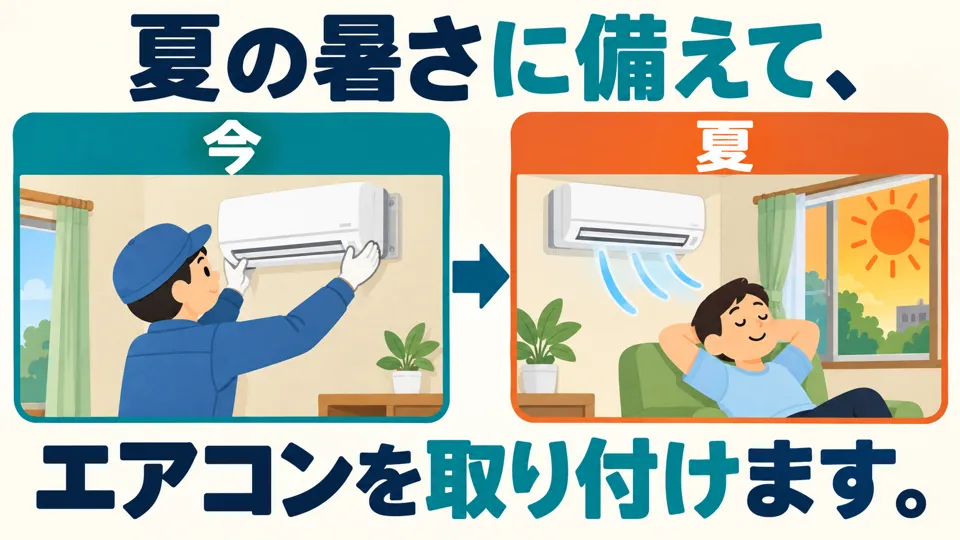
It is not limited to disasters. You can also use 「に備えて」 for installing an air conditioner ahead of the summer heat.