JPEDLAB iconJPEDLAB
Save history

Create an account and play

Explore first, then save your progress whenever you are ready. No email address is required.

Start free
Read as articleCards
1/10

Look at the arrows: when learning about the town, what roles do the materials and conversation play? Both are bridges to information.

››

Lesson notes · ≈ JLPT N3 · Intermediate 2

〜を通して・〜を通じて~o tooshite / ~o tsuujite

through a means

「〜を通して・〜を通じて」 follows a noun for a means that leads to learning or understanding.

How it works
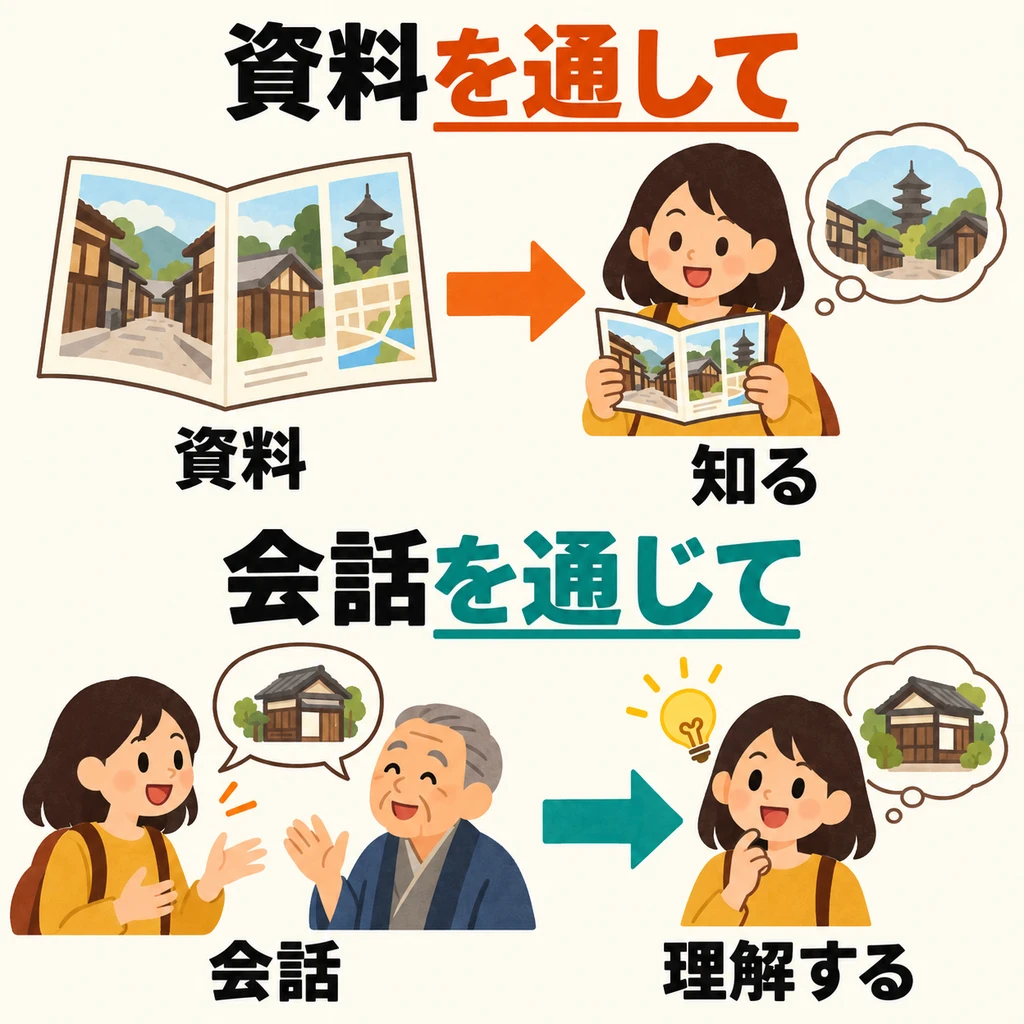
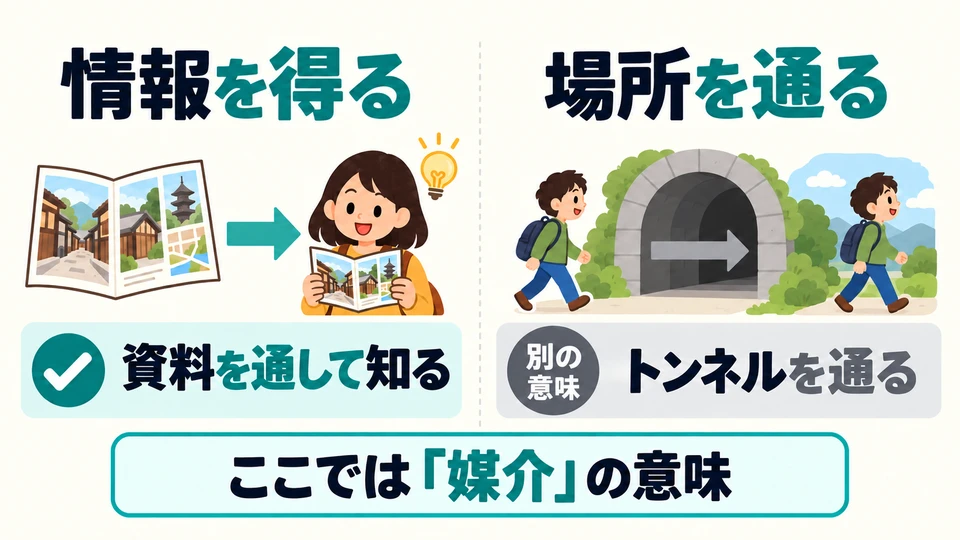
  1. Look at the arrows: when learning about the town, what roles do the materials and conversation play? Both are bridges to information.
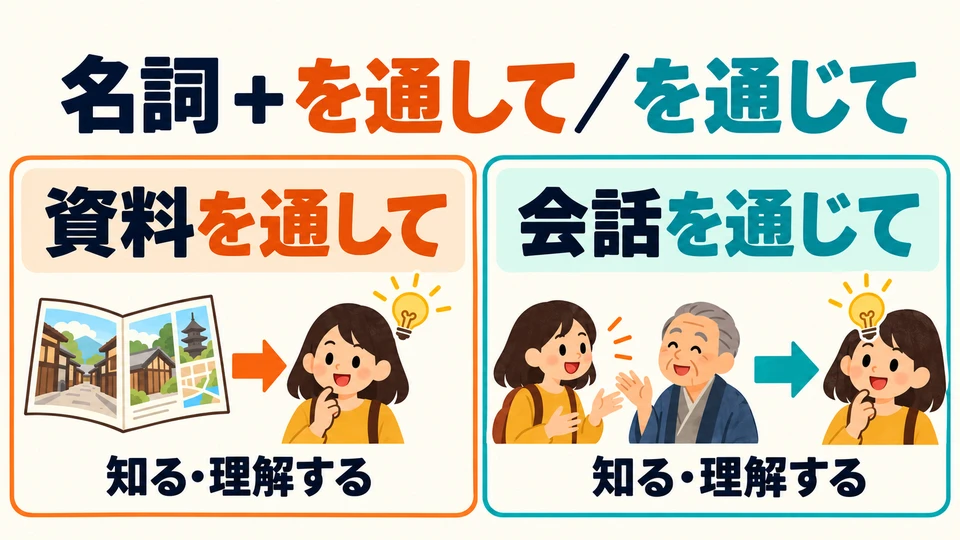
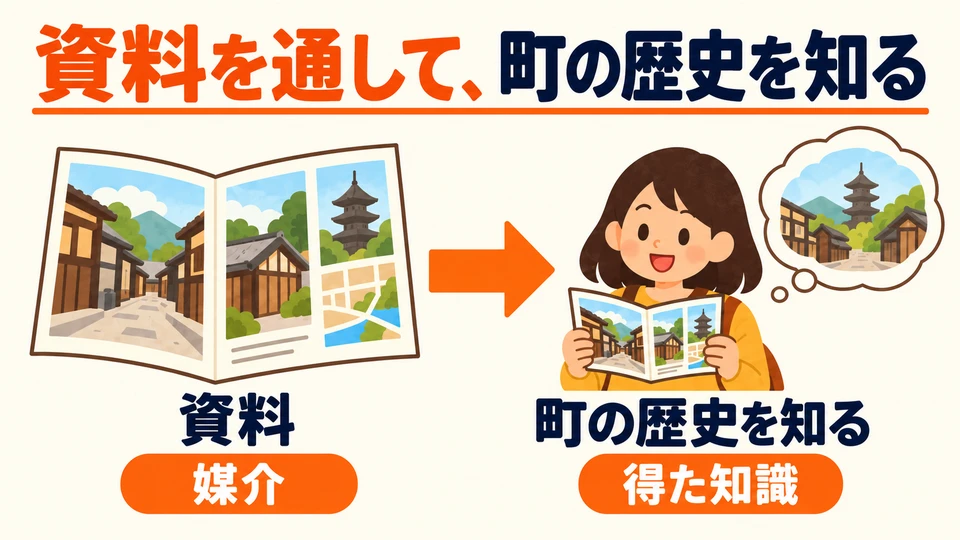
    Look at the arrows: when learning about the town, what roles do the materials and conversation play? Both are bridges to information.
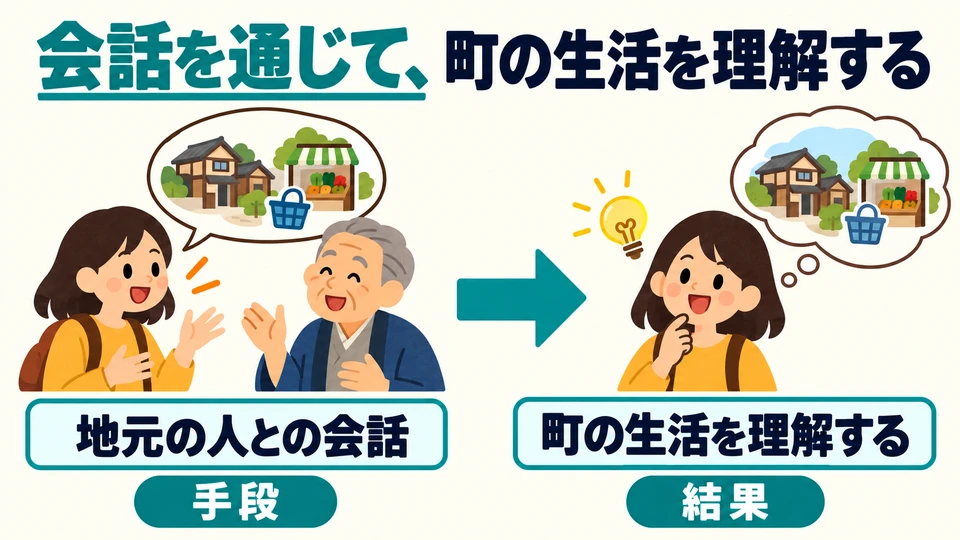
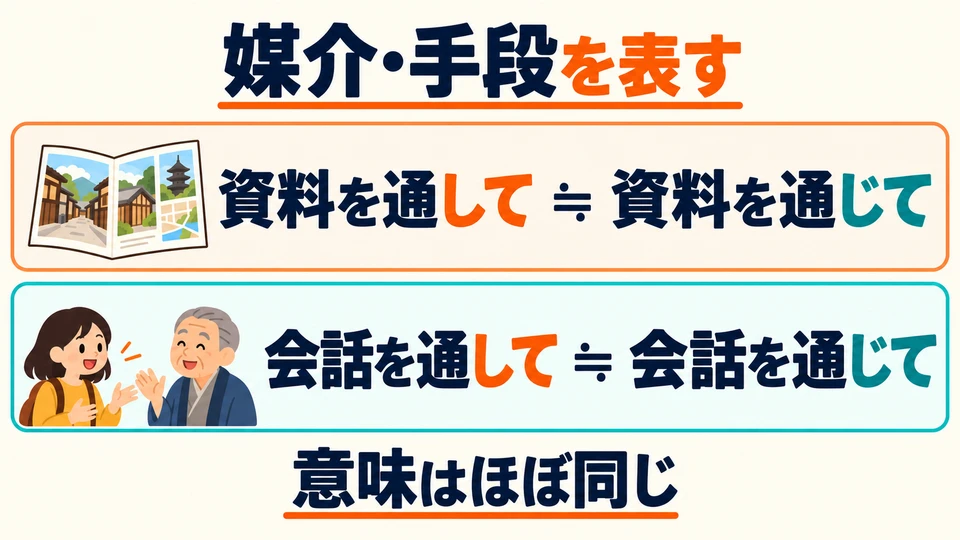
  2. Add 「を通して/を通じて」 after a noun to express doing or achieving something through a person, thing, or means.

Add 「を通して/を通じて」 after a noun to express doing or achieving something through a person, thing, or means.

  • The materials provide historical information. Here, they are the medium for gaining knowledge, and the town’s history is what is learned.

    The materials provide historical information. Here, they are the medium for gaining knowledge, and the town’s history is what is learned.

  • After talking with a local resident, the learner understands life in the town. Conversation is the means, and understanding that life is the result.

    After talking with a local resident, the learner understands life in the town. Conversation is the means, and understanding that life is the result.

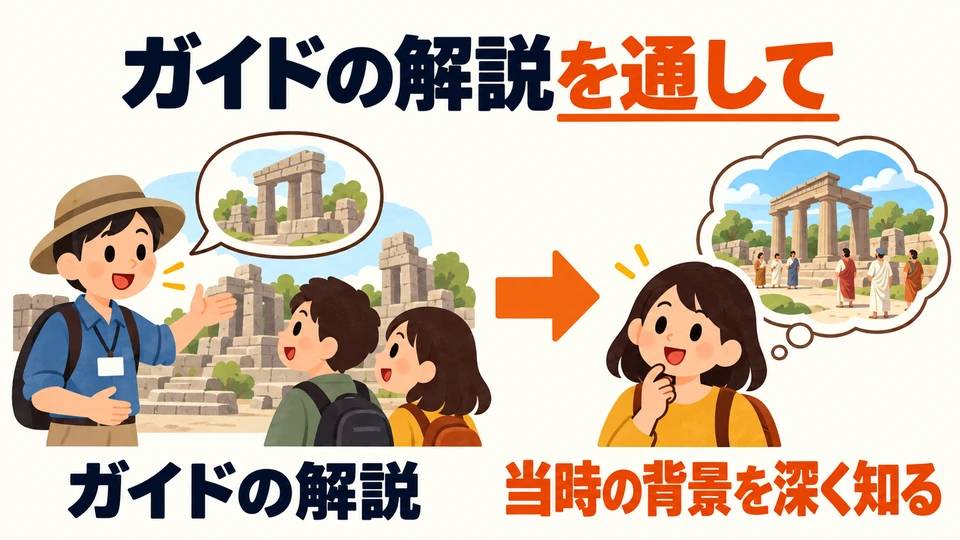
  • To learn more about the background of a historical site, you can use a guide’s explanation. The explanation is the medium that leads to understanding.

    To learn more about the background of a historical site, you can use a guide’s explanation. The explanation is the medium that leads to understanding.

  • When expressing a medium or means, the two forms have essentially the same meaning. Both can follow 「資料」 and 「会話」 in the picture.

    When expressing a medium or means, the two forms have essentially the same meaning. Both can follow 「資料」 and 「会話」 in the picture.

  • Here, “through” means obtaining information by means of a medium, rather than physically passing through a place or object.

    Here, “through” means obtaining information by means of a medium, rather than physically passing through a place or object.

  • Example sentences

    • 観光かんこうkankou案内所あんないしょannaishoのno資料しりょうshiryouをo通しとおしtooshiて、te、町まちmachiのno歴史れきしrekishiをo知るしるshiruことkotoがgaできました。dekimashita。

      Through the materials at the tourist information center, I was able to learn about the history of the town.

    • 地元じもとjimotoのno人ひとhitoとtoのno会話かいわkaiwaをo通じつうじtsuujiて、te、このkono町まちmachiのno

    In a conversation

    • A
      この遺跡いせきの歴史れきしについて、もっと詳しくくわしく知りたいですしりたいですね。

      A: I'd like to know more about the history of these ruins.

    • B
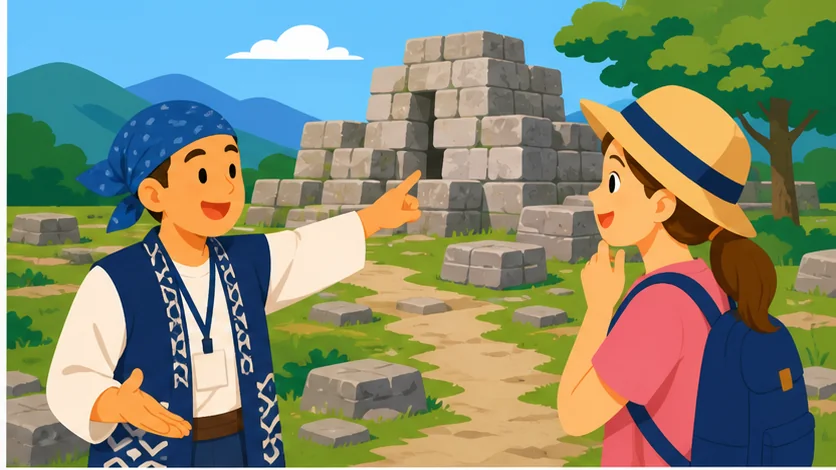
      それなら、現地げんちガイドがいどの解説かいせつを通しとおして、当時とうじの背景はいけいを深くふかく知るしることができますよ。

      B: In that case, you can deeply understand the background of those days through the local guide's explanations.

    • A
      なるほど。では、わ、ガイドがいどツアーつあーに申しもうし込んこんでみましょう。

      A: I see. Let's sign up for a guided tour, then.

    Check yourself

    1. Level 1 · Recognise

      Which sentence is correct?

    2. Level 1 · Recognise

      Listen and choose the meaning

    3. Level 2 · Build

      Put the words in order

      Through the materials at the tourist information center, I was able to learn about the town's history.

    4. Level 3 · Use

      What goes in the blank?

      観光案内所の資料____、町の歴史を知ることができました。

      Through the tourist information center's materials, I was able to learn about the town's history.

    More grammar in this theme

    • 〜に囲まれている・〜に囲まれたbe surrounded by
    • 〜が〜を占める・〜が占めるaccount for a share
    • 〜がちoften tends to
    • 〜に比べてcompared with
    • 〜に備えてin preparation for
    • 〜に代わって・〜に代わりin place of
    • 〜のような・〜のようにexamples such as
    • 〜としてin the role of
    • 〜に限るnothing beats
    • 〜を中心にcentered around
    • 〜をはじめとしてincluding ... as a leading example
    • 〜を通して・〜を通じてthrough a means
    • 〜ことからbased on the fact
    • 〜といえばspeaking of
    • 〜というとspeaking of; brings to mind
    Previous〜をはじめとしてNext〜ことから

    Keep practising

    Test your Japanese vocabulary12 adaptive questions, freeCheck your pronunciationRead aloud and get a scorePractise verb forms10-question conjugation quizSee the whole courseGrammar, vocabulary and quizzes by theme
    See the whole course
    Intermediate 2
    Geography, Climate, and Local Life
    生活せいかつ
    seikatsu
    をo
    理解りかいrikai
    できました。dekimashita。

    Through conversations with local people, I was able to understand life in this town.