Japanese grammar · ≈ JLPT N2 · Intermediate 2
〜を背にして~ o se ni shite
with something behind you
Use 〜を背にして after a landmark to set your orientation with it behind you before giving directions.
How it works
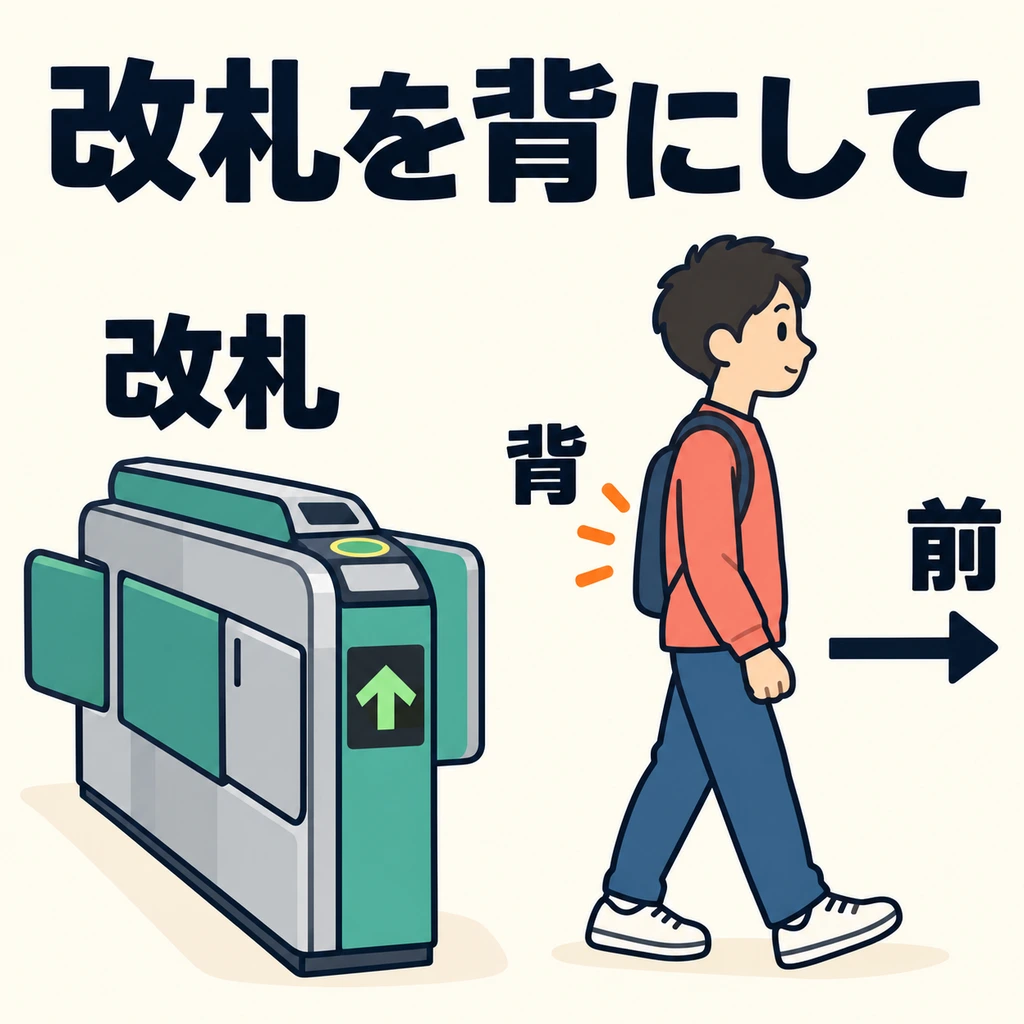
When asking for directions, first establish which way you are facing. In the picture, is the ticket gate in front of the person or behind them?
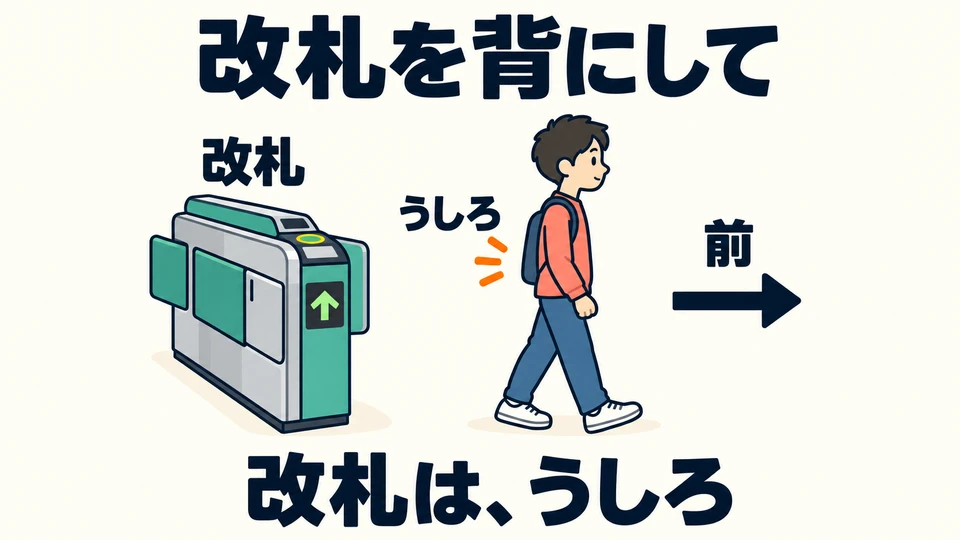
Turn your back to the ticket gate so it is behind you. That is what 「を背にして」 means in this picture.
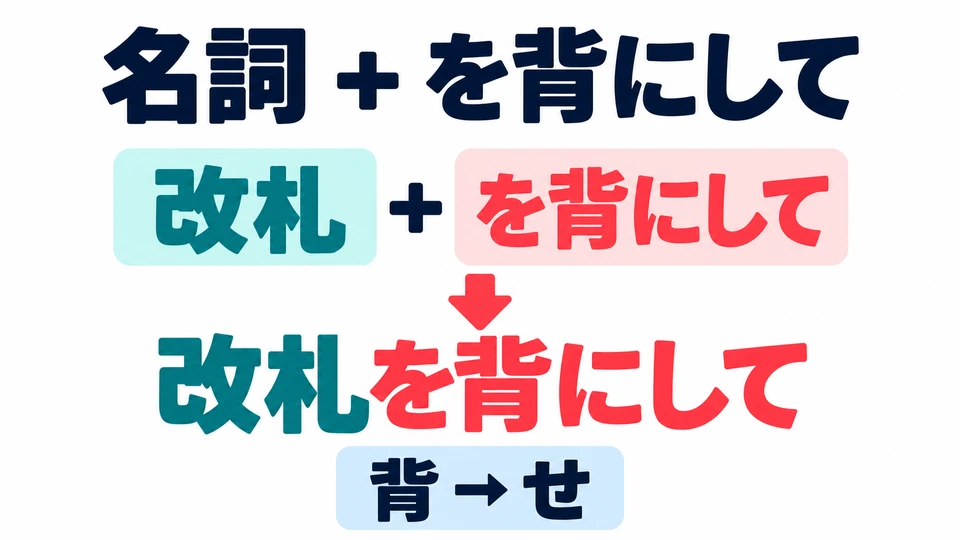
Put a noun before it: 改札+を背にして. In this pattern, 「背」 is read 「せ」.
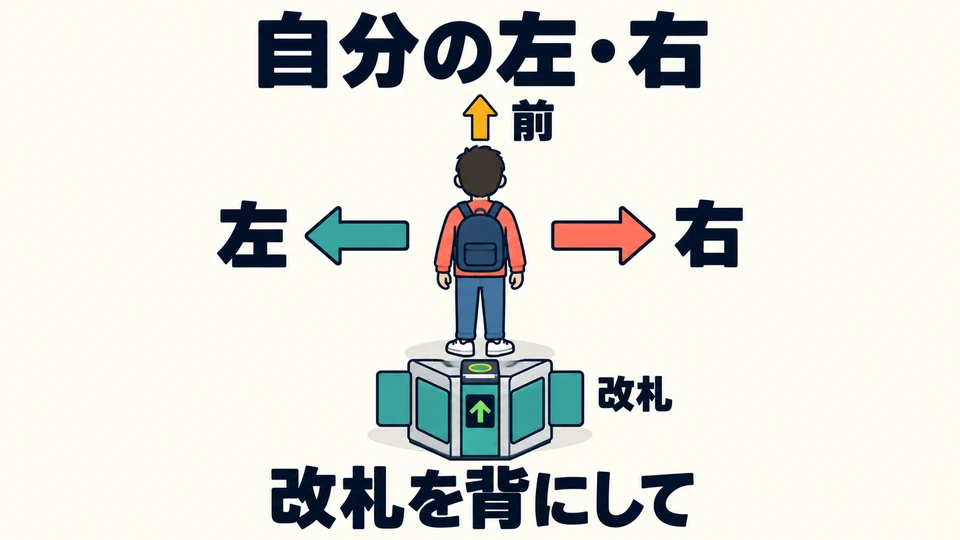
Left and right are based on the direction you face with your back to the landmark, not on the landmark’s own left and right.
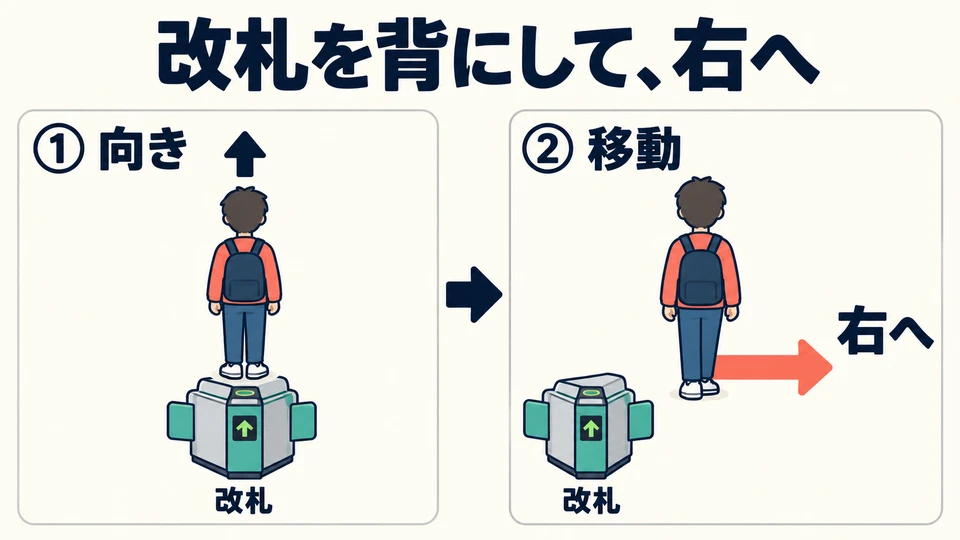
With your back to the ticket gate, go right: the pattern first sets your orientation, then gives a specific movement instruction.
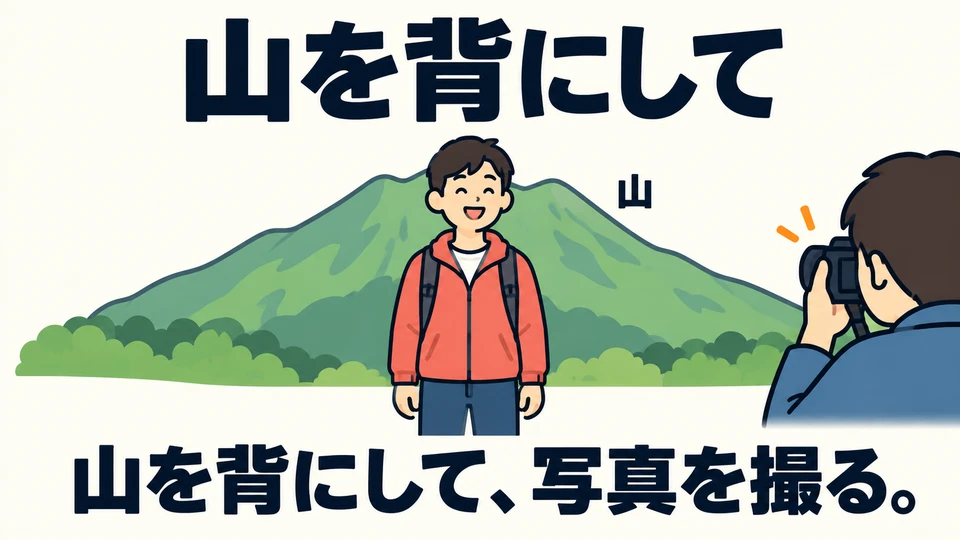
It can also describe scenery behind someone as a backdrop. It is not limited to asking for or giving directions.
Example sentences
- 駅ekiのno改札kaisatsuをo背seにniしshiて、te、右migiへe進んsusun
In a conversation
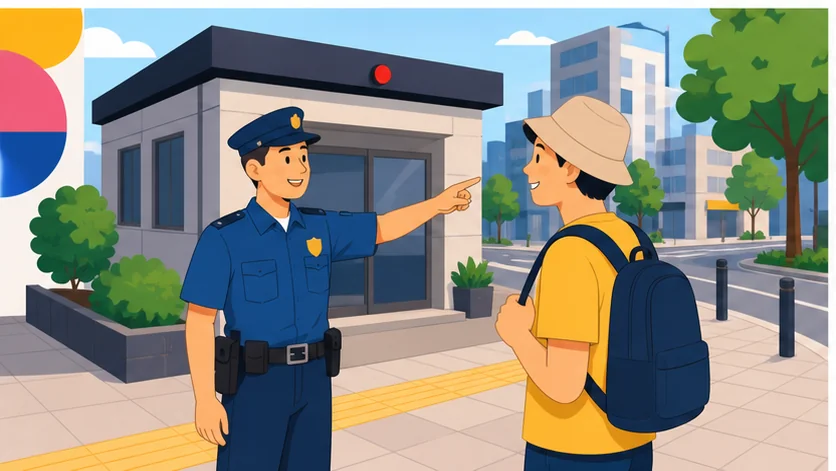
Check yourself
Level 1 · Recognise
Which sentence is correct?
Level 1 · Recognise
Listen and choose the meaning
Level 2 · Build
Put the words in order
With the building at the starting point behind you, please go to the right.
Level 3 · Use
What goes in the blank?
駅の改札を____にして、右へ進んでください。
With your back to the station ticket gate, proceed to the right.
More grammar in this theme
- 〜を背にしてwith something behind you