JPEDLAB iconJPEDLAB
Save history

Create an account and play

Explore first, then save your progress whenever you are ready. No email address is required.

Start free
Read as articleCards
See the whole course›Intermediate 2›Daily Information and Facility Use

Japanese grammar · ≈ JLPT N2 · Intermediate 2

〜を背にして~ o se ni shite

with something behind you

Use 〜を背にして after a landmark to set your orientation with it behind you before giving directions.

Start the interactive lessonIllustrated cards, audio and speaking practice

How it works

  1. When asking for directions, first establish which way you are facing. In the picture, is the ticket gate in front of the person or behind them?
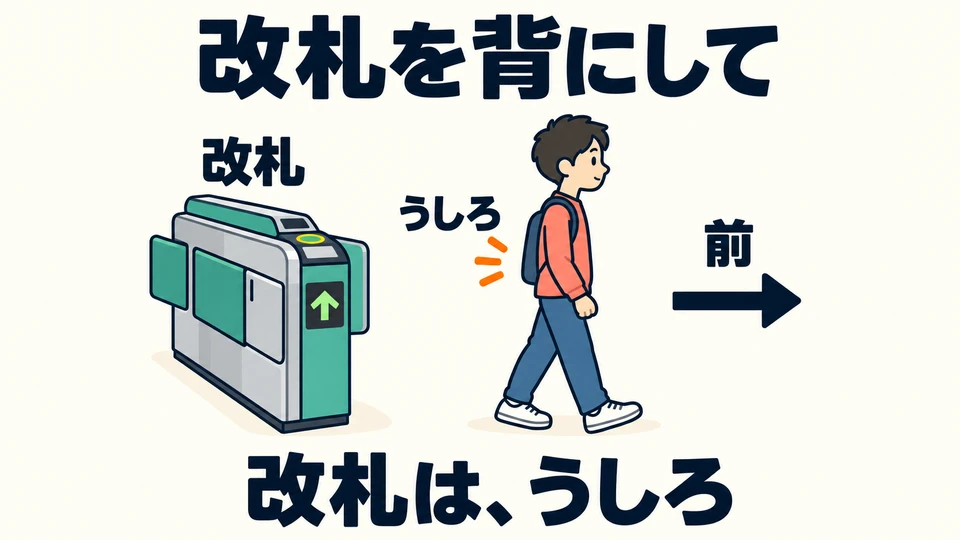
    When asking for directions, first establish which way you are facing. In the picture, is the ticket gate in front of the person or behind them?

  2. Turn your back to the ticket gate so it is behind you. That is what 「を背にして」 means in this picture.
    Turn your back to the ticket gate so it is behind you. That is what 「を背にして」 means in this picture.

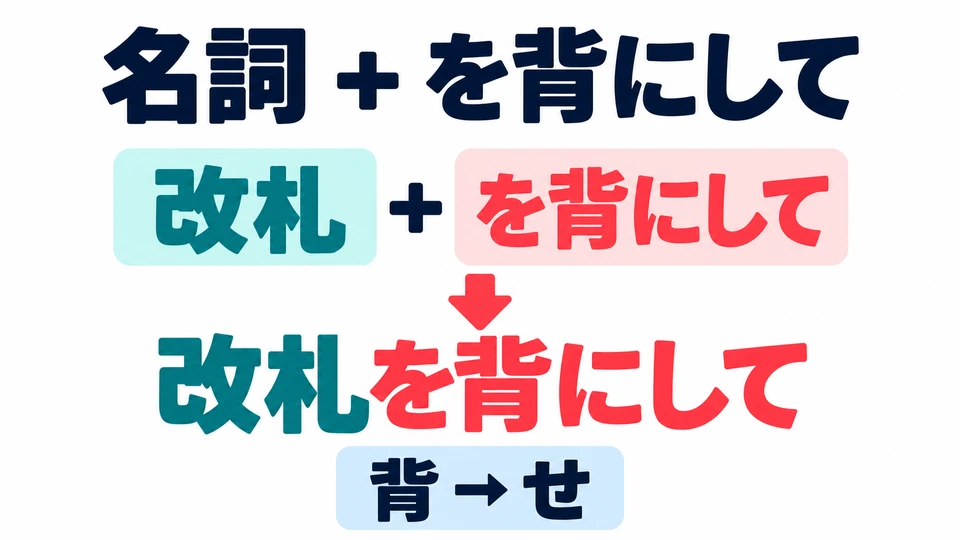
  3. Put a noun before it: 改札+を背にして. In this pattern, 「背」 is read 「せ」.
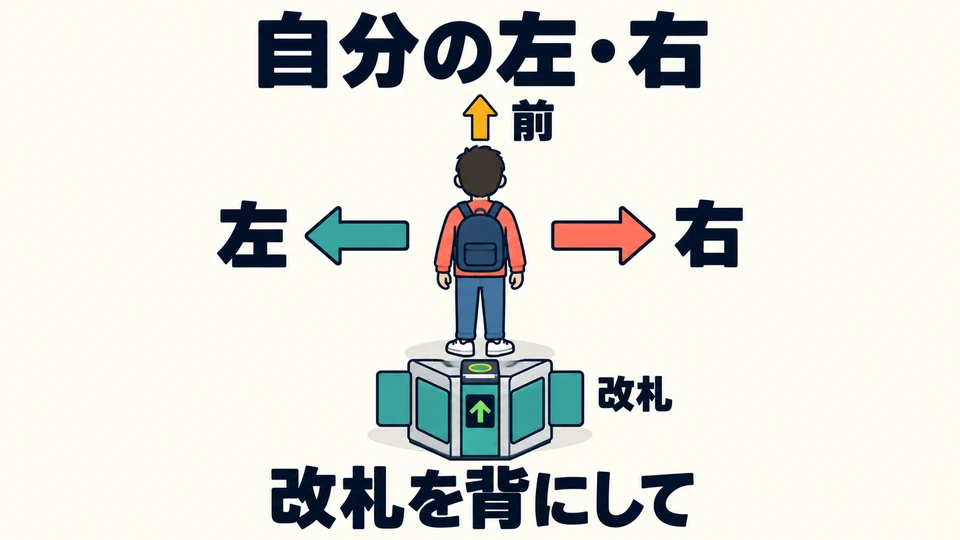
    Put a noun before it: 改札+を背にして. In this pattern, 「背」 is read 「せ」.

  4. Left and right are based on the direction you face with your back to the landmark, not on the landmark’s own left and right.
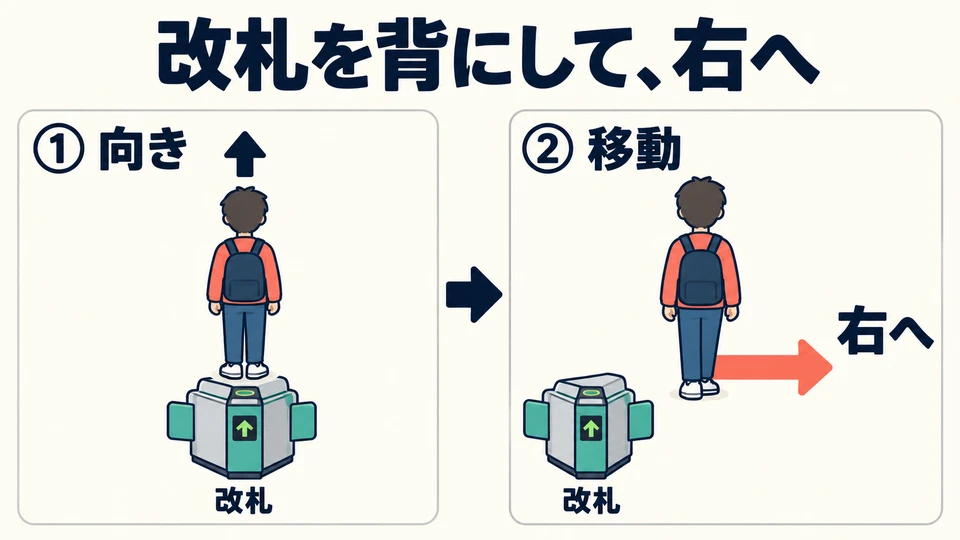
    Left and right are based on the direction you face with your back to the landmark, not on the landmark’s own left and right.

  5. With your back to the ticket gate, go right: the pattern first sets your orientation, then gives a specific movement instruction.
    With your back to the ticket gate, go right: the pattern first sets your orientation, then gives a specific movement instruction.

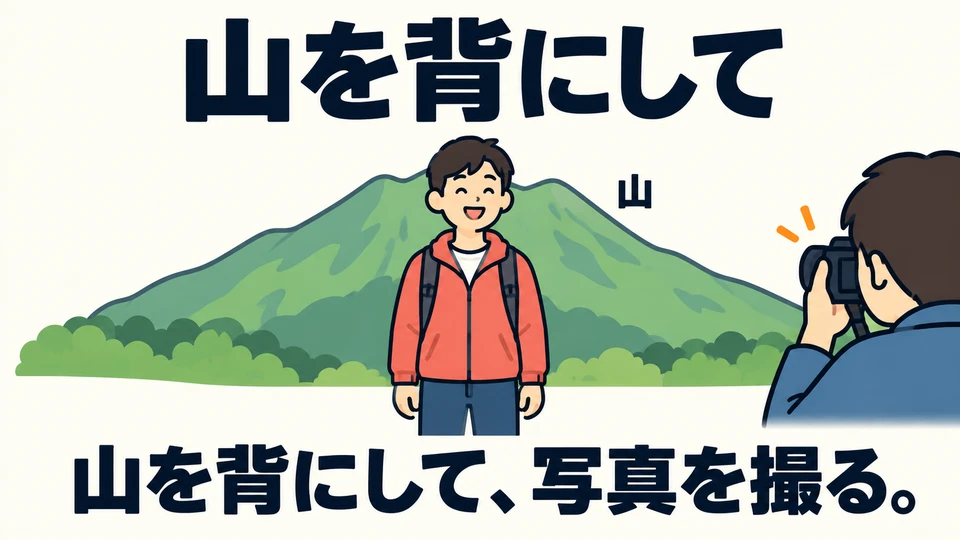
  6. It can also describe scenery behind someone as a backdrop. It is not limited to asking for or giving directions.

    It can also describe scenery behind someone as a backdrop. It is not limited to asking for or giving directions.

Example sentences

  • 駅えきekiのno改札かいさつkaisatsuをo背せseにniしshiて、te、右みぎmigiへえe進んすすんsusun

In a conversation

Check yourself

  1. Level 1 · Recognise

    Which sentence is correct?

  2. Level 1 · Recognise

    Listen and choose the meaning

  3. Level 2 · Build

    Put the words in order

    With the building at the starting point behind you, please go to the right.

  4. Level 3 · Use

    What goes in the blank?

    駅の改札を____にして、右へ進んでください。

    With your back to the station ticket gate, proceed to the right.

More grammar in this theme

  • 〜を背にしてwith something behind you

Keep practising

Test your Japanese vocabulary12 adaptive questions, freeCheck your pronunciationRead aloud and get a scorePractise verb forms10-question conjugation quizSee the whole courseGrammar, vocabulary and quizzes by theme
で
de
ください。kudasai。

With your back to the station ticket gate, please go to the right.

  • A
    すみません、現在げんざい地ちから目的もくてき地ちまでの行き方いきかたを教えおしえてくれませんか。

    A: Excuse me, could you tell me how to get to the destination from my current location?

  • B
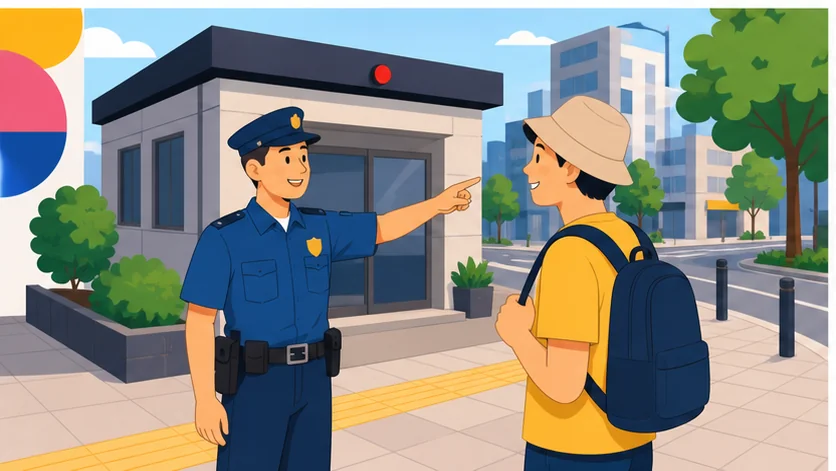
    はい、この交番こうばんを背せにして、左手ひだりて側がわにまっすぐ進んすすんでください。

    B: Sure, with your back to this police box, please go straight to your left.

  • 市しshi役所やくしょyakushoをo背せseにniしshiて、te、まっすぐmassugu歩くあるくarukuとto交差こうさkousa点てんtenがgaあります。arimasu。

    With your back to the city hall, walk straight and there will be an intersection.

  • A
    交番こうばんを背せにして左ひだりですね、わかりました。ありがとうございます。

    A: Left with my back to the police box, right? I see. Thank you very much.

  • お・ご〜です/でしょうrespectful description or question
    〜場合in the case that
    〜ないことには〜ないunless, it cannot happen
    〜たいことがあるんですがgentle topic opener
    意向形+とするtry or be about to
    〜みたいなんですが・〜ようなんですがtentative problem explanation
    〜ていただきたいんですがpolite request for help
    〜にはrequirements to reach a goal
    〜にかかわらずregardless of a condition
    〜次第/〜次第でdepending on; as soon as
    〜途中で・〜途中にduring a journey or activity
    〜を〜としてuse or treat as
    〜に沿って・〜に沿う・〜に沿ったalong; in accordance with
    Previous〜を〜として
    Next〜に沿って・〜に沿う・〜に沿った