JPEDLAB iconJPEDLAB
Save history

Create an account and play

Explore first, then save your progress whenever you are ready. No email address is required.

Start free
Read as articleCards
See the whole course›Intermediate 1›Dining and Shopping Information

Japanese grammar · ≈ JLPT N2 · Intermediate 1

〜こそ・〜からこそ~koso / ~kara koso

emphasis and precise reason

Use 「〜こそ」 to single out something important and 「〜からこそ」 to stress that it is precisely the reason.

Start the interactive lessonIllustrated cards, audio and speaking practice

How it works

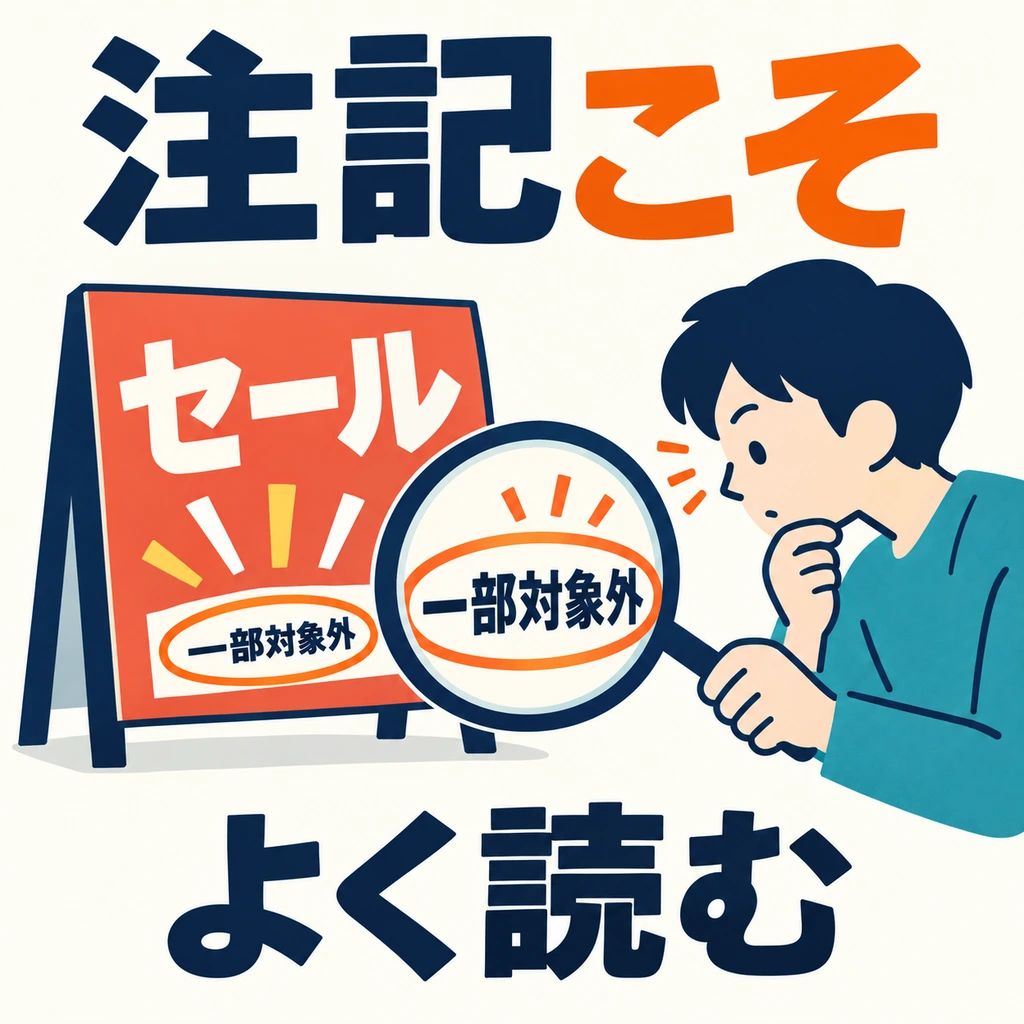
  1. Which part deserves the most attention? 「こそ」 highlights something especially important that you should pay attention to.
    Which part deserves the most attention? 「こそ」 highlights something especially important that you should pay attention to.

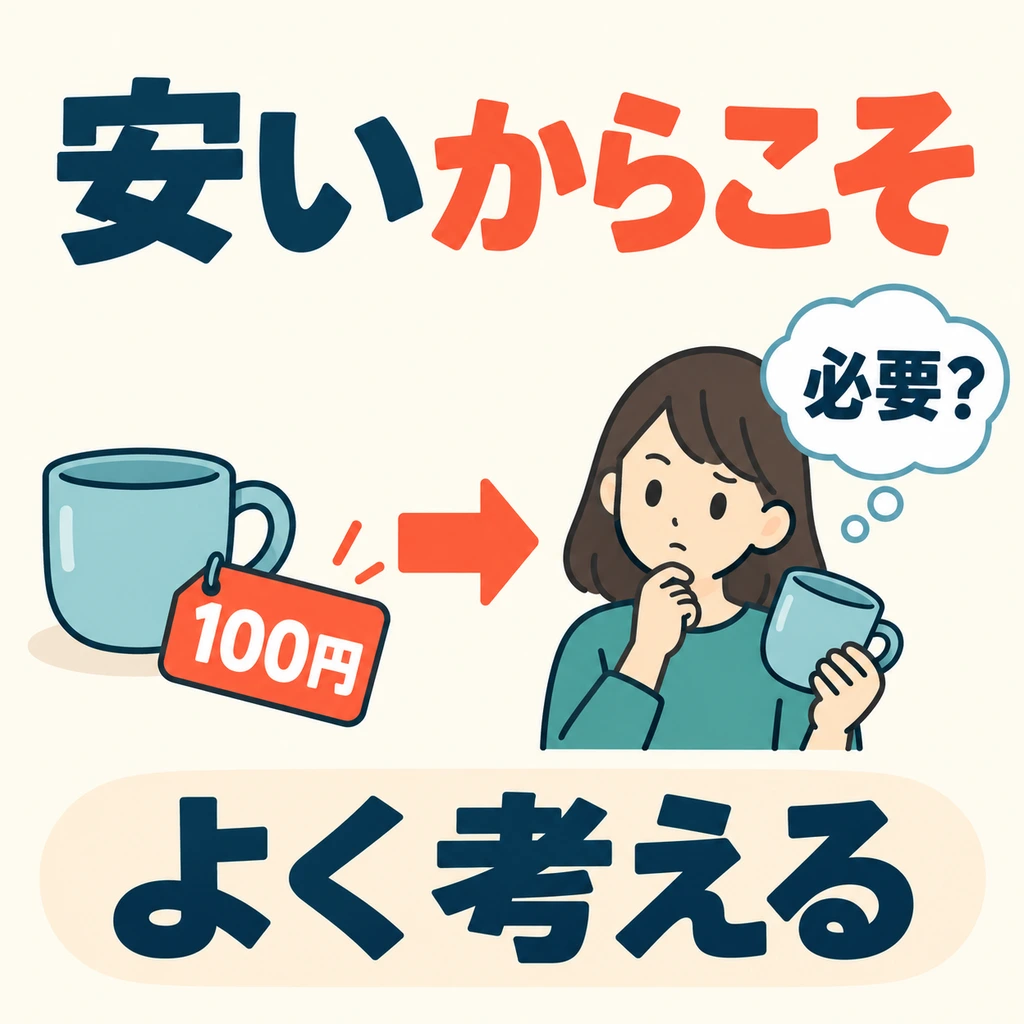
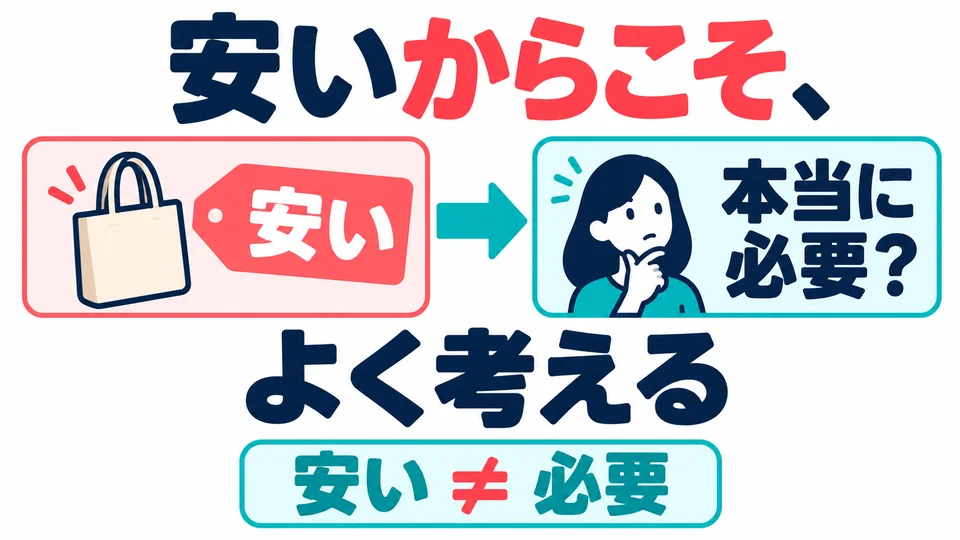
  2. Should you buy it right away just because it is cheap? 「からこそ」 stresses that precisely because it is cheap, you should think it over more carefully.
    Should you buy it right away just because it is cheap? 「からこそ」 stresses that precisely because it is cheap, you should think it over more carefully.

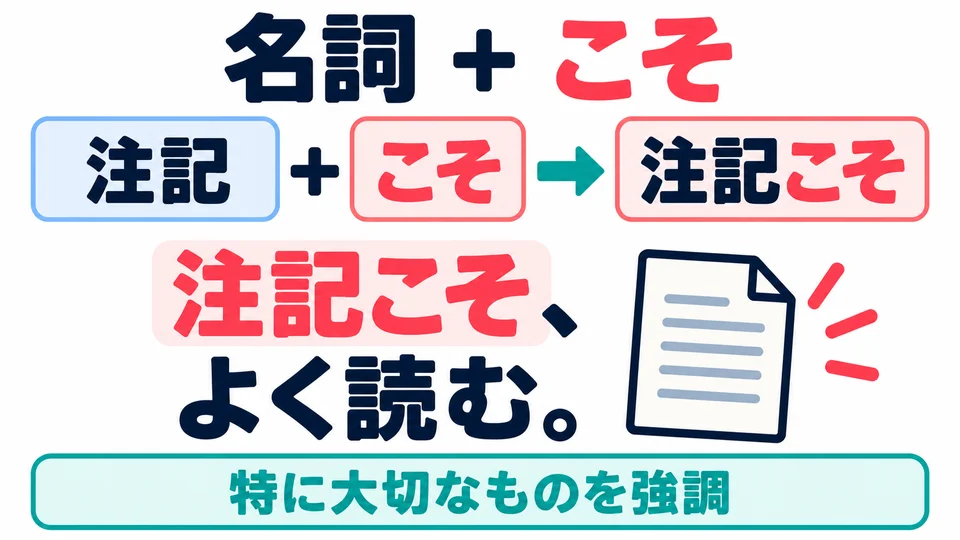
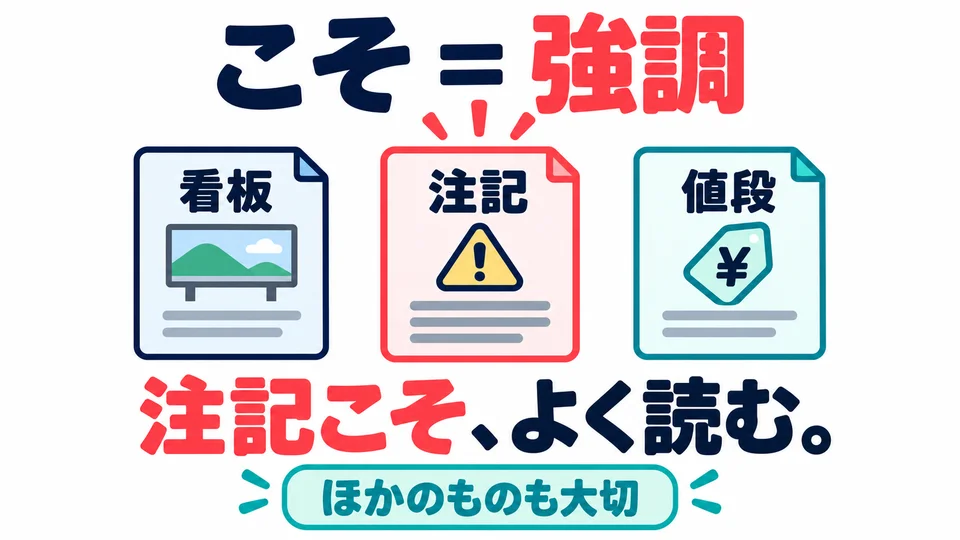
  3. Attach 「こそ」 directly to a noun. 「注記こそ」 singles out the note as something to pay particular attention to.
    Attach 「こそ」 directly to a noun. 「注記こそ」 singles out the note as something to pay particular attention to.

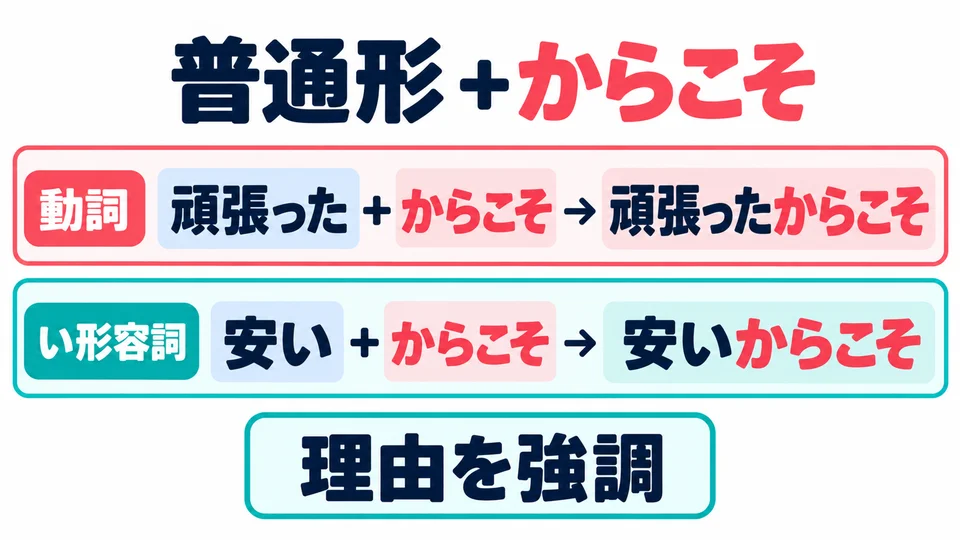
  4. With verbs and い-adjectives, use the plain form + からこそ, as in 「安いからこそ」, to emphasize the reason.
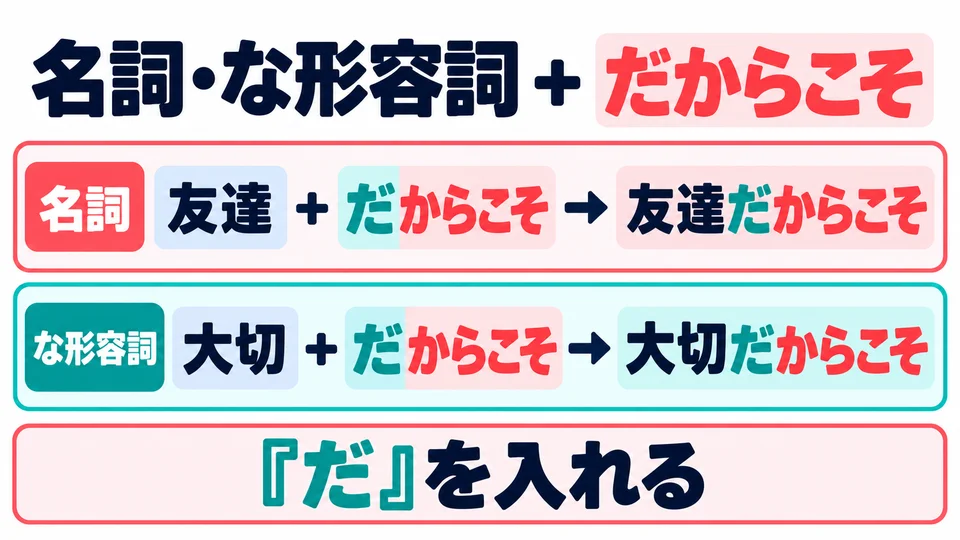
    With verbs and い-adjectives, use the plain form + からこそ, as in 「安いからこそ」, to emphasize the reason.

  5. With nouns and な-adjectives, use 「だからこそ」. It means “precisely because that is the case.”
    With nouns and な-adjectives, use 「だからこそ」. It means “precisely because that is the case.”

  6. 「こそ」 highlights “this very thing.” It does not necessarily mean “only this”; other things are not necessarily excluded.
    「こそ」 highlights “this very thing.” It does not necessarily mean “only this”; other things are not necessarily excluded.

  7. The example stresses that being cheap is the very reason to think carefully. A low price does not mean you really need it.

    The example stresses that being cheap is the very reason to think carefully. A low price does not mean you really need it.

Example sentences

  • 初めてはじめてhajimete行くいくiku店みせmiseこそ、koso、看板かんばんkanbanをoよくyoku読んだほうよんだほうyondahouがgaいいです。iidesu。

    It is precisely when going to a shop for the first time that you should read the sign carefully.

In a conversation

Check yourself

  1. Level 1 · Recognise

    Which sentence is correct?

  2. Level 1 · Recognise

    Listen and choose the meaning

  3. Level 2 · Build

    Put the words in order

    It is precisely at a shop you are visiting for the first time that you should read the sign carefully.

  4. Level 3 · Use

    What goes in the blank?

    初めて行く店____、看板をよく読んだほうがいいです。

    Especially when going to a store for the first time, you should read the signs carefully.

More grammar in this theme

  • 〜こそ・〜からこそemphasis and precise reason

Keep practising

Test your Japanese vocabulary12 adaptive questions, freeCheck your pronunciationRead aloud and get a scorePractise verb forms10-question conjugation quizSee the whole courseGrammar, vocabulary and quizzes by theme
  • A
    この店、みせ、一部いちぶ商品しょうひんはわセールせーるの対象外たいしょうがいなんだね。

    A: Some items in this shop are excluded from the sale, aren't they?

  • B
    小さなちいさな文字もじの注記ちゅうきこそ、見み落とさないように気おとさないようにきをつけないとね。

    B: It is precisely the small print notes that you need to be careful not to overlook.

  • 安いやすいyasuiからkaraこそ、koso、本当ほんとうhontouにni必要ひつようhitsuyouかkaどうdouかka考えたほうかんがえたほうkangaetahouがgaいいです。iidesu。

    Precisely because it is cheap, you should think about whether you really need it.

  • A
    本当ほんとうだ、下したの方ほうに小さくちいさく書いかいてあるね。

    A: You're right, it's written in small letters at the bottom.

  • 〜ているongoing state or practice
    〜によってvaries depending on
    〜のうちにbefore a state changes
    〜のわりにsurprisingly, considering
    〜がいいんじゃないgentle suggestion or advice
    〜ようになっているsystem feature or mechanism
    〜に限りlimited to a date or group
    〜につきper unit; due to
    〜ということですso that means
    〜でしょうかgentle question or request
    〜はずだshould; expected to
    〜向けintended for
    Previous〜に限り
    Next〜につき