
Japanese grammar · ≈ JLPT N2 · Intermediate 1
〜に限り~ni kagiri
limited to a date or group
Use 「〜に限り」 in formal notices to specify the date or people eligible for an offer or service.
How it works

Will the discount still apply tomorrow? 「に限り」 means today only; it does not apply on other days.
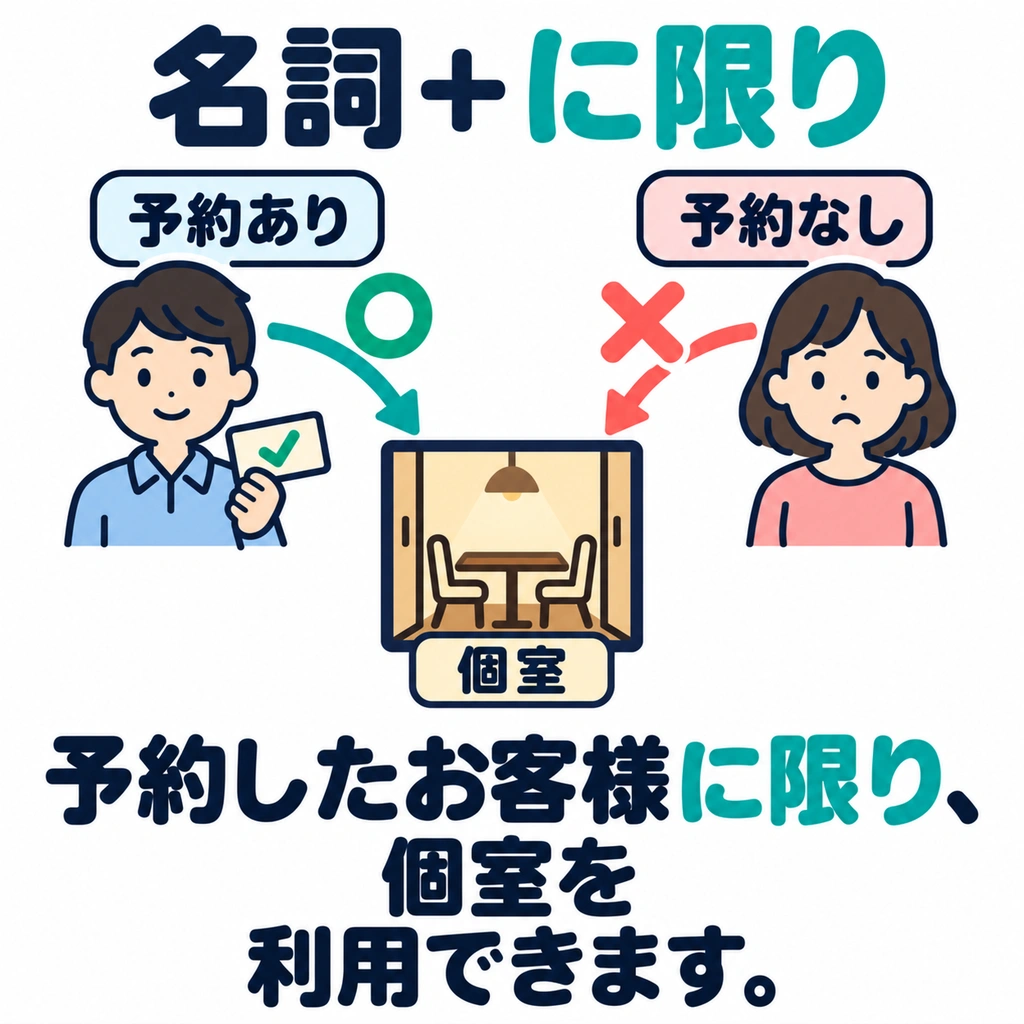
Only customers with reservations can use the private room. 「に限り」 can also specify who is eligible.
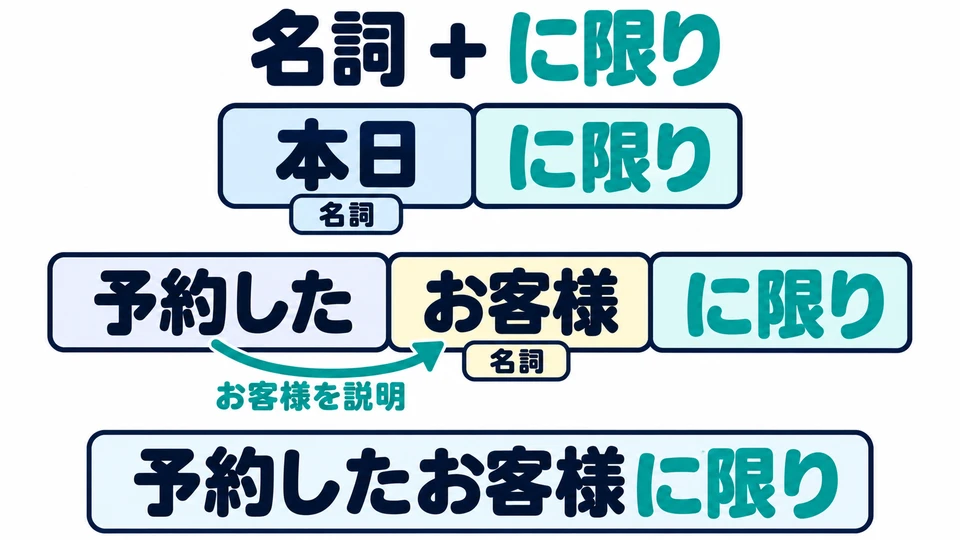
It follows a noun. 「予約した」 modifies 「お客様」, so the whole phrase still ends in a noun.
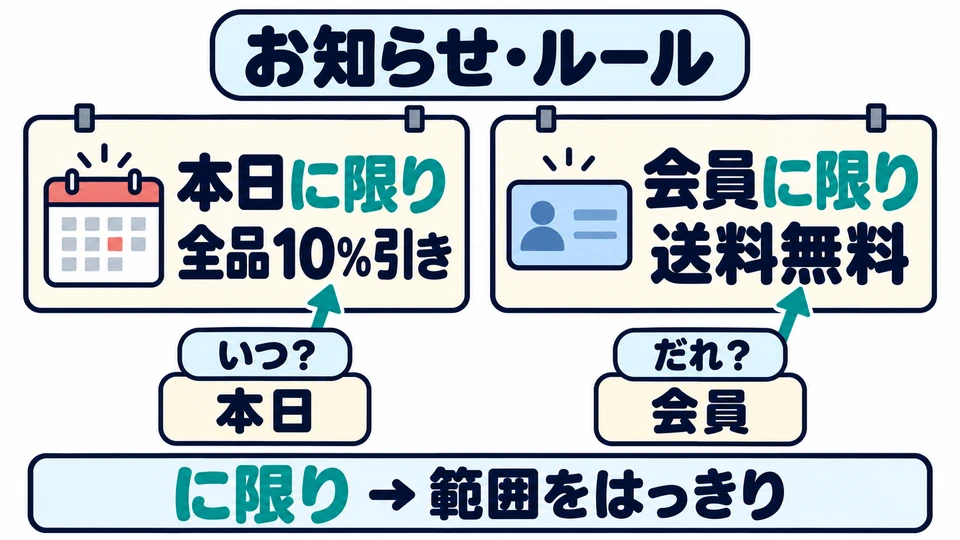
Often used in formal notices and event rules to make clear when or for whom an offer or service applies.
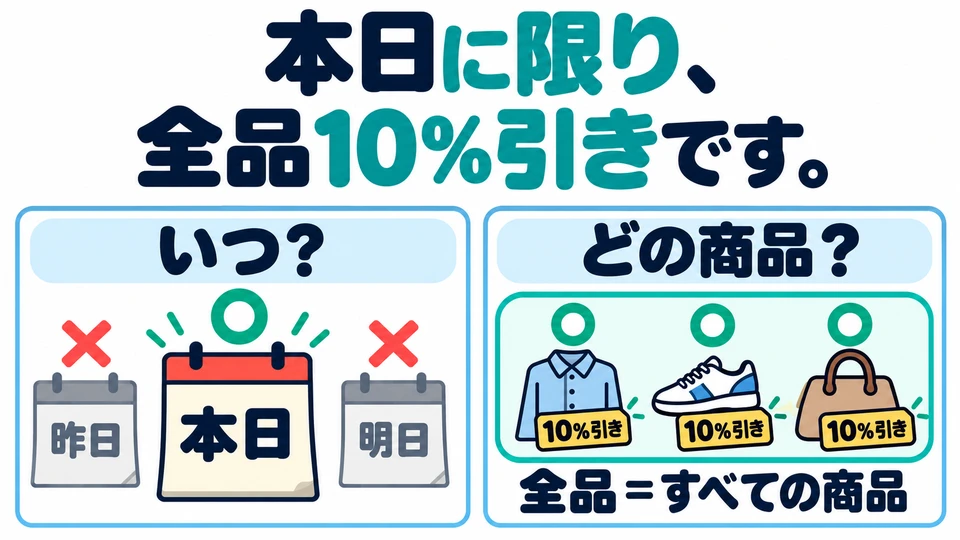
In the example, 「全品」 includes every item; 「本日に限り」 limits the date of the discount.
Example sentences
- 本日honjitsuにni限り、kagiri、全品zenpin10juu%paasento引きhikiです。desu。
Today only, all items are 10% off.
In a conversation

- Aすみません、この割引券はいつでも使えますか。
A: Excuse me, can this coupon be used anytime?
- Bいいえ、有効期限内に
Check yourself
Level 1 · Recognise
Which sentence is correct?
Level 1 · Recognise
Listen and choose the meaning
Level 2 · Build
Put the words in order
Only products with a posted notice are eligible for this sale.
Level 3 · Use
What goes in the blank?
本日____、入場料が無料になります。
Only today, admission is free.
More grammar in this theme
- 〜に限りlimited to a date or group