
〜によって~ni yotte
Ni yotte (〜によって) means “varies depending on”.
Depending on the day of the week, there are days with discounts and days without.
Use 「〜によって」 with a noun to show that results or conditions differ by day, time, country, or another factor.
In the course
How it works

At the same shop, Monday has a discount and Tuesday does not. Different weekdays bring different results.
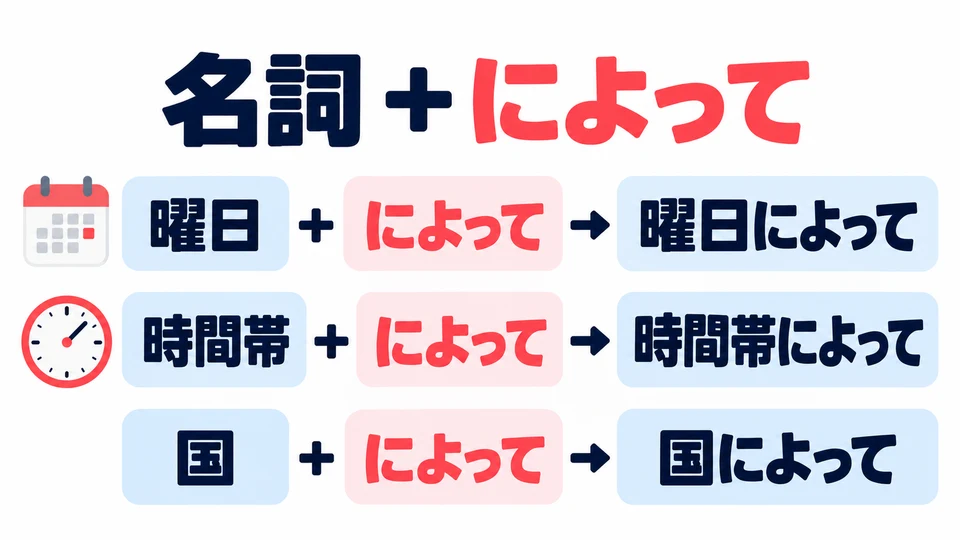
Use a noun for the condition, then add 「によって」, as in 「曜日によって」.

Expressions like 「違います」 and 「変わります」 often follow, showing the specific difference or change.
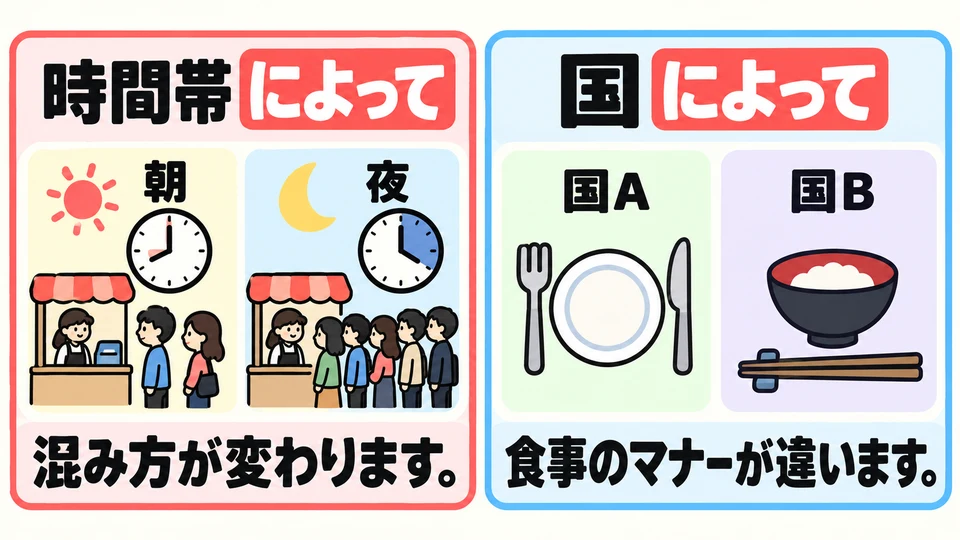
The condition can also be a time of day or a country. Again, compare how the results differ under each condition.
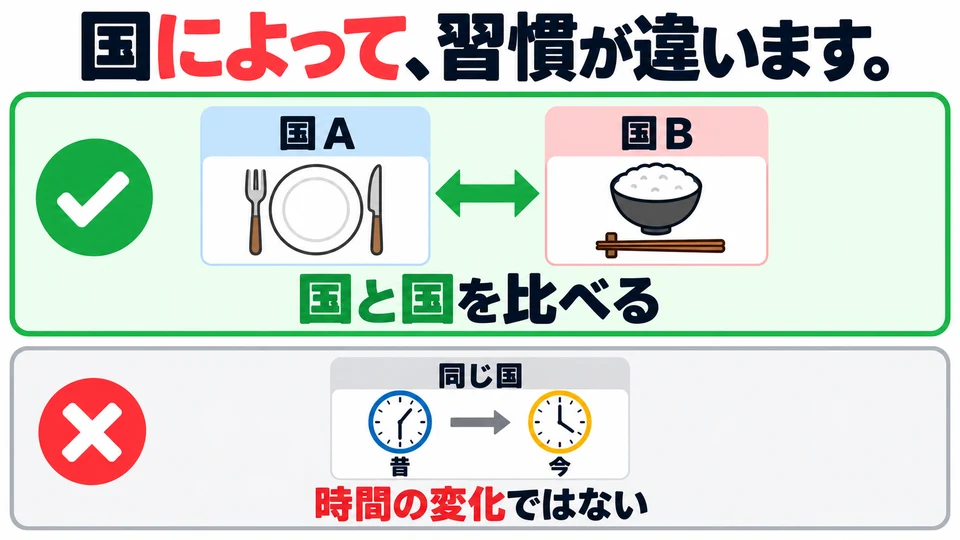
「国によって」 compares differences between countries. It does not mean that one country’s customs change over time.
Example sentences
- 曜日youbiにniよっyotて、te、割引waribikiがgaあるaru日hiとtoないnai日hiがga
In a conversation

- Aこのお店、日替わりランチがあるんですね。
A: This shop has a daily lunch special, doesn't it?
- Bええ、日によって、具
Check yourself
Level 1 · Recognise
Which sentence is correct?
Level 1 · Recognise
Listen and choose the meaning
Level 2 · Build
Put the words in order
The volume of the lunch set differs depending on the restaurant.
Level 3 · Use
What goes in the blank?
曜日____、割引がある日とない日があります。
Depending on the day of the week, there are days with and without discounts.
More grammar in this theme
- 〜によってvaries depending on