JPEdLab iconJPEdLab
Save history

Create an account and play

Explore first, then save your progress whenever you are ready. No email address is required.

Start free
  1. Japanese grammar
  2. JLPT N3 grammar
  3. 〜のうちに

〜のうちに~no uchi ni

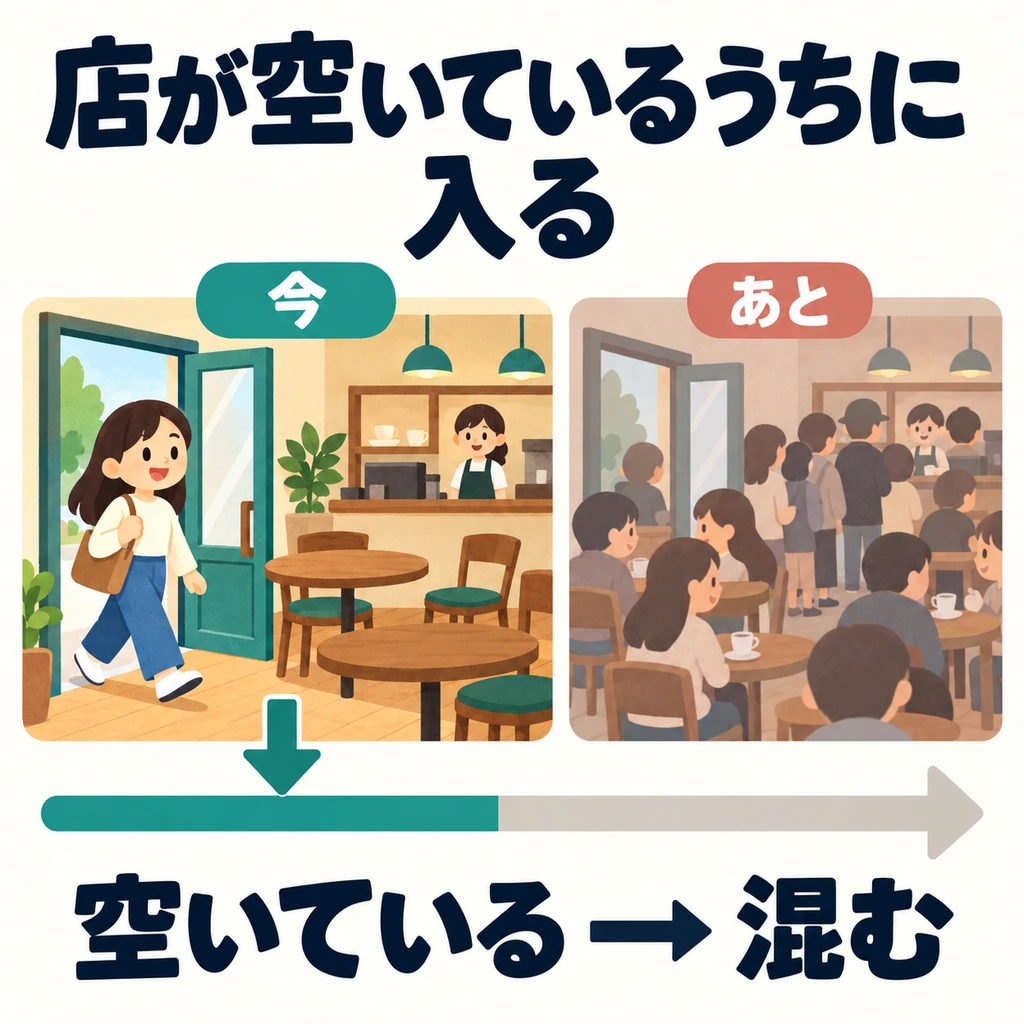
No uchi ni (〜のうちに) means “before a state changes”.

店みせmiseがga空いあいaiてteいるiruうちuchiにni入ったほうはいったほうhaittahouがgaいいです。iidesu。

It's better to go in while the restaurant is still uncrowded.

Use 「〜のうちに」 to do something while a time or state still holds, before it changes.

In the course›

How it works

  1. Look at the picture: the café has space now, but will be crowded later. Which side would you choose to get in easily?
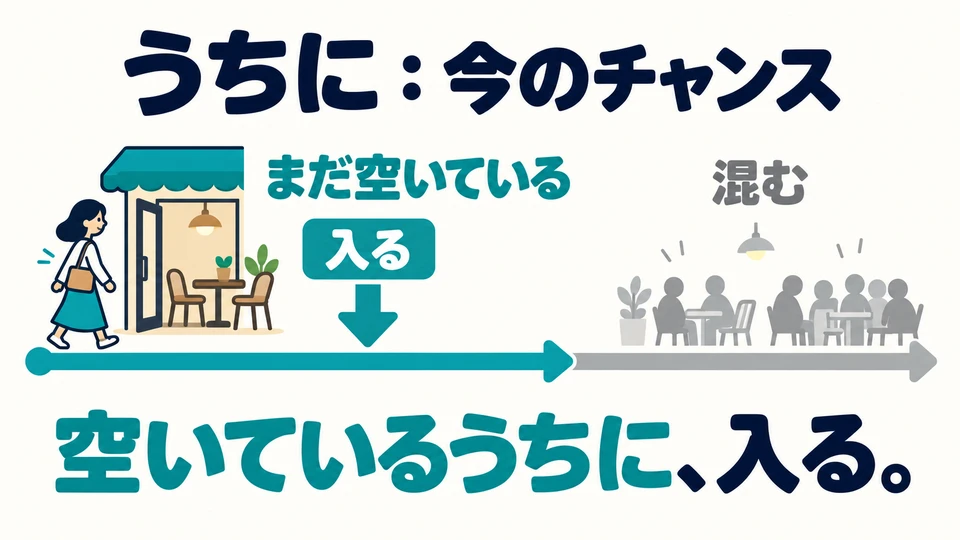
    Look at the picture: the café has space now, but will be crowded later. Which side would you choose to get in easily?

  2. 「うちに」 means doing something while a state still holds, before it changes. It suggests taking the opportunity.
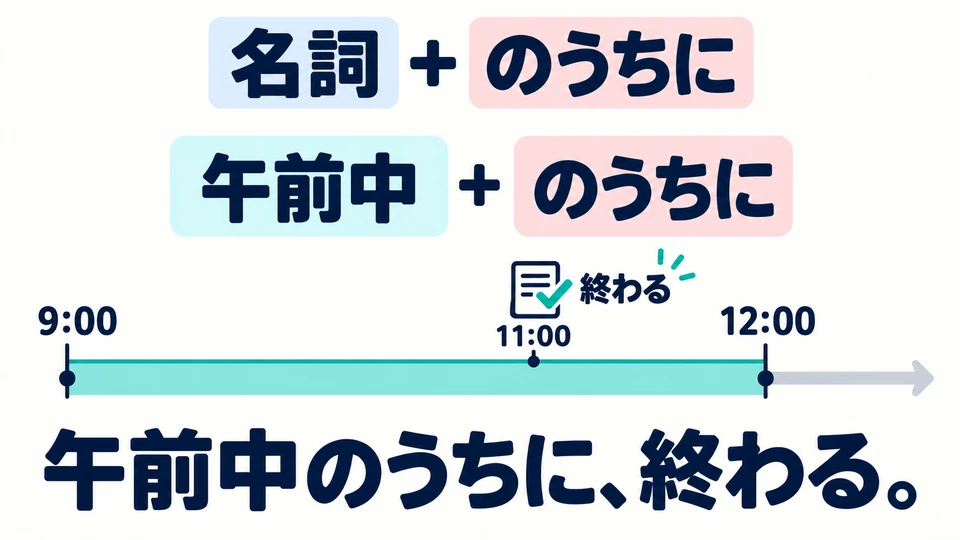
    「うちに」 means doing something while a state still holds, before it changes. It suggests taking the opportunity.

  3. After a noun, use 「のうちに」. For example, 「午前中のうちに」 means within the morning.
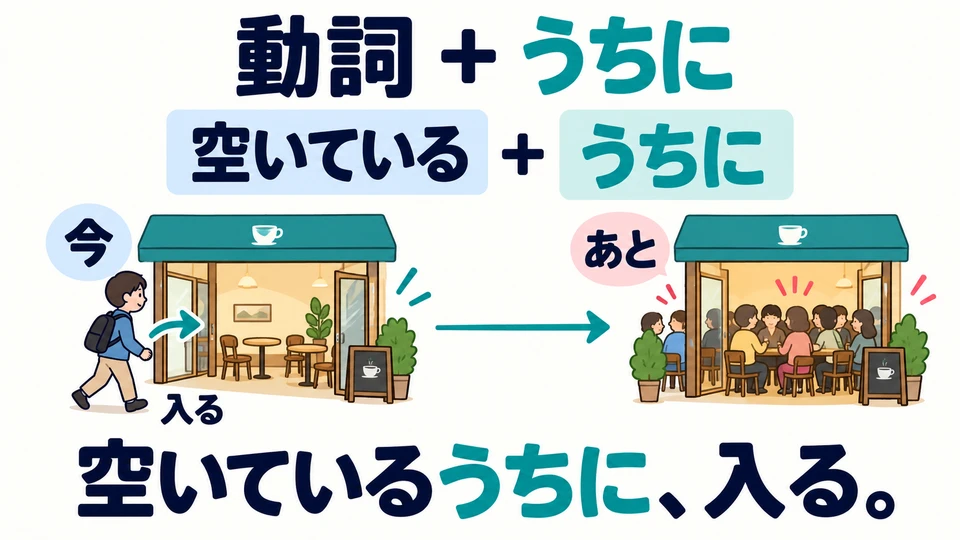
    After a noun, use 「のうちに」. For example, 「午前中のうちに」 means within the morning.

  4. Verbs take 「うちに」 directly. 「空いているうちに」 means while the place is still uncrowded.
    Verbs take 「うちに」 directly. 「空いているうちに」 means while the place is still uncrowded.

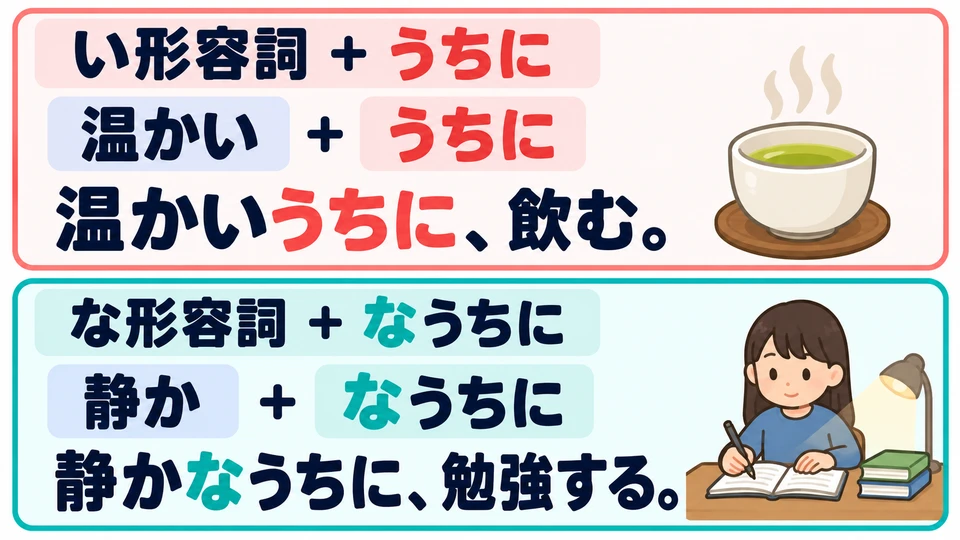
  5. Use 「うちに」 after an い-adjective and 「なうちに」 after a な-adjective: while the state has not yet changed.
    Use 「うちに」 after an い-adjective and 「なうちに」 after a な-adjective: while the state has not yet changed.

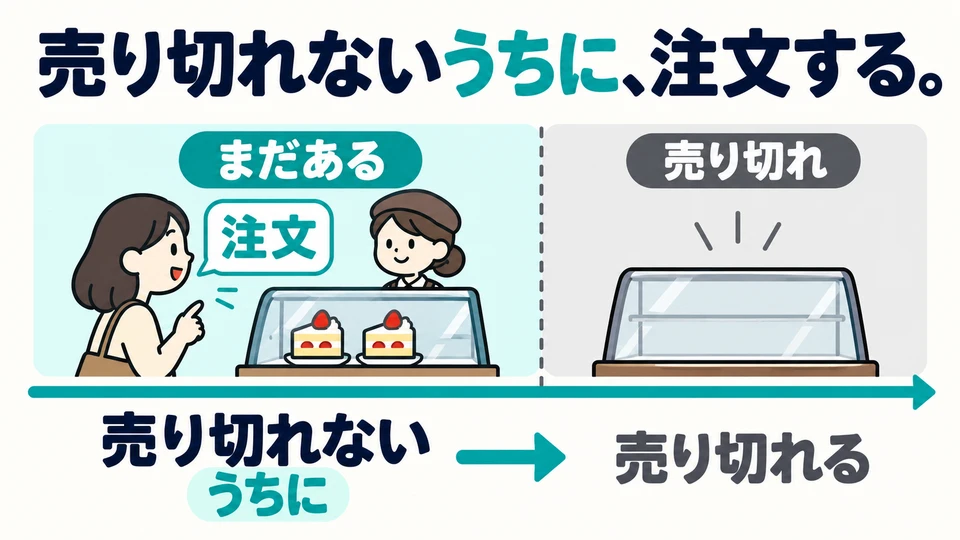
  6. 「売り切れないうちに」 means ordering before the item sells out. The action comes before the change.

    「売り切れないうちに」 means ordering before the item sells out. The action comes before the change.

Example sentences

  • 店みせmiseがga空いあいaiてteいるiruうちuchiにni入ったほうはいったほうhaittahouがgaいいです。iidesu。

    It's better to go in while the restaurant is still uncrowded.

In a conversation
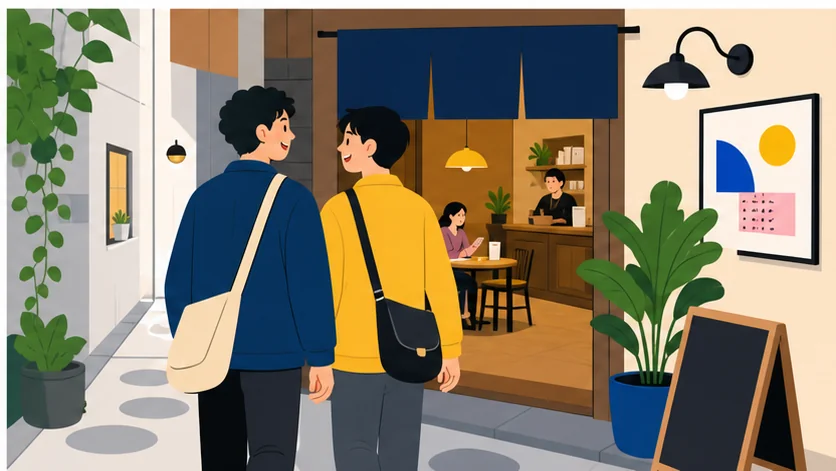
  • A
    あの隠れ家かくれがカフェ、かふぇ、行っいってみたいですね。

    A: I'd like to try going to that hidden-gem cafe.

  • B
    人気店にんきてんになる前まえの、まだあまりにぎわっ

Check yourself

  1. Level 1 · Recognise

    Which sentence is correct?

  2. Level 1 · Recognise

    Listen and choose the meaning

  3. Level 2 · Build

    Put the words in order

    You should go in while the shop is still empty.

  4. Level 3 · Use

    What goes in the blank?

    店が____入ったほうがいいです。

    You should go in while the restaurant is not busy.

More grammar in this theme

  • 〜のうちにbefore a state changes

More JLPT N3 grammar

Keep practising

Test your Japanese vocabulary12 adaptive questions, freeCheck your pronunciationRead aloud and get a scorePractise verb forms10-question conjugation quizSee the whole courseGrammar, vocabulary and quizzes by theme
人気にんきninki
メニューめにゅーmenyuu
がga
売りうりuri
切れないうちきれないうちkirenaiuchi
にni
注文ちゅうもんchuumon
したほうshitahou
がga
いいです。iidesu。

It's better to order before the popular menu items sell out.

て
いないうち
に
一緒いっしょ
に
行きましょう。いきましょう。

B: Let's go together while it's still not too bustling, before it becomes a popular shop.

  • A
    そうですね。口コミくちこみ評価ひょうかが高くたかくなる前まえがいいですね。

    A: That's true. It's best to go before the online reviews get too high.

  • Intermediate 1
    Dining and Shopping Information
    More quizzesOpen this lesson’s quizzes in the course
    〜ているongoing state or practice
    〜によってvaries depending on
    〜のわりにsurprisingly, considering
    〜がいいんじゃないgentle suggestion or advice
    〜ようになっているsystem feature or mechanism
    〜に限りlimited to a date or group
    〜こそ・〜からこそemphasis and precise reason
    〜につきper unit; due to
    〜ということですso that means
    〜でしょうかgentle question or request
    〜はずだshould; expected to
    〜向けintended for
    Previous〜によって
    Next〜のわりに
    See all 114
    〜から〜にかけてapproximate time or place range
    〜がきっかけでtrigger for a change
    〜っぽいcharacteristic or impression
    〜でもeven in a situation
    〜なんてsurprise; can you believe
    〜ば〜ほどthe more…, the more…
    〜ことでby doing; through
    〜なぁsoftly voiced wish