JPEdLab iconJPEdLab
Save history

Create an account and play

Explore first, then save your progress whenever you are ready. No email address is required.

Start free
  1. Japanese grammar
  2. JLPT N3 grammar
  3. 〜ば〜ほど

〜ば〜ほど~ba ~ hodo

Ba hodo (〜ば〜ほど) means “the more…, the more…”.

本ほんhonをo読めよめyomeばba読むよむyomuほど、hodo、考え方かんがえかたkangaekataがga広がります。ひろがります。hirogarimasu。

The more books you read, the more your perspective broadens.

「〜ば〜ほど」 links two changes that grow together, as in the more you read, the broader your ideas become.

In the course›

How it works

  1. Look from left to right: the more books you read, the richer your ideas become. Both changes grow together.
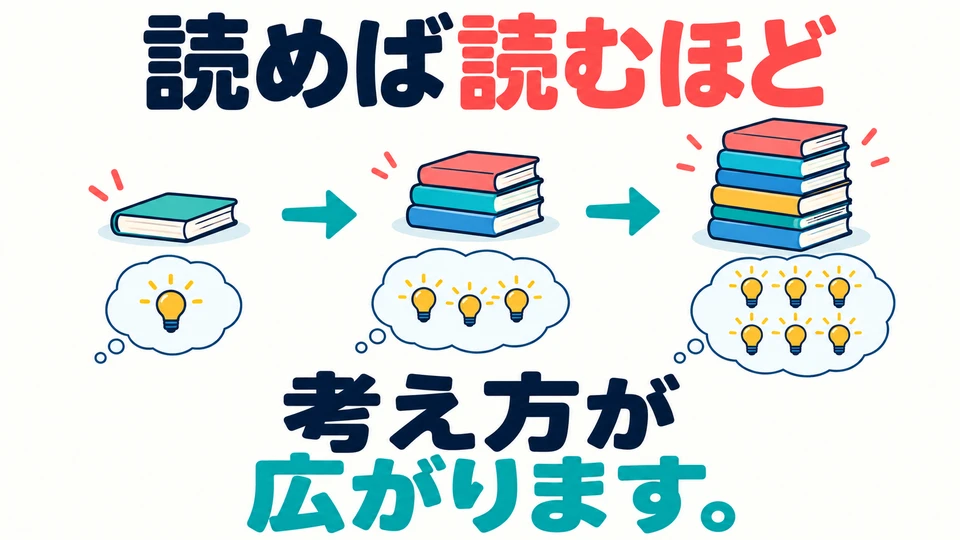
    Look from left to right: the more books you read, the richer your ideas become. Both changes grow together.

  2. Use this pattern for changes that build up through reading, practice, and so on. It means “the more…, the more…”.
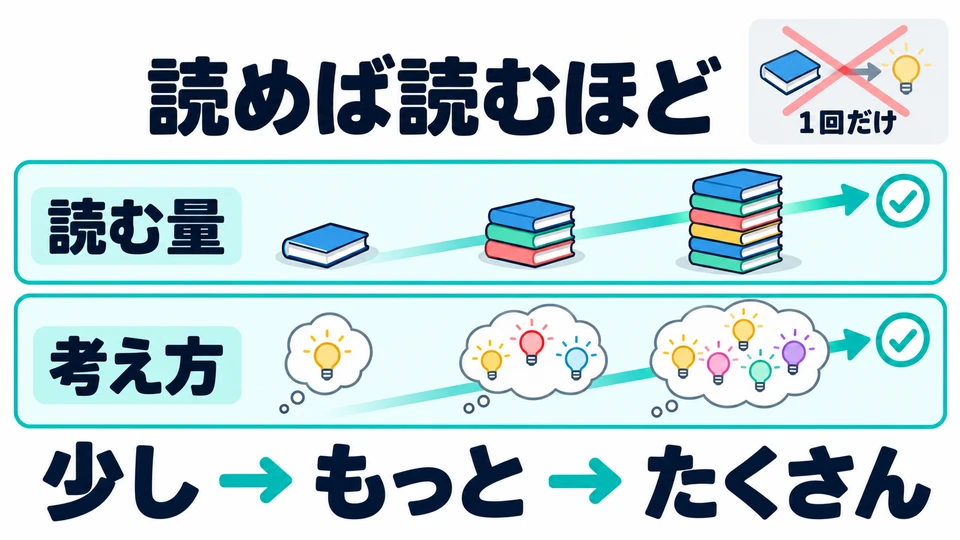
    Use this pattern for changes that build up through reading, practice, and so on. It means “the more…, the more…”.

  3. The key is that the degree changes along with it, rather than simply saying “do it once and this result follows”.
    The key is that the degree changes along with it, rather than simply saying “do it once and this result follows”.

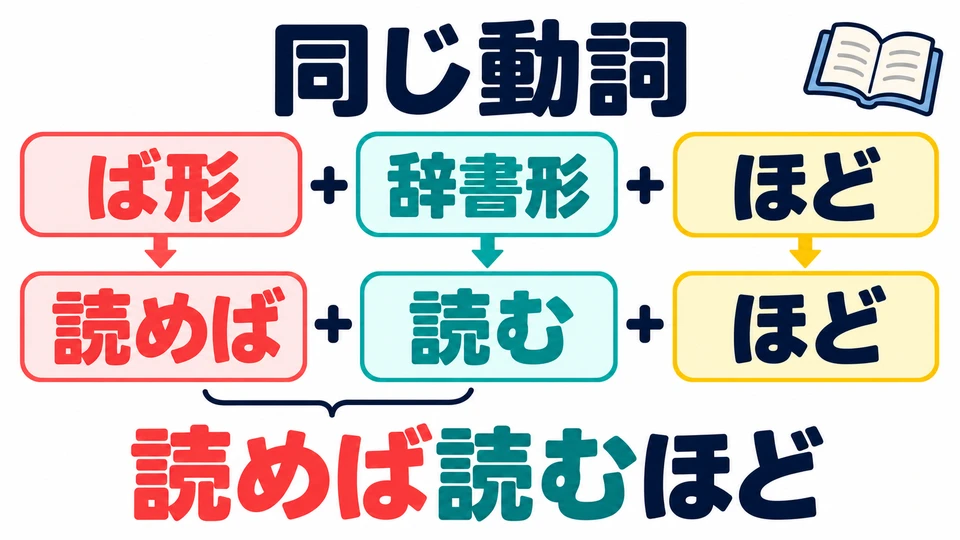
  4. Repeat the same verb: ば-form + dictionary form + ほど. For example, 「読めば読むほど」.
    Repeat the same verb: ば-form + dictionary form + ほど. For example, 「読めば読むほど」.

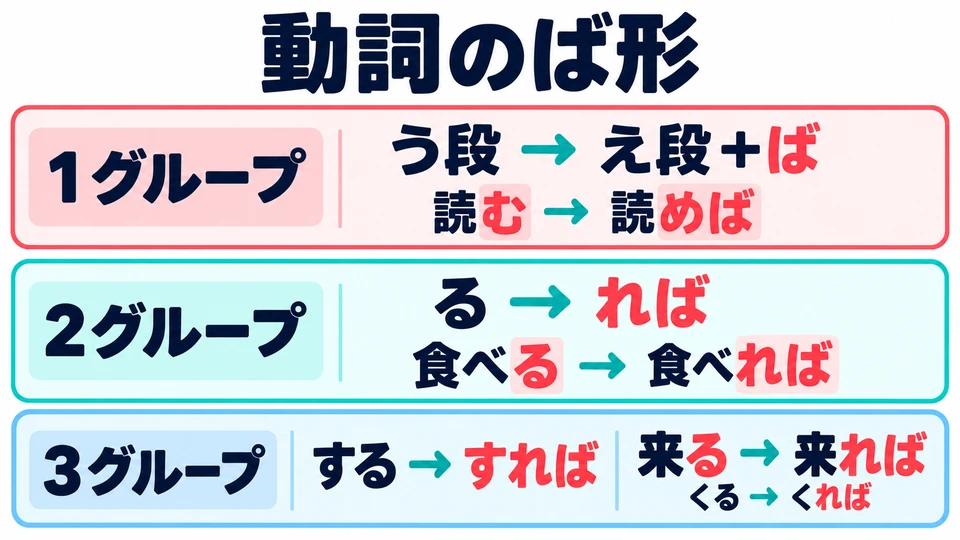
  5. First identify the verb group, then follow the diagram to form the ば-form. The same verb after it stays in the dictionary form; do not conjugate both verbs.
    First identify the verb group, then follow the diagram to form the ば-form. The same verb after it stays in the dictionary form; do not conjugate both verbs.

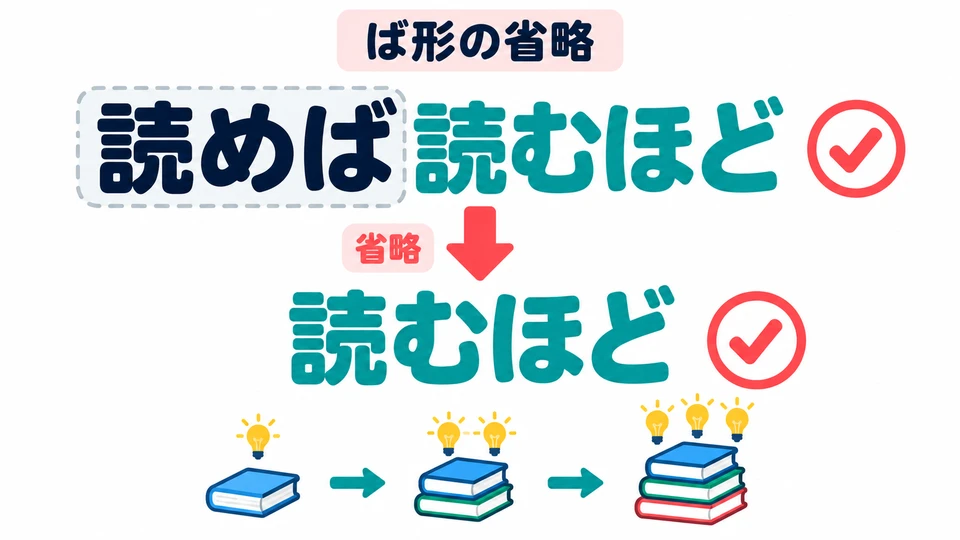
  6. You can also omit the first ば-form. 「読むほど」 still means that the more you read, the greater the change.
    You can also omit the first ば-form. 「読むほど」 still means that the more you read, the greater the change.

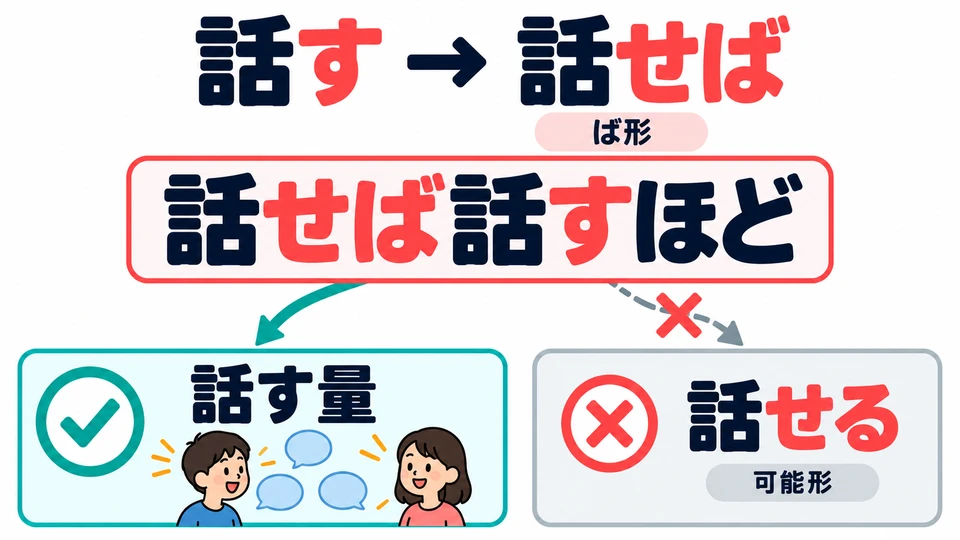
  7. In the example, 「話せば」 is the ば-form of 「話す」. It means “the more you talk”, not “being able to speak”.

    In the example, 「話せば」 is the ば-form of 「話す」. It means “the more you talk”, not “being able to speak”.

Example sentences

  • 本ほんhonをo読めよめyomeばba読むよむyomuほど、hodo、考え方かんがえかたkangaekataがga広がります。ひろがります。hirogarimasu。

    The more books you read, the more your perspective broadens.

In a conversation

  • A
    毎日まいにち日記にっきを書いかいて自分じぶんの生活せいかつを振りふり返っかえっているんだけど、なかなか文章ぶんしょう

Check yourself

  1. Level 1 · Recognise

    Which sentence is correct?

  2. Level 1 · Recognise

    Listen and choose the meaning

  3. Level 2 · Build

    Put the words in order

    The more you read, the broader your way of thinking becomes.

  4. Level 3 · Use

    What goes in the blank?

    本を____、考え方が広がります。

    The more you read books, the more your perspective broadens.

More grammar in this theme

  • 〜ば〜ほどthe more…, the more…

More JLPT N3 grammar

Keep practising

Test your Japanese vocabulary12 adaptive questions, freeCheck your pronunciationRead aloud and get a scorePractise verb forms10-question conjugation quizSee the whole courseGrammar, vocabulary and quizzes by theme
人ひと
hito
とto
話せはなせhanase
ばba
話すはなすhanasu
ほど、hodo、
自分じぶんjibun
のno
考えかんがえkangae
がga
整理せいりseiri
されます。saremasu。

The more you talk with people, the more your own thoughts become organized.

が
上手にならないじょうずにならない
ん
だ。

A: I write in a journal every day to reflect on my life, but my writing isn't really getting any better.

  • B
    日記にっきはわ毎日まいにち書きかき続けつづけて記録きろくすれば記録きろくするほど、思考力しこうりょくや表現力ひょうげんりょくがついていくものだよ。

    B: Journals are the kind of thing where the more you keep writing and recording every day, the more your thinking and expressive skills will develop.

  • A
    そうなんだね。じゃあ、諦めないあきらめないでこれからも毎日まいにち継続けいぞくしていくよ。

    A: I see. In that case, I won't give up and will keep keeping at it every day.

  • Intermediate 1
    Time Use and Future Planning
    More quizzesOpen this lesson’s quizzes in the course
    〜はずがないcannot possibly; no way
    〜なんてsurprise; can you believe
    こんな・そんな・あんな・どんなthis, that, what kind
    こんなふうにin this way
    〜ことでby doing; through
    〜なぁsoftly voiced wish
    〜ことがありますsometimes happens
    〜こともありますsometimes also happens
    〜にとってfrom someone’s perspective
    〜ことだしsince, given that
    〜てくれない?casual request for help
    〜てくれる?could you do it for me
    〜じゃない?・〜んじゃない?right?; gentle suggestion
    Previous〜なんて
    Nextこんな・そんな・あんな・どんな
    See all 114
    〜がいいんじゃないgentle suggestion or advice
    〜ということですso that means
    〜はずだshould; expected to
    〜向けintended for
    意向形+とするtry or be about to
    〜ていただきたいんですがpolite request for help
    〜にはrequirements to reach a goal
    〜途中で・〜途中にduring a journey or activity