JPEDLAB iconJPEDLAB
Save history

Create an account and play

Explore first, then save your progress whenever you are ready. No email address is required.

Start free
Read as articleCards
See the whole course›Intermediate 1›Time Use and Future Planning

Japanese grammar · ≈ JLPT N3 · Intermediate 1

〜じゃない?・〜んじゃない?~janai? / ~n janai?

right?; gentle suggestion

Use 〜じゃない? or 〜んじゃない? casually to check agreement or offer a gentle suggestion.

Start the interactive lessonIllustrated cards, audio and speaking practice

How it works

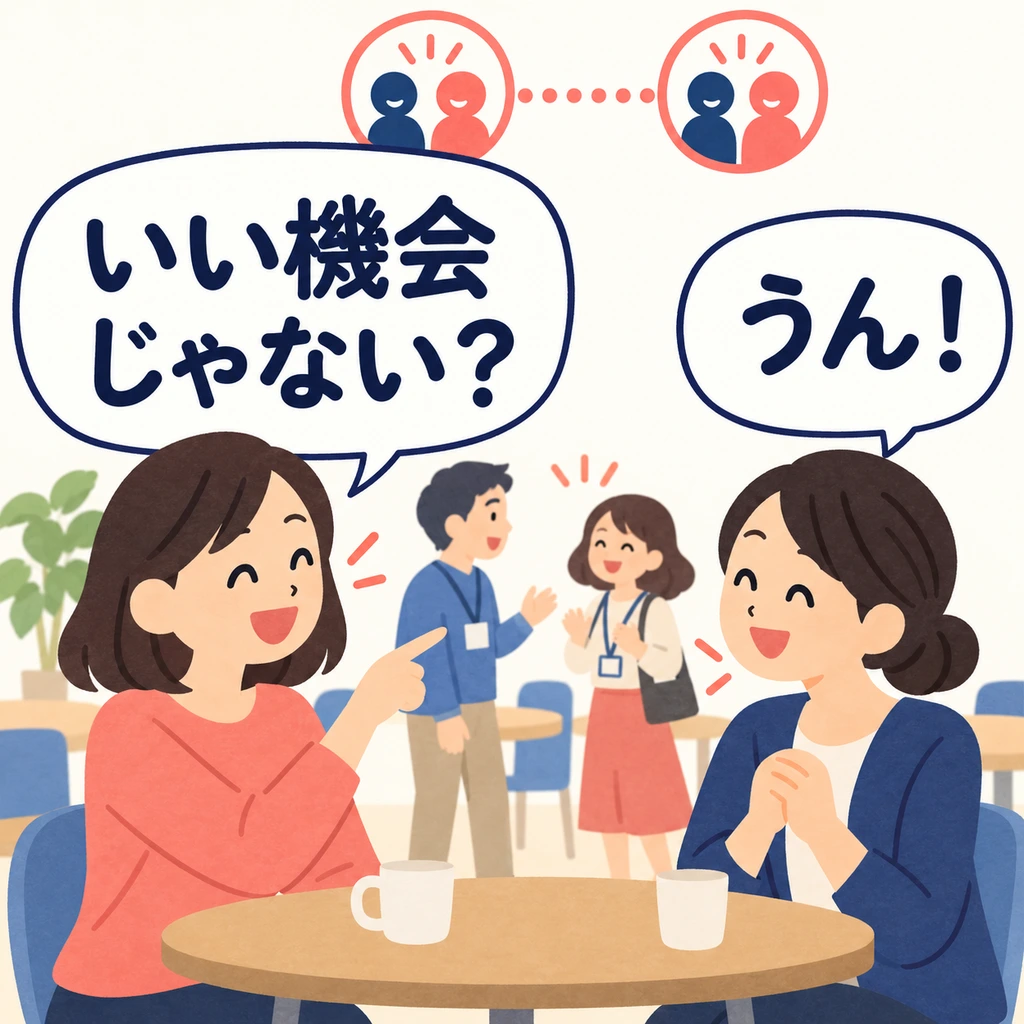
  1. When you say “A good opportunity, right?”, you share your view and ask if the other person agrees.
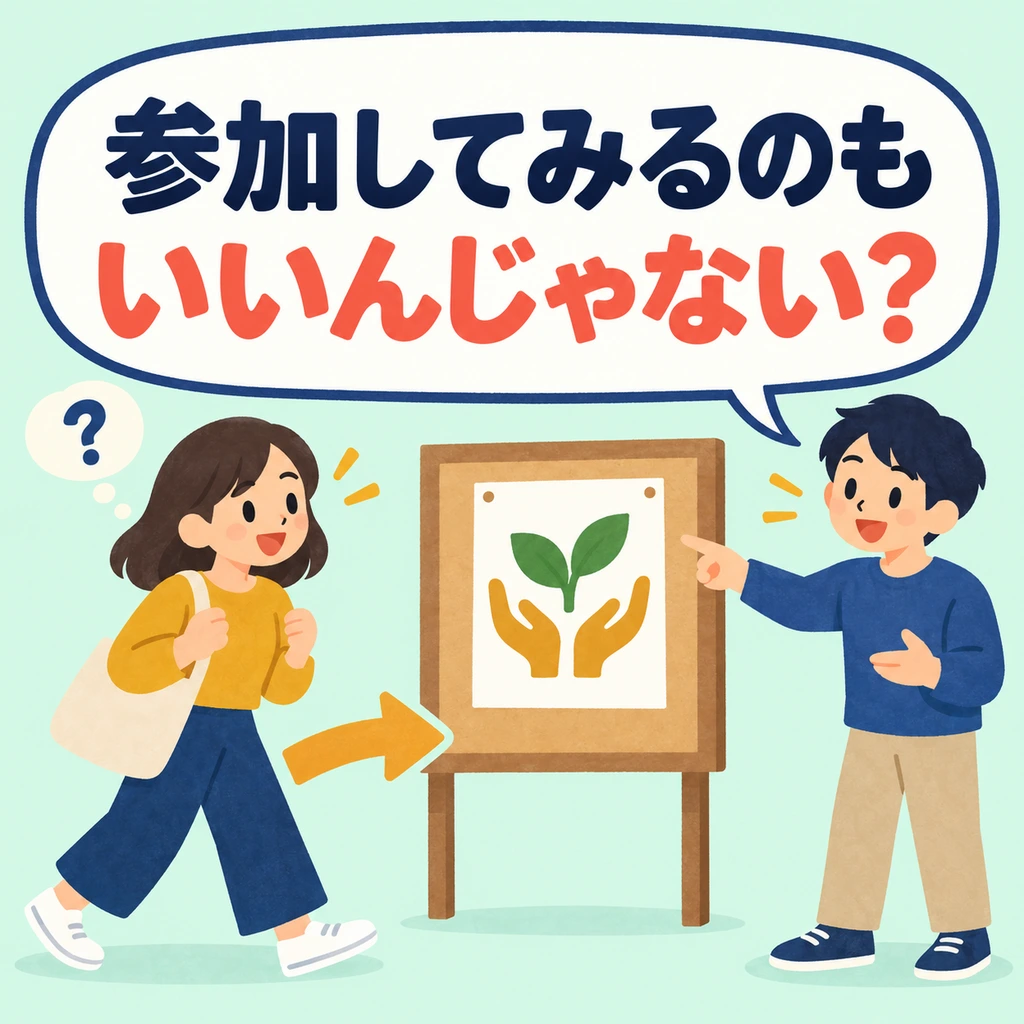
    When you say “A good opportunity, right?”, you share your view and ask if the other person agrees.

  2. When a friend wants to try something new, “That could be nice too, right?” offers a gentle suggestion.
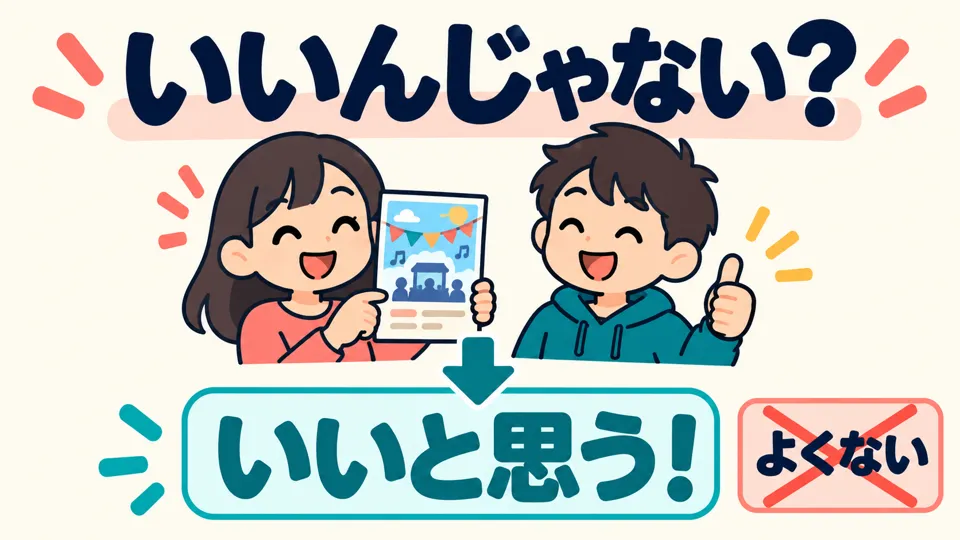
    When a friend wants to try something new, “That could be nice too, right?” offers a gentle suggestion.

  3. Although it contains 「じゃない」, here it means “That’s nice.” Don’t read it as “That’s not good.”
    Although it contains 「じゃない」, here it means “That’s nice.” Don’t read it as “That’s not good.”

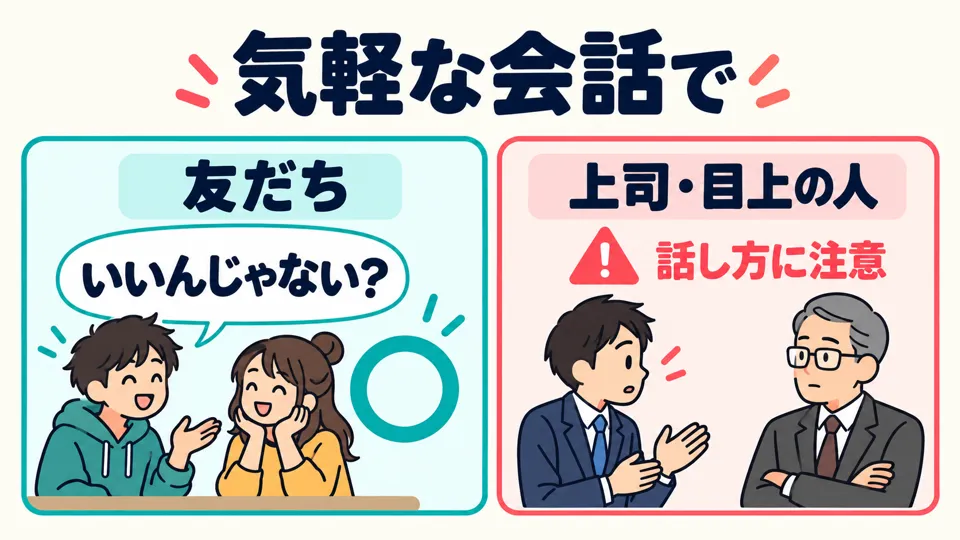
  4. Use it in casual chats with friends or people you know. Mind your register when speaking to elders or your boss.
    Use it in casual chats with friends or people you know. Mind your register when speaking to elders or your boss.

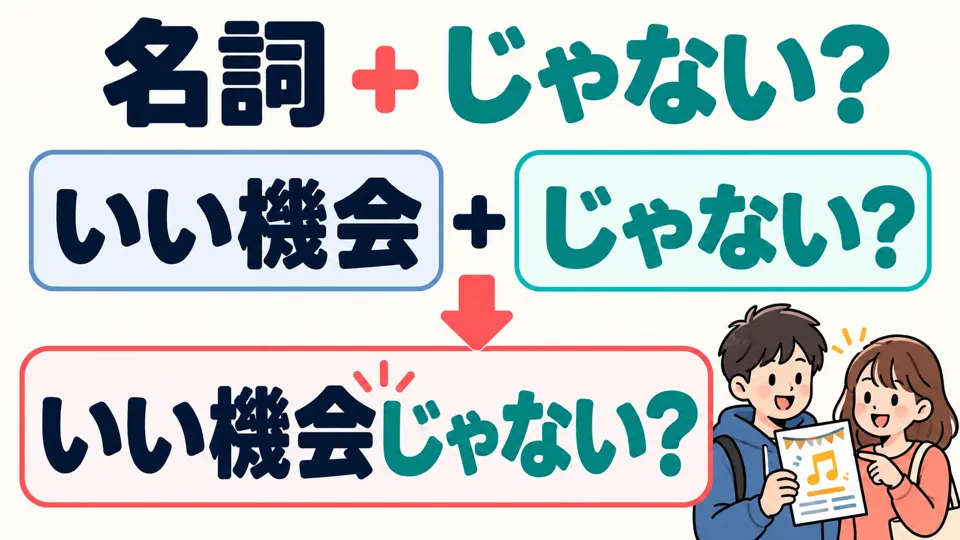
  5. You can attach 「じゃない?」 directly to a noun, as in 「いい機会じゃない?」.
    You can attach 「じゃない?」 directly to a noun, as in 「いい機会じゃない?」.

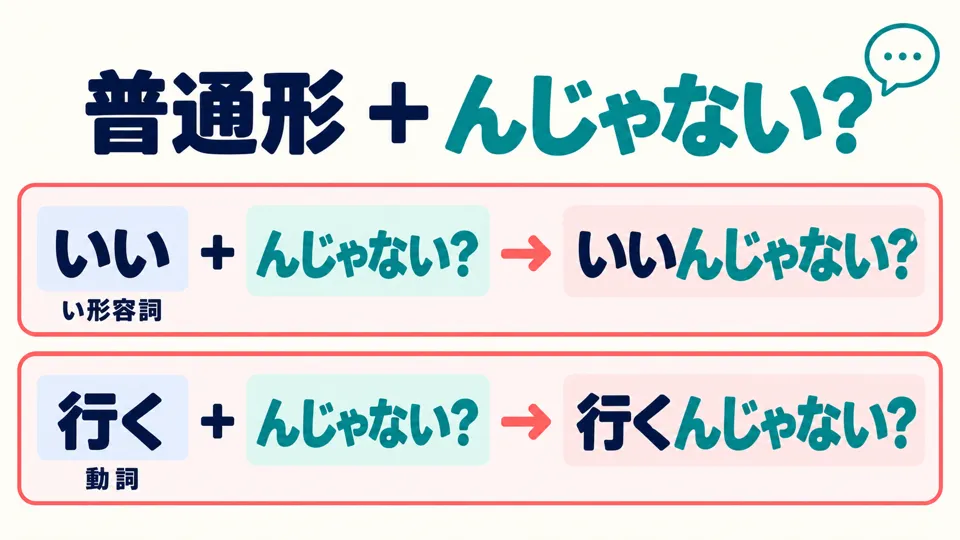
  6. Use the plain form before 「んじゃない?」, as in 「いいんじゃない?」.
    Use the plain form before 「んじゃない?」, as in 「いいんじゃない?」.

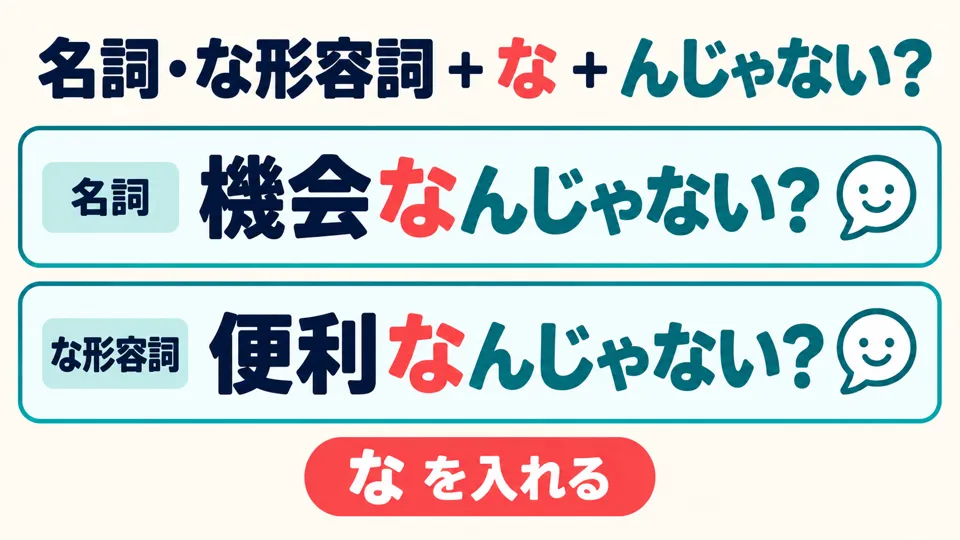
  7. Add 「な」 between a noun or な-adjective and 「ん」, as in 「機会なんじゃない?」.

    Add 「な」 between a noun or な-adjective and 「ん」, as in 「機会なんじゃない?」.

Example sentences

  • せっかくsekkaku日本にっぽんnipponにniいるなら、irunara、地域ちいきchiiki活動かつどうkatsudouにni参加さんかsankaしshiてteみるmiruの

In a conversation

Check yourself

  1. Level 1 · Recognise

    Which sentence is correct?

  2. Level 1 · Recognise

    Listen and choose the meaning

  3. Level 2 · Build

    Put the words in order

    If you join that club, wouldn't it broaden your horizons?

  4. Level 3 · Use

    What goes in the blank?

    せっかく日本にいるなら、地域活動に参加してみるのも____?

    Since you're in Japan, why not try participating in local activities?

More grammar in this theme

  • 〜じゃない?・〜んじゃない?right?; gentle suggestion

Keep practising

Test your Japanese vocabulary12 adaptive questions, freeCheck your pronunciationRead aloud and get a scorePractise verb forms10-question conjugation quizSee the whole courseGrammar, vocabulary and quizzes by theme
no
もmo
いいii
んn
じゃない?じゃないjanai

Since you're finally in Japan, wouldn't it be a good idea to try participating in local activities?

  • A
    生活せいかつの幅はばを広げるひろげるために、何なんか新しいあたらしいことを始めたいはじめたいんだけど、何なにがいいかな。

    A: I want to start something new to broaden my horizons, but what do you think would be good?

  • このkono交流こうりゅうkouryuu会、かい、kai、友だちともだちtomodachiをo作るつくるtsukuruいいii機会きかいkikaiじゃない?じゃないjanai

    Isn't this exchange meeting a good opportunity to make friends?

  • B
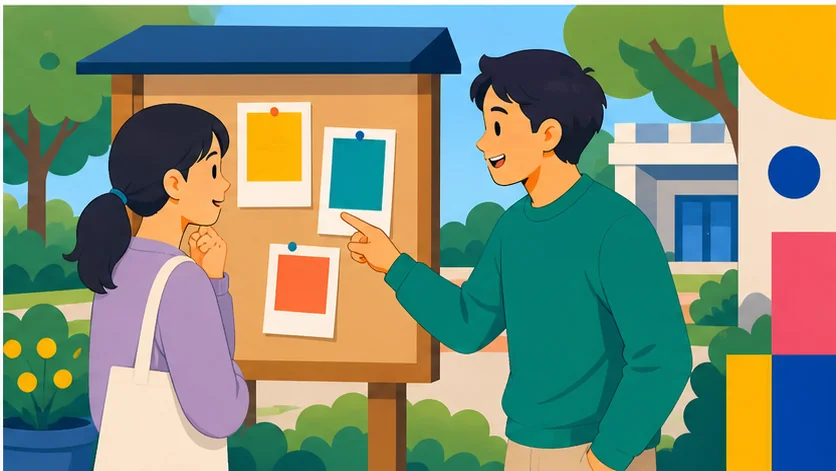
    それなら、公民館こうみんかんの掲示板けいじばんにある地域ちいきイベントいべんとにボランティアぼらんてぃあとして参加さんかしてみるのもいいんじゃない?じゃない

    B: In that case, wouldn't it be a good idea to try volunteering for a local event listed on the community center bulletin board?

  • A
    なるほど。地元じもとの知り合いしりあいも増えるふえることだし、一度いちど説明せつめい会かいに行っいってみるよ。

    A: I see. Since it'll also help me get to know more locals, I'll go to the information session once.

  • 〜はずがないcannot possibly; no way
    〜なんてsurprise; can you believe
    〜ば〜ほどthe more…, the more…
    こんな・そんな・あんな・どんなthis, that, what kind
    こんなふうにin this way
    〜ことでby doing; through
    〜なぁsoftly voiced wish
    〜ことがありますsometimes happens
    〜こともありますsometimes also happens
    〜にとってfrom someone’s perspective
    〜ことだしsince, given that
    〜てくれない?casual request for help
    〜てくれる?could you do it for me
    Previous〜てくれる?