
Japanese grammar · ≈ JLPT N3 · Intermediate 1
〜じゃない?・〜んじゃない?~janai? / ~n janai?
right?; gentle suggestion
Use 〜じゃない? or 〜んじゃない? casually to check agreement or offer a gentle suggestion.
How it works

When you say “A good opportunity, right?”, you share your view and ask if the other person agrees.

When a friend wants to try something new, “That could be nice too, right?” offers a gentle suggestion.

Although it contains 「じゃない」, here it means “That’s nice.” Don’t read it as “That’s not good.”
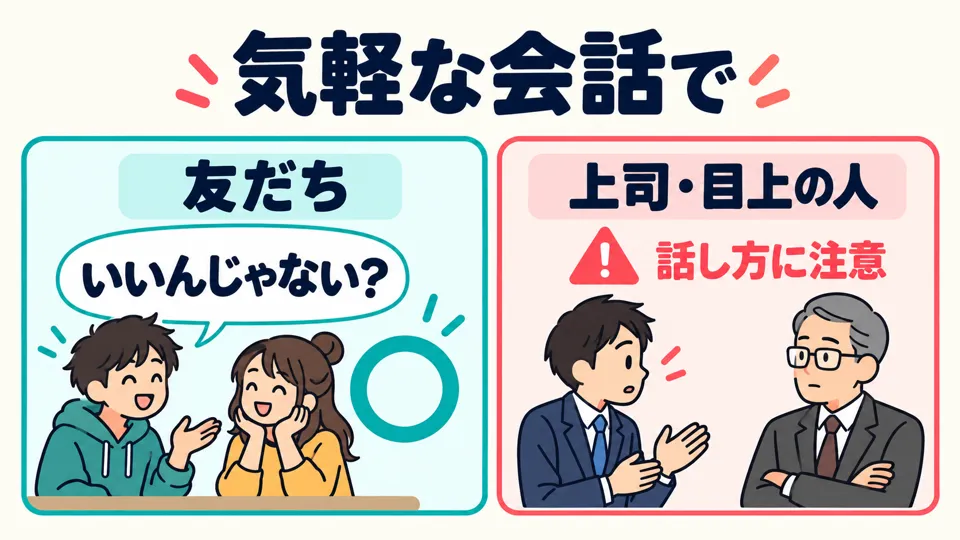
Use it in casual chats with friends or people you know. Mind your register when speaking to elders or your boss.
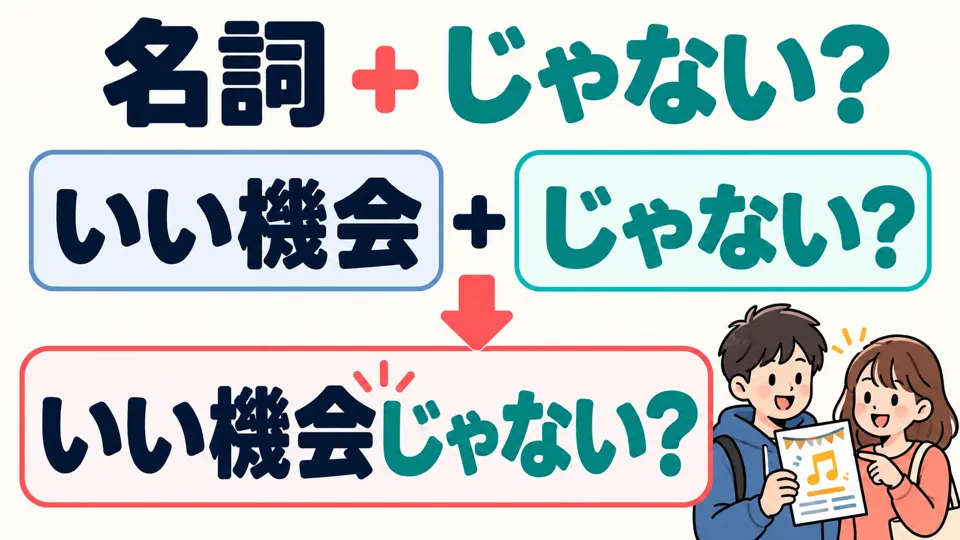
You can attach 「じゃない?」 directly to a noun, as in 「いい機会じゃない?」.
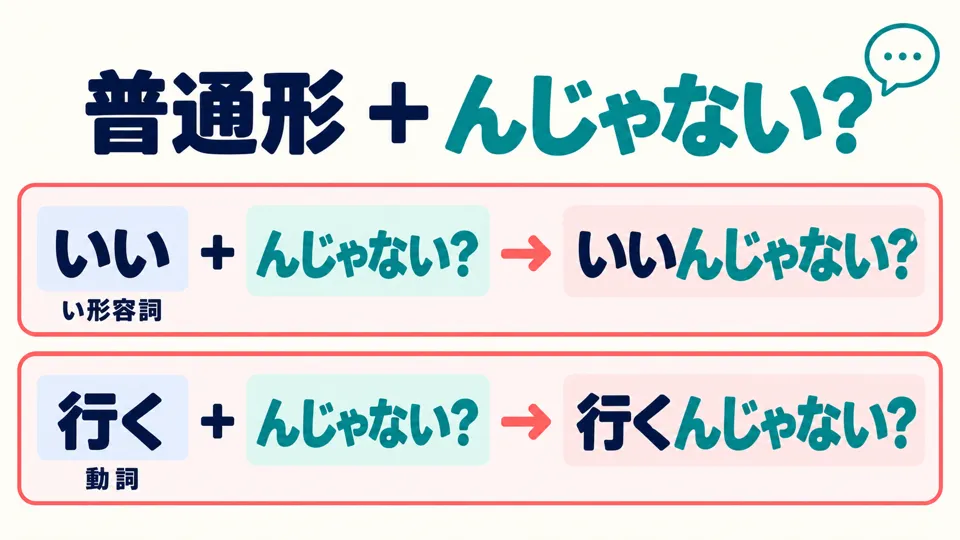
Use the plain form before 「んじゃない?」, as in 「いいんじゃない?」.
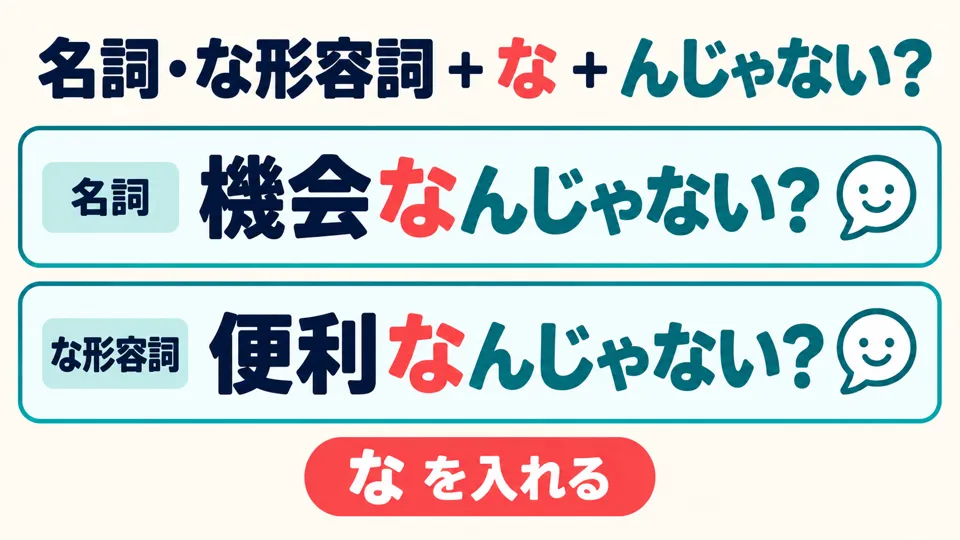
Add 「な」 between a noun or な-adjective and 「ん」, as in 「機会なんじゃない?」.
Example sentences
- せっかくsekkaku日本nipponにniいるなら、irunara、地域chiiki活動katsudouにni参加sankaしshiてteみるmiruの
In a conversation

Check yourself
Level 1 · Recognise
Which sentence is correct?
Level 1 · Recognise
Listen and choose the meaning
Level 2 · Build
Put the words in order
If you join that club, wouldn't it broaden your horizons?
Level 3 · Use
What goes in the blank?
せっかく日本にいるなら、地域活動に参加してみるのも____?
Since you're in Japan, why not try participating in local activities?
More grammar in this theme
- 〜じゃない?・〜んじゃない?right?; gentle suggestion