
Japanese grammar · ≈ JLPT N2 · Intermediate 1
〜ことだし~koto da shi
since, given that
Use 〜ことだし to give a reason, often as a lead-in to a suggestion, decision, or intention.
How it works

Look at the picture: having some free time becomes the occasion to suggest going to the social gathering.
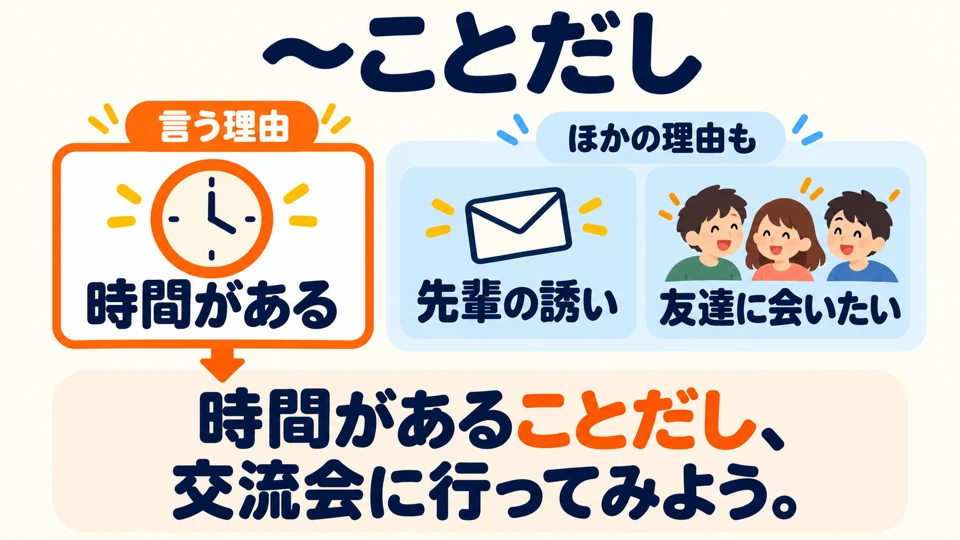
Giving one reason often implies that there are others too; you do not need to list them all.
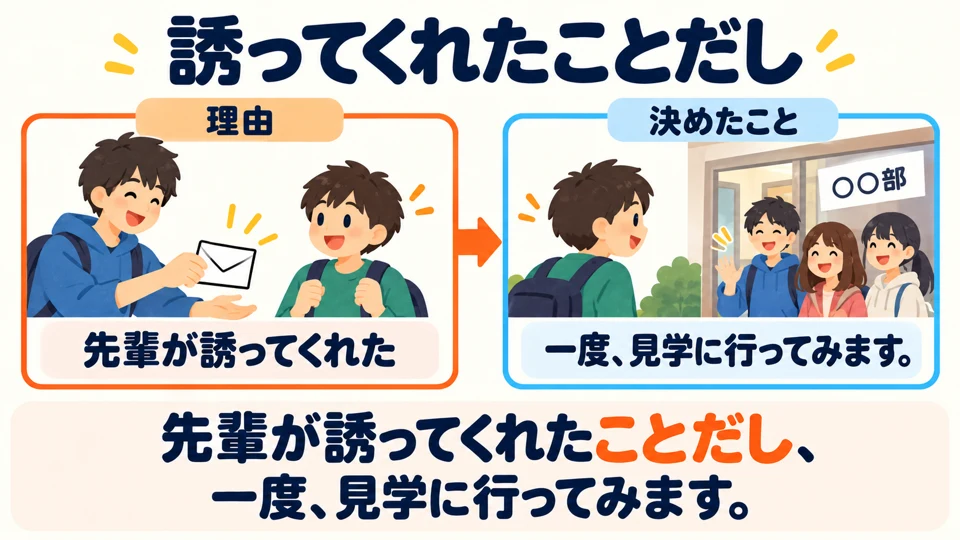
An older student has already invited you; you use this as a reason to decide to go and take a look.
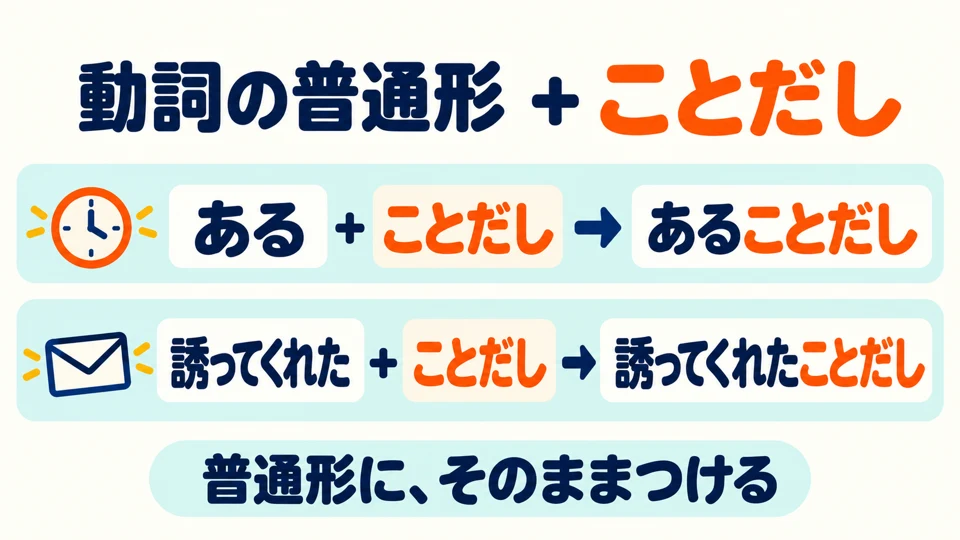
Attach 「ことだし」 to the plain form of a verb: あることだし、誘ってくれたことだし.
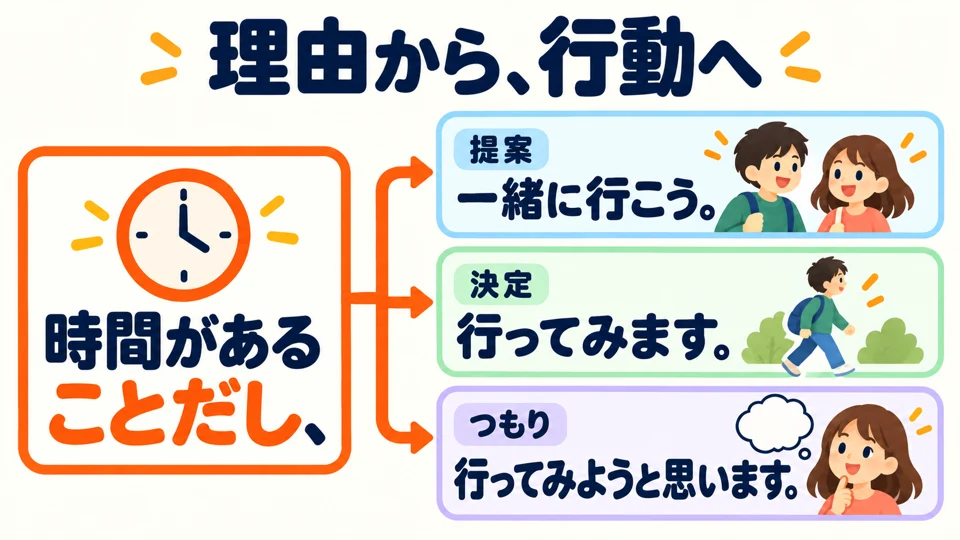
The reason is often followed by a suggestion, decision, or intention, such as going to take a look or saying “Let’s go together.”

On seeing an information booth, you invite your companion to hear more, using “Since there’s a booth here” as the reason.
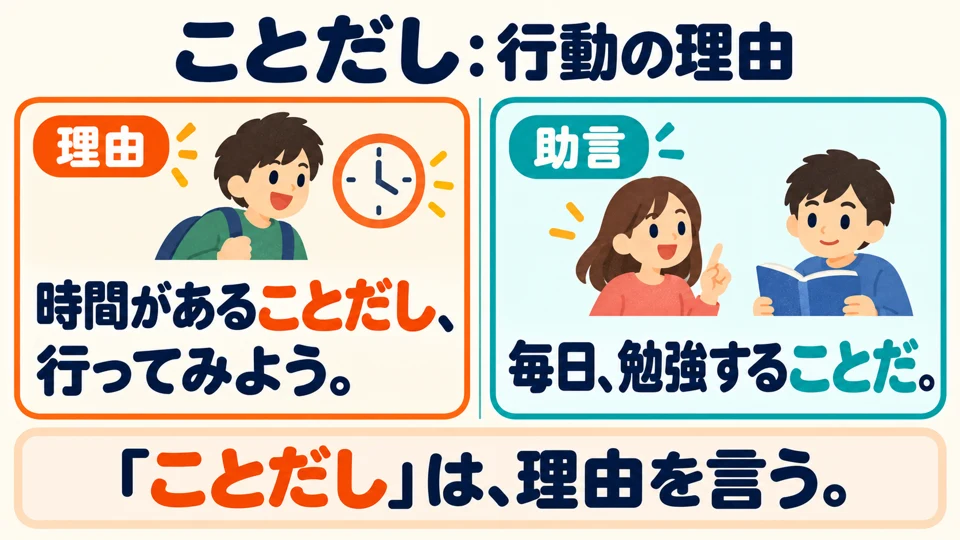
Here, 「ことだし」 explains the reason for an action; it does not advise someone what they should do.
Example sentences
- 週末shuumatsuはwa時間jikanがgaあるaruことkotoだdaし、shi、交流kouryuu会kaiにni
In a conversation

Check yourself
Level 1 · Recognise
Which sentence is correct?
Level 1 · Recognise
Listen and choose the meaning
Level 2 · Build
Put the words in order
Since I have time this weekend, I think I'll try going to the exchange event.
Level 3 · Use
What goes in the blank?
週末は時間がある____、交流会に行ってみようと思います。
Since I have time on the weekend, I think I'll go to the exchange event.
More grammar in this theme
- 〜ことだしsince, given that