
Japanese grammar · ≈ JLPT N3 · Intermediate 1
〜なぁ~ naa
softly voiced wish
「〜なぁ」 adds a gentle, casual feeling to a wish or another inner reaction.
How it works
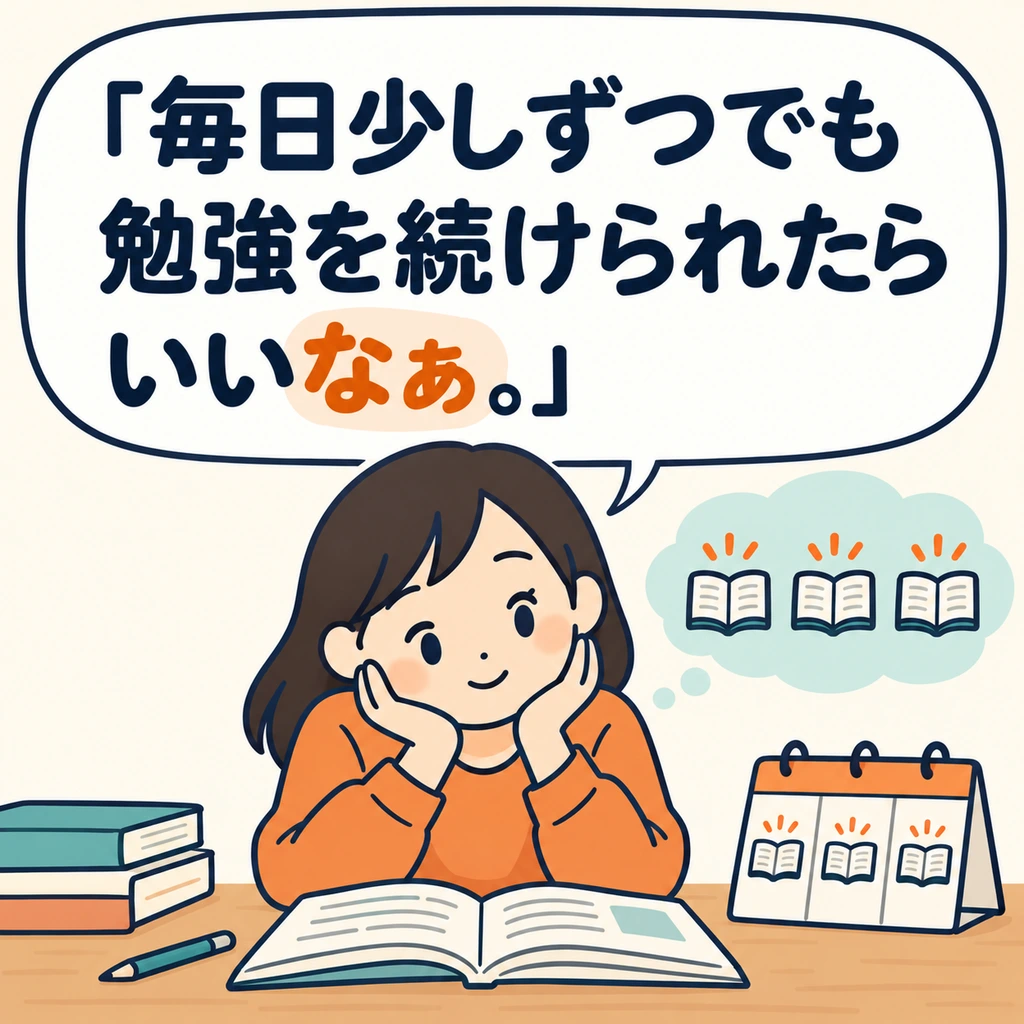
Looking at her daily study plan, she softly voices a wish. What tone does the orange part add?

At the end of a sentence, 「なぁ」 lets an inner wish come out naturally, with a hopeful tone.
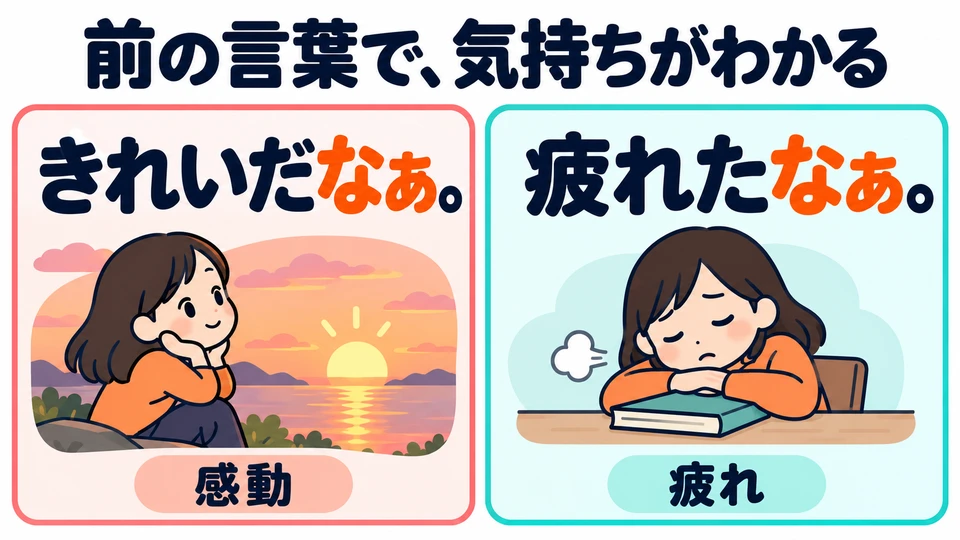
It can also express a heartfelt reaction or other inner feelings. The words before it tell you which feeling is meant.
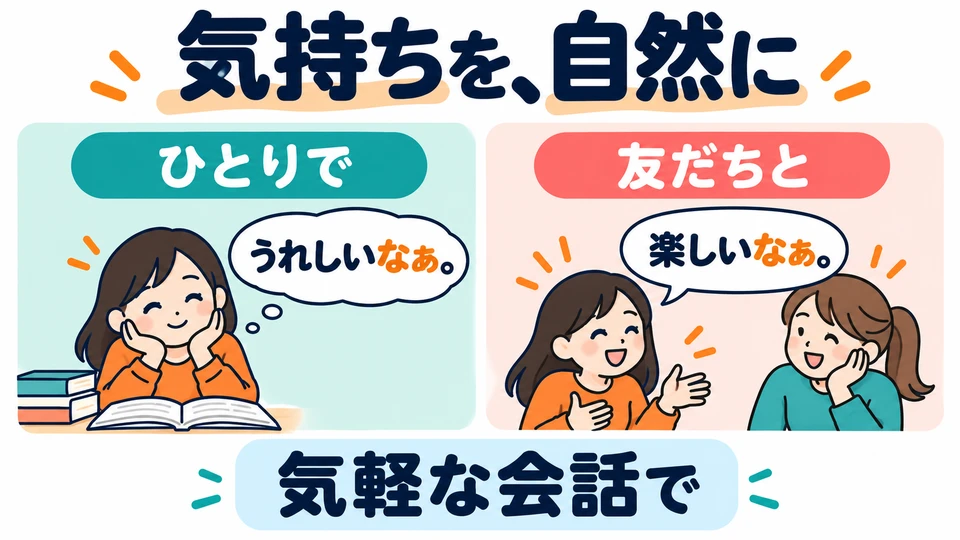
It often sounds like talking to yourself, but can also reveal your feelings in conversation. It suits casual spoken situations.
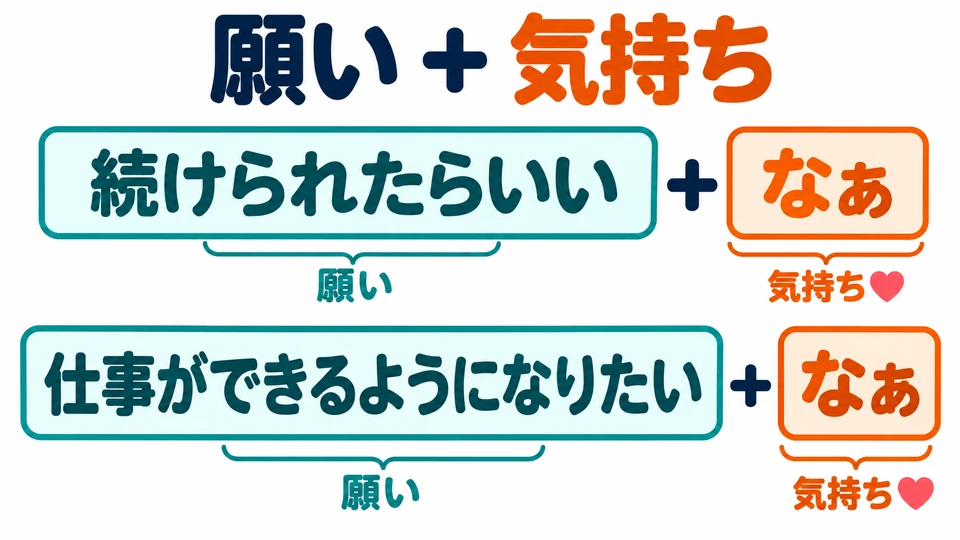
In the examples, 「たらいい」 and 「たい」 express the wishes; 「なぁ」 adds feeling.
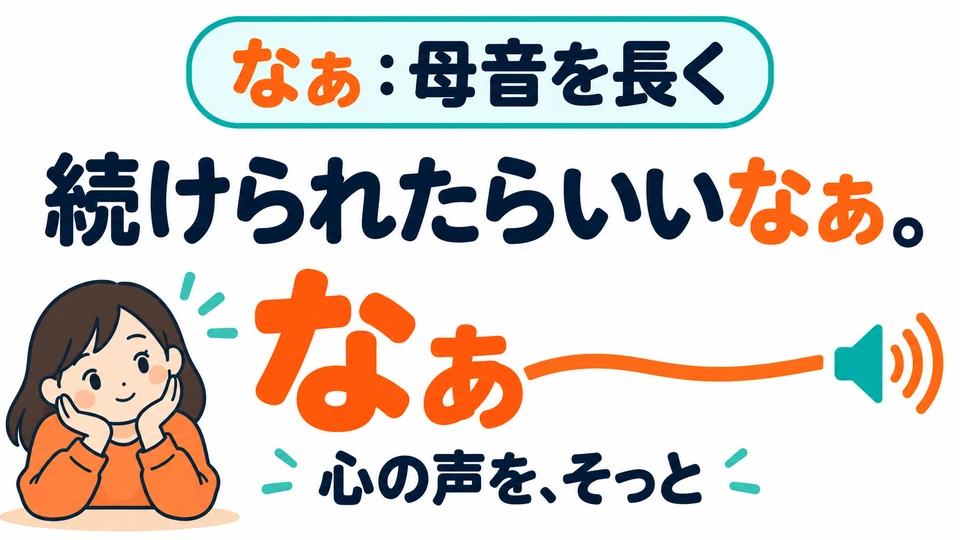
Listen to the end of the examples: the vowel in 「なぁ」 is drawn out, as if gently voicing a feeling.
Example sentences
- 毎日mainichi少しsukoshiずつzutsuでdeもmo勉強benkyouをo続けられたらいいtsuzukeraretaraiiなぁ。naa。
I wish I could keep studying every day, even if it's just a little bit.
In a conversation

- A来年の就職活動のために、今から何かできることはないかなぁ。
A: I wonder if there is anything I can do starting now for next year's job hunting.
Check yourself
Level 1 · Recognise
Which sentence is correct?
Level 1 · Recognise
Listen and choose the meaning
Level 2 · Build
Put the words in order
I wish I could decide clearly and early what I want my future to look like.
Level 3 · Use
What goes in the blank?
自分の将来像を早くはっきりと決められたらいい____。
I wish I could decide my future vision clearly and soon.
More grammar in this theme
- 〜なぁsoftly voiced wish