
Japanese grammar · ≈ JLPT N3 · Intermediate 1
〜ということです~ to iu koto desu
so that means
Use 「〜ということです」 to restate information and check whether your understanding is right.
How it works
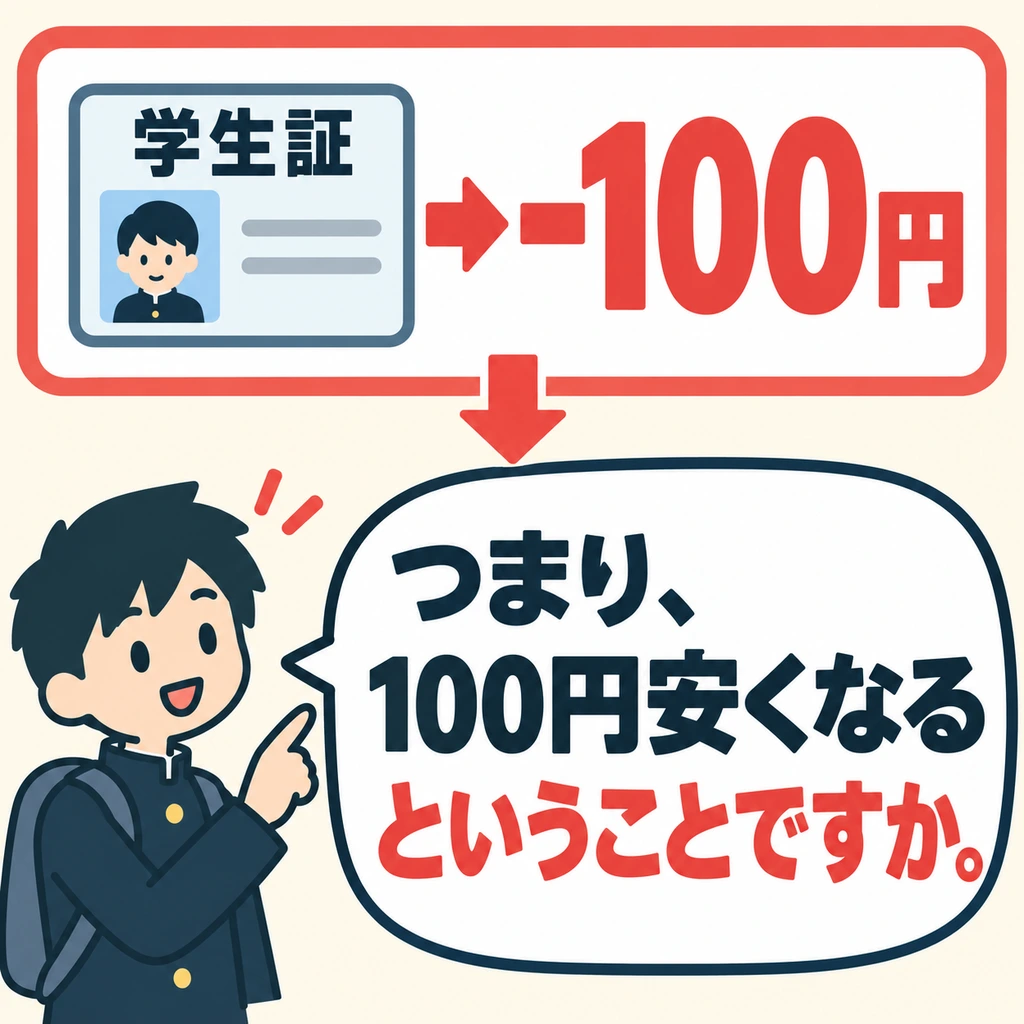
After reading the discount notice, check in your own words: “Does showing my student ID make it 100 yen cheaper?”
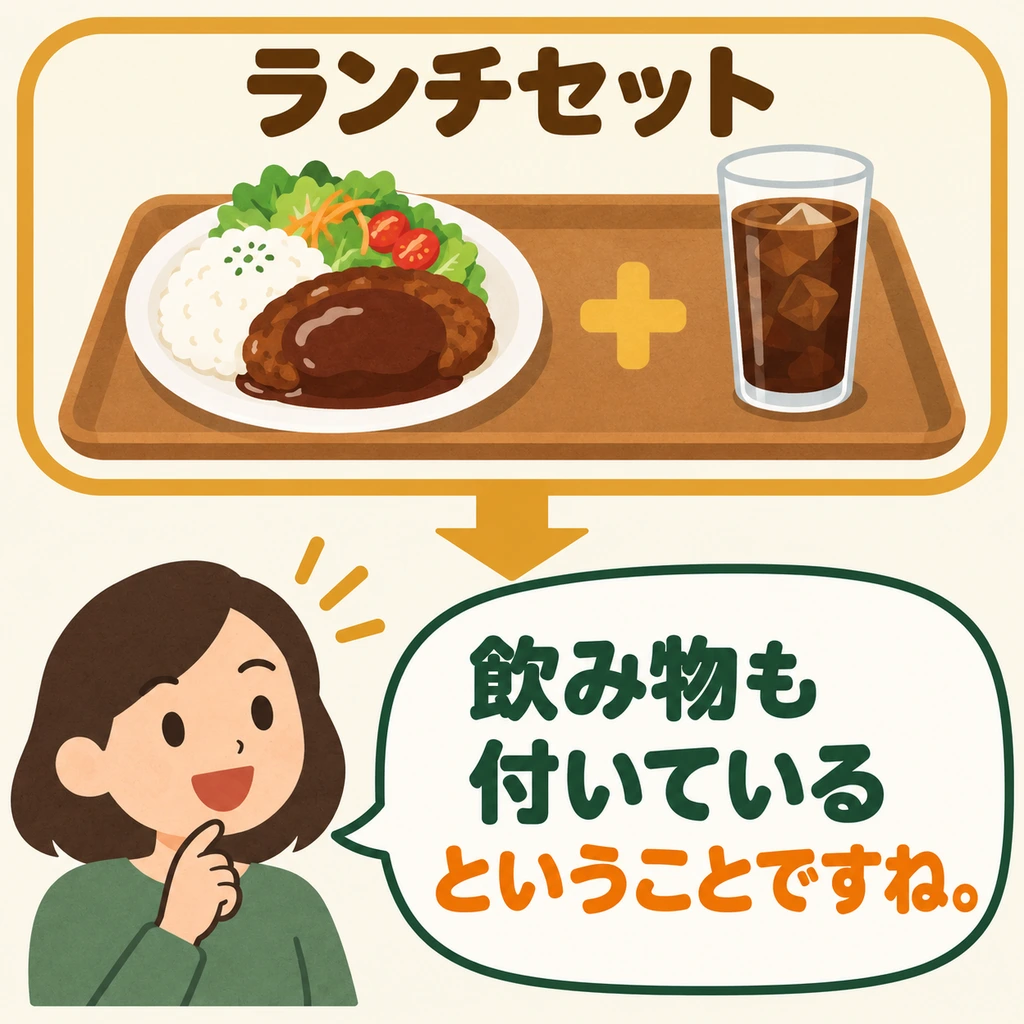
The set meal picture shows food and a drink. Say what you understand to confirm that the drink is included too.
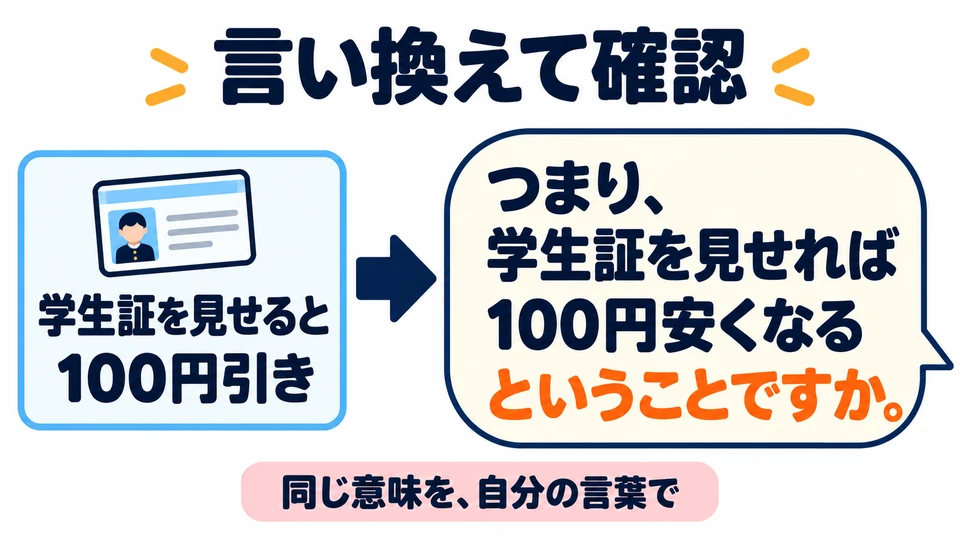
Here, 「ということだ」 rephrases the preceding information and restates what it means.
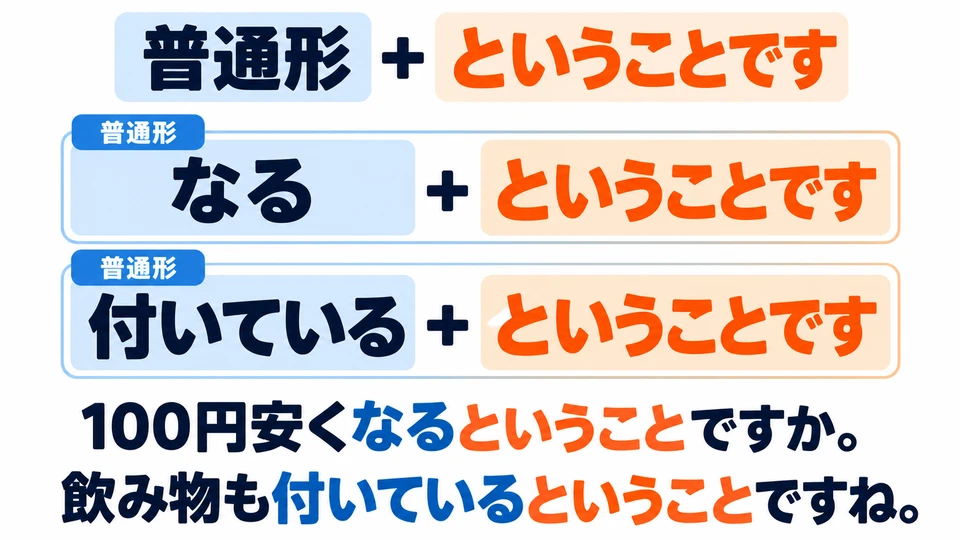
The examples add 「ということです」 to the plain forms 「なる」 and 「付いている」 to express what the speaker understands.
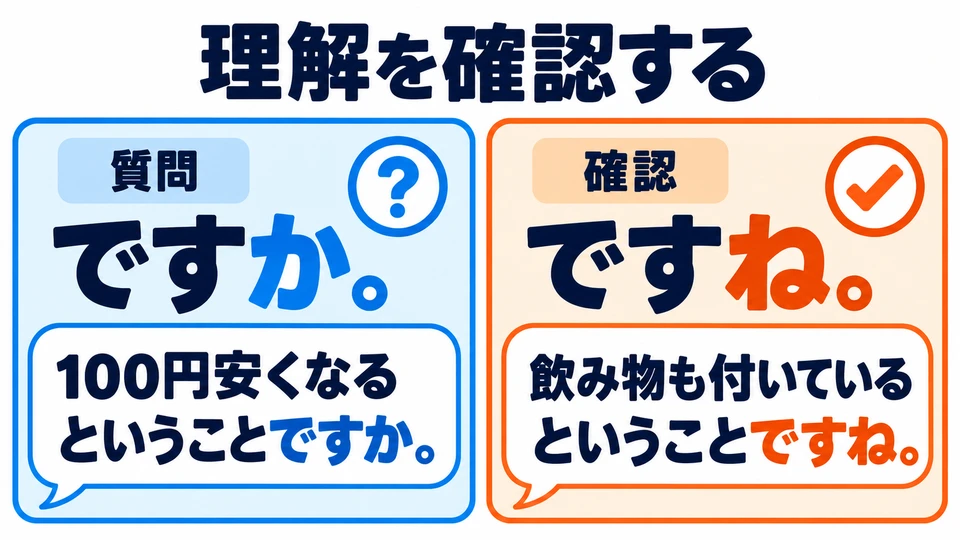
The first example uses 「ですか」 to ask whether the understanding is correct; the second uses 「ですね」 to invite confirmation.
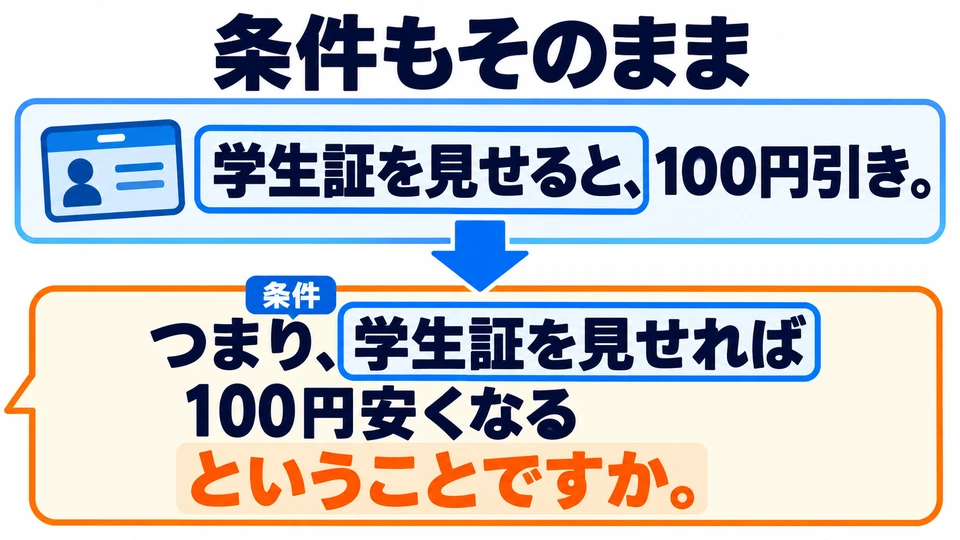
In the discount example, showing a student ID is the condition. Keep that condition when rephrasing to check your understanding.
Example sentences
- つまり、tsumari、学生証gakuseishouをo見せれmisereばba100hyaku円en安くyasukuなるnaruとtoいうiu
In a conversation

Check yourself
Level 1 · Recognise
Which sentence is correct?
Level 1 · Recognise
Listen and choose the meaning
Level 2 · Build
Put the words in order
So that means the lunch set also comes with a drink, right?
Level 3 · Use
What goes in the blank?
つまり、学生証を見せれば100円安くなる____。
So, does that mean if I show my student ID, it will be 100 yen cheaper?
More grammar in this theme
- 〜ということですso that means