
〜ている~te iru
Te iru (〜ている) means “ongoing state or practice”.
This restaurant is always crowded at lunchtime.
Use 「〜ている」 for a current state, a result that remains, or an ongoing policy such as offering a discount.
In the course
How it works
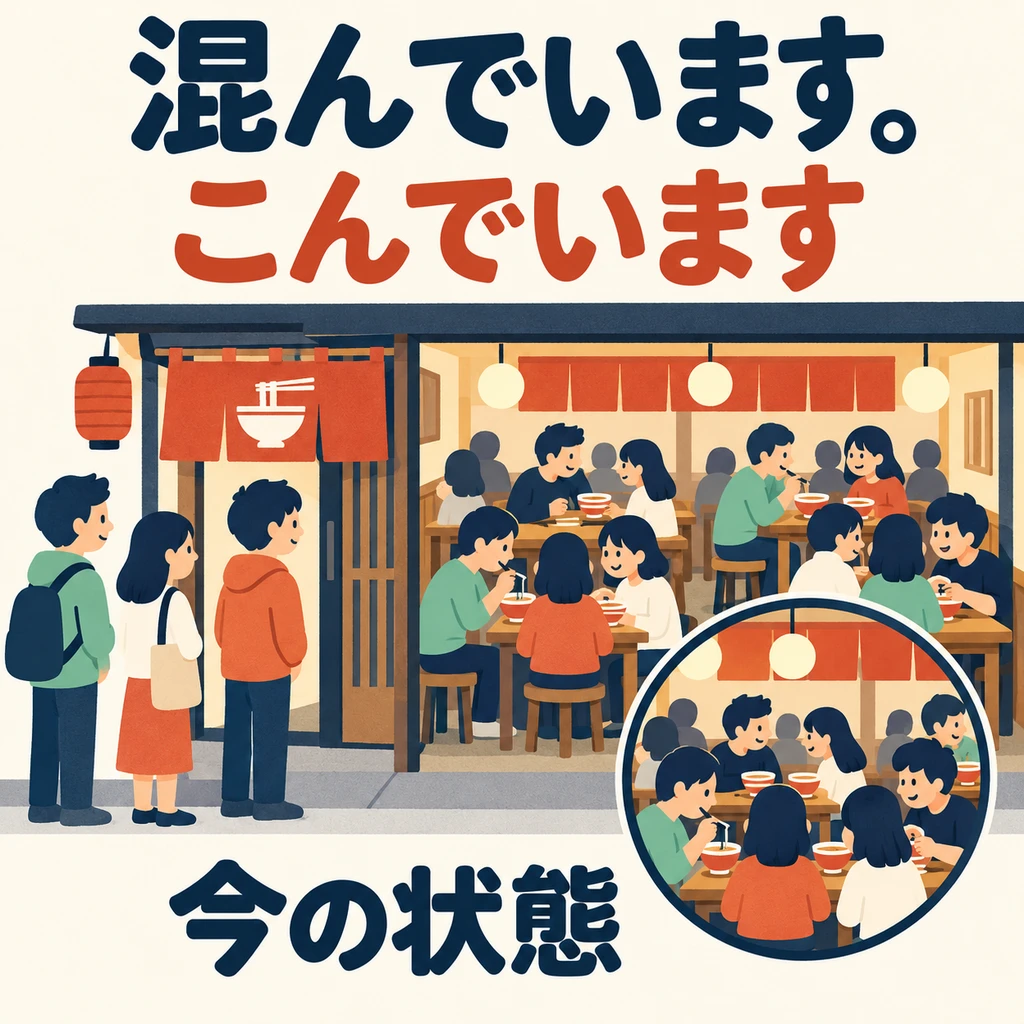
Look at the full restaurant: 「混んでいます」 describes how crowded it is now.
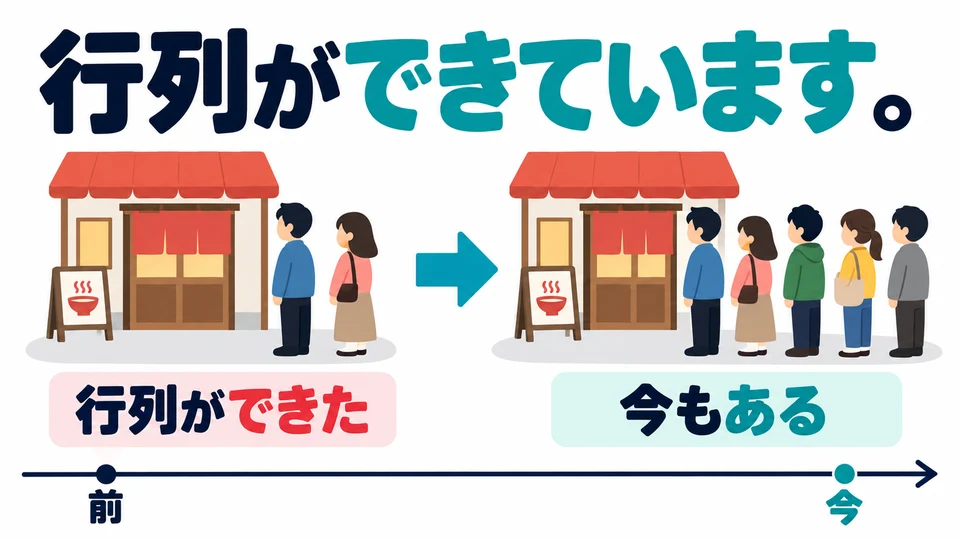
「行列ができています」: a line has formed and is still there now.
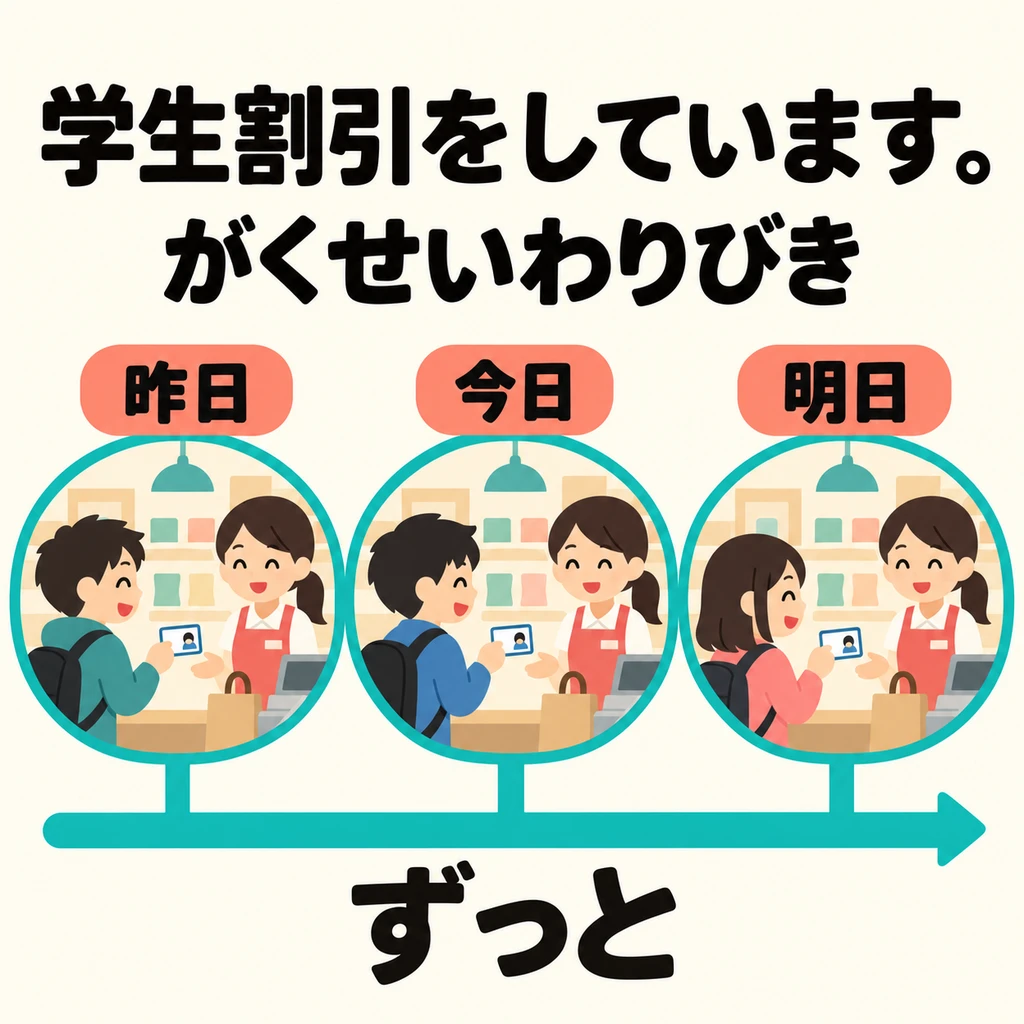
The shop continues to offer student discounts. 「~ている」 can describe this too.
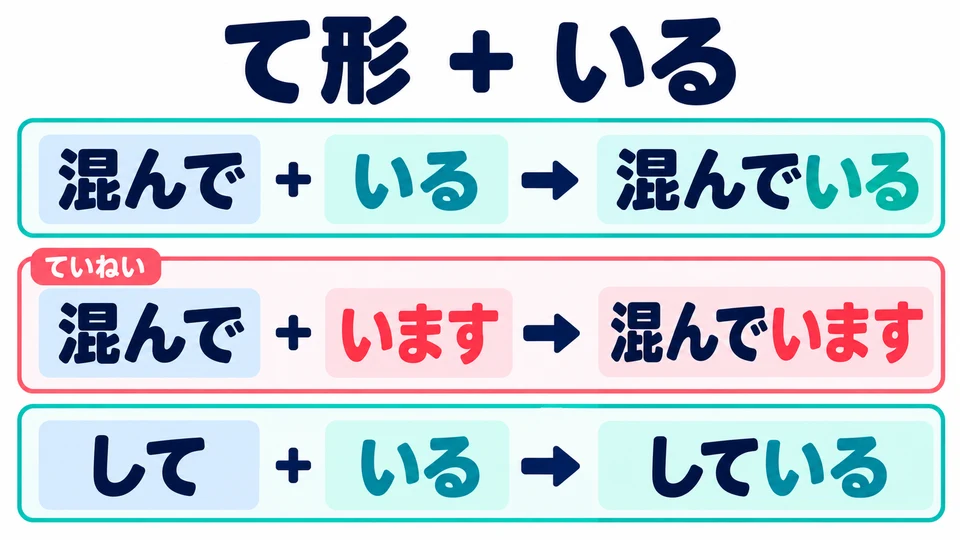
Verb て-form + いる; the polite form is 「~ています」.
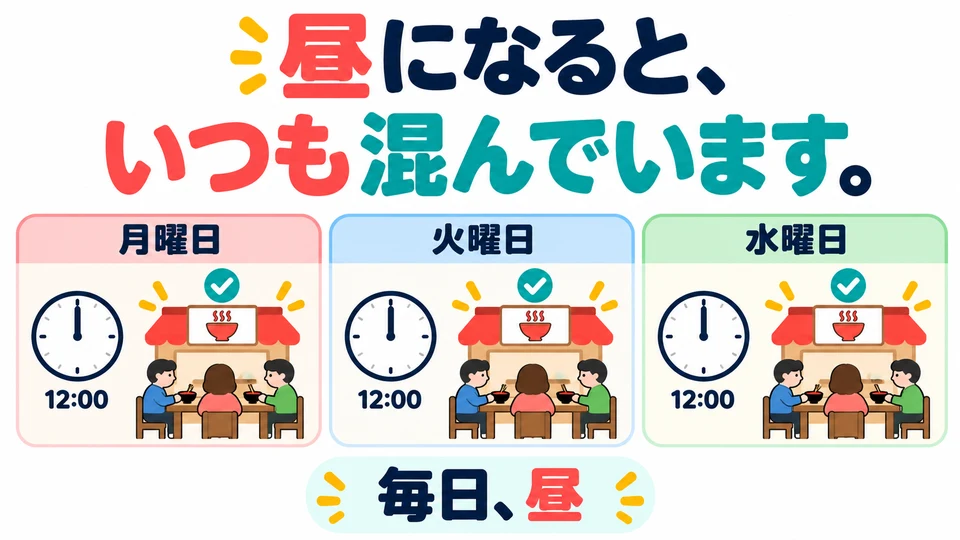
In the example, 「いつも」 means it is crowded every lunchtime, not all day long.
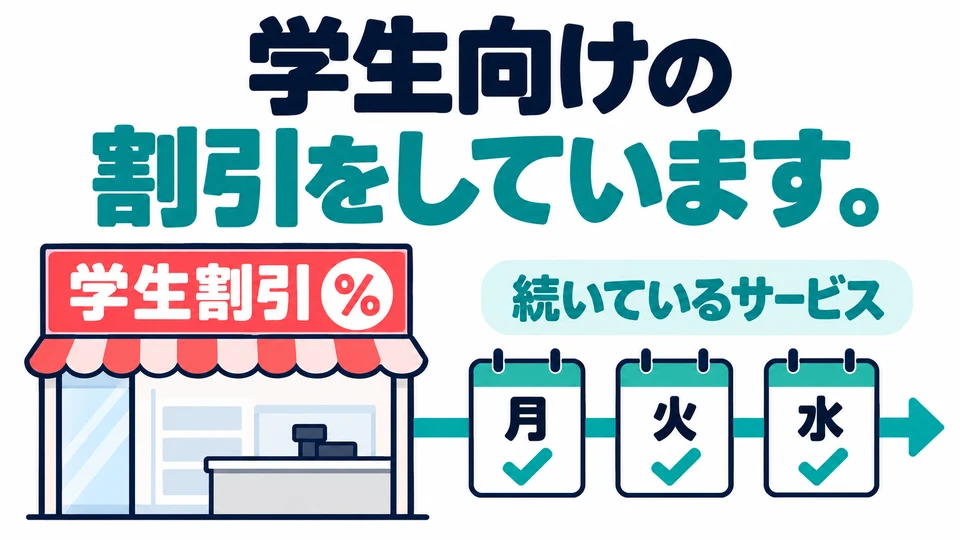
Here, 「割引をしています」 describes a discount policy. No one needs to be paying right now.
Example sentences
- このkonoレストランresutoranは、wa、昼hiruにniなるnaruとtoいつもitsumo混んkonでdeいます。imasu。
This restaurant is always crowded at lunchtime.
In a conversation

- Aあのお店、すごくにぎわっていますね。
A: That shop is really bustling, isn't it?
- Bあそこは人気のラーメン屋で、いつも行列
Check yourself
Level 0 · Conjugate
Use the て-form for 〜ている: an ongoing action, state, or habit. て形(〜ている)
今、友達と駅前の店でラーメンを(食べる)います。
Level 1 · Recognise
Which sentence is correct?
Level 1 · Recognise
Listen and choose the meaning
Level 2 · Build
Put the words in order
This shop offers discounts for students.
Level 3 · Use
What goes in the blank?
このレストランは、昼になるといつも____(丁寧に)。
This restaurant is always crowded at lunchtime.
More grammar in this theme
- 〜ているongoing state or practice