〜て〜~te ~
Te (〜て〜) means “accompanying state or sequence”.
I put on a mask and went to the hospital.
Use 〜て〜 for an accompanying state or manner, or to connect actions in sequence.
In the course
How it works
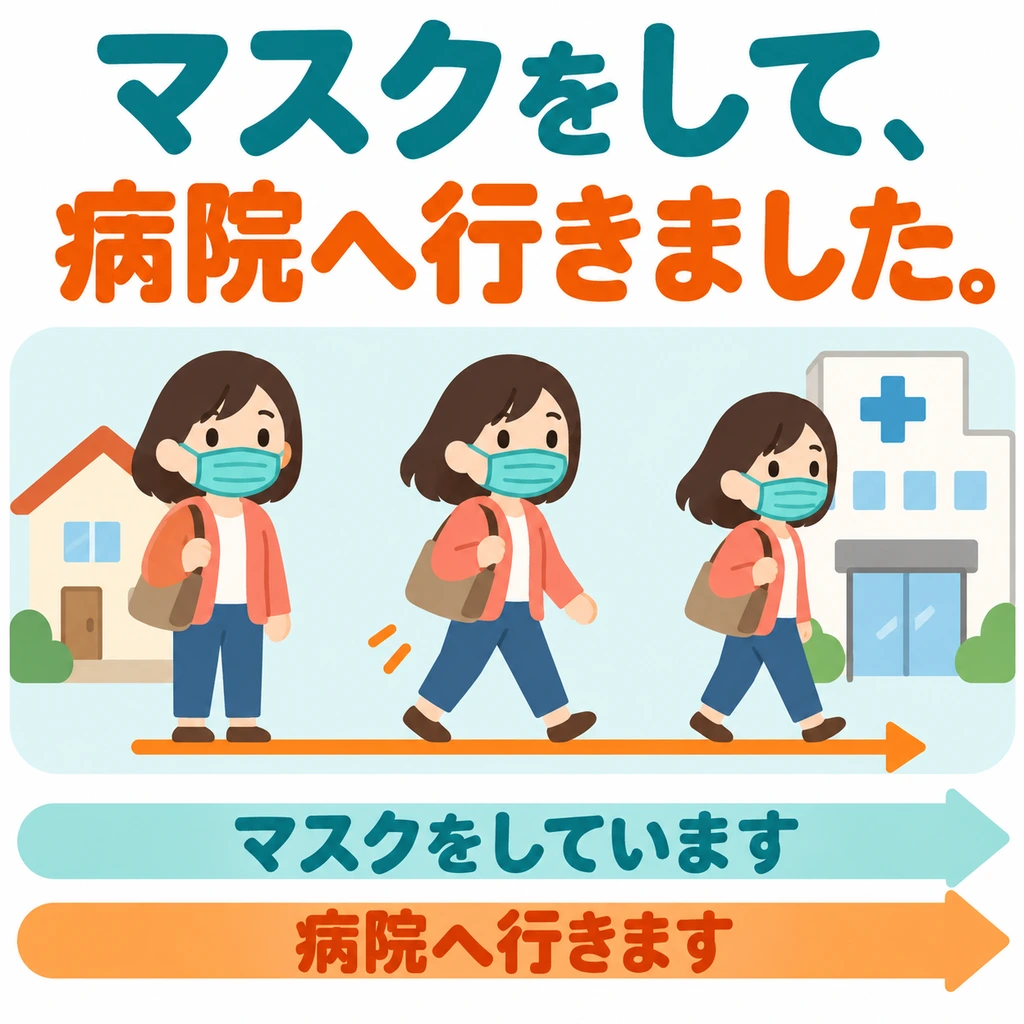
Does she keep her mask on all the way from home to the hospital? The two arrows show the state and action overlapping.
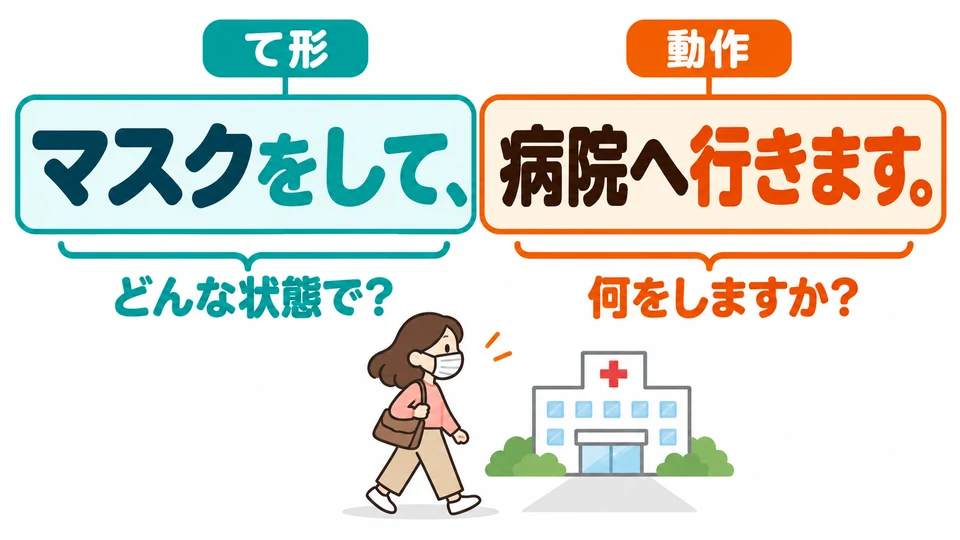
The first part uses a verb in て形 to describe the accompanying state or the way the action in the second part is performed.
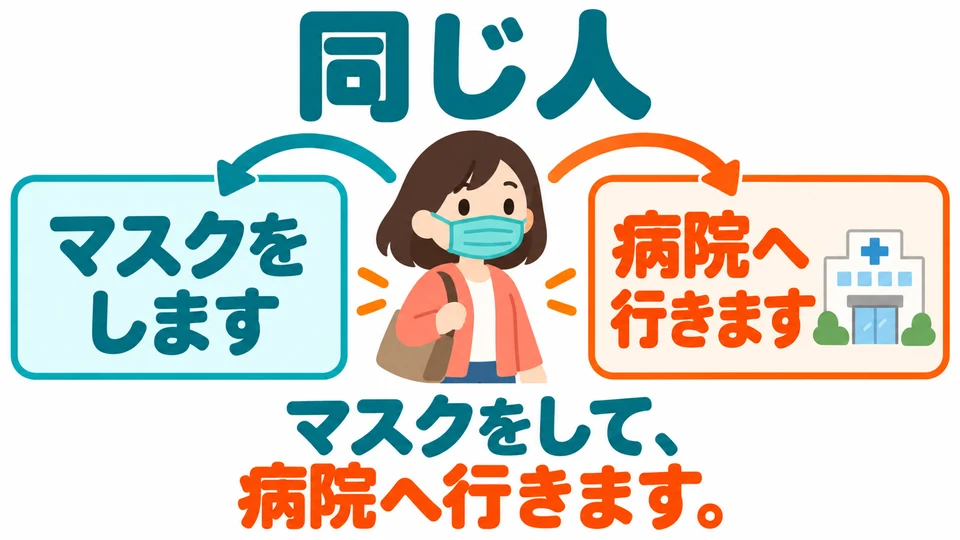
These expressions usually refer to the same person: the person wearing the mask is also the one going to the hospital.
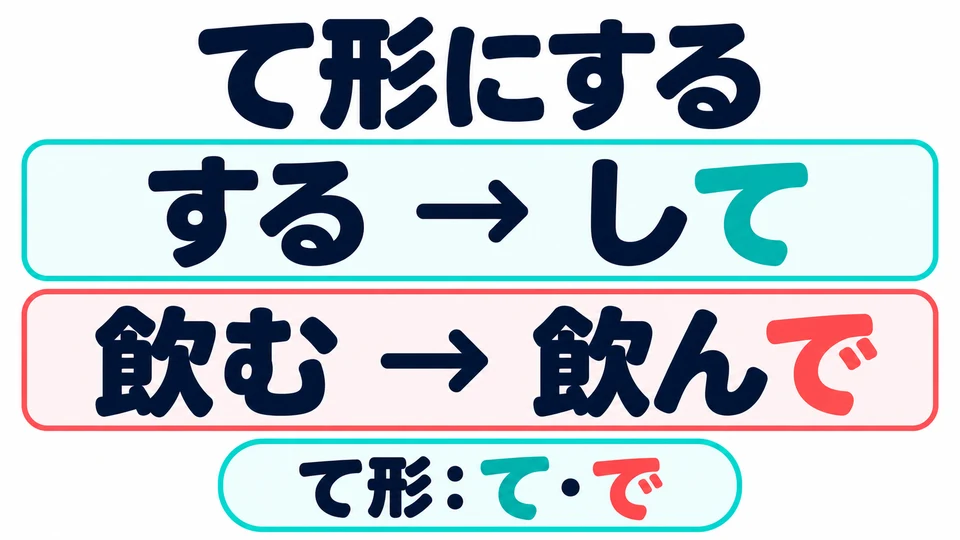
To connect the parts, first change the verb to て形: する→して, 飲む→飲んで. A て形 can also end in で.
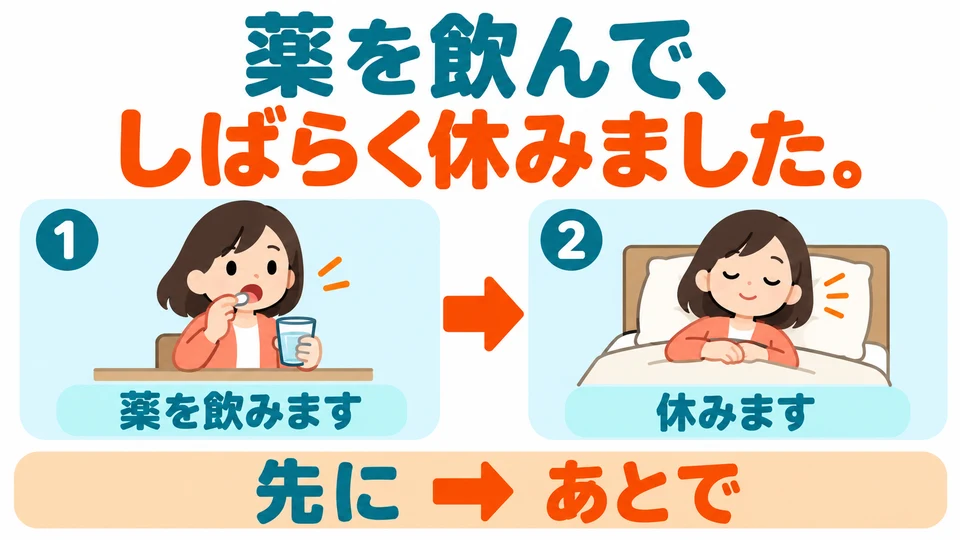
Here, the person rests after taking the medicine. The form connects actions in sequence; it does not mean resting while swallowing the medicine.
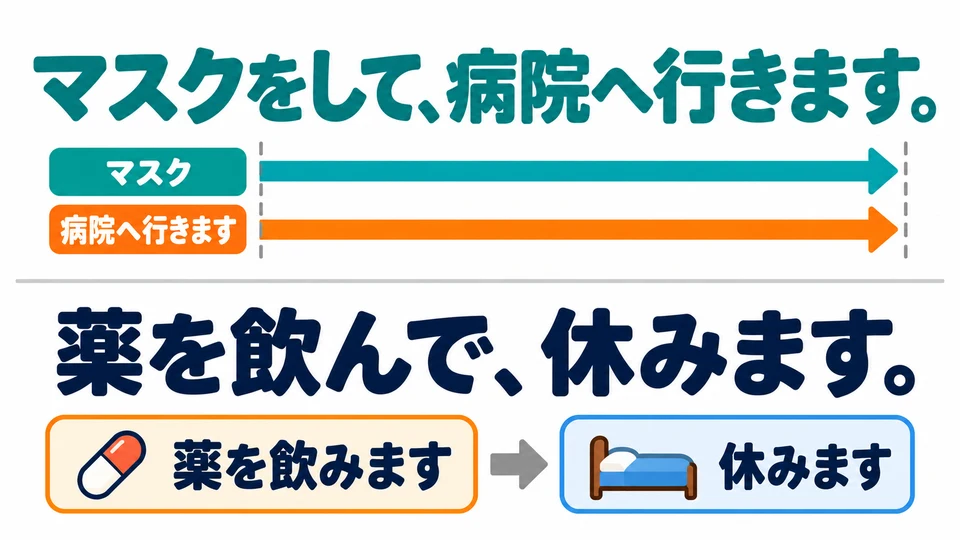
Wearing a mask is a state that continues during the trip; taking medicine is an action before resting. て does not always mean things happen at the same time.
Example sentences
- マスクmasukuをoしshiて、te、病院byouinへe行きました。ikimashita。
I put on a mask and went to the hospital.
- 薬kusuriをo
In a conversation
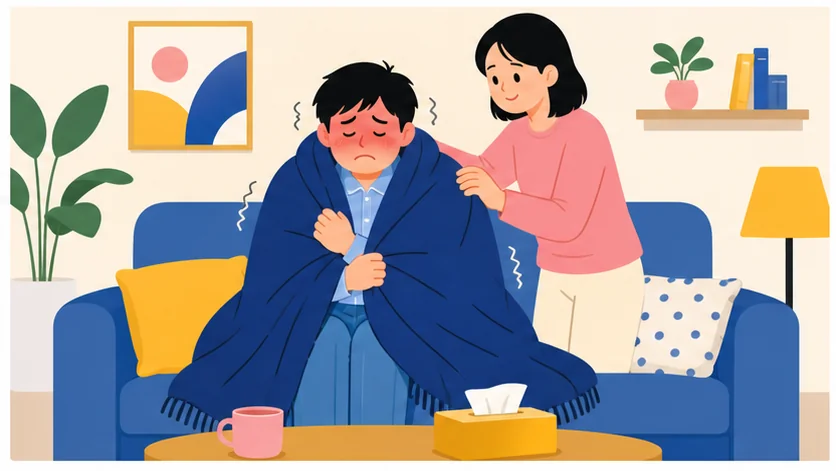
- A顔が真っ赤ですが、大丈夫ですか。
A: Your face is bright red, are you okay?
- B体が急に震えて、ひどい寒気が
Check yourself
Level 1 · Recognise
Which sentence is correct?
Level 1 · Recognise
Listen and choose the meaning
Level 2 · Build
Put the words in order
I wore a mask and went to the hospital.
Level 3 · Use
What goes in the blank?
マスクを____(する)、病院へ行きました。
I went to the hospital wearing a mask.
More grammar in this theme
- 〜て〜accompanying state or sequence