
Japanese grammar · ≈ JLPT N5 · Beginner 3
〜と読みます・〜と書いてあります~to yomimasu · ~to kaite arimasu
is read as / says
Use 「〜と読みます」 to give a reading and 「〜と書いてあります」 to report the exact visible written words.
How it works
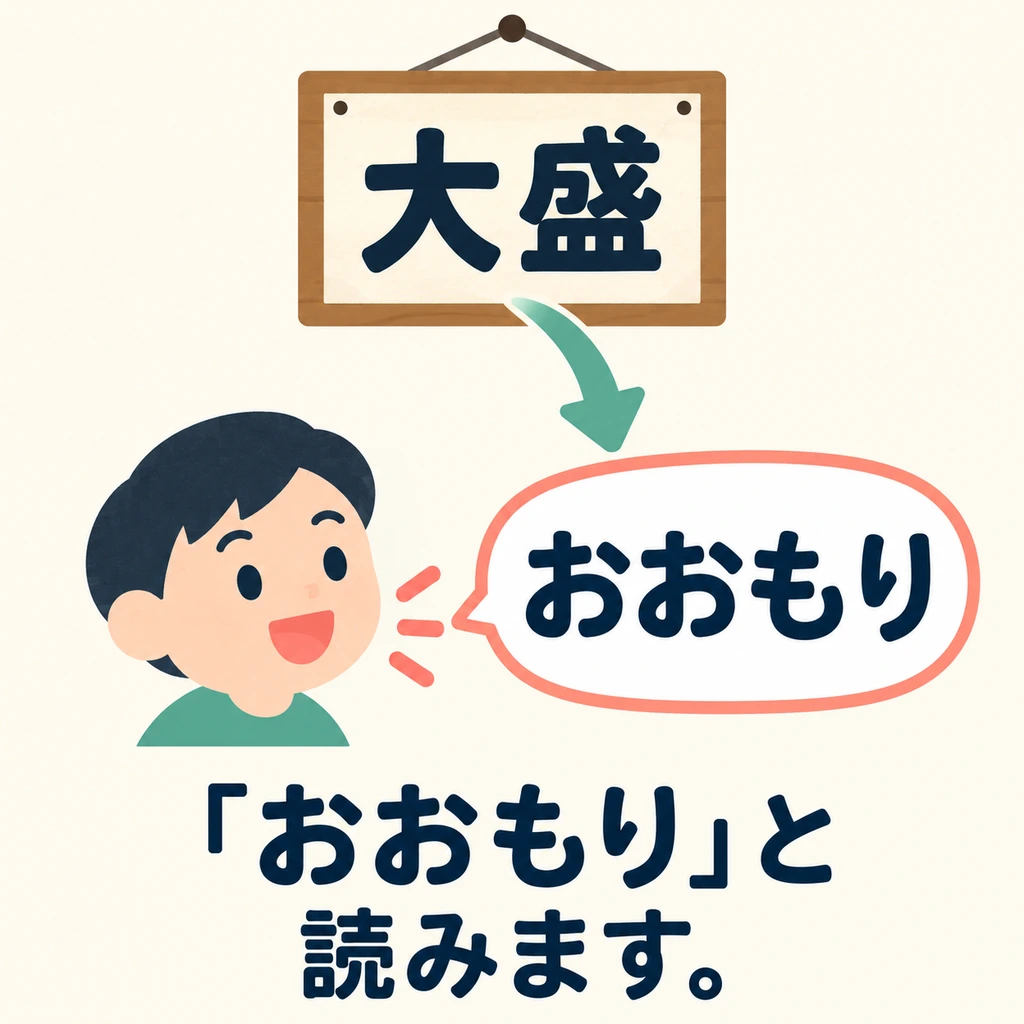
Unsure how to read the kanji? 「おおもり」と読みます tells someone how to pronounce 大盛.
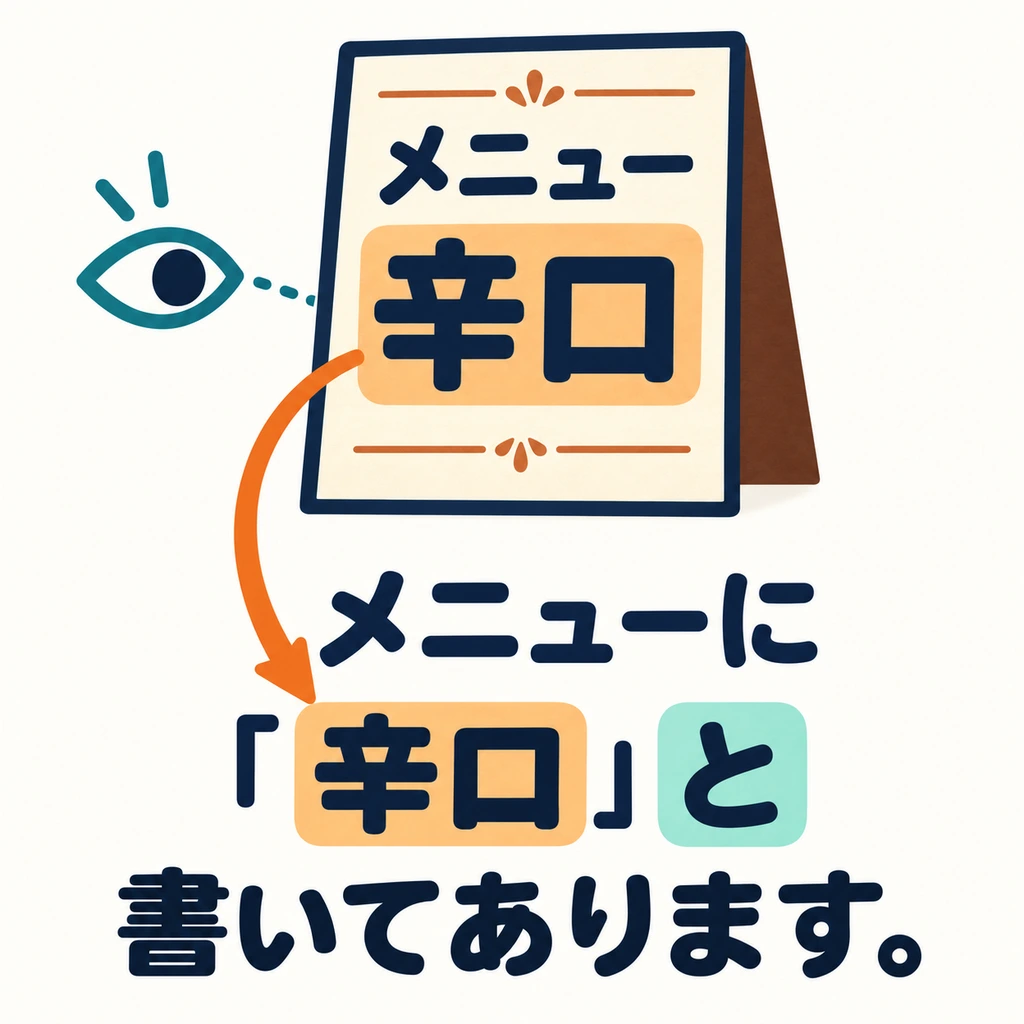
What does the menu say? 「辛口」と書いてあります tells someone the exact words you see.
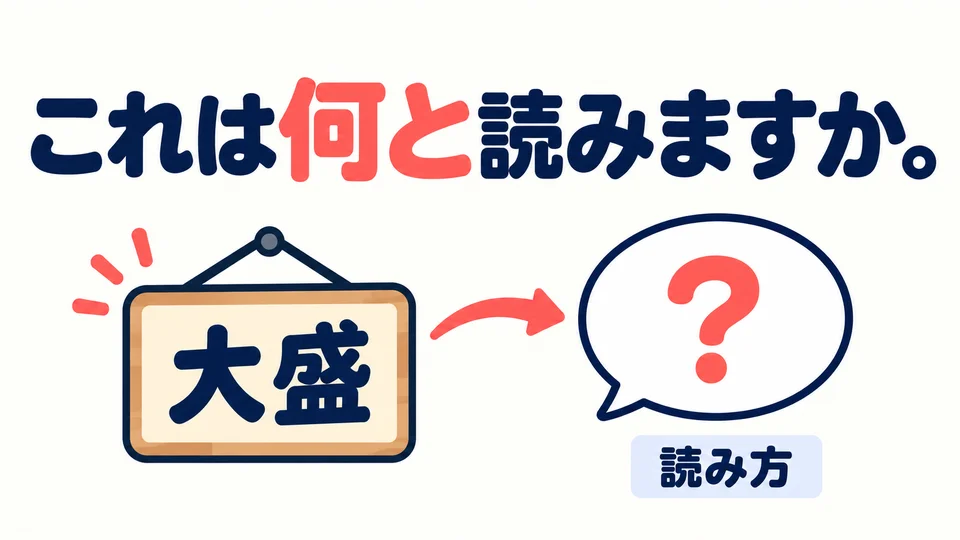
If you are unsure of the reading, ask: これは何と読みますか. 何と asks “How is this read?”
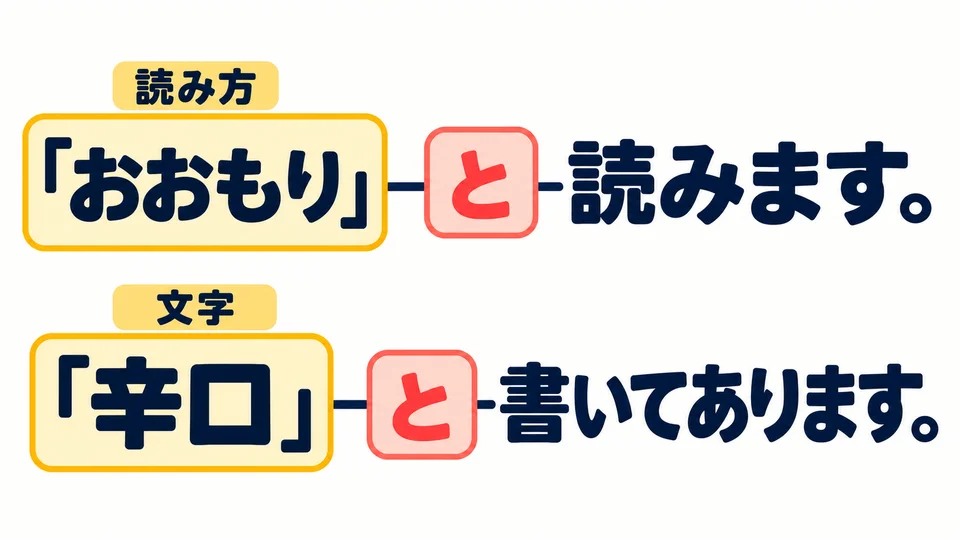
In 「おおもり」と読みます, と introduces the reading. It also marks quoted text when saying what is written.
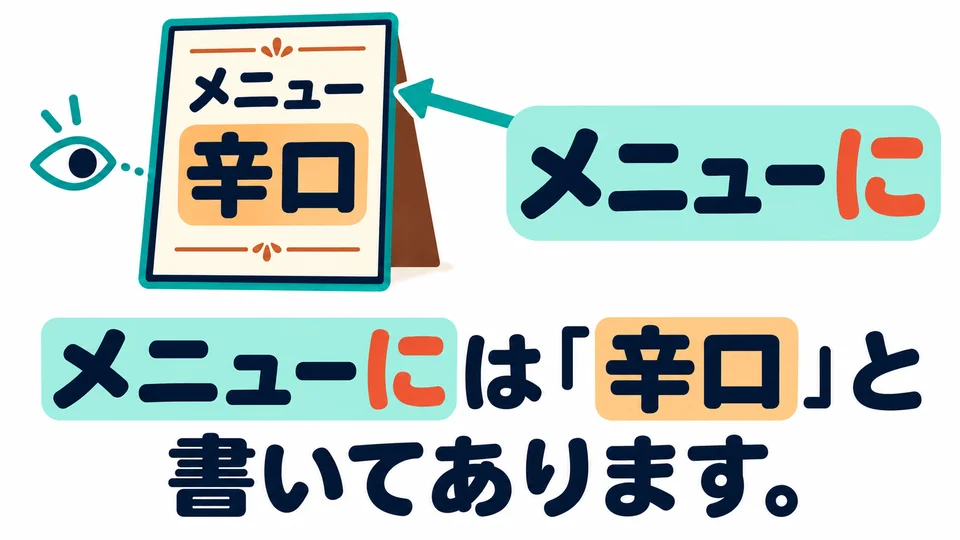
に in メニューに marks where the text is. First say where it is written, then what it says.
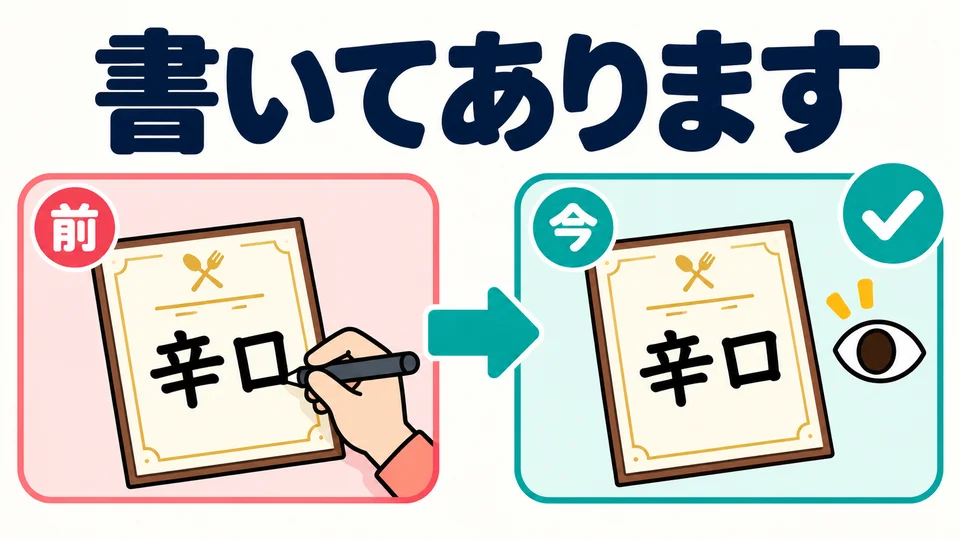
書いてあります means the text has already been written and is visible now, rather than someone being in the act of writing.
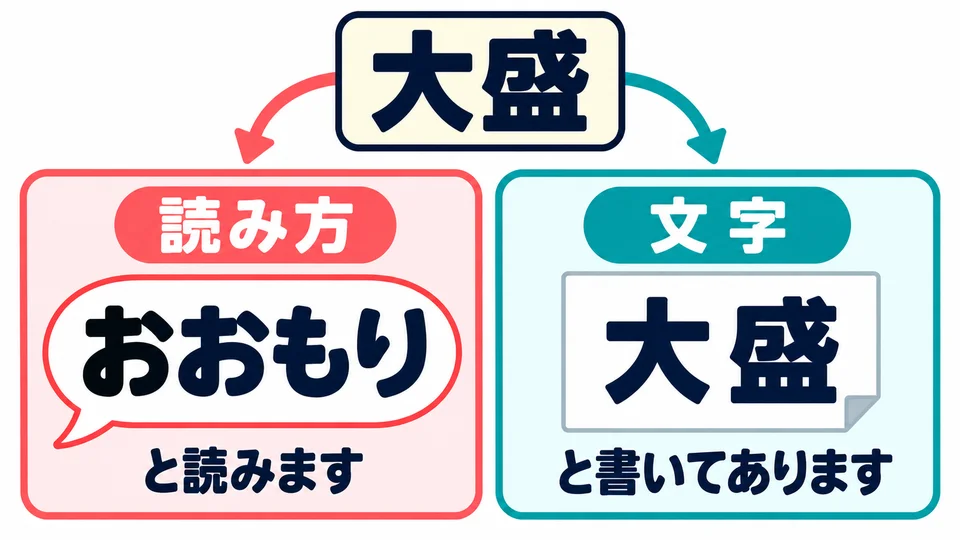
Keep pronunciation, written words, and meaning separate: 読みます gives the reading; 書いてあります gives the original text, not a translation.
Example sentences
- これkoreは"waおおもり"oomoriとto読みます。yomimasu
This is read as "oomori".
- メニューmenyuuにniは"wa
In a conversation

- Aこれは何と読みますか。
A: How do you read this?
- B「香ばしい」と読みます。
B: It's read as "koubashii".

- A
Check yourself
Level 1 · Recognise
Which sentence is correct?
Level 1 · Recognise
Listen and choose the meaning
Level 2 · Build
Put the words in order
This is read as "ohmori".
Level 3 · Use
What goes in the blank?
これは 読みます。
This is read as "omori".
More grammar in this theme
- 〜と読みます・〜と書いてありますis read as / says