JPEDLAB iconJPEDLAB
Save history

Create an account and play

Explore first, then save your progress whenever you are ready. No email address is required.

Start free
Read as articleCards
See the whole course›Intermediate 1›Health and Daily Habits

Japanese grammar · ≈ JLPT N4 · Intermediate 1

〜にくいです~nikui desu

difficult to do

Attach 〜にくいです to a verb stem to say an action is difficult, not impossible.

Start the interactive lessonIllustrated cards, audio and speaking practice

How it works

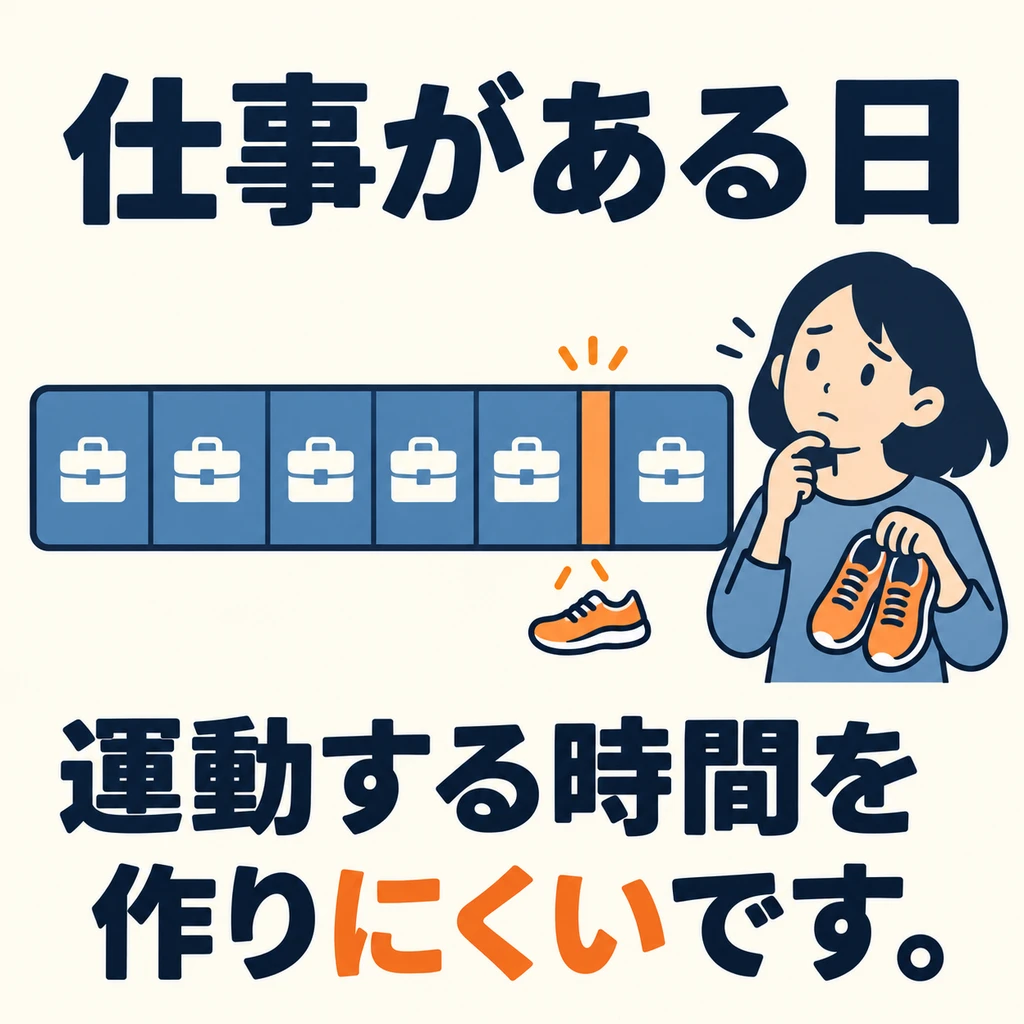
  1. Work fills the day, leaving little free time. Use 「にくい」 to explain that making time to exercise is difficult.
    Work fills the day, leaving little free time. Use 「にくい」 to explain that making time to exercise is difficult.

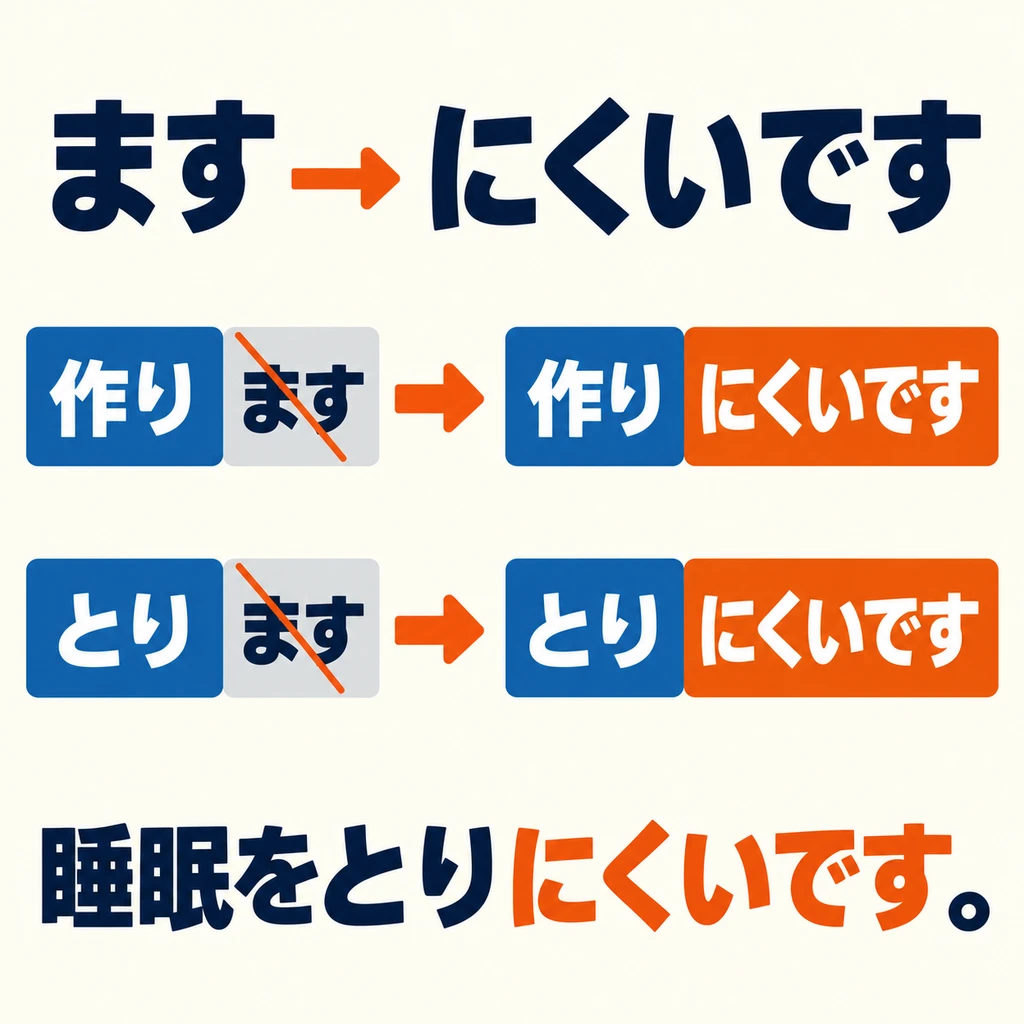
  2. Remove 「ます」 from the verb’s ます form and add 「にくいです」 to say that an action is difficult to do.
    Remove 「ます」 from the verb’s ます form and add 「にくいです」 to say that an action is difficult to do.

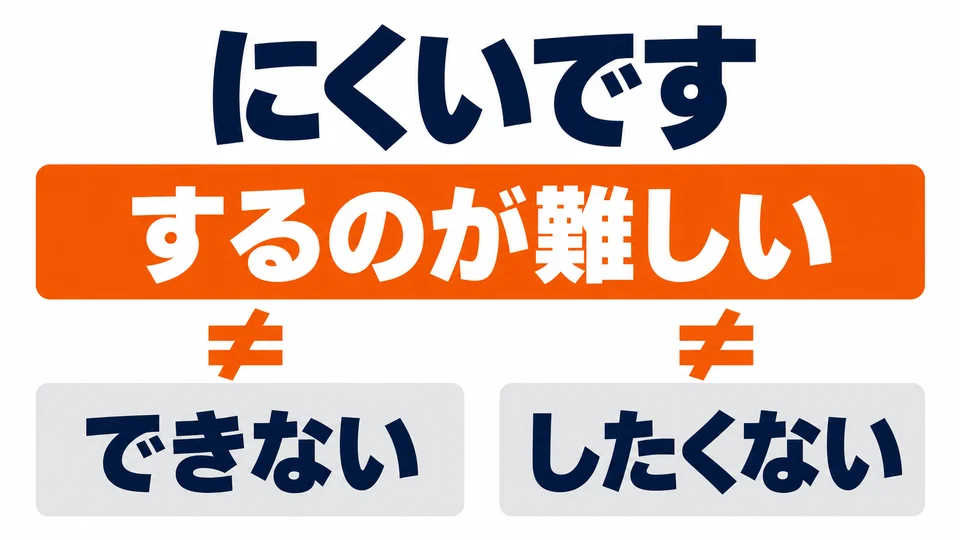
  3. 「にくい」 means something is not easy to do. It does not mean it is impossible or that you are unwilling to do it.
    「にくい」 means something is not easy to do. It does not mean it is impossible or that you are unwilling to do it.

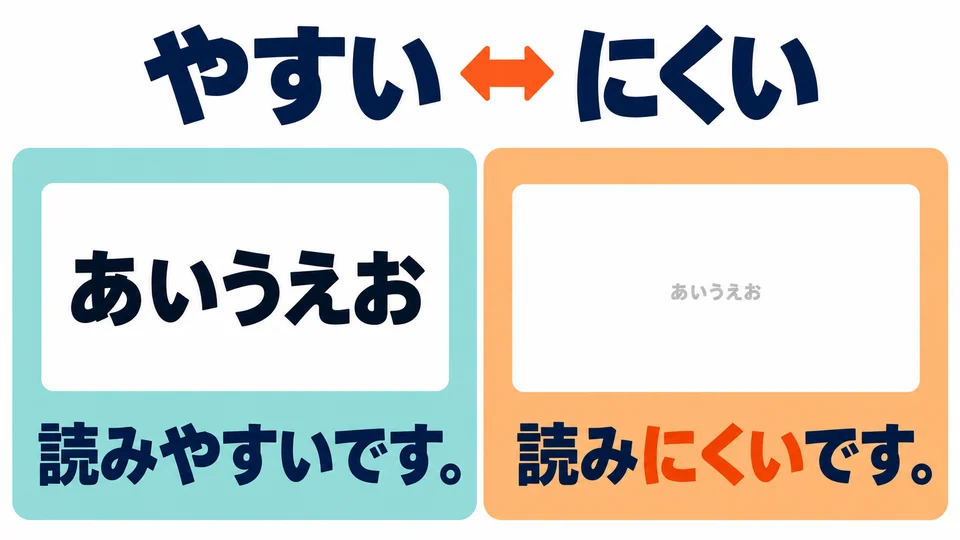
  4. For the same action, use 「やすい」 when it is easy and 「にくい」 when it is difficult. The meanings are opposites.
    For the same action, use 「やすい」 when it is easy and 「にくい」 when it is difficult. The meanings are opposites.

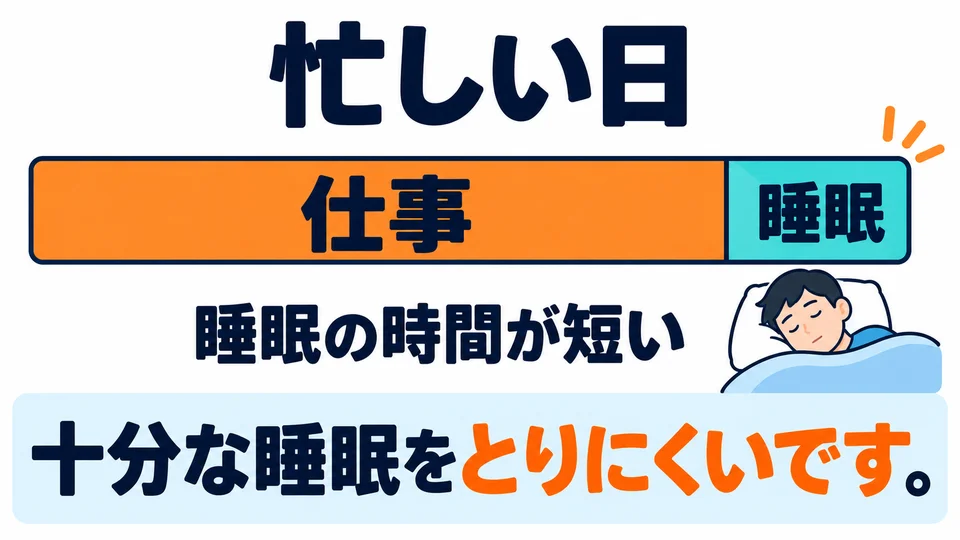
  5. The example emphasizes that it is hard to get enough sleep when busy. It does not necessarily mean it is hard to fall asleep.

    The example emphasizes that it is hard to get enough sleep when busy. It does not necessarily mean it is hard to fall asleep.

Example sentences

  • 仕事しごとshigotoがgaあるaru日ひhiは、わ、wa、運動うんどうundouするsuru時間じかんjikanをo作りにくいつくりにくいtsukurinikuiです。desu。

In a conversation

Check yourself

  1. Level 1 · Recognise

    Which sentence is correct?

  2. Level 1 · Recognise

    Listen and choose the meaning

  3. Level 2 · Build

    Put the words in order

    On workdays, it is hard to make time for exercise.

  4. Level 3 · Use

    What goes in the blank?

    仕事がある日は、運動する時間を____。

    On workdays, it's hard to make time for exercise.

More grammar in this theme

  • 〜にくいですdifficult to do

Keep practising

Test your Japanese vocabulary12 adaptive questions, freeCheck your pronunciationRead aloud and get a scorePractise verb forms10-question conjugation quizSee the whole courseGrammar, vocabulary and quizzes by theme

On days when I have work, it's difficult to make time to exercise.

  • A
    最近、さいきん、夜よるに十分な睡眠じゅうぶんなすいみんをとりにくいです。

    A: Lately, it's been difficult to get enough sleep at night.

  • B
    睡眠すいみん不足ふそくはわ体調たいちょう管理かんりに良くよくないですから、心配しんぱいですね。

    B: Lack of sleep is bad for health management, so that's a concern.

  • 忙しいいそがしいisogashii日ひhiは、わ、wa、十分な睡眠じゅうぶんなすいみんjuubunnasuiminをoとりにくいtorinikuiです。desu。

    On busy days, it's hard to get enough sleep.

  • A
    ええ、お風呂おふろに入っはいって湯船ゆぶねで深呼吸しんこきゅうをすると、リラックスりらっくすして寝やすいねやすいですよ。

    A: Yes, taking a bath and taking deep breaths in the bathtub helps you relax and makes it easier to sleep.

  • 〜もsurprisingly many or long
    〜しか〜ないonly; less than enough
    〜たらどうですかgentle suggestion or advice
    〜ないで〜without doing something
    〜らしいですreported news; apparently
    〜て〜accompanying state or sequence
    〜ないで〜without doing something
    〜のに/〜にpurpose or goal
    〜やすいですeasy to do
    〜ようにしていますmake a conscious effort; habit
    〜ないようにしていますmindful effort to avoid
    〜ことにしますdecide to do
    〜ないことにしますdecide not to do
    Previous〜やすいです
    Next〜ようにしています