
〜も~mo
Mo (〜も) means “surprisingly many or long”.
Yesterday, I drank as many as five glasses of water.
Add 〜も after a quantity to show that it feels surprisingly large or long to the speaker.
In the course
How it works
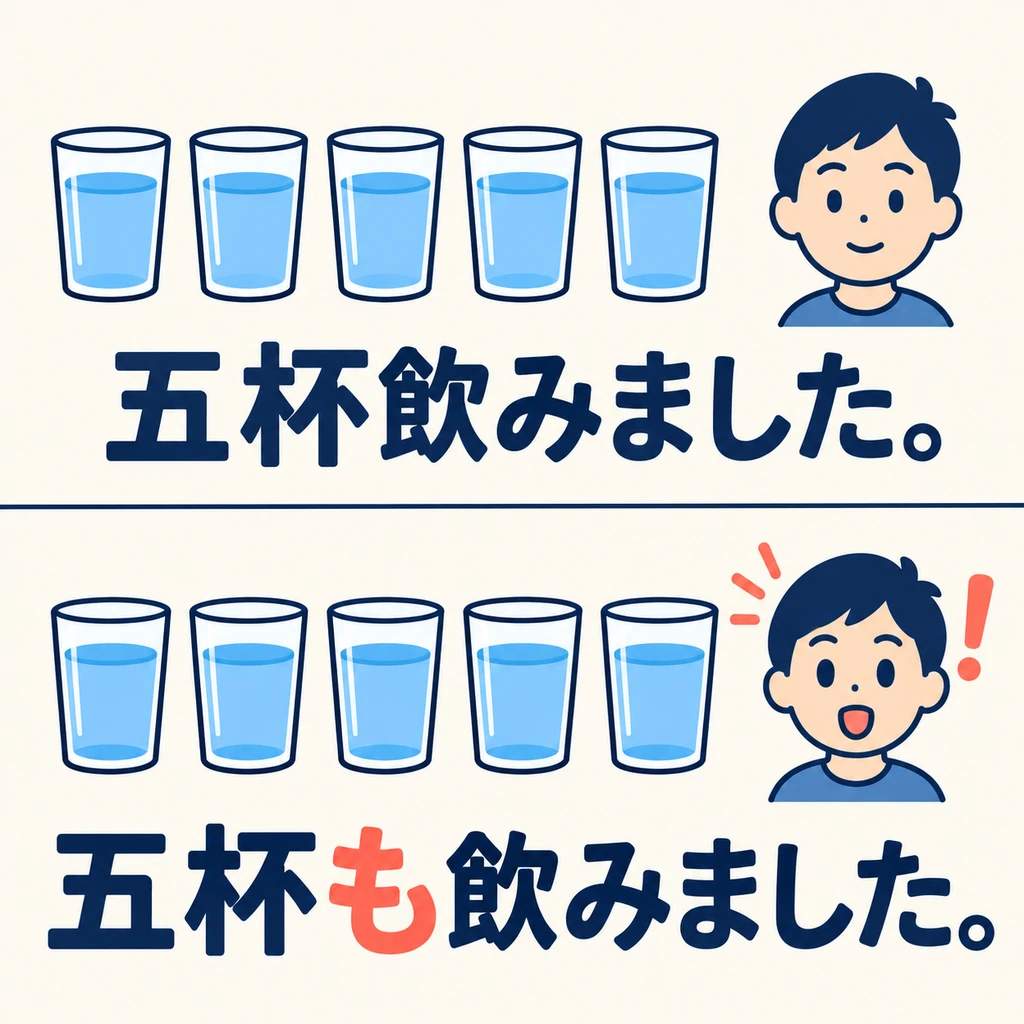
Both rows show five glasses. How do the expressions differ? 「も」 emphasizes that the speaker finds the amount large.
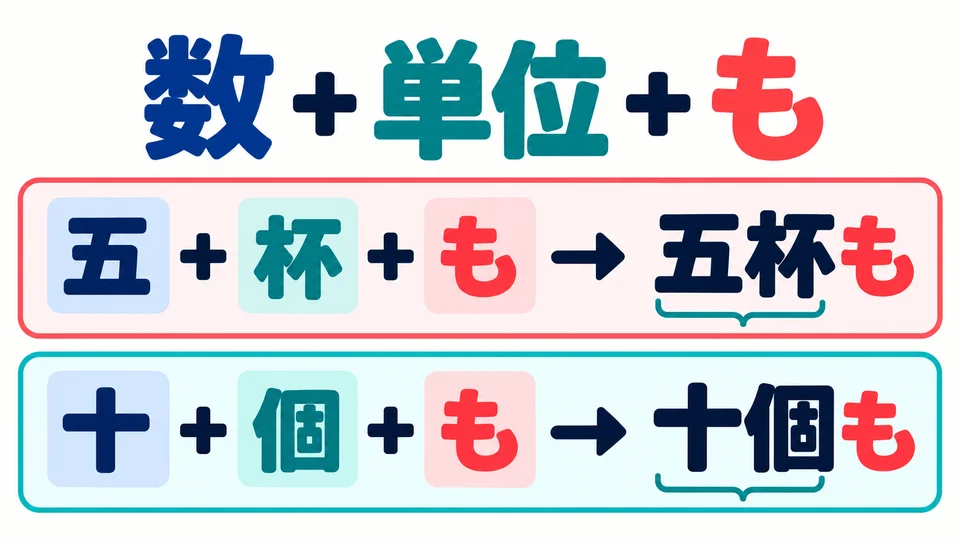
Place 「も」 after the number and its counter: 五杯も, 十個も. Do not insert it within the number.
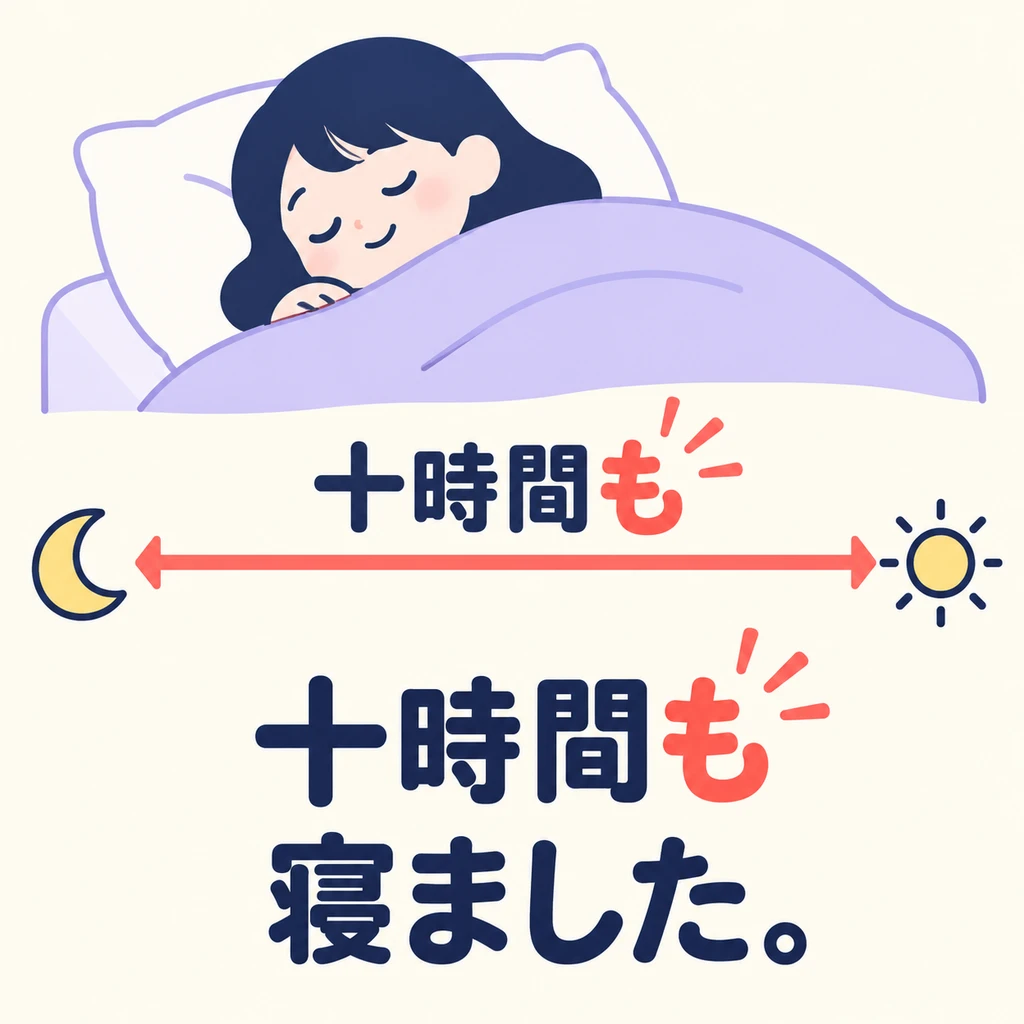
「も」 can also follow a time unit: 十時間も. The speaker emphasizes how long they slept.
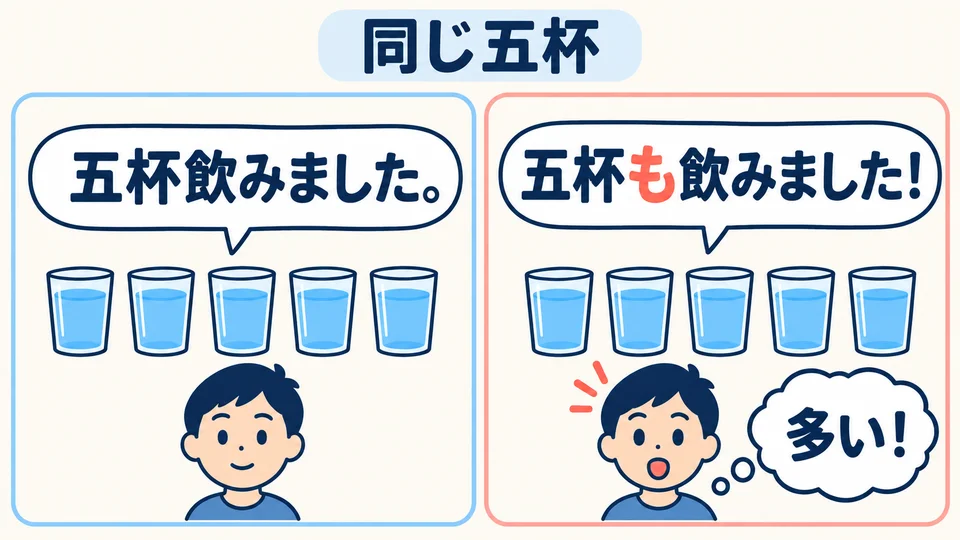
How much counts as a lot? That depends on the speaker’s judgment. 「も」 adds a tone of surprise to the quantity.
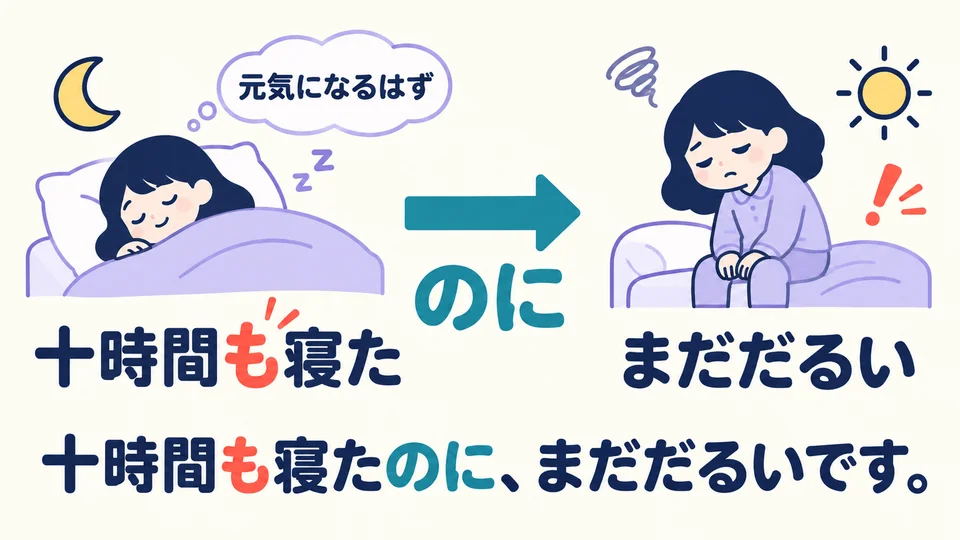
In the example, 「十時間も」 emphasizes that the sleep was long enough, so still feeling tired comes as a surprise.
Example sentences
- 昨日kinouはwa水mizuをo五go杯haiもmo飲みました。nomimashita。
Yesterday, I drank as many as five glasses of water.
- きのう
In a conversation

- A昨日からひどい寒気が五時間も続いています。
A: I've been having severe chills for as long as five hours since yesterday.
- Bそれは大変です
Check yourself
Level 1 · Recognise
Which sentence is correct?
Level 1 · Recognise
Listen and choose the meaning
Level 2 · Build
Put the words in order
Since yesterday, severe chills have continued for as long as three hours.
Level 3 · Use
What goes in the blank?
昨日は水を五杯____飲みました。
I drank as many as five glasses of water yesterday.
More grammar in this theme
- 〜もsurprisingly many or long