
JPEDLAB iconJPEDLAB
Save history

Create an account and play

Explore first, then save your progress whenever you are ready. No email address is required.

Start free
Read as articleCards
See the whole course›Intermediate 1›Joining Activities and Local Life

Japanese grammar · ≈ JLPT N4 · Intermediate 1

命令形meireikei

forceful direct command

Use the imperative to urge immediate action or give a forceful instruction; it can sound rude in everyday requests.

Start the interactive lessonIllustrated cards, audio and speaking practiceTake the quiz
Pattern
命令形
Romaji
meireikei
JLPT (approx.)
≈ N4
Course level
Intermediate 1
Theme
Joining Activities and Local Life

How it works
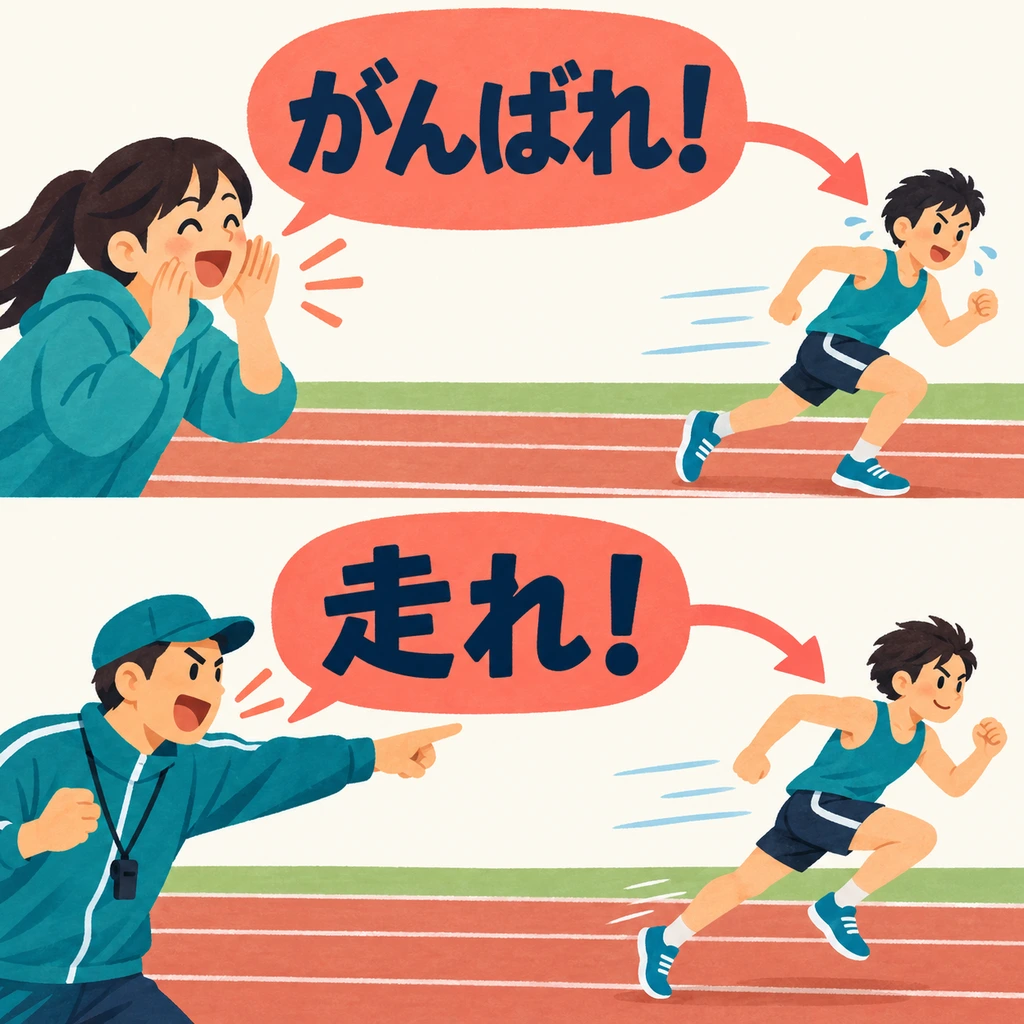
  1. The imperative directly urges someone to act and sounds forceful. In the picture, who does each speaker want to do what?
    The imperative directly urges someone to act and sounds forceful. In the picture, who does each speaker want to do what?

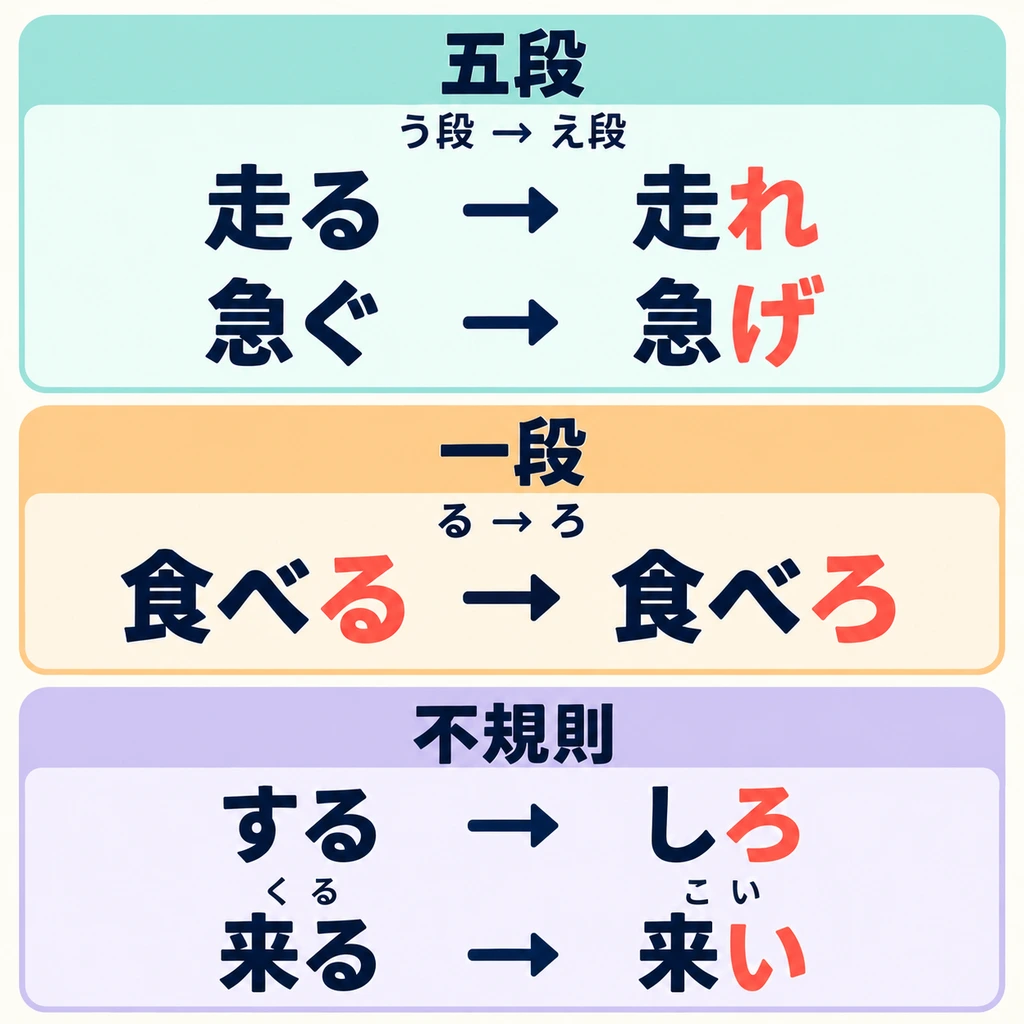
  2. First check which group the verb belongs to, then form the imperative. The three groups in the chart change differently.
    First check which group the verb belongs to, then form the imperative. The three groups in the chart change differently.

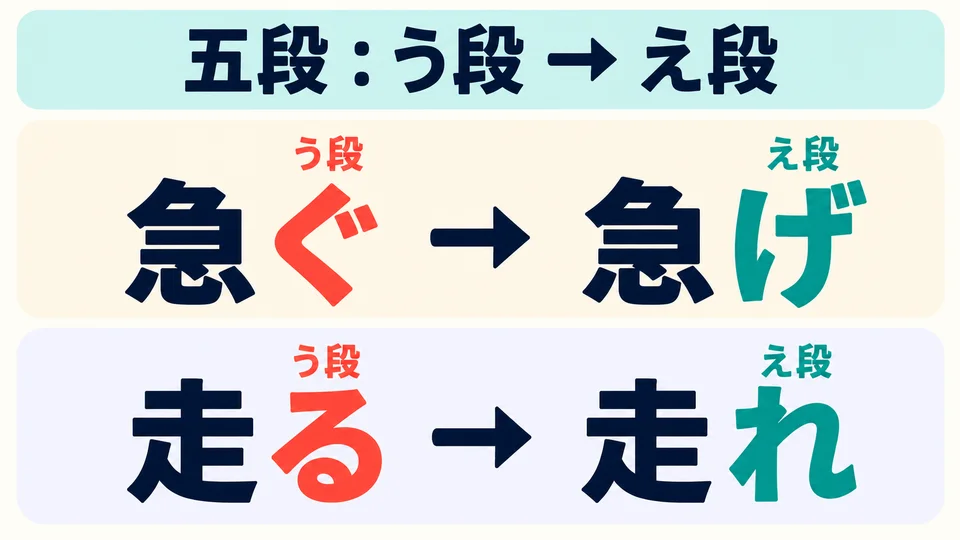
  3. For godan verbs, change the final kana from the う row to the え row: 急ぐ→急げ, 走る→走れ.
    For godan verbs, change the final kana from the う row to the え row: 急ぐ→急げ, 走る→走れ.

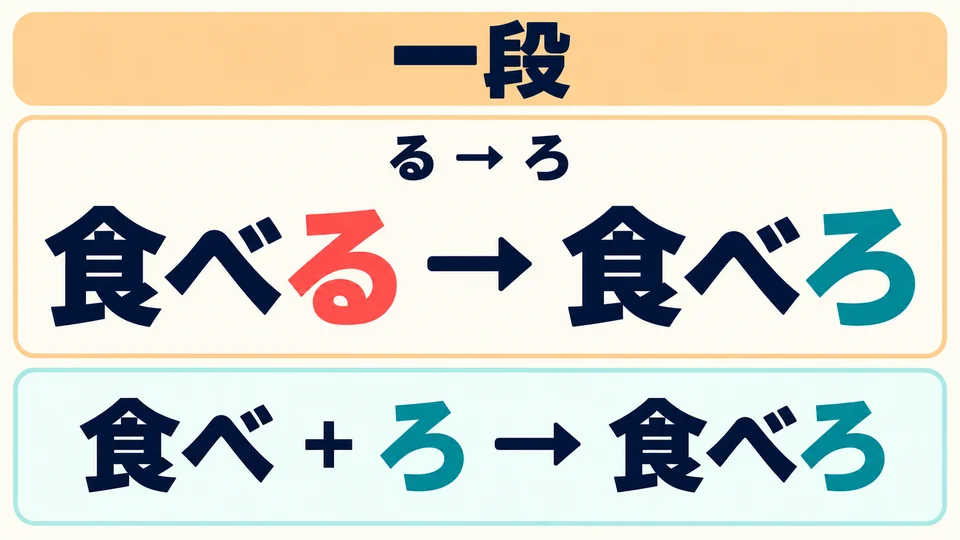
  4. For ichidan verbs, remove the final る and add ろ. For example: 食べる→食べろ.
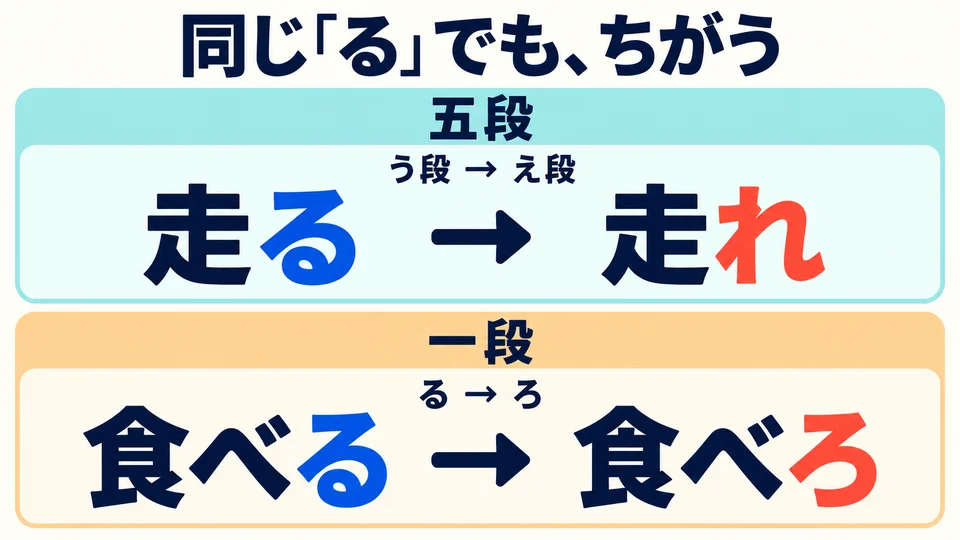
    For ichidan verbs, remove the final る and add ろ. For example: 食べる→食べろ.

  5. Even verbs ending in る may change differently: 走る is godan, while 食べる is ichidan.
    Even verbs ending in る may change differently: 走る is godan, while 食べる is ichidan.

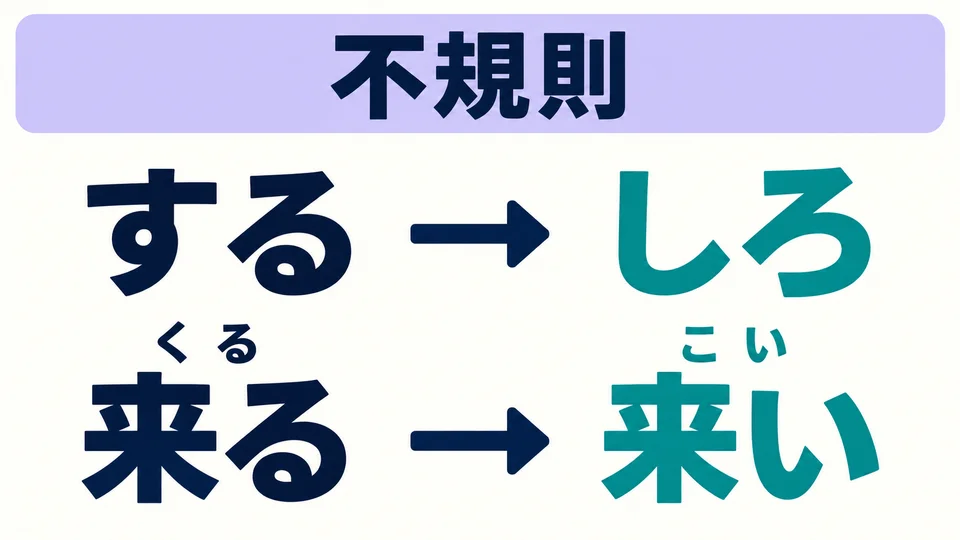
  6. Memorize the irregular forms separately: する→しろ; 来る→来い. 来い is pronounced こい.
    Memorize the irregular forms separately: する→しろ; 来る→来い. 来い is pronounced こい.

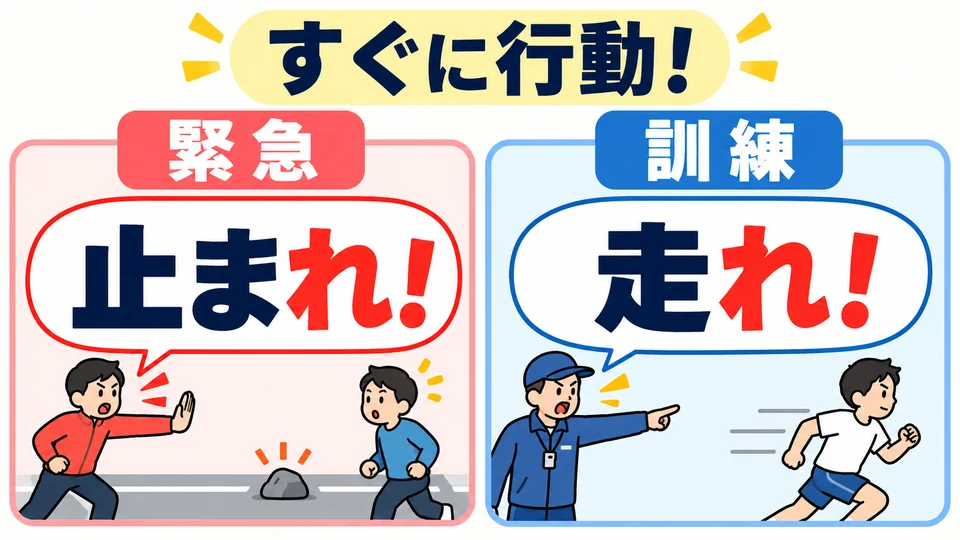
  7. This short, forceful form is often used when immediate action is needed in an emergency or when giving instructions during training.
    This short, forceful form is often used when immediate action is needed in an emergency or when giving instructions during training.

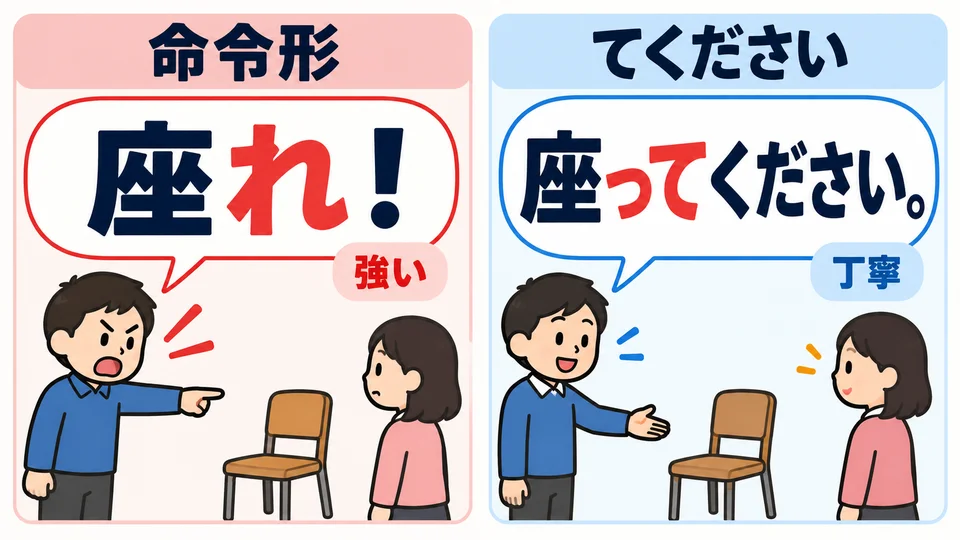
  8. For everyday requests for help, 「~てください」 is more polite. The imperative can sound rude.

    For everyday requests for help, 「~てください」 is more polite. The imperative can sound rude.

Example sentences

  • がんばれ!がんばれganbare

    Hang in there!

  • 急げ!いそげisoge

    Hurry up!

In a conversation

  • A
    走れ!はしれもっと早く!はやく

    A: Run! Faster!

  • B
    はい!はいがんばります!がんばります

    B: Yes! I'll do my best!

  • A
    よし、最後さいごまで力ちからを

Check yourself

  1. Which sentence is correct?

    1. 合図があったら、すぐに走れ!
    2. 合図があったら、すぐに走りれ!
    3. 合図があったら、すぐに走れろ!
    4. 合図があったら、すぐに走るれ!
    Show answer

    Answer: A 合図があったら、すぐに走れ!

  2. Which sentence is correct?

    1. がんばれ!
    2. がんばりれ!
    3. がんばれろ!
    4. がんばるれ!
    Show answer

    Answer: A がんばれ!

  3. Which sentence is correct?

    1. 自分の力を出せ!
    2. 自分の力を出しせ!
    3. 自分の力を出せろ!
    4. 自分の力を出すせ!
    Show answer

    Answer: A 自分の力を出せ!

More grammar in this theme

  • 命令形forceful direct command

Keep practising

Test your Japanese vocabulary12 adaptive questions, freeCheck your pronunciationRead aloud and get a scorePractise verb forms10-question conjugation quizSee the whole courseGrammar, vocabulary and quizzes by theme
  • In the example, 「がんばれ!」 cheers the other person on. A forceful tone can also convey encouragement.

    In the example, 「がんばれ!」 cheers the other person on. A forceful tone can also convey encouragement.

  • 出せ!だせ

    A: All right, give it your all until the very end!

    Take the quiz
    〜ようになりますbegin doing something habitually
    〜なくなりますstop doing or feeling
    〜たばかりですrecently completed action
    〜ながら〜while doing another action
    〜と言っていましたreport what someone said
    〜なstrongly tell someone not to
    〜ながらtwo actions happening together
    Previous〜と言っていました
    Next〜な