
〜なくなります~naku narimasu
Naku narimasu (〜なくなります) means “stop doing or feeling”.
As I have gotten used to Japanese, I stopped using a dictionary.
Use 「〜なくなります」 when a change means you no longer do or feel something you did before.
In the course
How it works
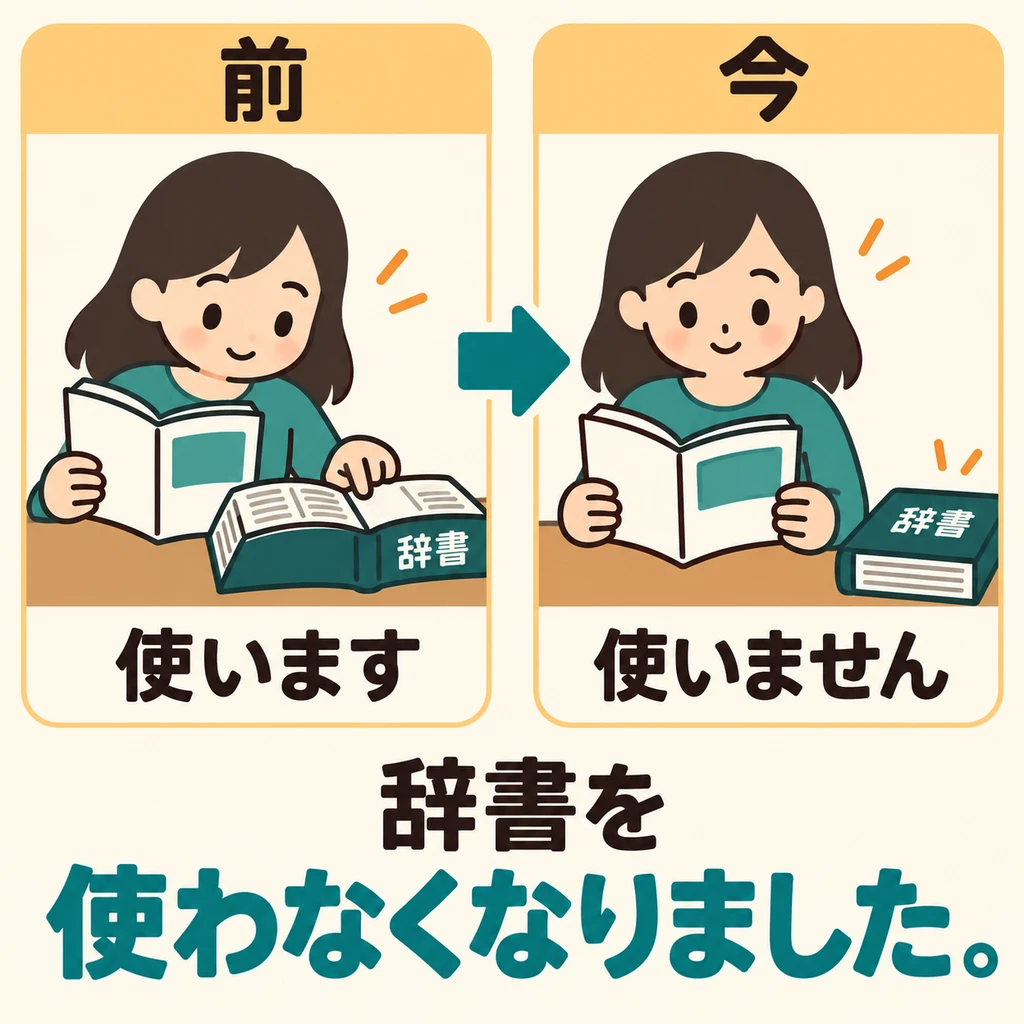
Before, the student used a dictionary; now they no longer do. The before-and-after picture shows a change in habit.
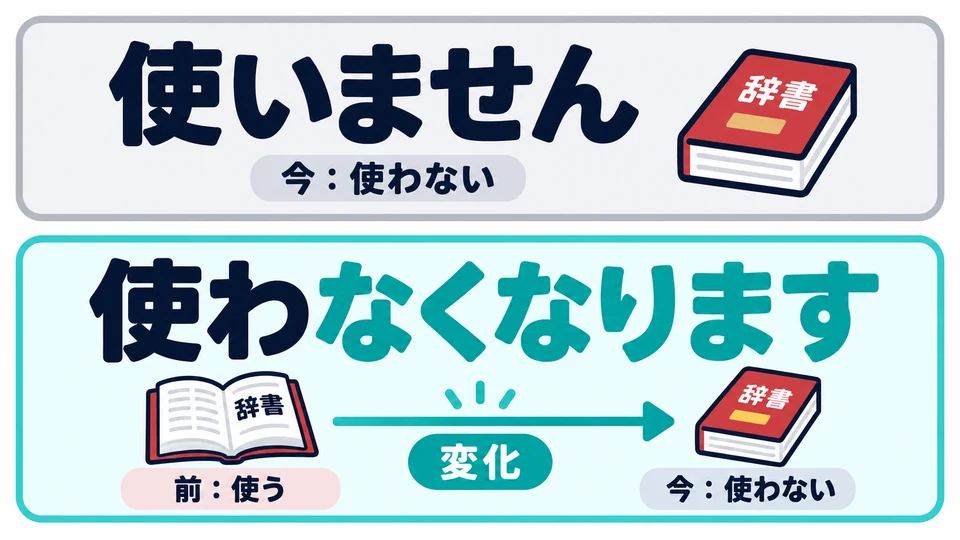
「使いません」 simply says “do not use.” 「使わなくなります」 emphasizes a change to no longer using something.
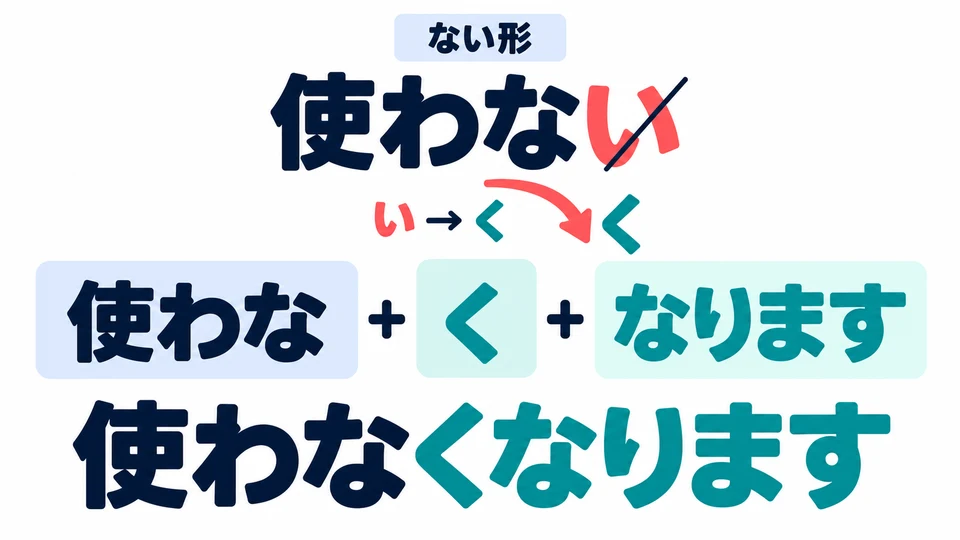
Start with the verb’s ない form, replace the final 「い」 with 「く」, and add なります: 使わない→使わなくなります.
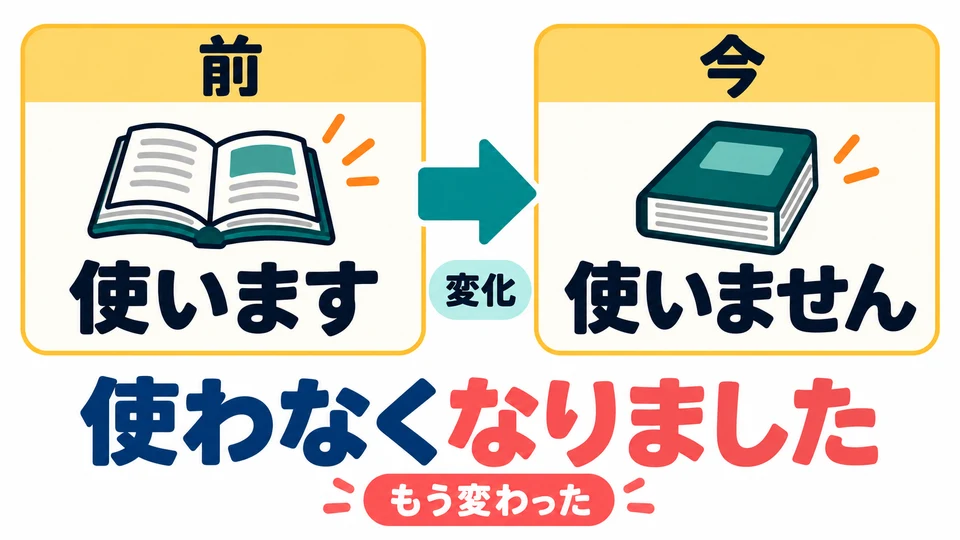
Use 「なりました」 when the change has already happened: 使わなくなりました means that you no longer use it now.
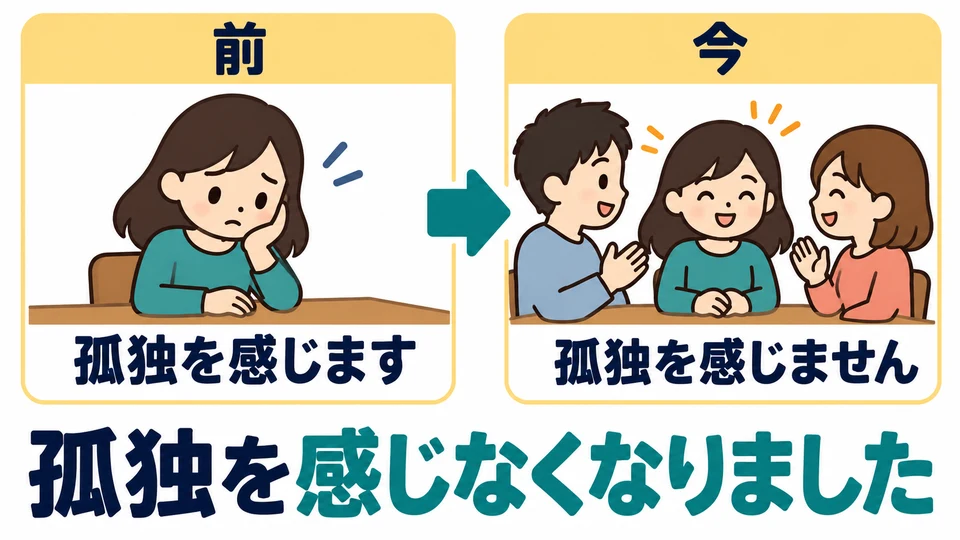
This pattern also describes changes in feelings: 感じなくなります means that you stop feeling that way.
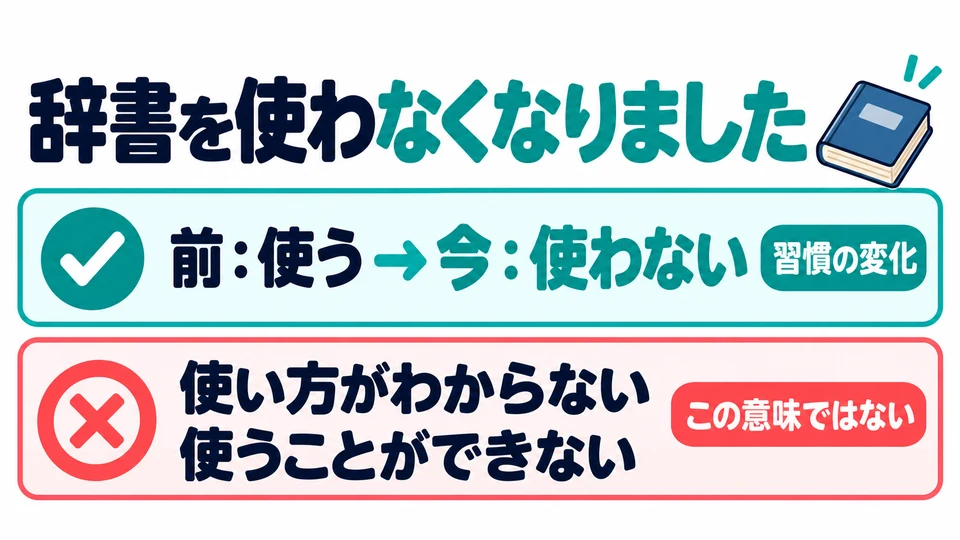
The dictionary example describes a change in habit: the speaker no longer uses one. It does not mean they have forgotten how to use it or cannot use it.
Example sentences
- 日本nihon語goにni慣れnareてteきkiて、te、辞書jishoをo使わなくなりました。tsukawanakunarimashita。
As I have gotten used to Japanese, I stopped using a dictionary.
In a conversation

- A最近、一人で困っていませんか?
A: Have you been having any trouble on your own lately?
- Bいえ、住民と仲良くなって、一人
Check yourself
Level 1 · Recognise
Which sentence is correct?
Level 1 · Recognise
Listen and choose the meaning
Level 2 · Build
Put the words in order
Considering the burden on residents, unnecessary meetings will no longer be held.
Level 3 · Use
What goes in the blank?
日本語に慣れてきて、辞書を____。
I got used to Japanese and stopped using a dictionary.
More grammar in this theme
- 〜なくなりますstop doing or feeling