
Japanese grammar · ≈ JLPT N4 · Beginner 3
〜みたいです~mitai desu
similarity-based comparison
Use 「〜みたいです」 to compare something with a familiar thing based on noticeable similarities.
How it works
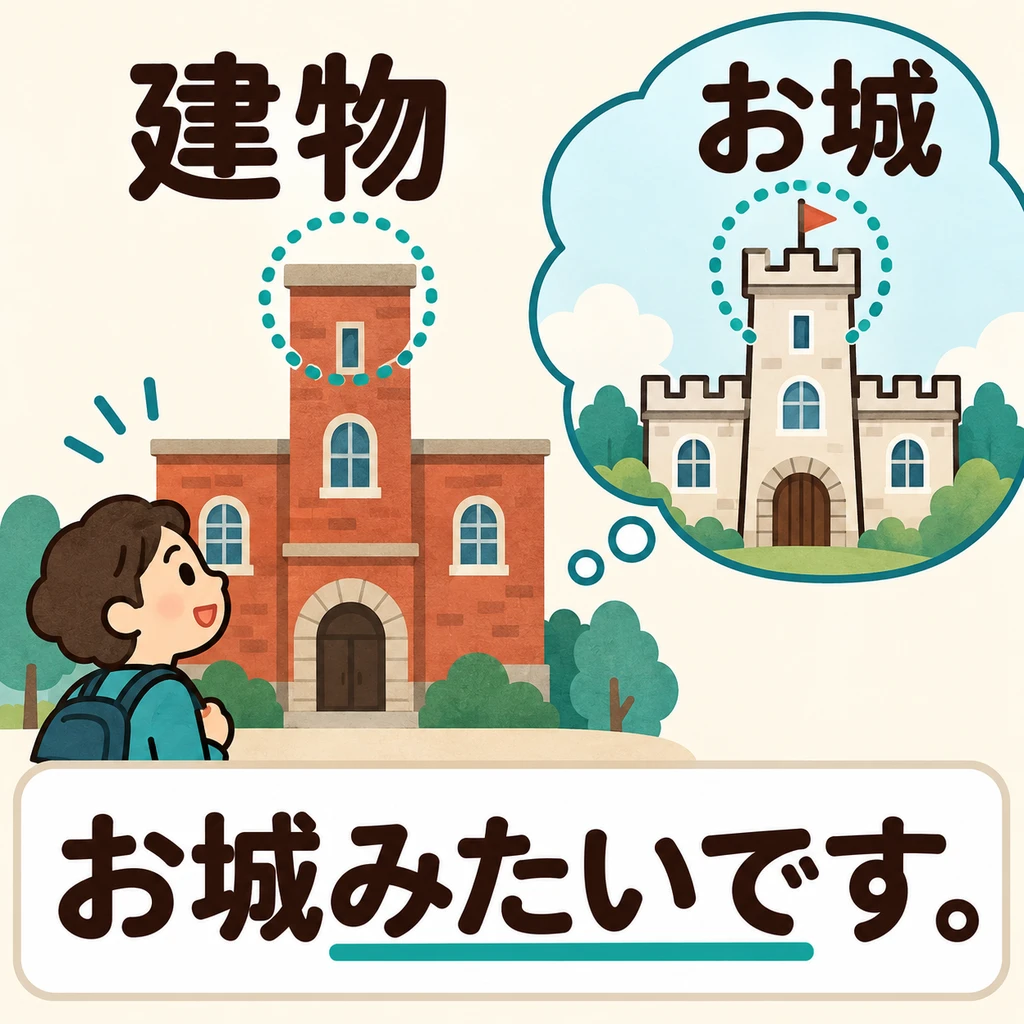
What does this building remind you of? Its tall tower brings a familiar castle to mind.
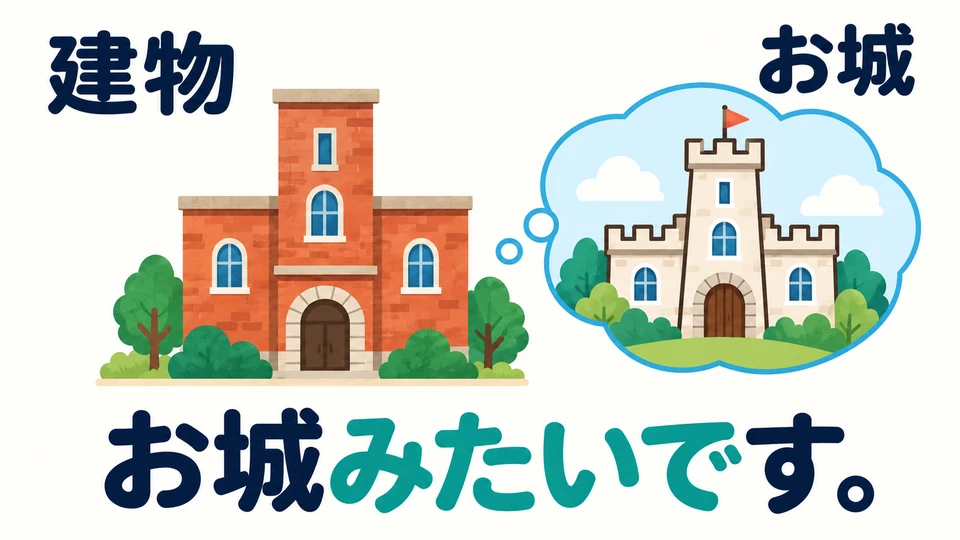
「みたいです」 can mean “is like…”. It conveys an immediate impression through something familiar.
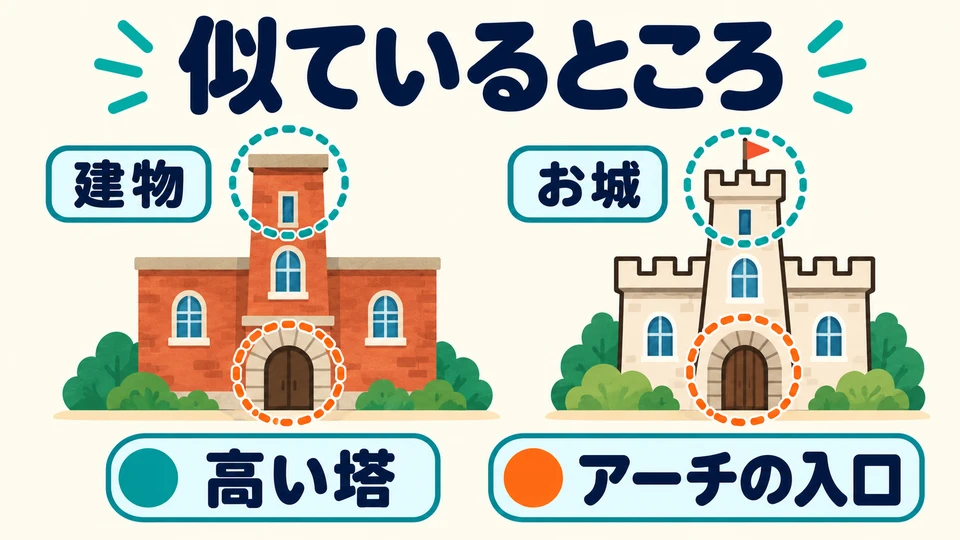
A comparison picks out similarities: the building and the castle in the picture both have tall towers and arched entrances.
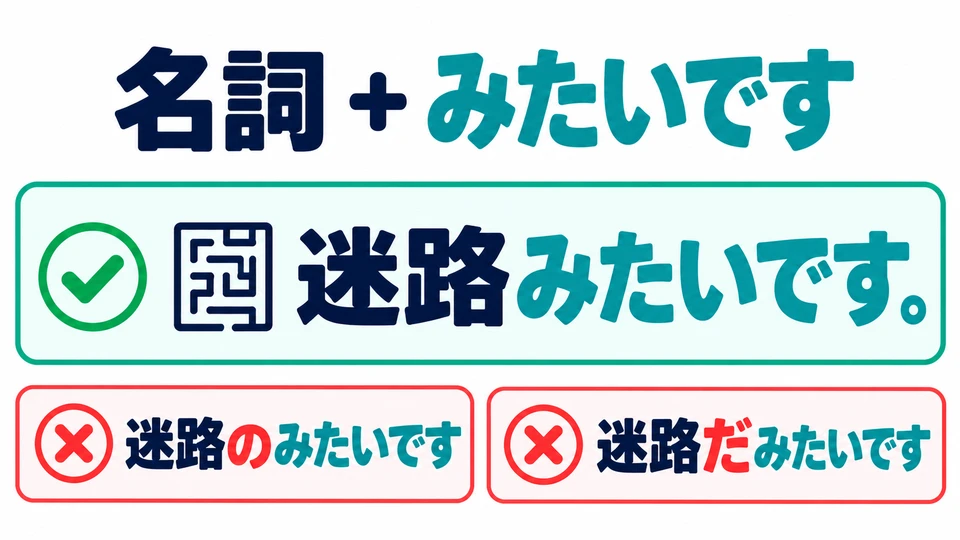
Attach 「みたいです」 directly to a noun, without 「の」 or 「だ」: 迷路みたいです。
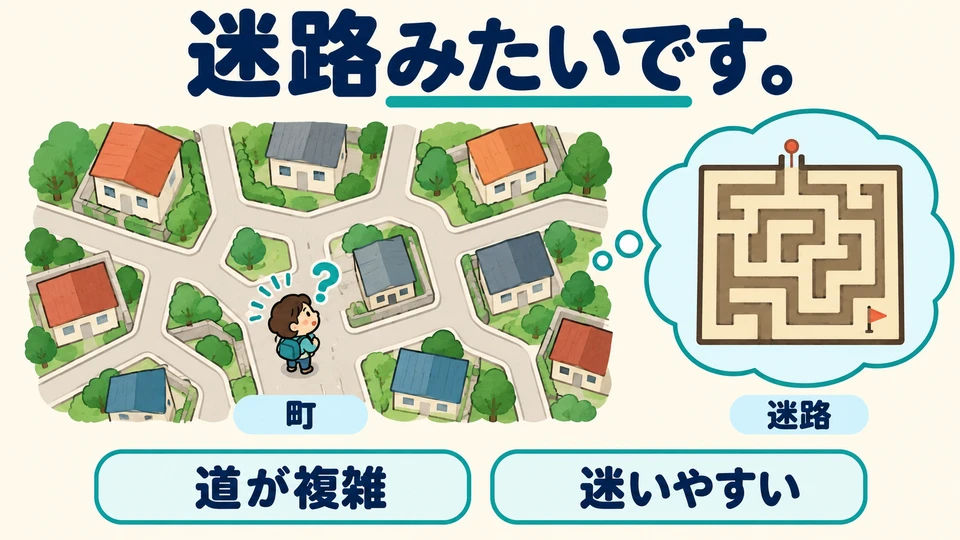
「迷路みたいです」 highlights complicated paths that make it easy to get lost. It does not say this place is an actual maze.
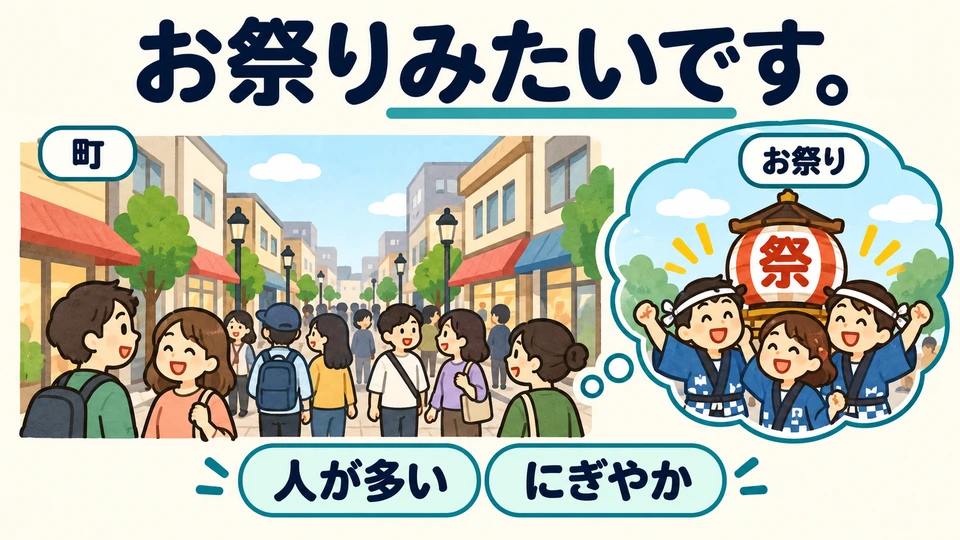
「お祭りみたいです」 highlights the crowds and lively atmosphere. It does not say a festival is actually taking place here.
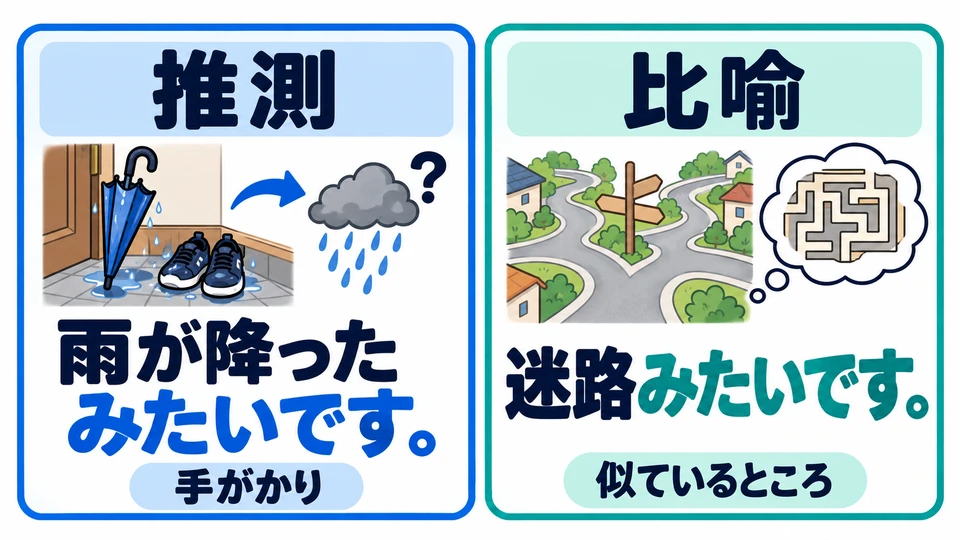
The 「みたいです」 you learned earlier infers facts from clues. These two examples use similarities to make comparisons.
Example sentences
- ここkokoはwa迷路meiroみたいです。mitaidesu
This place is like a maze. (example)
- このkono地域chiikiはwa
In a conversation
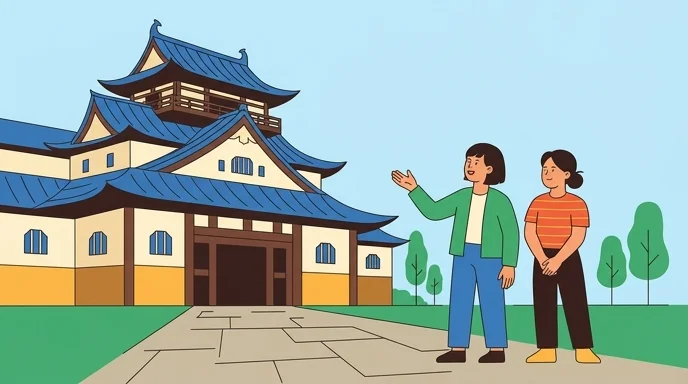
- Aここはどこですか。
A: Where is this?
- Bこの建物はとても古いですね。
B: This building is very old.
- A
Check yourself
Level 1 · Recognise
Which sentence is correct?
Level 1 · Recognise
Listen and choose the meaning
Level 2 · Build
Put the words in order
This street is complex and like a maze.
Level 3 · Use
What goes in the blank?
この通りは複雑で迷路 。
This street is complicated and like a maze.
More grammar in this theme
- 〜みたいですsimilarity-based comparison