〜ようです~you desu
You desu (〜ようです) means “inference from clues”.
Use 「〜ようです」 to state a reasoned impression when clues support it but you are not certain.
In the courseBeginner 3Travel Mishaps
How it works
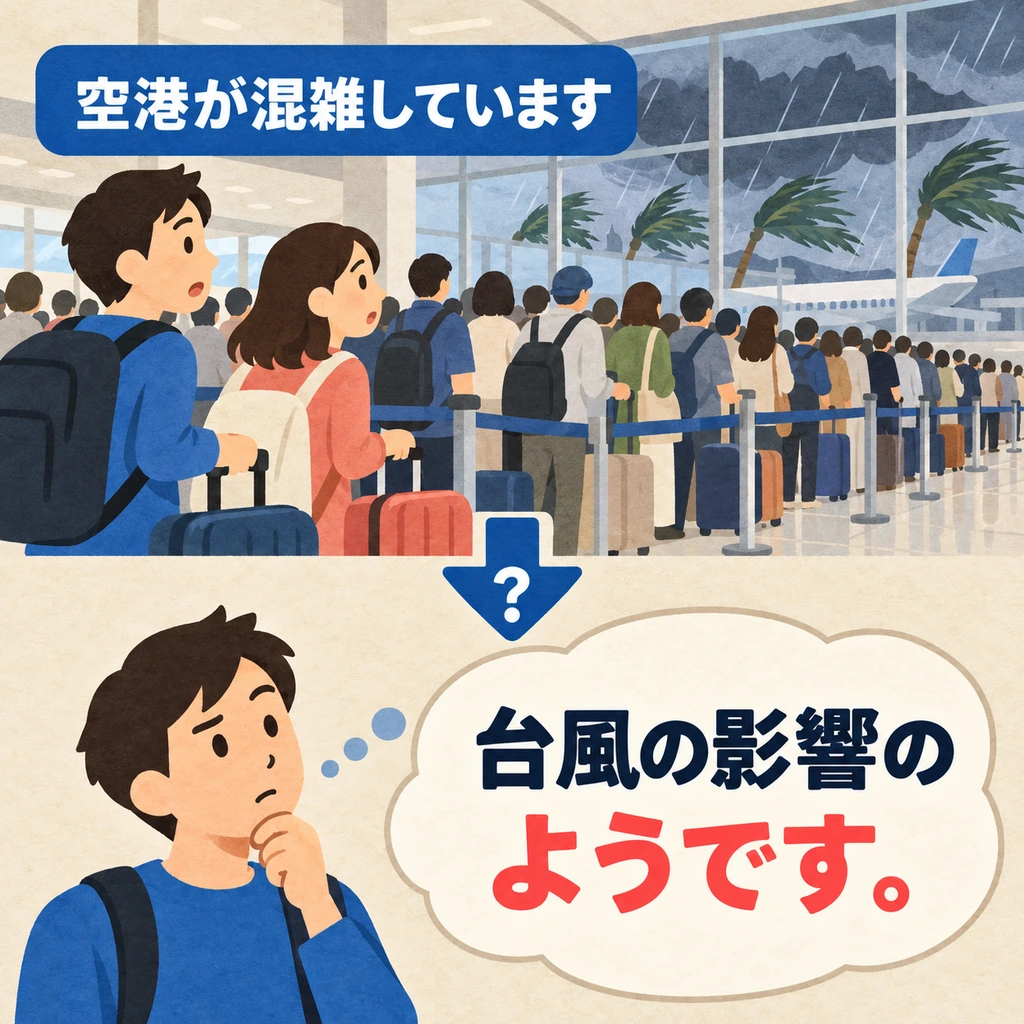
The airport is crowded, and wind and rain rage outside. Which clues suggest the typhoon is affecting things?
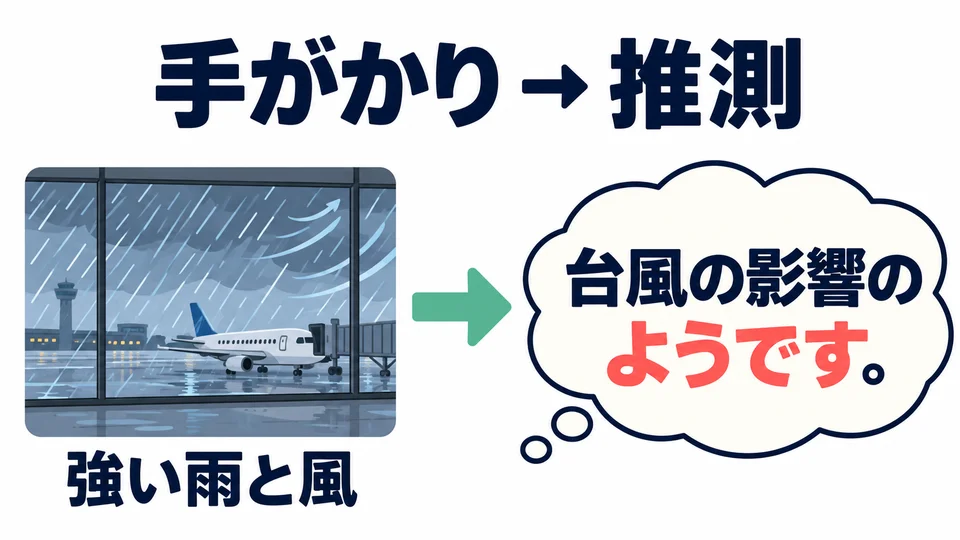
「ようです」expresses an inference based on clues: “it seems” or “apparently.”
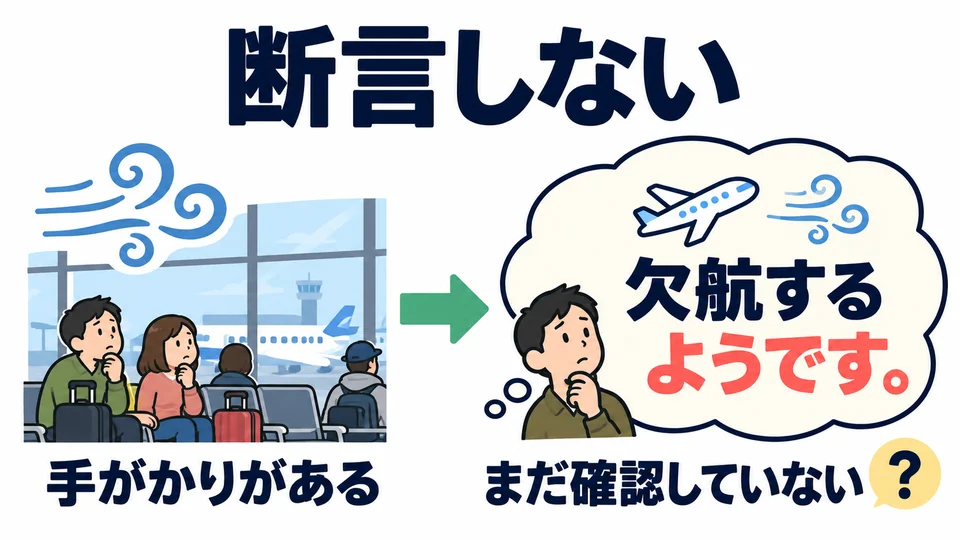
The speaker has grounds for the judgment but has not fully confirmed it, so they avoid stating it as certain.
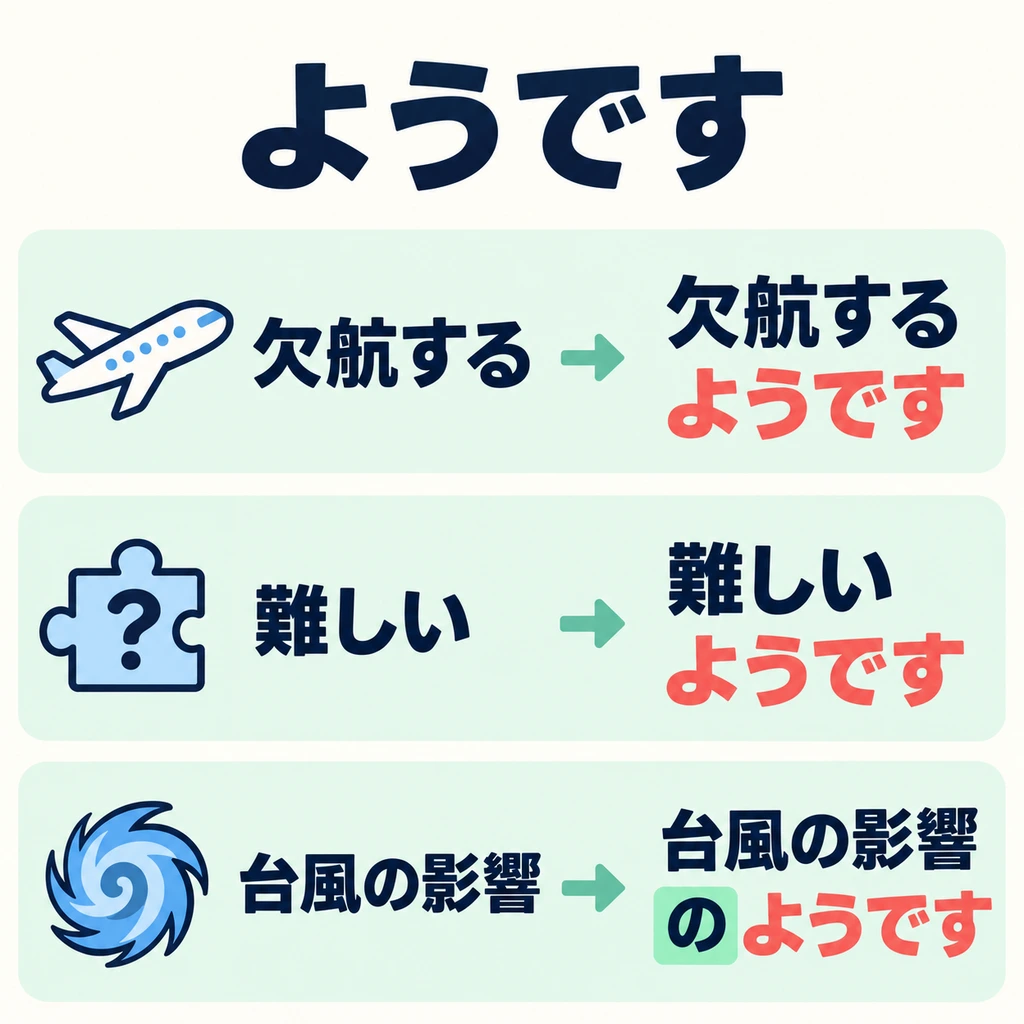
Before adding「ようです」, check whether the preceding word is a verb, adjective, or noun.
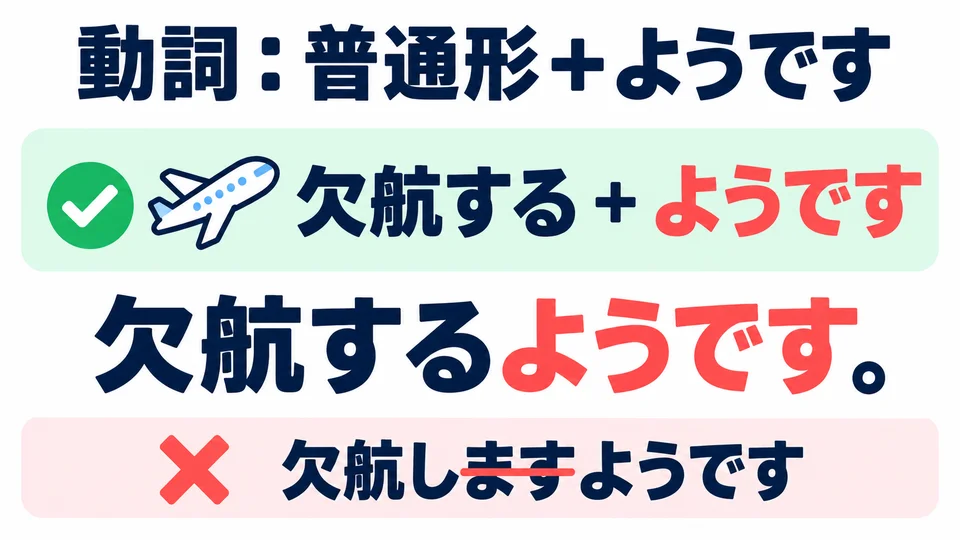
Use the plain form of a verb: 欠航するようです. Do not attach it after「します」.
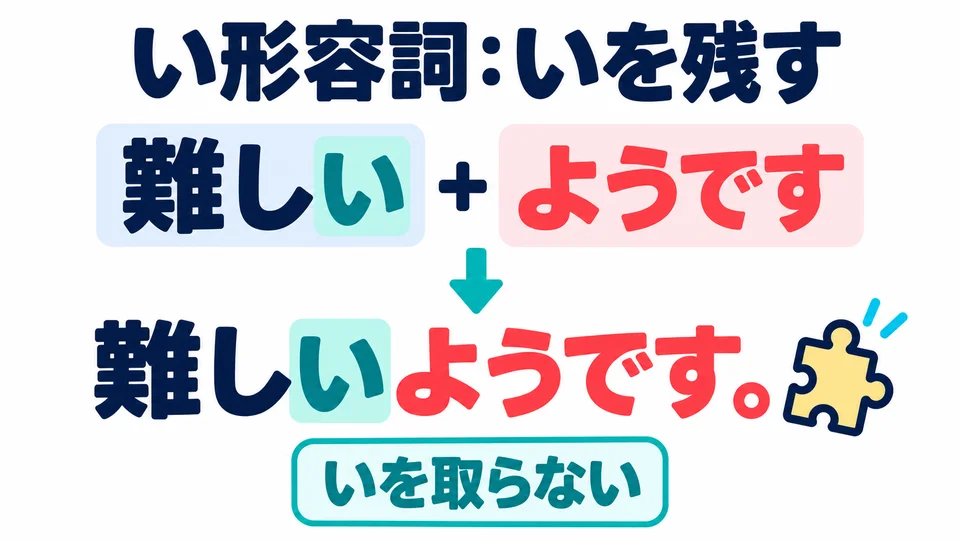
Keep「い」on an い-adjective: 難しいようです means “it seems difficult.”
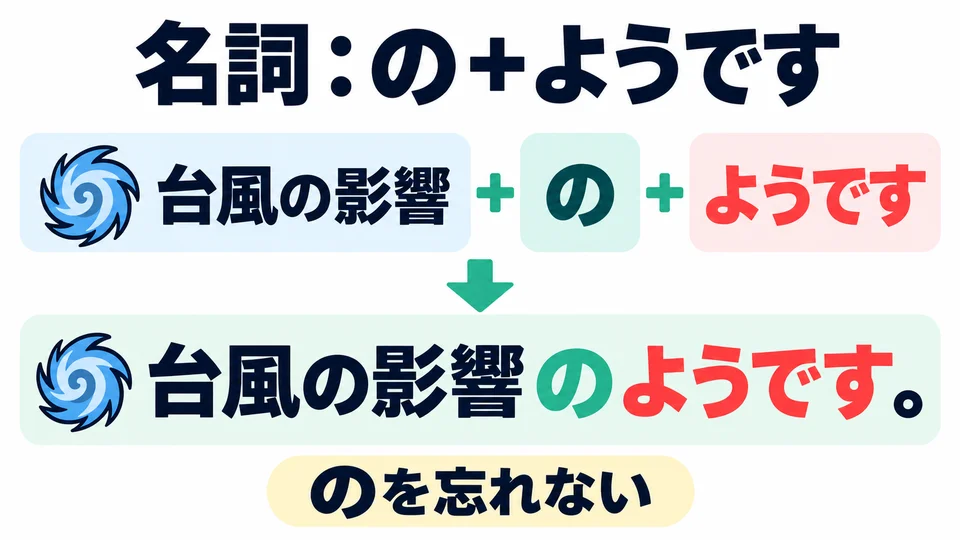
Add「の」after a noun: 台風の影響のようです. Be sure to include「の」.
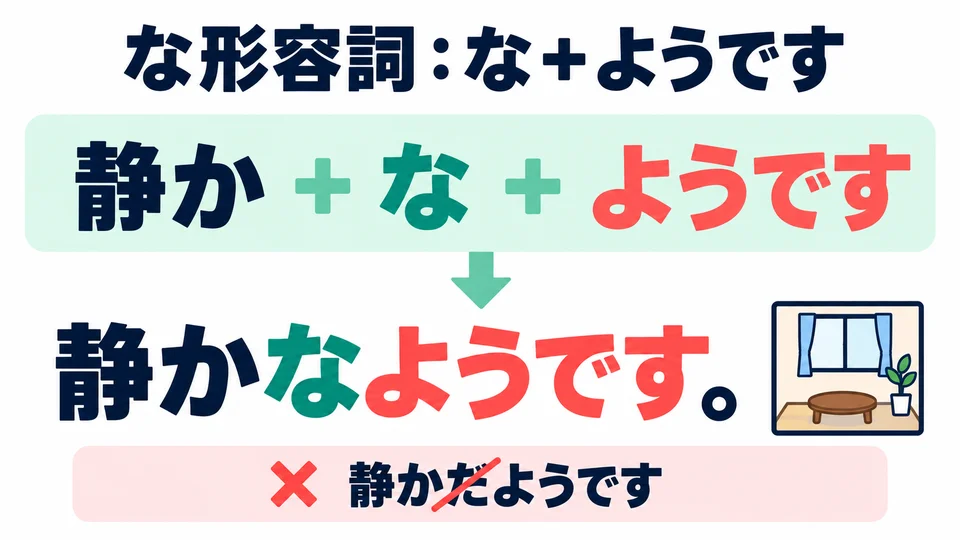
Add「な」after a な-adjective, then「ようです」. Do not use「だ」here.
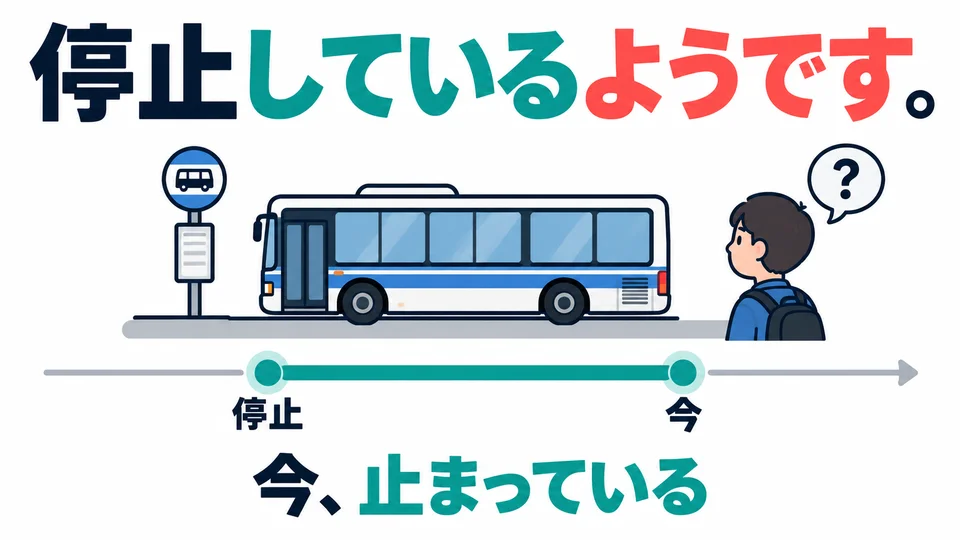
「停止しているようです」infers that something is currently stopped, not that it is about to stop.
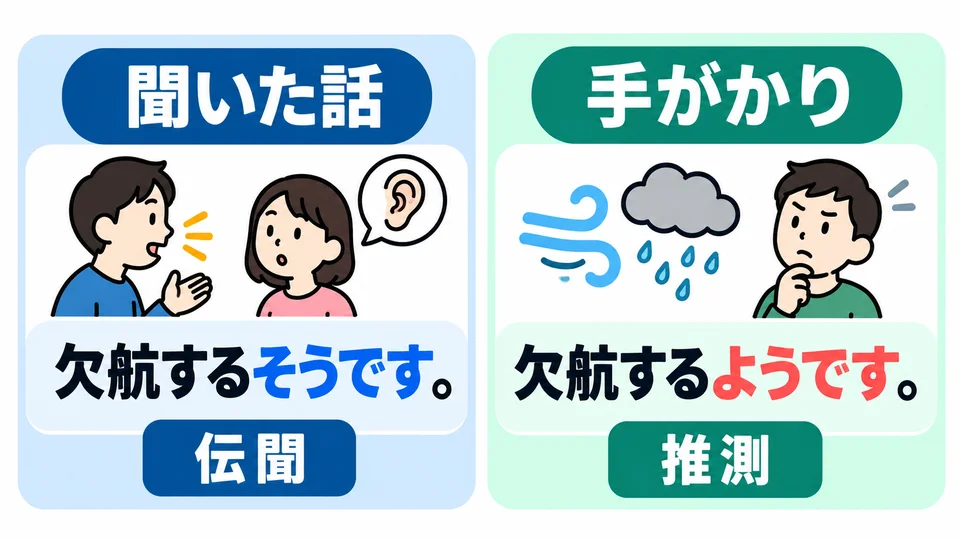
「そうです」reports information heard from others;「ようです」expresses your own inference.
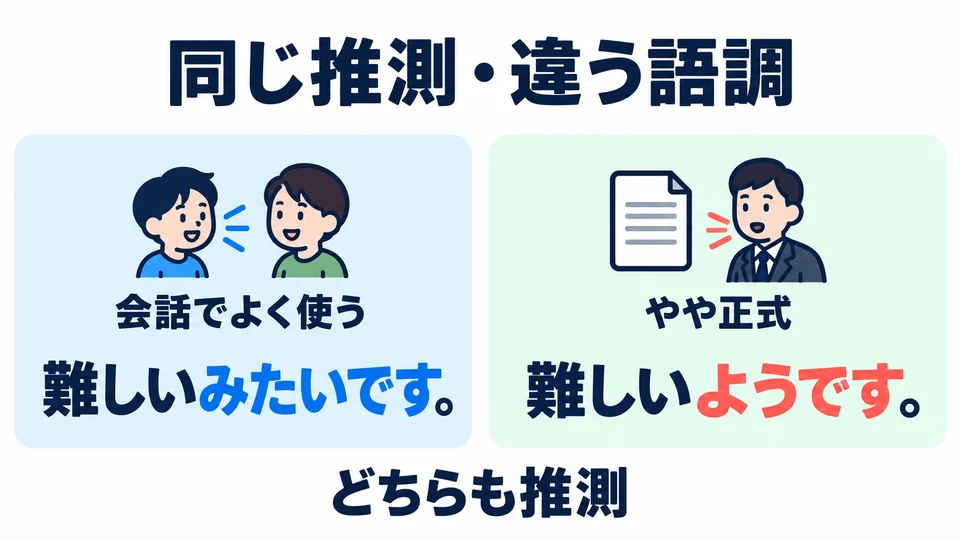
「みたいです」can also express an inference;「ようです」sounds more formal.
In a conversation

- A空港が混雑していますね。
A: The airport is crowded.
- Bええ、台風の影響のようです。
B: Yes, it seems to be due to the typhoon.
Check yourself
Level 1 · Recognise
Which sentence is correct?
Level 1 · Recognise
Listen and choose the meaning
Level 2 · Build
Put the words in order
It seems that this flight will be canceled today.
Level 3 · Use
What goes in the blank?
今日この飛行機は欠航する 。
It seems this flight is canceled today.
More grammar in this theme
- 〜ようですinference from clues