JPEDLAB iconJPEDLAB
Save history

Create an account and play

Explore first, then save your progress whenever you are ready. No email address is required.

Start free
Read as articleCards
See the whole course›Intermediate 1›Observations and Childhood Experiences

Japanese grammar · ≈ JLPT N3 · Intermediate 1

Nばかり/Vてばかりいます~bakari / ~te bakari imasu

keep doing the same thing

Use 「〜てばかりいました」 to recall repeatedly doing the same activity during a past period.

Start the interactive lessonIllustrated cards, audio and speaking practice

How it works

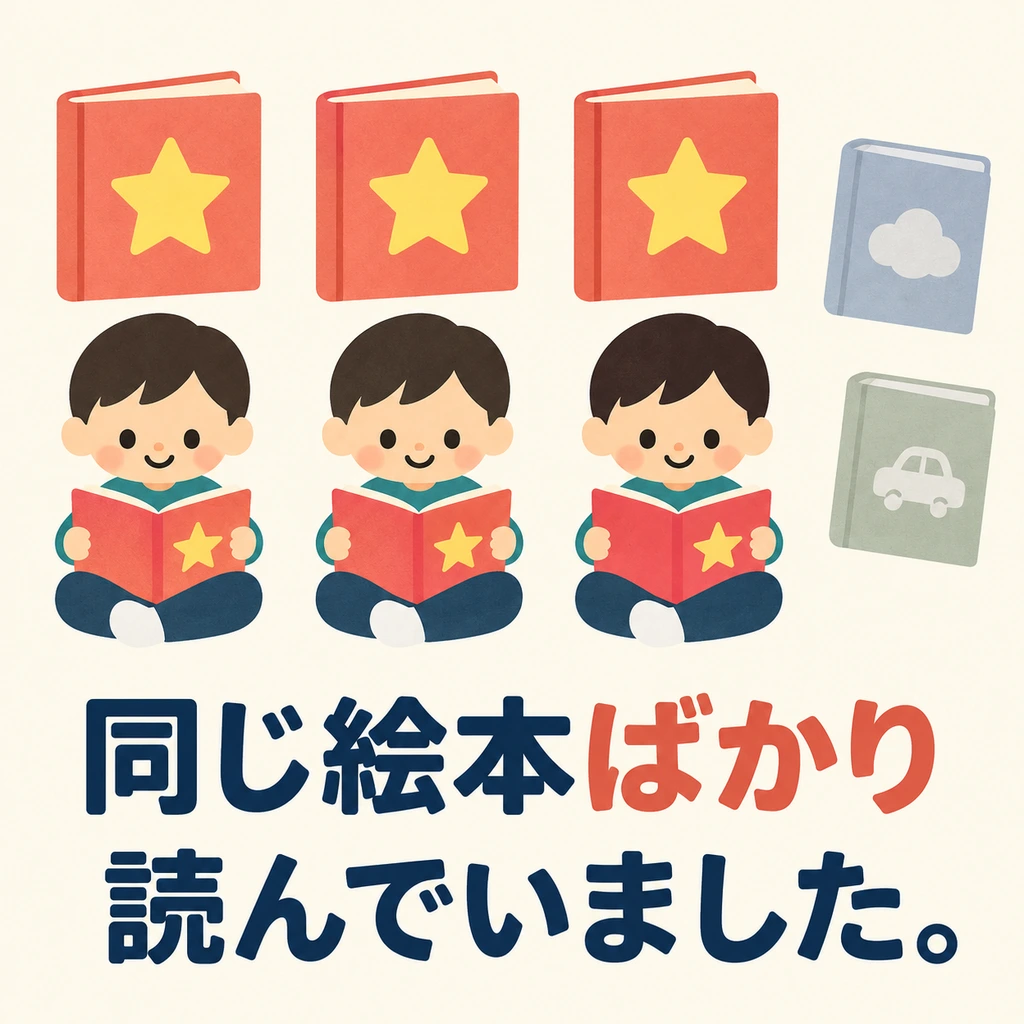
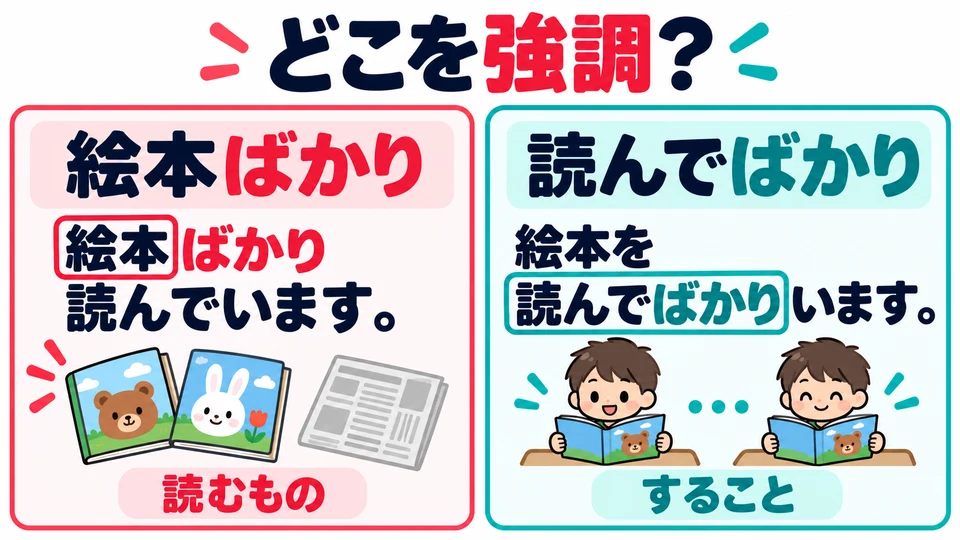
  1. Which book keeps getting chosen? 「ばかり」 after a noun emphasizes the favored object: other books are rarely read.
    Which book keeps getting chosen? 「ばかり」 after a noun emphasizes the favored object: other books are rarely read.

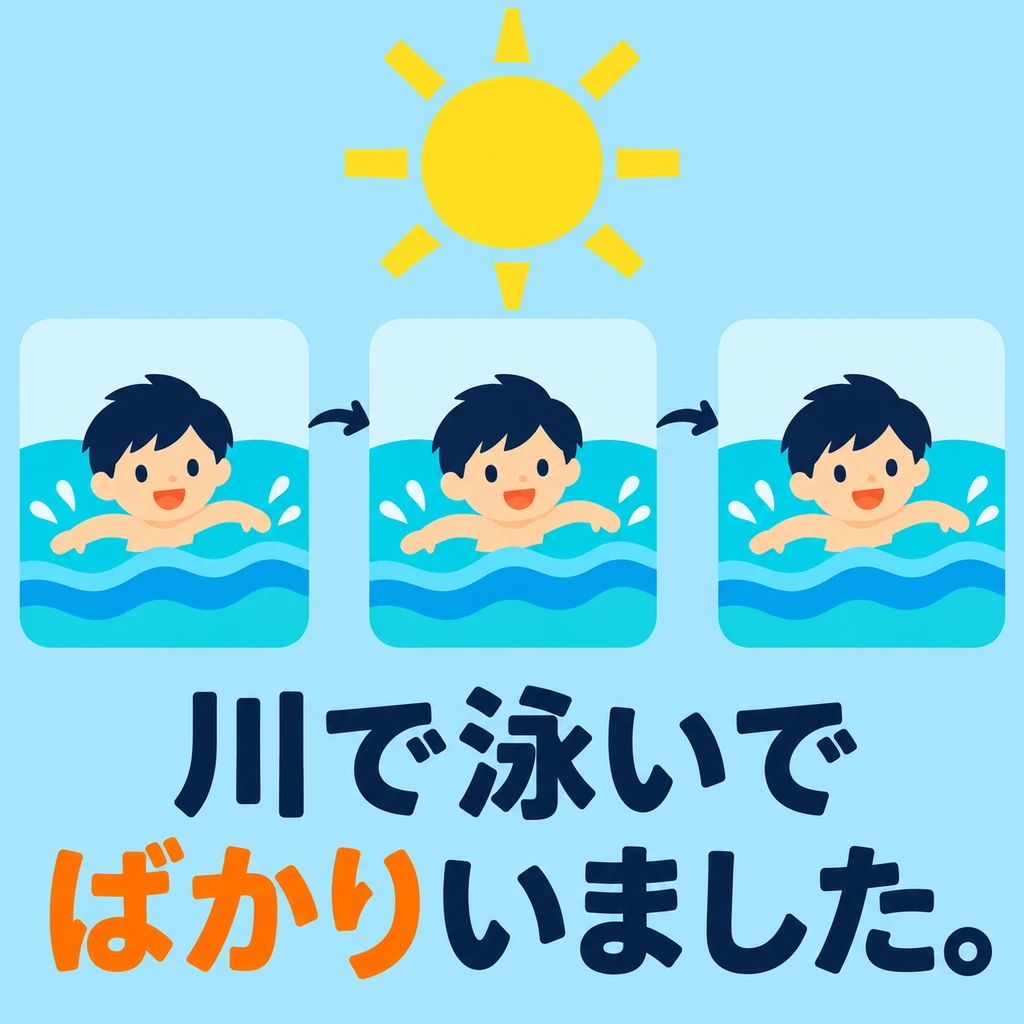
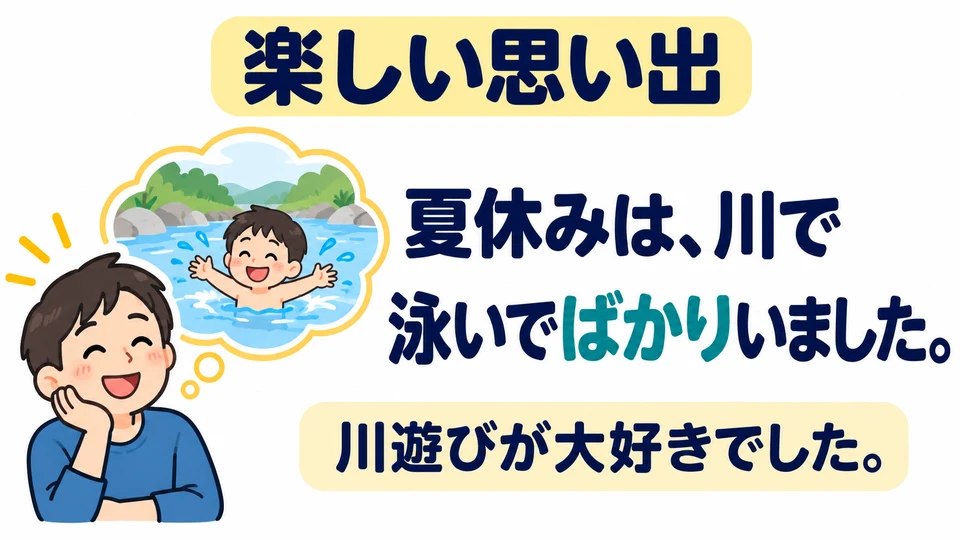
  2. What does the child keep doing over summer vacation? 「ばかりいます」 after a verb’s て-form emphasizes repeating the same activity.
    What does the child keep doing over summer vacation? 「ばかりいます」 after a verb’s て-form emphasizes repeating the same activity.

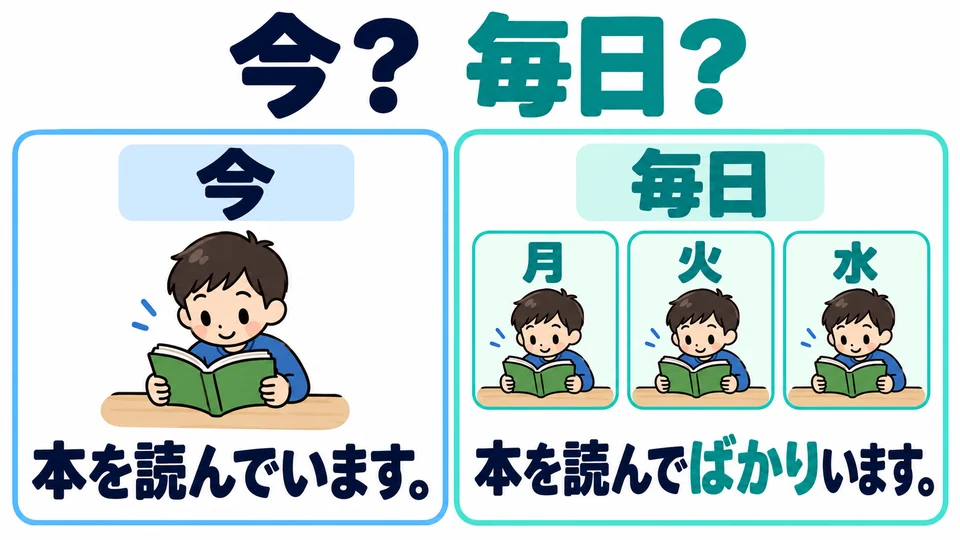
  3. This describes a habit or a tendency over a period of time, rather than just an action happening right now.
    This describes a habit or a tendency over a period of time, rather than just an action happening right now.

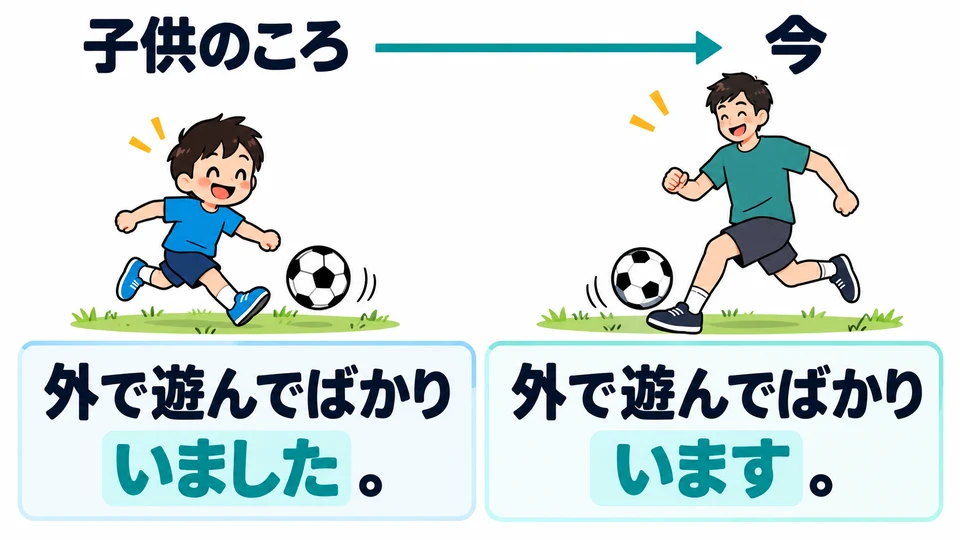
  4. Use 「いました」 at the end when recalling childhood habits; use 「います」 for current habits.
    Use 「いました」 at the end when recalling childhood habits; use 「います」 for current habits.

  5. The picture-book example emphasizes the action of “always reading.” 「ばかり」 after a noun instead emphasizes what is being read.
    The picture-book example emphasizes the action of “always reading.” 「ばかり」 after a noun instead emphasizes what is being read.

  6. The childhood examples can also fondly recall favorite activities. 「ばかり」 does not necessarily express a complaint.

    The childhood examples can also fondly recall favorite activities. 「ばかり」 does not necessarily express a complaint.

Example sentences

  • 子供こどもkodomoのnoころ、koro、私わたしwatashiはわwa外そとsotoでde遊んあそんasonでdeばかりbakariいました。imashita。

In a conversation
Check yourself

  1. Level 1 · Recognise

    Which sentence is correct?

  2. Level 1 · Recognise

    Listen and choose the meaning

  3. Level 2 · Build

    Put the words in order

    Whenever he has free time, my younger brother does nothing but play games.

  4. Level 3 · Use

    What goes in the blank?

    子供のころ、私は外で____。

    When I was a child, I did nothing but play outside.

More grammar in this theme

  • Nばかり/Vてばかりいますkeep doing the same thing

Keep practising

Test your Japanese vocabulary12 adaptive questions, freeCheck your pronunciationRead aloud and get a scorePractise verb forms10-question conjugation quizSee the whole courseGrammar, vocabulary and quizzes by theme

When I was a child, I did nothing but play outside.

  • A
    子供こどものころ、どんな遊びあそびをしましたか。

    A: What kind of games did you play when you were a child?

  • B
    私わたしはわ川遊びかわあそびが大好きで、だいすきで、夏休みなつやすみはわ川かわで泳いおよいでばかりいました。

    B: I loved playing in the river, so during summer vacation, I did nothing but swim in the river.

  • 小さいちいさいchiisaiころ、koro、私わたしwatashiはわwa同じおなじonaji絵本えほんehonをo読んよんyonでdeばかりbakariいました。imashita。

    When I was young, I did nothing but read the same picture book.

  • A
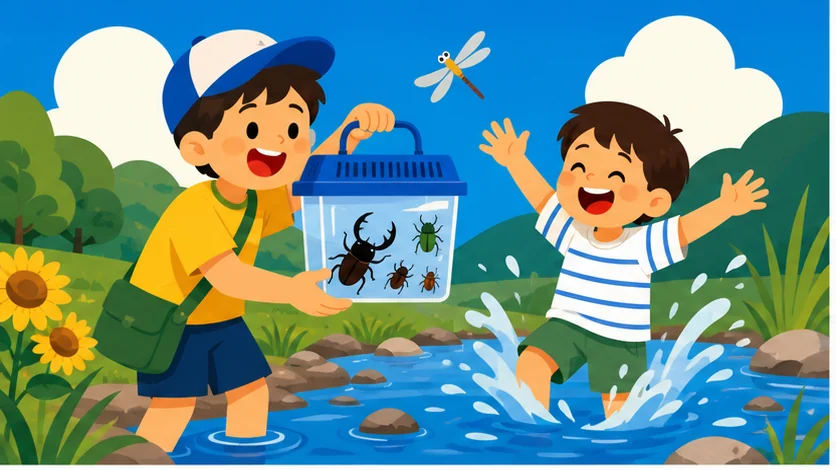
    楽したのしそうですね。私わたしはわ虫取りむしとりをしてばかりいましたよ。

    A: That sounds like fun. I did nothing but catch bugs myself.

  • 〜させますmake or let someone act
    〜のを見ましたsaw someone do
    〜ていましたpast repeated habit
    〜させられますbe made to do
    〜させてくれますkindly let me do
    〜させてもらいますgratefully be allowed to
    Previous〜ていました
    Next〜させられます