
Japanese grammar · ≈ JLPT N3 · Intermediate 1
Nばかり/Vてばかりいます~bakari / ~te bakari imasu
keep doing the same thing
Use 「〜てばかりいました」 to recall repeatedly doing the same activity during a past period.
How it works

Which book keeps getting chosen? 「ばかり」 after a noun emphasizes the favored object: other books are rarely read.
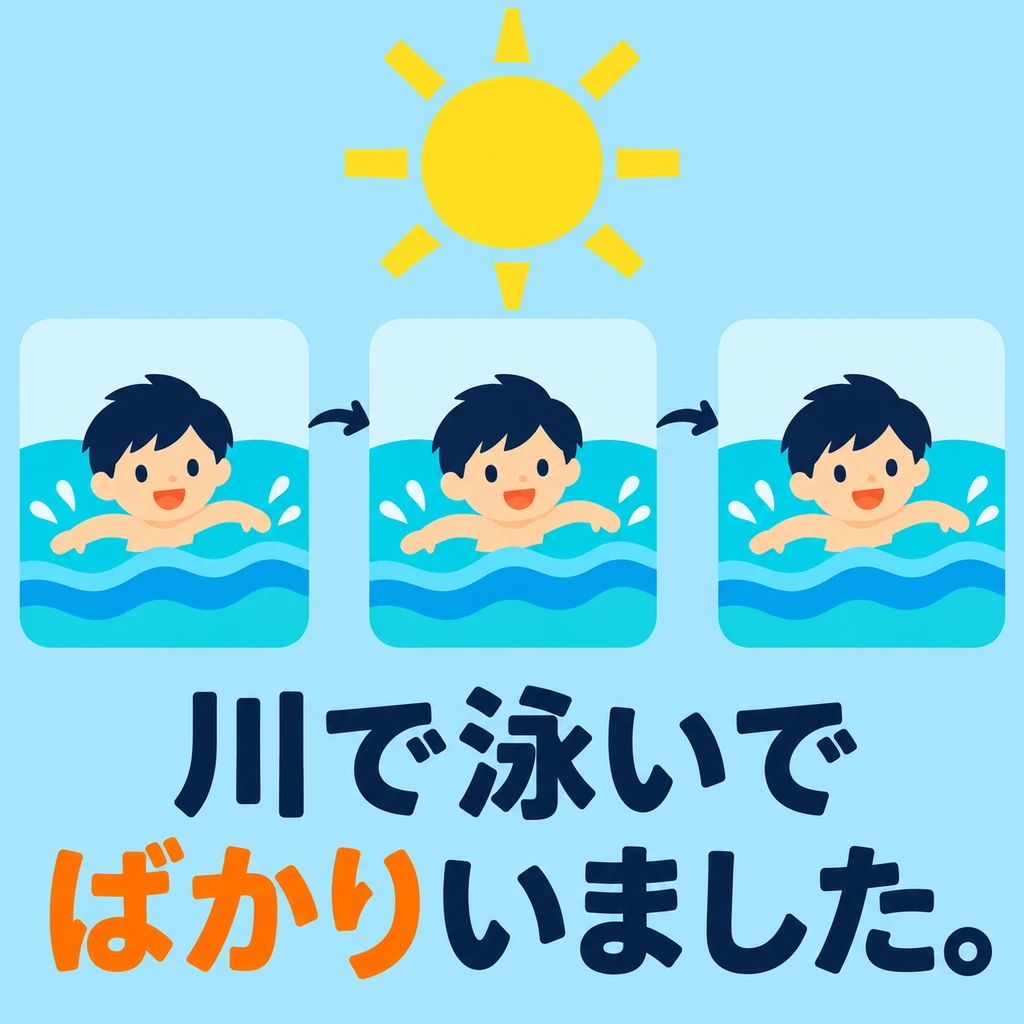
What does the child keep doing over summer vacation? 「ばかりいます」 after a verb’s て-form emphasizes repeating the same activity.
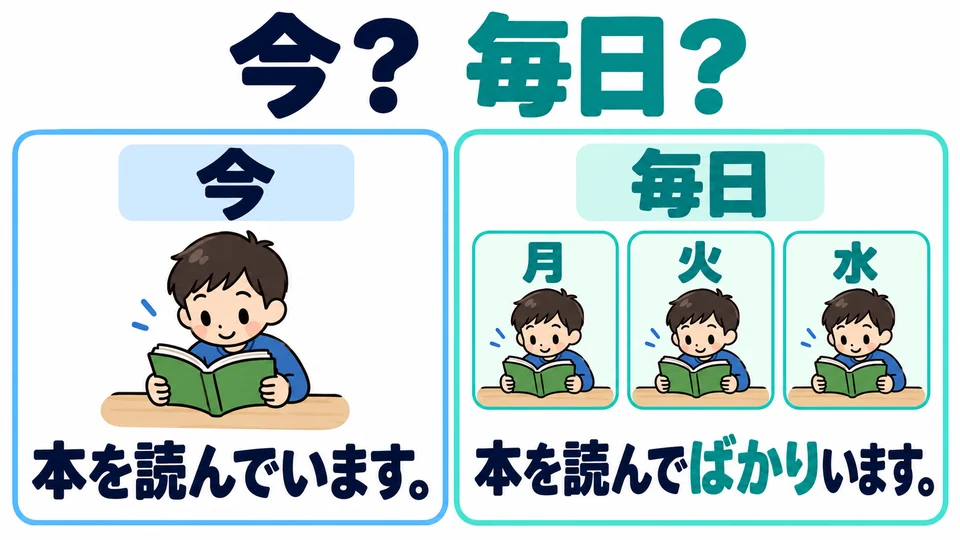
This describes a habit or a tendency over a period of time, rather than just an action happening right now.
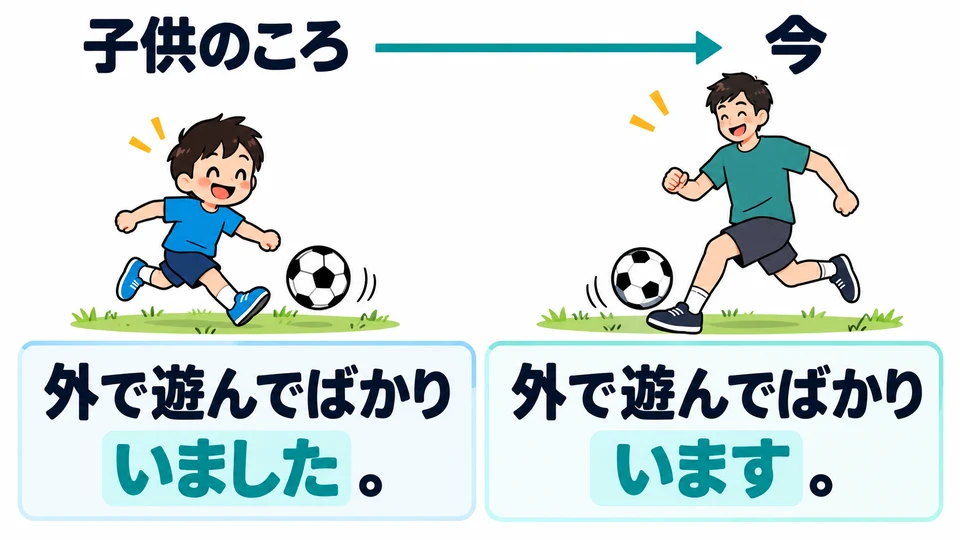
Use 「いました」 at the end when recalling childhood habits; use 「います」 for current habits.
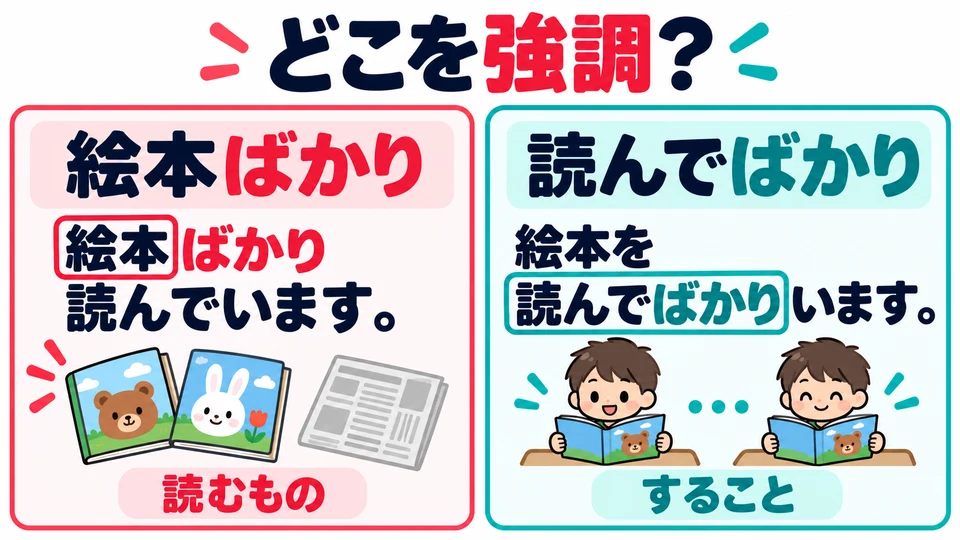
The picture-book example emphasizes the action of “always reading.” 「ばかり」 after a noun instead emphasizes what is being read.
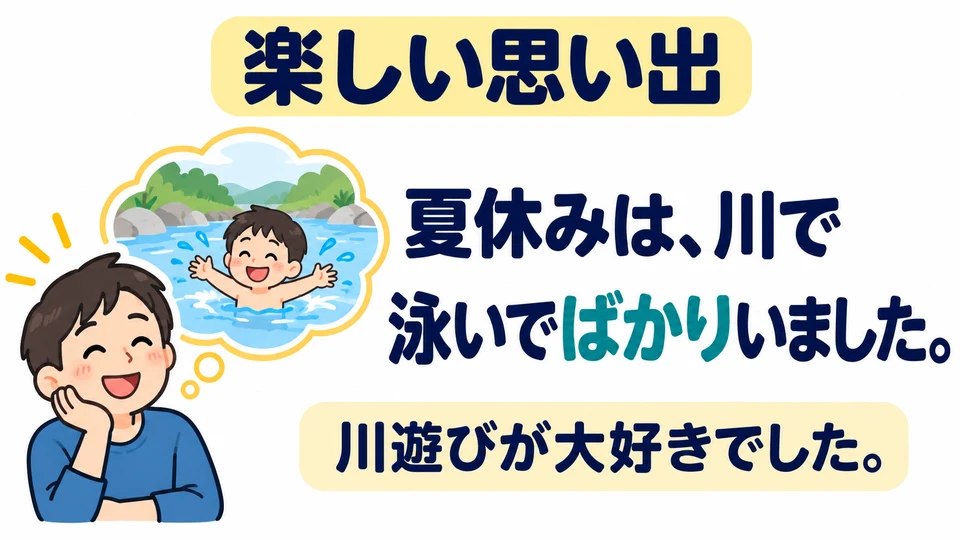
The childhood examples can also fondly recall favorite activities. 「ばかり」 does not necessarily express a complaint.
Example sentences
- 子供kodomoのnoころ、koro、私watashiはwa外sotoでde遊んasonでdeばかりbakariいました。imashita。
In a conversation
Check yourself
Level 1 · Recognise
Which sentence is correct?
Level 1 · Recognise
Listen and choose the meaning
Level 2 · Build
Put the words in order
Whenever he has free time, my younger brother does nothing but play games.
Level 3 · Use
What goes in the blank?
子供のころ、私は外で____。
When I was a child, I did nothing but play outside.
More grammar in this theme
- Nばかり/Vてばかりいますkeep doing the same thing