
〜ながら〜~nagara ~
Nagara (〜ながら〜) means “while doing another action”.
I walked around the town while looking at the map.
Use 「〜ながら〜」 for two actions usually done by the same person, with the second action as the main one.
In the course
How it works
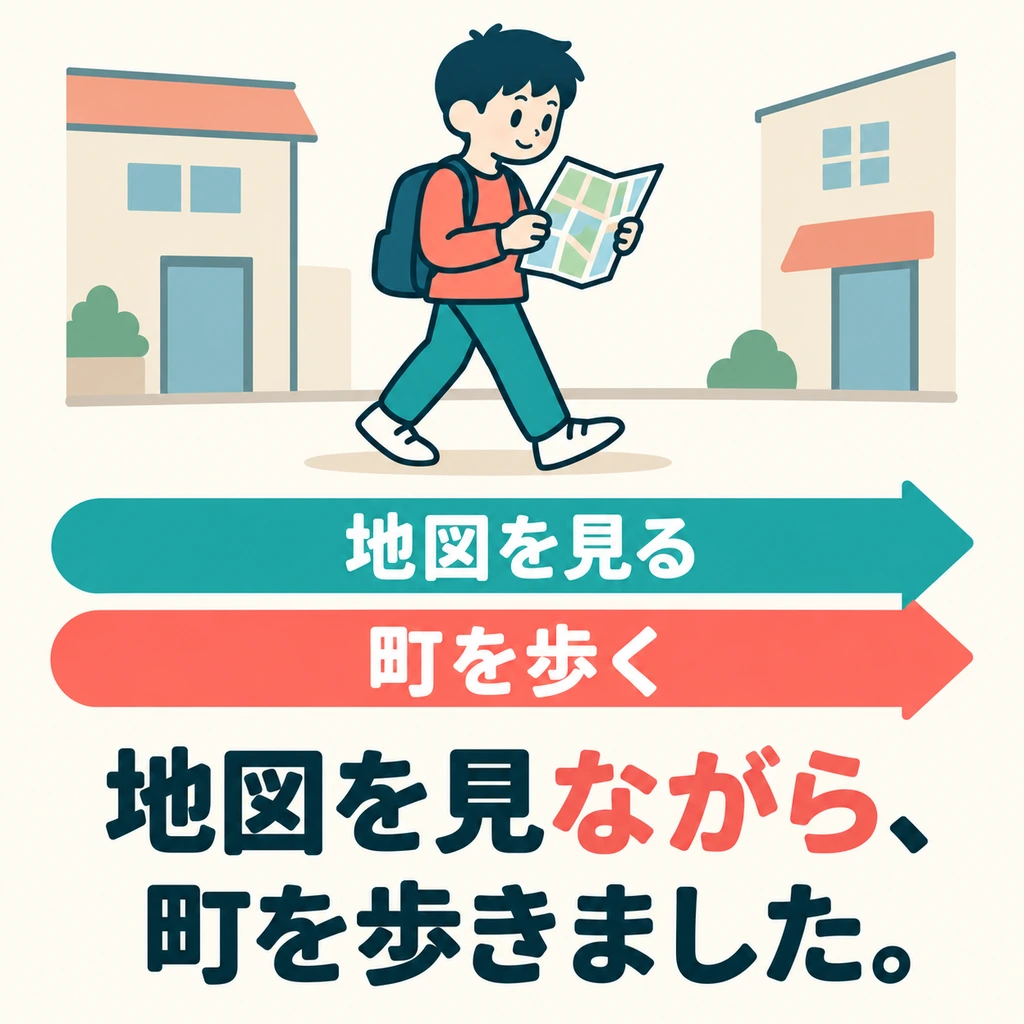
Look at the picture: looking at the map and walking happen at the same time. 「ながら」 means doing one thing while doing another.
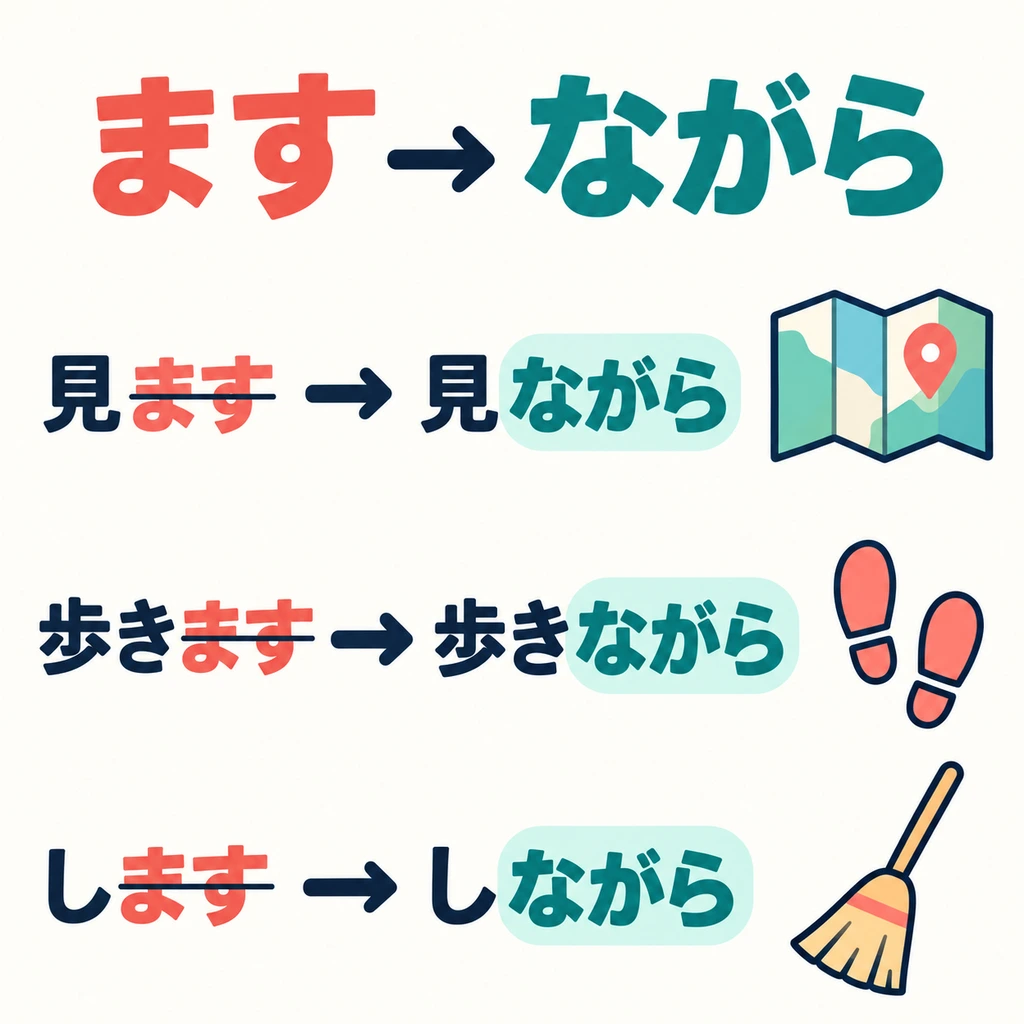
Take the verb’s 「ます形」, remove 「ます」, and add 「ながら」. Note the form 「しながら」.
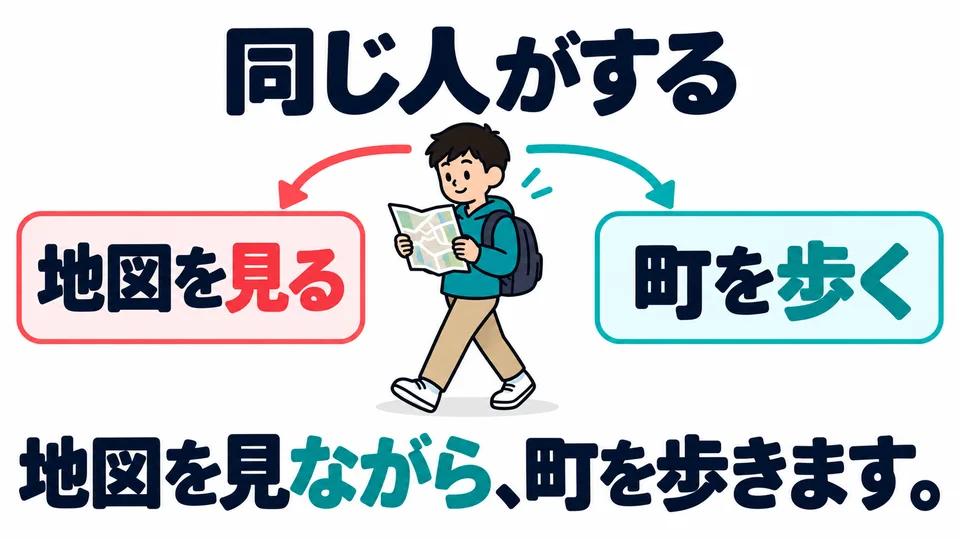
The person looking at the map is also walking. The two actions linked by 「ながら」 are usually done by the same person.
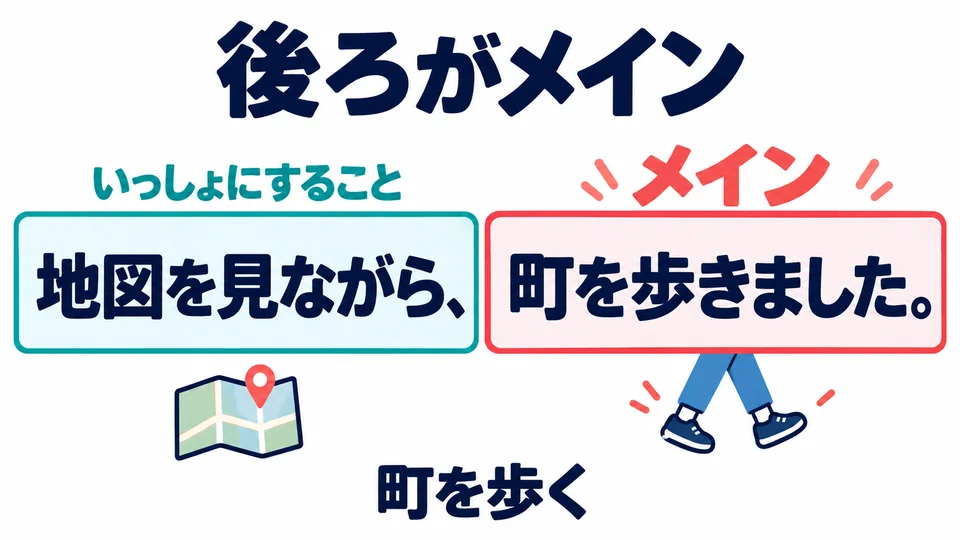
The second part gives the main action. The example is mainly about walking around town; looking at the map is an accompanying action.
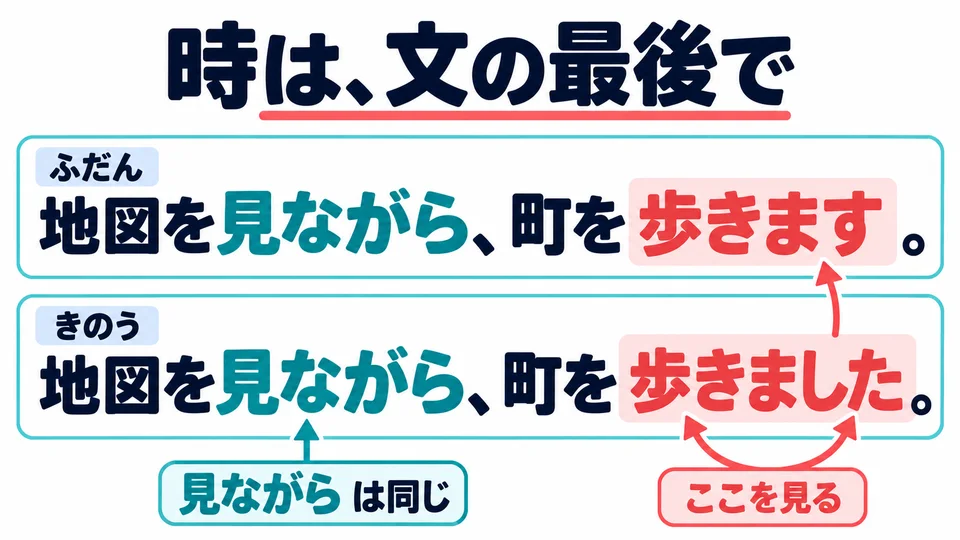
「見ながら」 in the first part stays unchanged. The second part tells you whether it is past or present: 「歩きました」 indicates the past.
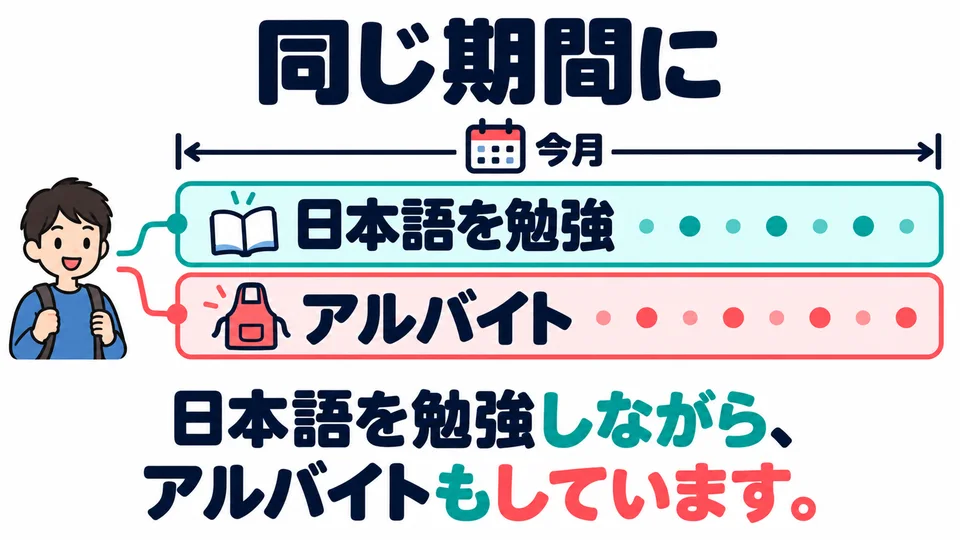
Studying Japanese and working part-time can take place over the same period. You do not have to do both at the exact same moment every second.
Example sentences
- 地図chizuをo見miながら、nagara、町machiをo歩きました。arukimashita。
I walked around the town while looking at the map.
- 日本nihon語go
In a conversation
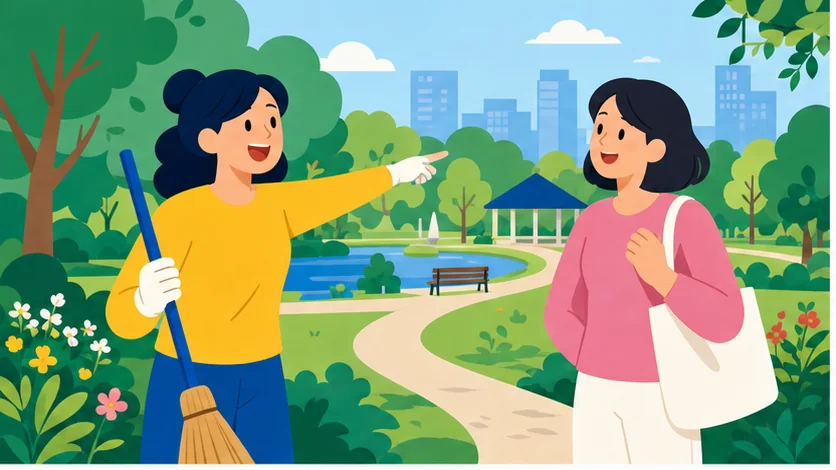
- A明日の清掃活動、参加しますか?
A: Will you participate in tomorrow's cleaning activity?
- Bはい、掃除しながらボランティアの人
Check yourself
Level 0 · Conjugate
Change to 〜ながら: “while doing it”. 〜ながら
地図を(見る)、町を歩きました。
Level 1 · Recognise
Which sentence is correct?
Level 1 · Recognise
Listen and choose the meaning
Level 2 · Build
Put the words in order
I walked around town while looking at a map.
Level 3 · Use
What goes in the blank?
地図を____、町を歩きました。
I walked around town while looking at a map.
More grammar in this theme
- 〜ながら〜while doing another action