
〜ないで〜~naide ~
Naide (〜ないで〜) means “without doing something”.
I went outside without wearing a jacket, so I got cold.
Use 〜ないで〜 to describe what someone did without doing the first action.
In the course
How it works
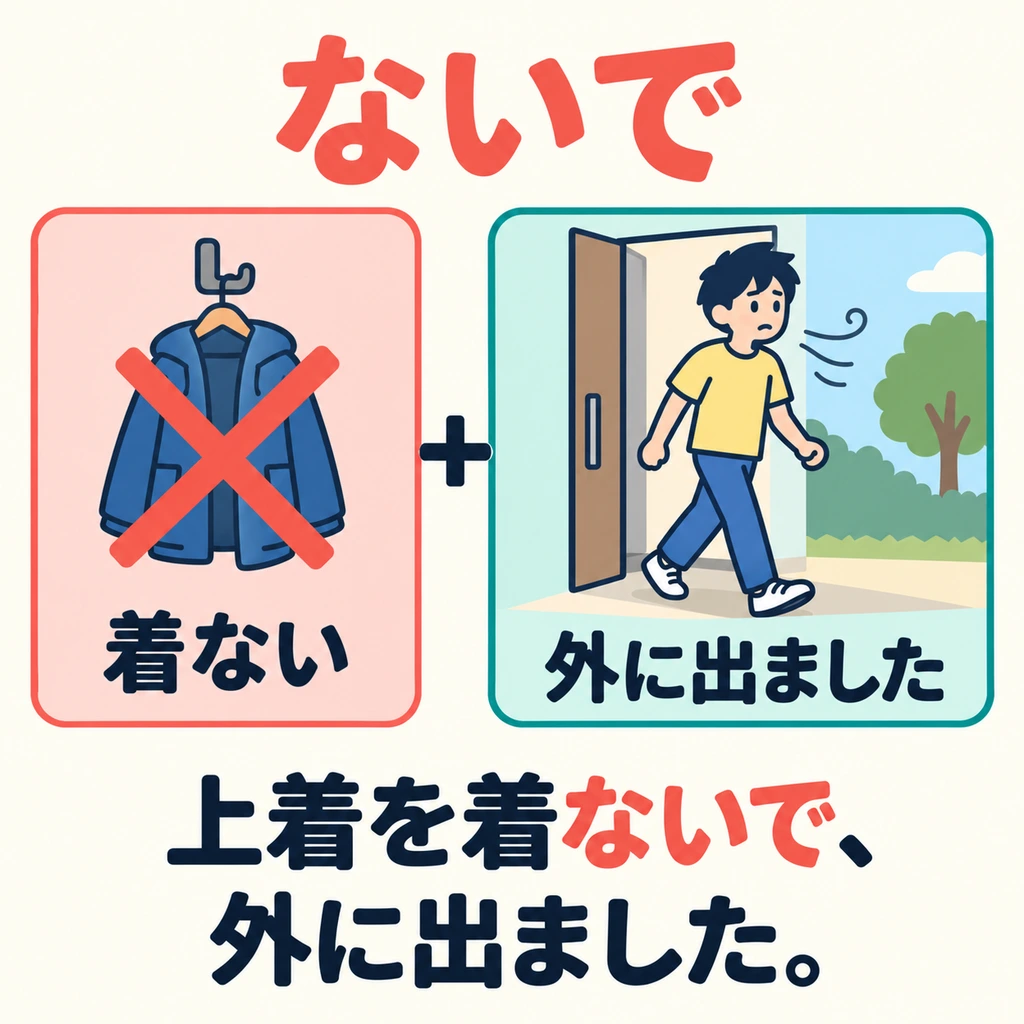
He went outside without putting on a jacket. 「ないで」 describes the circumstances of the main action.
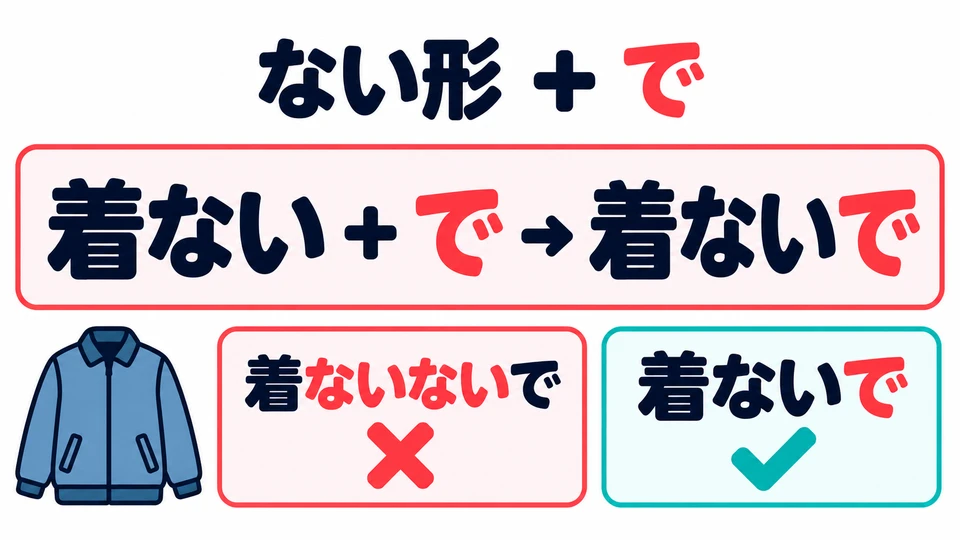
Add 「で」 to the verb’s ない form: 着ない→着ないで. Do not add another ない.
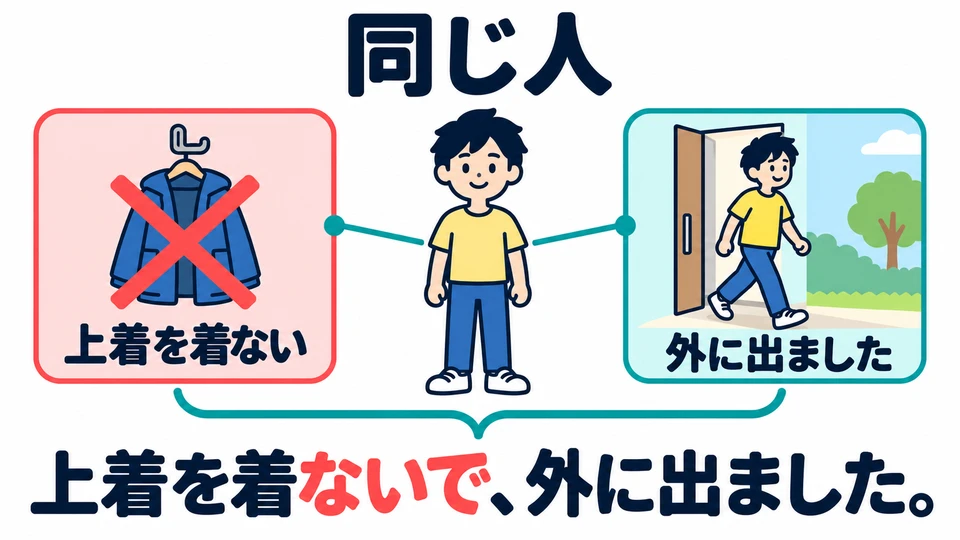
Both parts usually refer to the same person: the person who did not put on a jacket is also the one who went outside.

Even for a past event, the first part uses 「ないで」. The second part expresses the past tense.
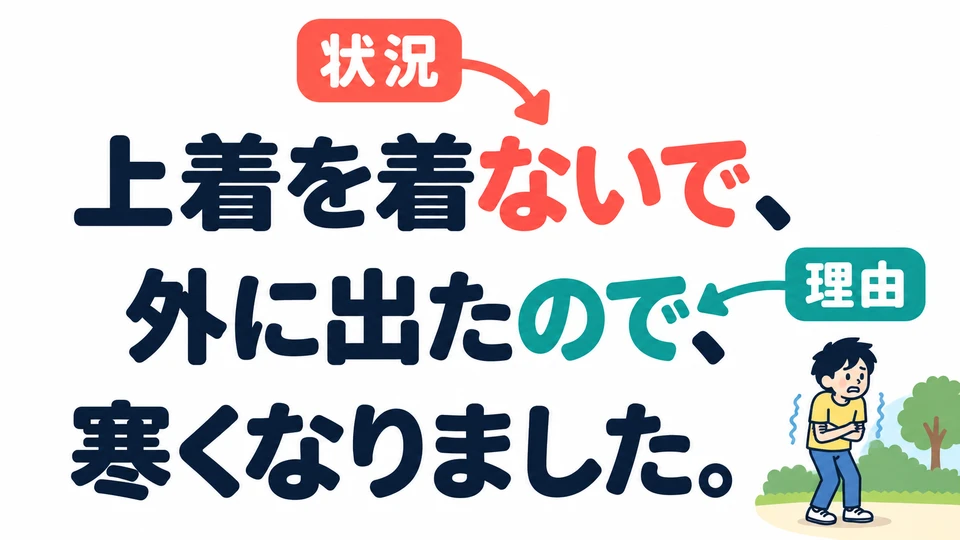
In the first example, 「ないで」 describes not wearing a jacket; 「ので」 links the reason to the result of feeling cold.
Example sentences
- 上着uwagiをo着ないkinaiで、de、外sotoにni出たdetaのnoで寒くdesamukuなりました。narimashita。
I went outside without wearing a jacket, so I got cold.
In a conversation

- A足がひどく腫れていますが、どうしたんですか。
A: Your foot is badly swollen, what happened?
- B昨日怪我を
Check yourself
Level 0 · Conjugate
Change to 〜ないで: “without doing it”. ないで
朝ご飯を(食べる)、学校へ行きました。
Level 1 · Recognise
Which sentence is correct?
Level 1 · Recognise
Listen and choose the meaning
Level 2 · Build
Put the words in order
I endured it without taking any medicine.
Level 3 · Use
What goes in the blank?
上着を____、外に出たので寒くなりました。
I went outside without wearing a jacket, so I got cold.
More grammar in this theme
- 〜ないで〜without doing something