JPEdLab iconJPEdLab
Save history

Create an account and play

Explore first, then save your progress whenever you are ready. No email address is required.

Start free
  1. Japanese grammar
  2. JLPT N3 grammar
  3. 〜のわりに

〜のわりに~no wari ni

No wari ni (〜のわりに) means “surprisingly, considering”.

このkono店みせmiseはわwa安いやすいyasuiわりwariに、ni、料理りょうりryouriがgaおいしいです。oishiidesu。

Considering how cheap it is, the food at this restaurant is delicious.

Use 「〜のわりに」 to compare an expectation set by a price or situation with a surprisingly different result.

In the course›

How it works

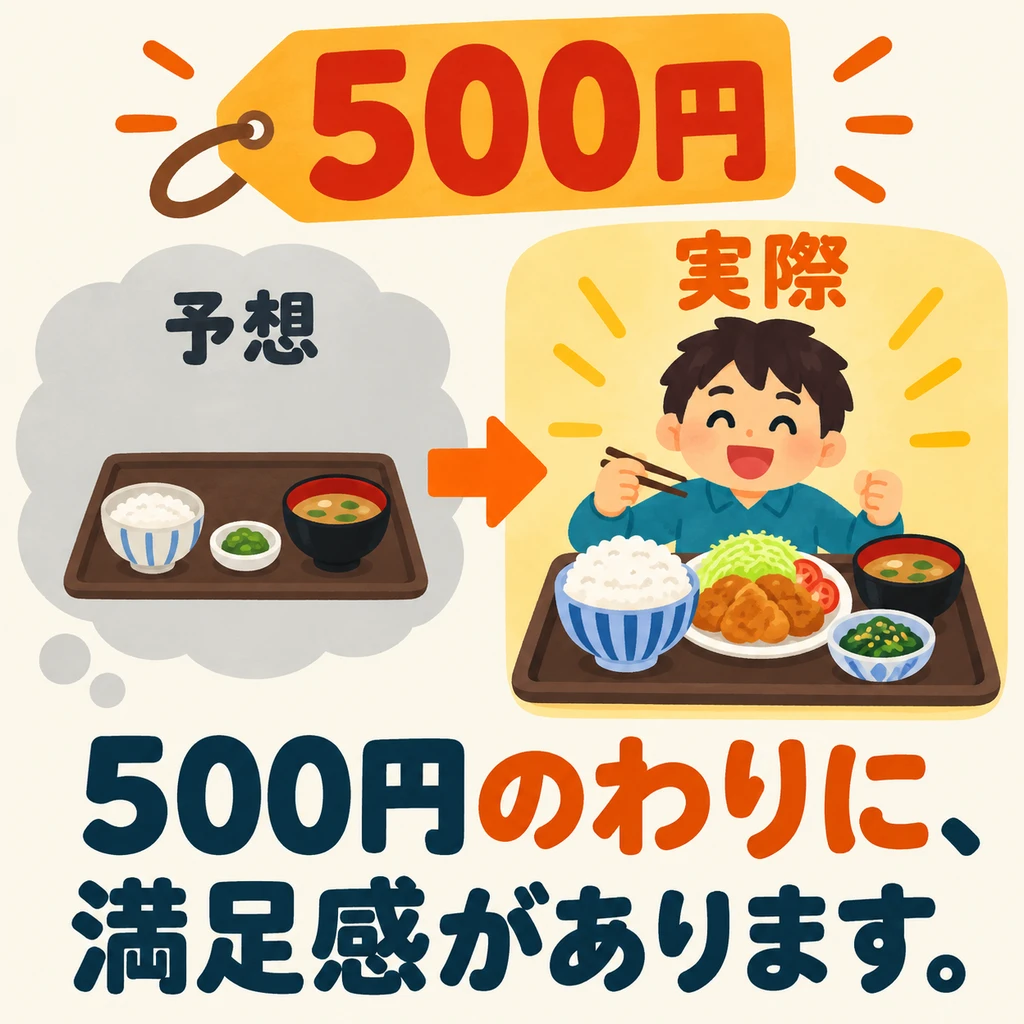
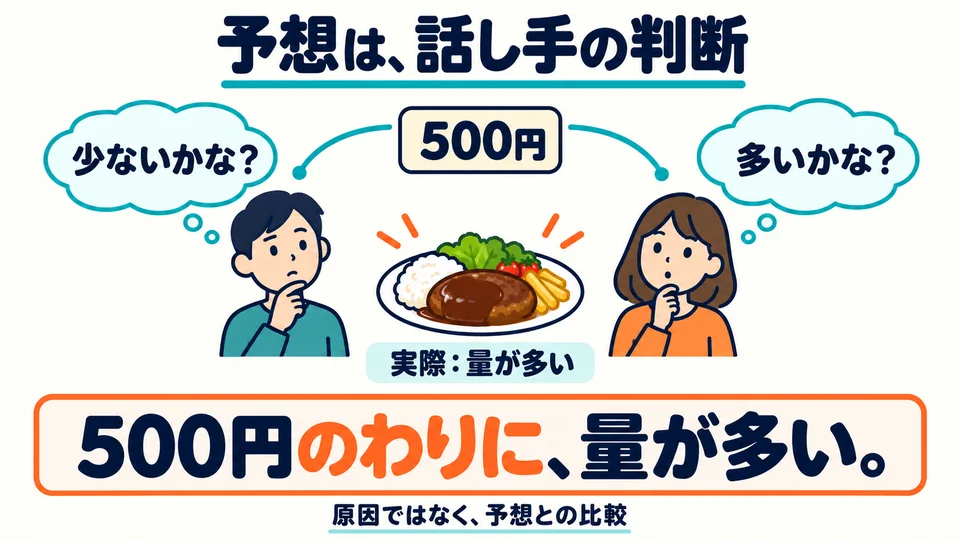
  1. Seeing 500 yen, how much food do you expect? The actual meal is generous. First, compare expectation with reality.
    Seeing 500 yen, how much food do you expect? The actual meal is generous. First, compare expectation with reality.

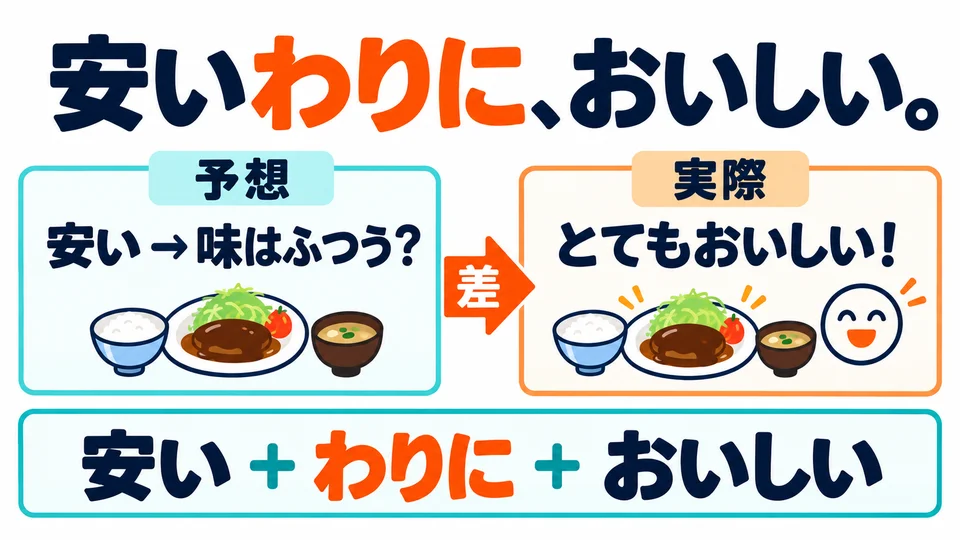
  2. The price or quality mentioned first sets an expectation, but reality is surprising. Think of it as “for …, surprisingly …”.
    The price or quality mentioned first sets an expectation, but reality is surprising. Think of it as “for …, surprisingly …”.

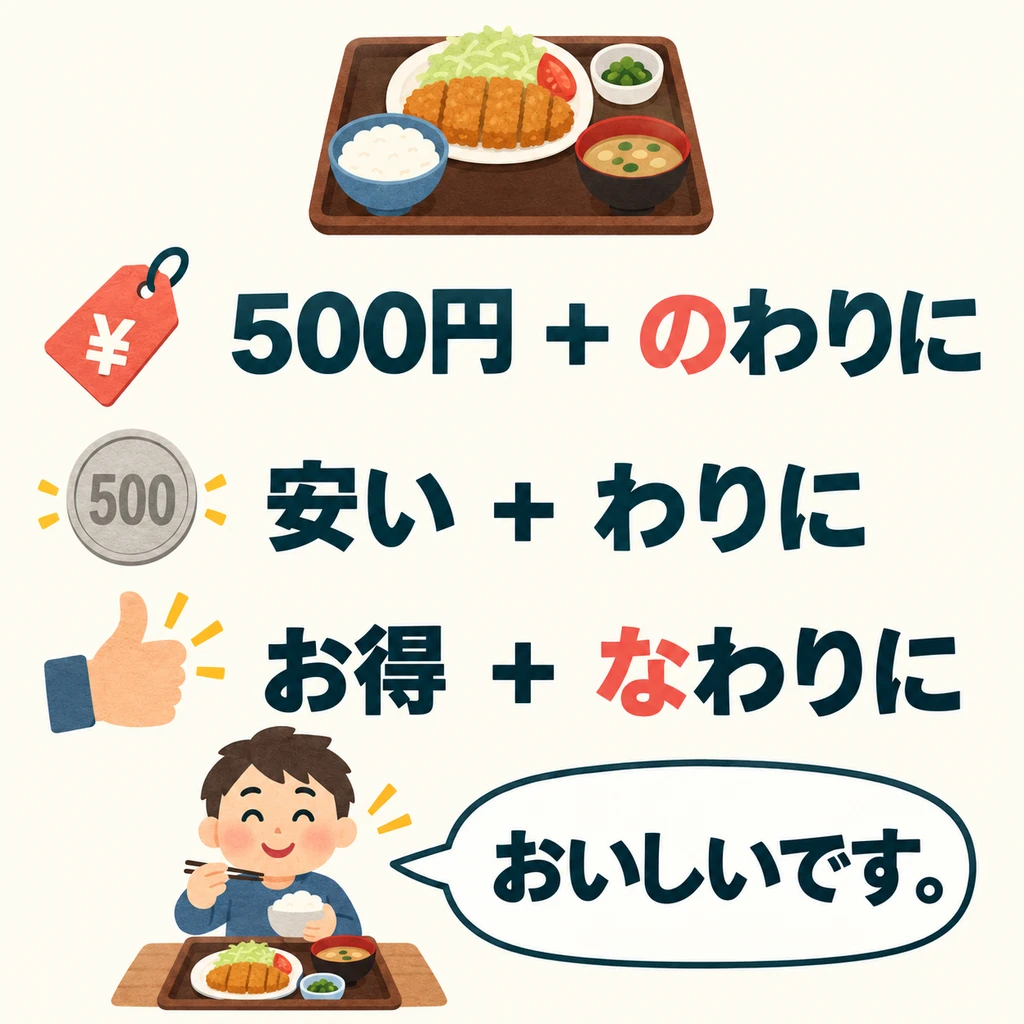
  3. First, see how the basis for the judgment connects: nouns take 「の」, な-adjectives take 「な」, and い-adjectives connect directly.
    First, see how the basis for the judgment connects: nouns take 「の」, な-adjectives take 「な」, and い-adjectives connect directly.

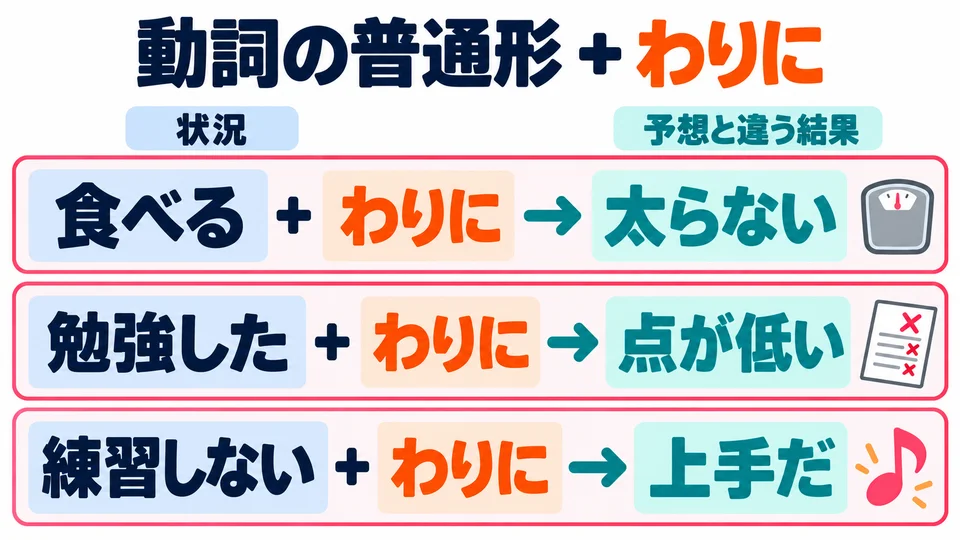
  4. Verbs connect to 「わりに」 in the plain form. The first clause gives the situation; the second gives a result that seems out of proportion to it.
    Verbs connect to 「わりに」 in the plain form. The first clause gives the situation; the second gives a result that seems out of proportion to it.

  5. This expectation comes from the speaker’s judgment, so others may not share it. The pattern does not mean that the first clause causes the second.
    This expectation comes from the speaker’s judgment, so others may not share it. The pattern does not mean that the first clause causes the second.

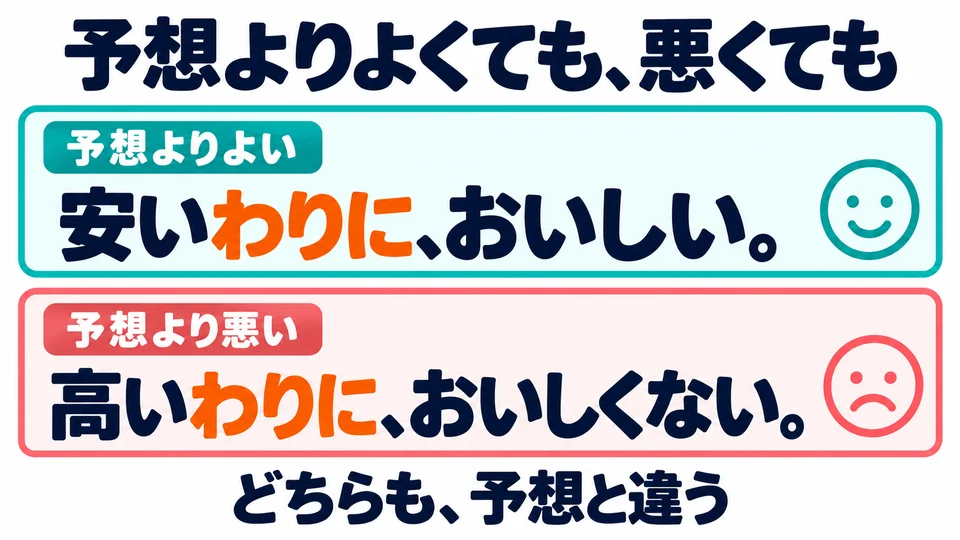
  6. The result can be better or worse than expected. What matters is the gap between the expectation set by the reference and the result.
    The result can be better or worse than expected. What matters is the gap between the expectation set by the reference and the result.

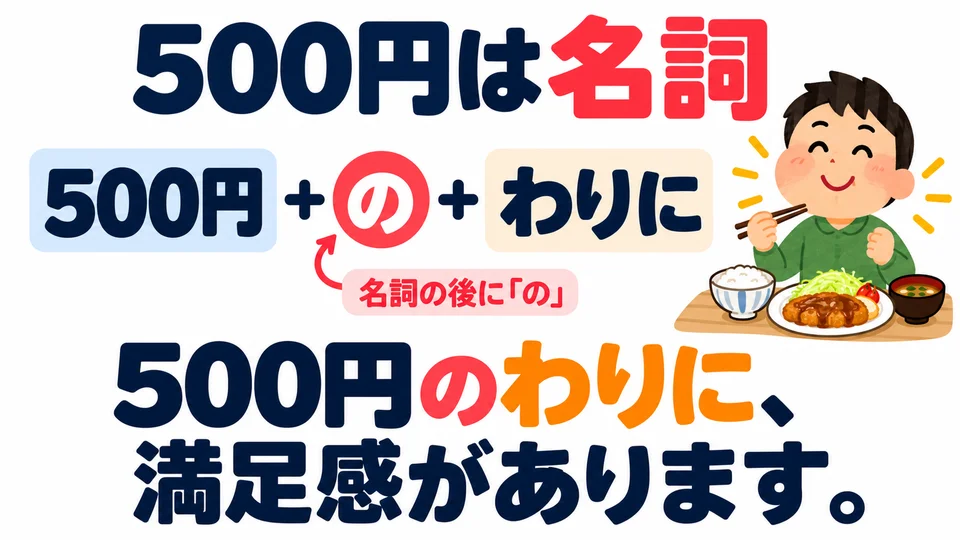
  7. In the examples, the low price sets the expectation, but the taste and satisfaction exceed it. 「の」 follows the noun 「500円」.

    In the examples, the low price sets the expectation, but the taste and satisfaction exceed it. 「の」 follows the noun 「500円」.

Example sentences

  • このkono店みせmiseはわwa安いやすいyasuiわりwariに、ni、料理りょうりryouriがgaおいしいです。oishiidesu。

    Considering how cheap it is, the food at this restaurant is delicious.

In a conversation

  • A
    この学割がくわりのランチらんちセット、せっと、どうですか。

    A: How is this student-discount lunch set?

  • B
    値段ねだんが安くやすくてお得おとくなわり

Check yourself

  1. Level 1 · Recognise

    Which sentence is correct?

  2. Level 1 · Recognise

    Listen and choose the meaning

  3. Level 2 · Build

    Put the words in order

    Although this restaurant is cheap, the food is delicious.

  4. Level 3 · Use

    What goes in the blank?

    このホテルは駅から近い____、宿泊料金が手ごろです。

    For being close to the station, this hotel has reasonable rates.

More grammar in this theme

  • 〜のわりにsurprisingly, considering

More JLPT N3 grammar

Keep practising

Test your Japanese vocabulary12 adaptive questions, freeCheck your pronunciationRead aloud and get a scorePractise verb forms10-question conjugation quizSee the whole courseGrammar, vocabulary and quizzes by theme
ランチらんち
ranchi
セットせっとsetto
はわwa
500ごひゃくgohyaku
円えんen
のno
わりwari
に、ni、
満足まんぞくmanzoku
感かんkan
がga
あります。arimasu。

Although the lunch set is only 500 yen, it's very satisfying.

に、
すごく
ボリュームぼりゅーむ
が
あります
ね。

B: For a price so cheap and affordable, it comes with a very large portion.

  • A
    本当ほんとうですね。お腹おなかがいっぱいになって大満足おおまんぞくです。

    A: You're right. I'm full and completely satisfied.

  • Intermediate 1
    Dining and Shopping Information
    More quizzesOpen this lesson’s quizzes in the course
    〜ているongoing state or practice
    〜によってvaries depending on
    〜のうちにbefore a state changes
    〜がいいんじゃないgentle suggestion or advice
    〜ようになっているsystem feature or mechanism
    〜に限りlimited to a date or group
    〜こそ・〜からこそemphasis and precise reason
    〜につきper unit; due to
    〜ということですso that means
    〜でしょうかgentle question or request
    〜はずだshould; expected to
    〜向けintended for
    Previous〜のうちに
    Next〜がいいんじゃない
    See all 114
    〜から〜にかけてapproximate time or place range
    〜がきっかけでtrigger for a change
    〜っぽいcharacteristic or impression
    〜でもeven in a situation
    〜なんてsurprise; can you believe
    〜ば〜ほどthe more…, the more…
    〜ことでby doing; through
    〜なぁsoftly voiced wish