
Japanese grammar · ≈ JLPT N3 · Intermediate 1
〜はずだ~ hazu da
should; expected to
Use 「〜はずだ」 for a confident expectation based on facts or information you know.
How it works

When you see the sale notice, what do you expect the price to be? First, find the basis for your prediction.
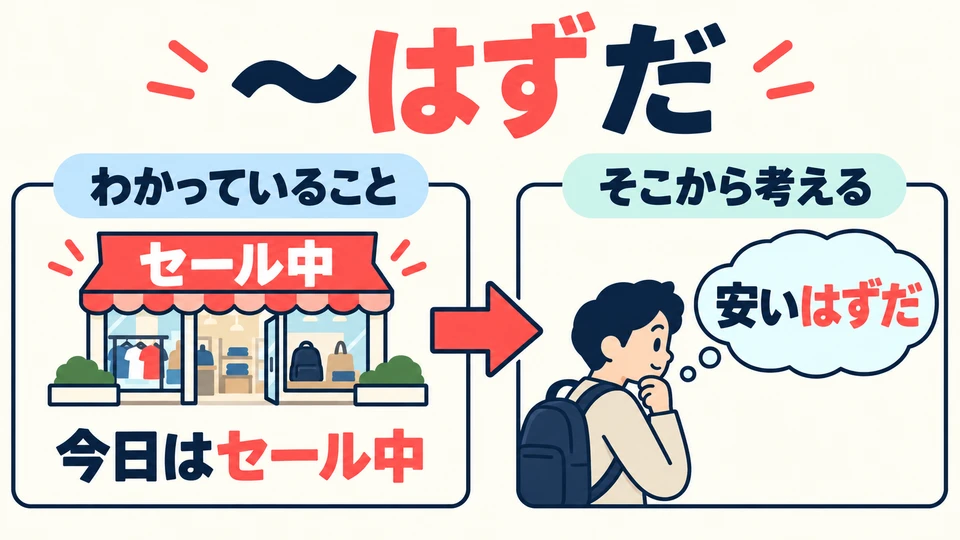
「はずだ」 expresses an expectation based on facts or known information: “it should be so.”

The speaker is confident in the conclusion, but may not have checked it personally.
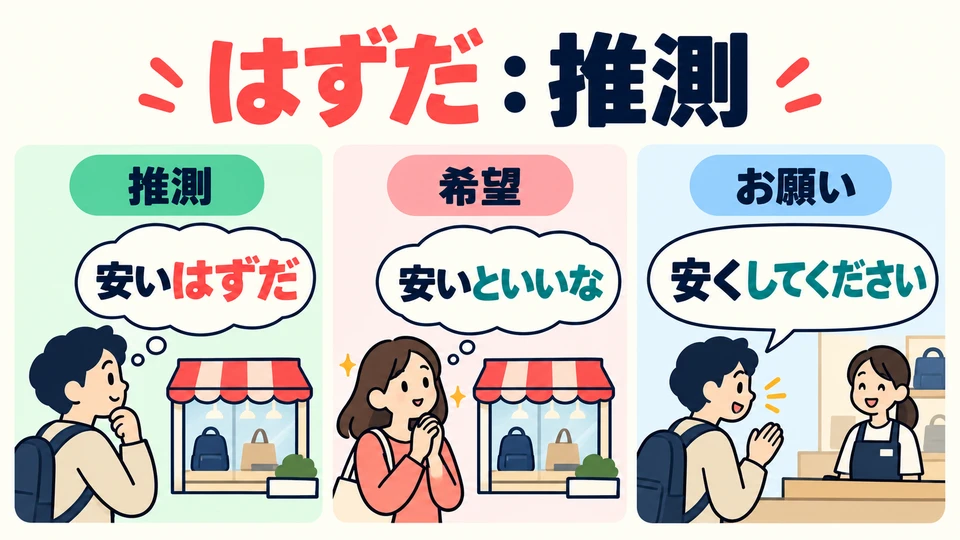
Here, “should” expresses an expectation, not a demand, an obligation, or a wish.
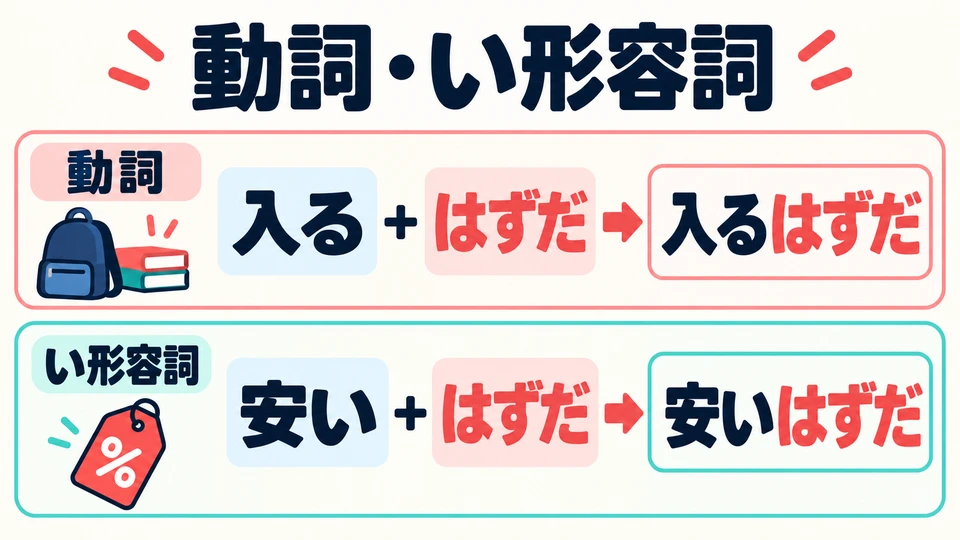
Add 「はずだ」 directly to verbs and い-adjectives: 入るはずだ, 安いはずだ.
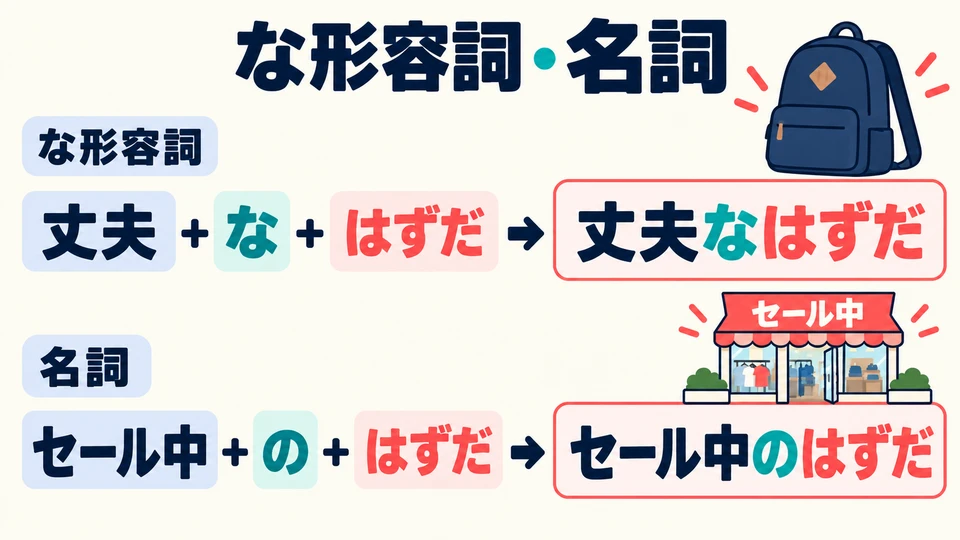
Use 「な」 after な-adjectives and 「の」 after nouns: 丈夫なはずだ, セール中のはずだ.
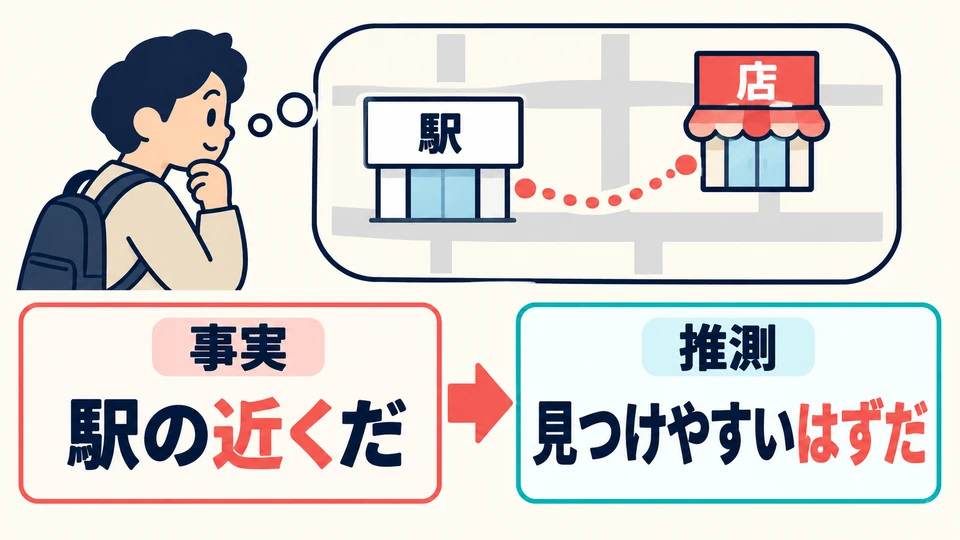
“Near the station” is a known fact; “easy to find” is the conclusion drawn from it.
Example sentences
- 今日kyouはwaセール中seeruchuuだdaから、kara、いつもitsumoよりyori安いyasuiはずhazuです。desu。
Since it's on sale today, it should be cheaper than usual.
In a conversation

- A新しい通学用のリュックを買いたいんですが、どれが良いですか。
A: I want to buy a new backpack for school. Which one do you recommend?
- Bこの
Check yourself
Level 1 · Recognise
Which sentence is correct?
Level 1 · Recognise
Listen and choose the meaning
Level 2 · Build
Put the words in order
Since it is on sale today, it should be cheaper than usual.
Level 3 · Use
What goes in the blank?
今日はセール中だから、いつもより安い____。
Because it's on sale today, it should be cheaper than usual.
More grammar in this theme
- 〜はずだshould; expected to