Lesson notes · ≈ JLPT N3 · Intermediate 1
〜はずだ~ hazu da
should; expected to
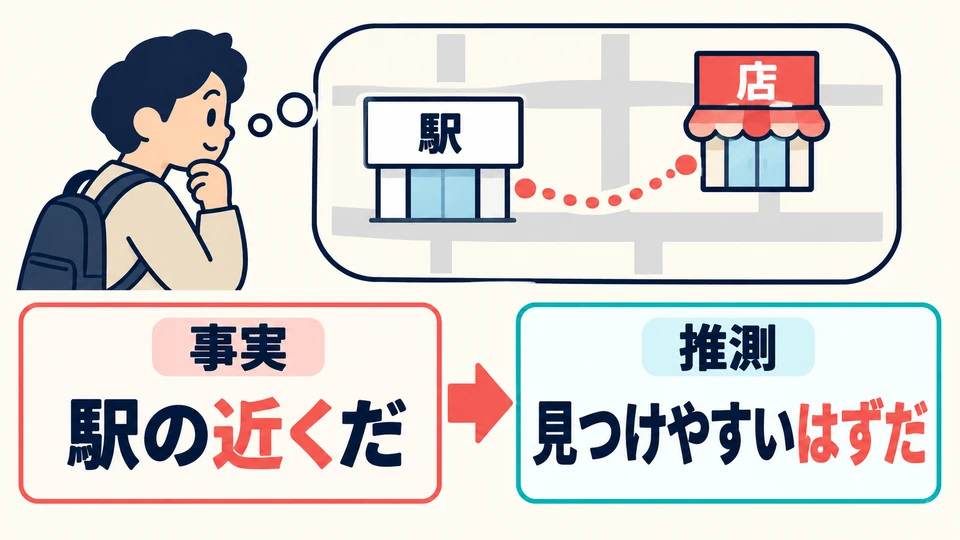
Use 「〜はずだ」 for a confident expectation based on facts or information you know.
How it works

When you see the sale notice, what do you expect the price to be? First, find the basis for your prediction.
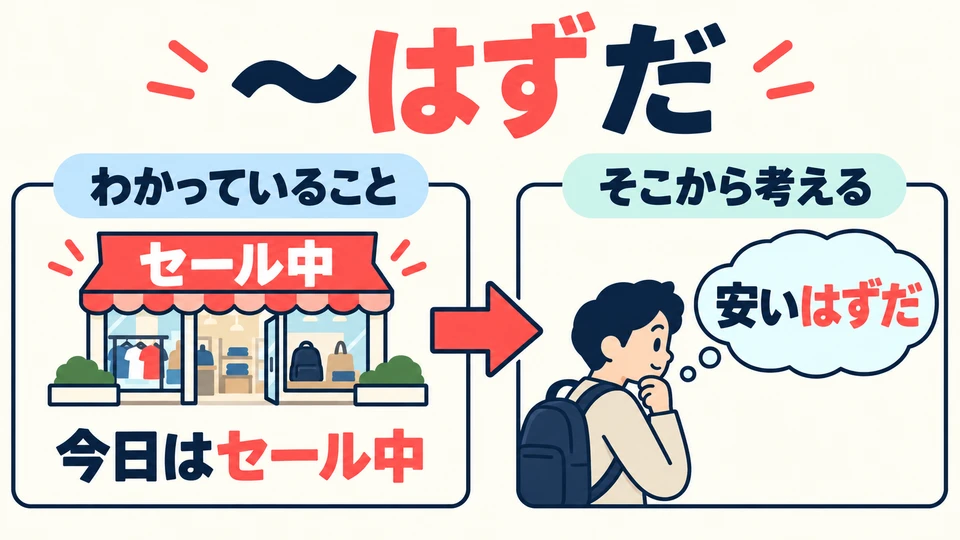
「はずだ」 expresses an expectation based on facts or known information: “it should be so.”

The speaker is confident in the conclusion, but may not have checked it personally.

Here, “should” expresses an expectation, not a demand, an obligation, or a wish.
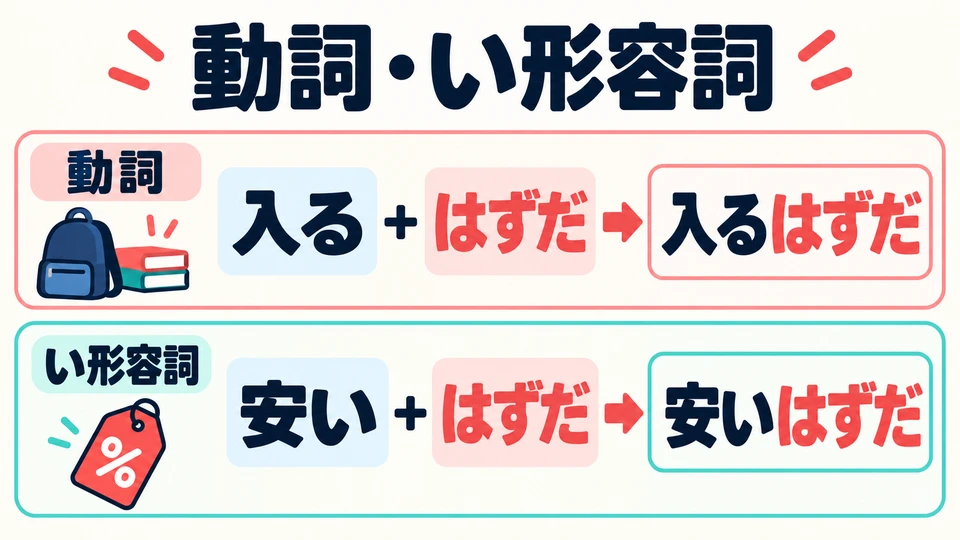
Add 「はずだ」 directly to verbs and い-adjectives: 入るはずだ, 安いはずだ.
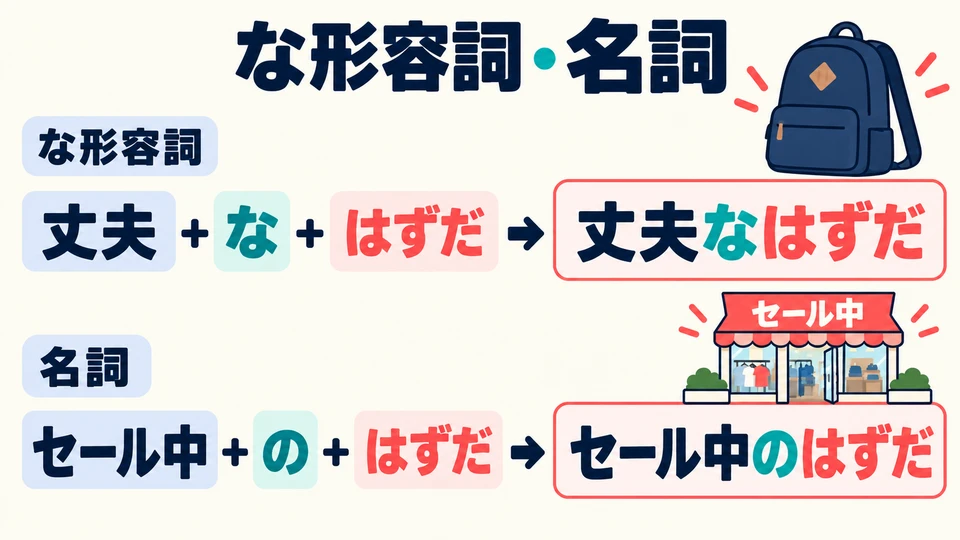
Use 「な」 after な-adjectives and 「の」 after nouns: 丈夫なはずだ, セール中のはずだ.