
Japanese grammar · ≈ JLPT N2 · Intermediate 1
〜こそ・〜からこそ~koso / ~kara koso
emphasis and precise reason
Use 「〜こそ」 to single out something important and 「〜からこそ」 to stress that it is precisely the reason.
How it works
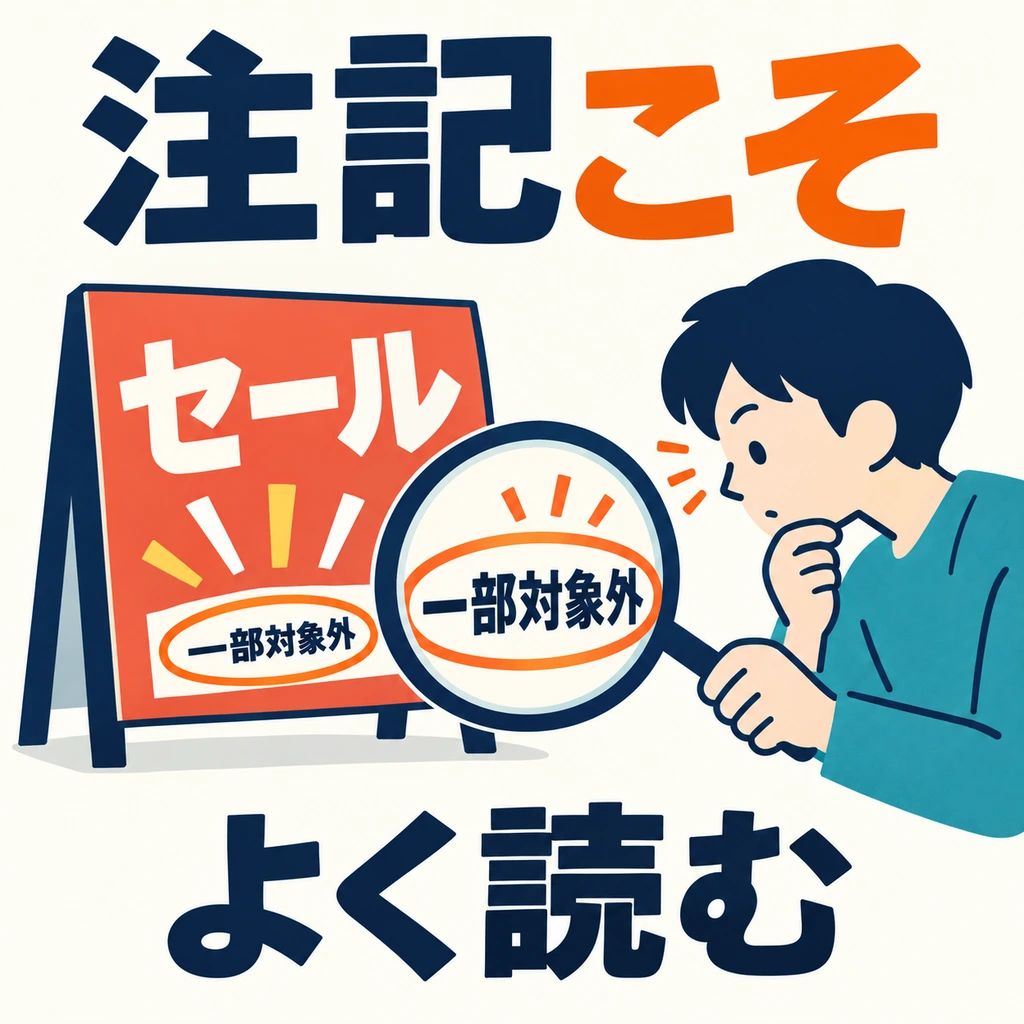
Which part deserves the most attention? 「こそ」 highlights something especially important that you should pay attention to.
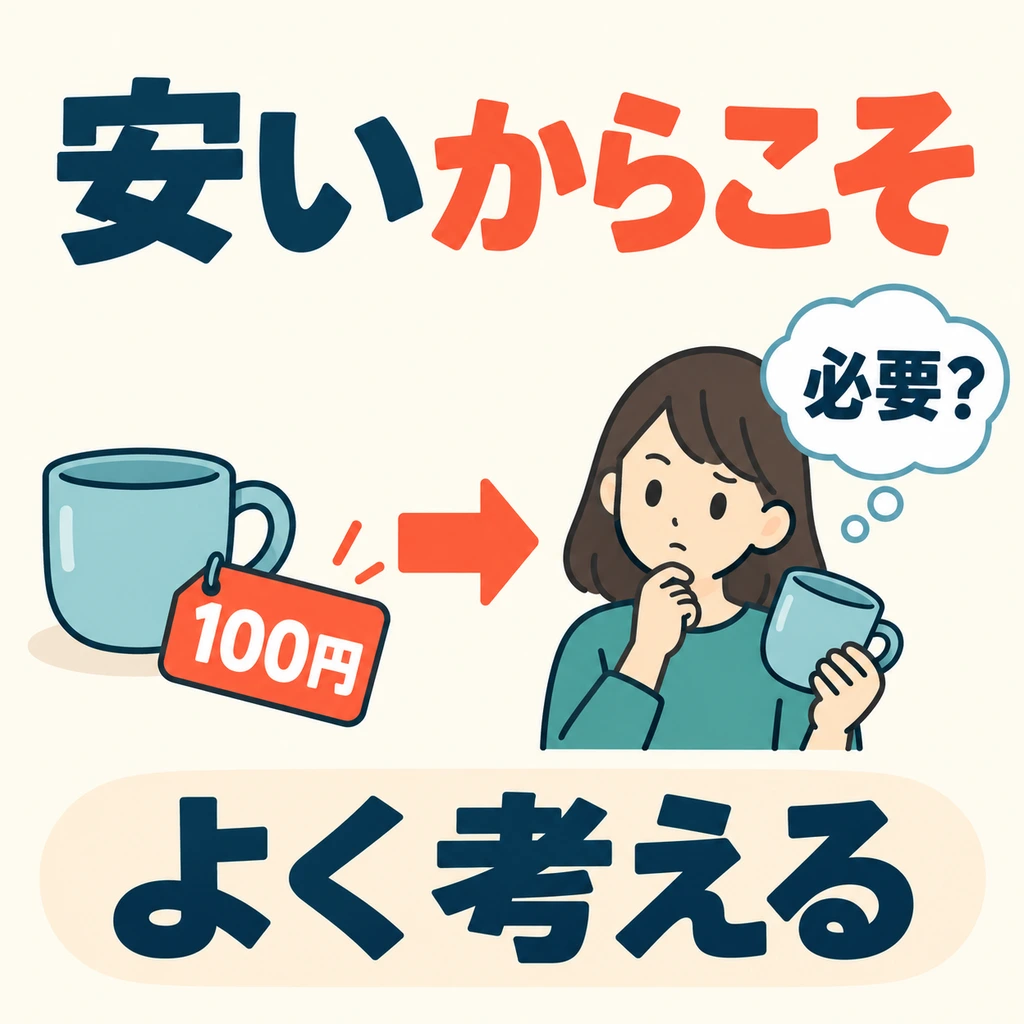
Should you buy it right away just because it is cheap? 「からこそ」 stresses that precisely because it is cheap, you should think it over more carefully.
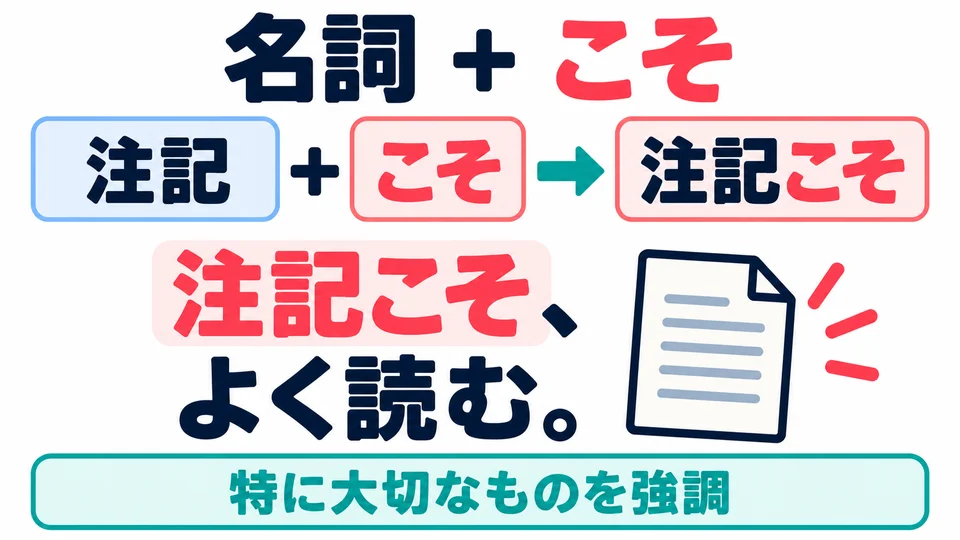
Attach 「こそ」 directly to a noun. 「注記こそ」 singles out the note as something to pay particular attention to.
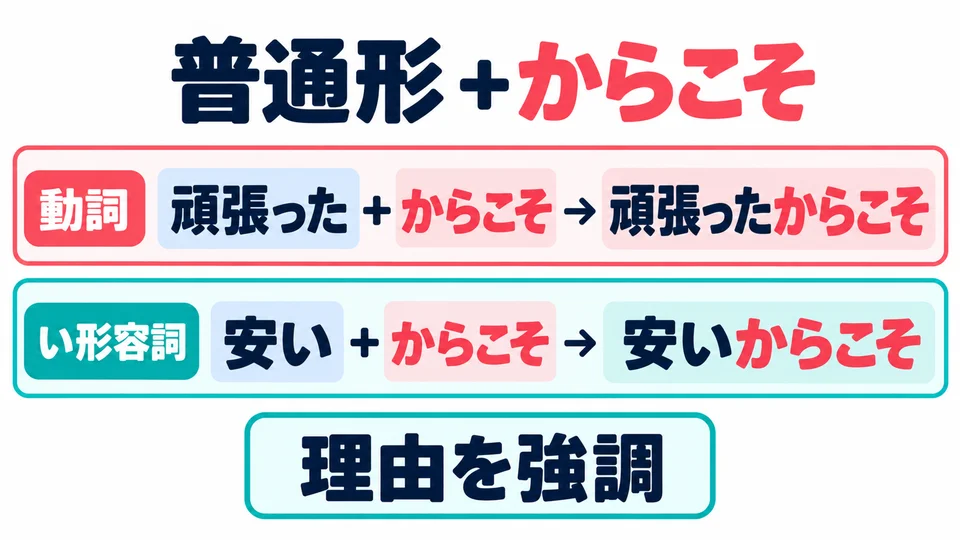
With verbs and い-adjectives, use the plain form + からこそ, as in 「安いからこそ」, to emphasize the reason.
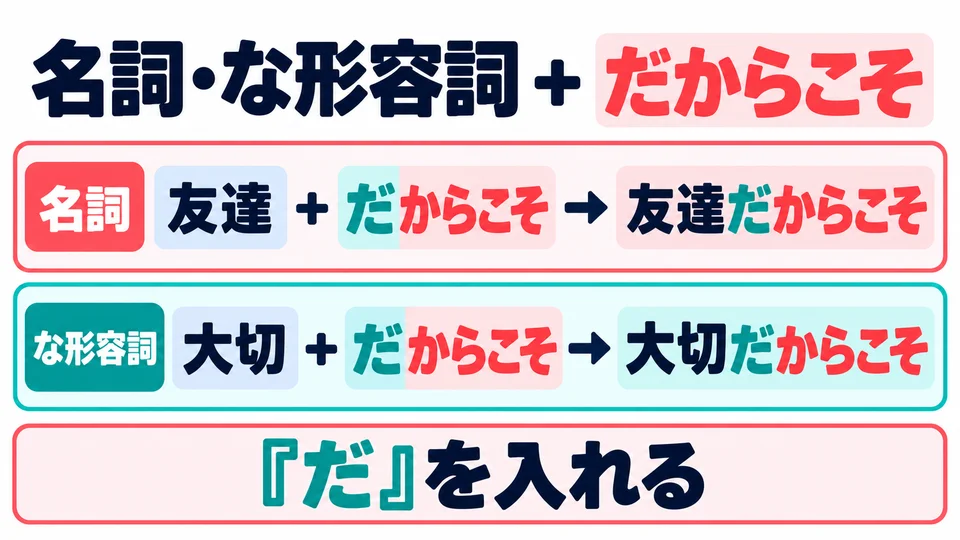
With nouns and な-adjectives, use 「だからこそ」. It means “precisely because that is the case.”
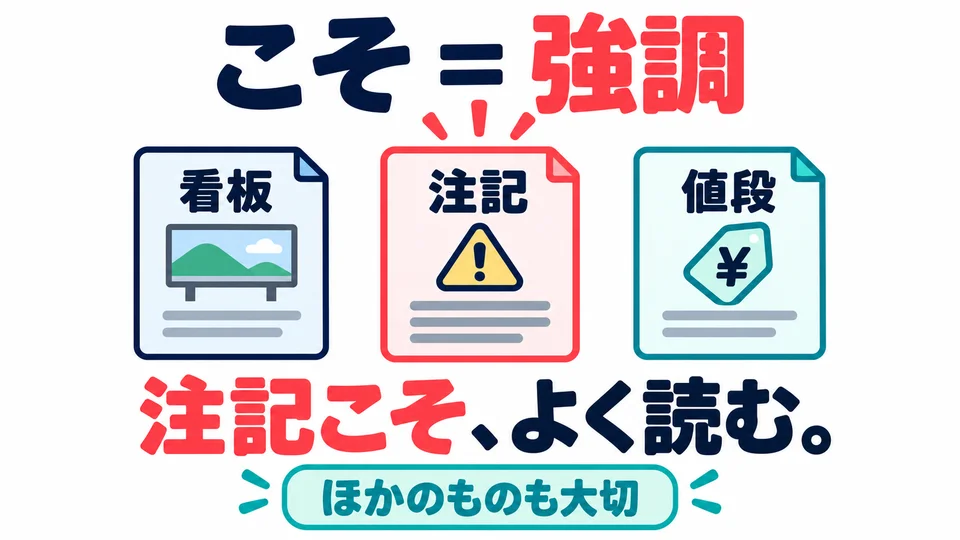
「こそ」 highlights “this very thing.” It does not necessarily mean “only this”; other things are not necessarily excluded.
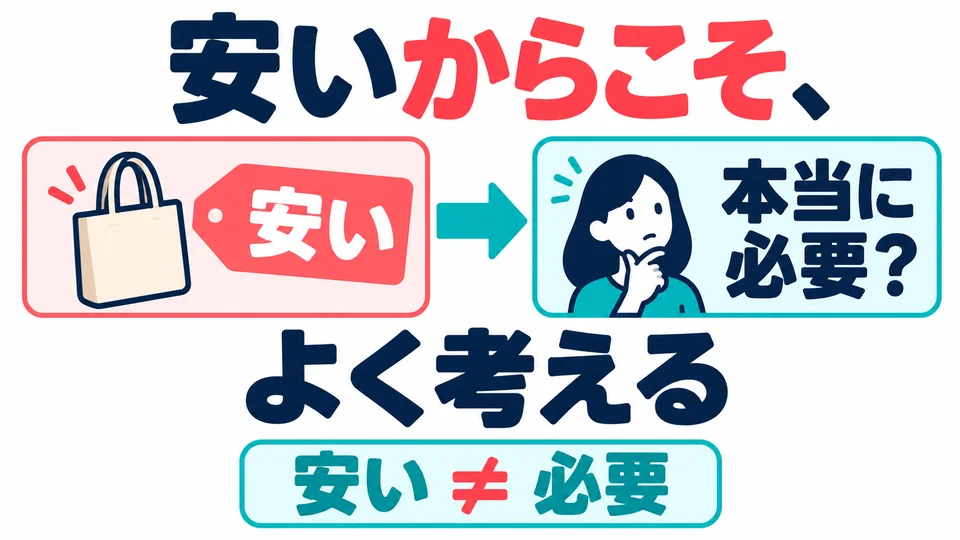
The example stresses that being cheap is the very reason to think carefully. A low price does not mean you really need it.
Example sentences
- 初めてhajimete行くiku店miseこそ、koso、看板kanbanをoよくyoku読んだほうyondahouがgaいいです。iidesu。
It is precisely when going to a shop for the first time that you should read the sign carefully.
In a conversation

Check yourself
Level 1 · Recognise
Which sentence is correct?
Level 1 · Recognise
Listen and choose the meaning
Level 2 · Build
Put the words in order
It is precisely at a shop you are visiting for the first time that you should read the sign carefully.
Level 3 · Use
What goes in the blank?
初めて行く店____、看板をよく読んだほうがいいです。
Especially when going to a store for the first time, you should read the signs carefully.
More grammar in this theme
- 〜こそ・〜からこそemphasis and precise reason