
〜ないと、〜~nai to, ~
Nai to, (〜ないと、〜) means “if you don't…, then…”.
If we don't take action quickly, the damage might worsen.
Use 「〜ないと、〜」 to state what may happen if someone does not take an action.
In the course
How it works
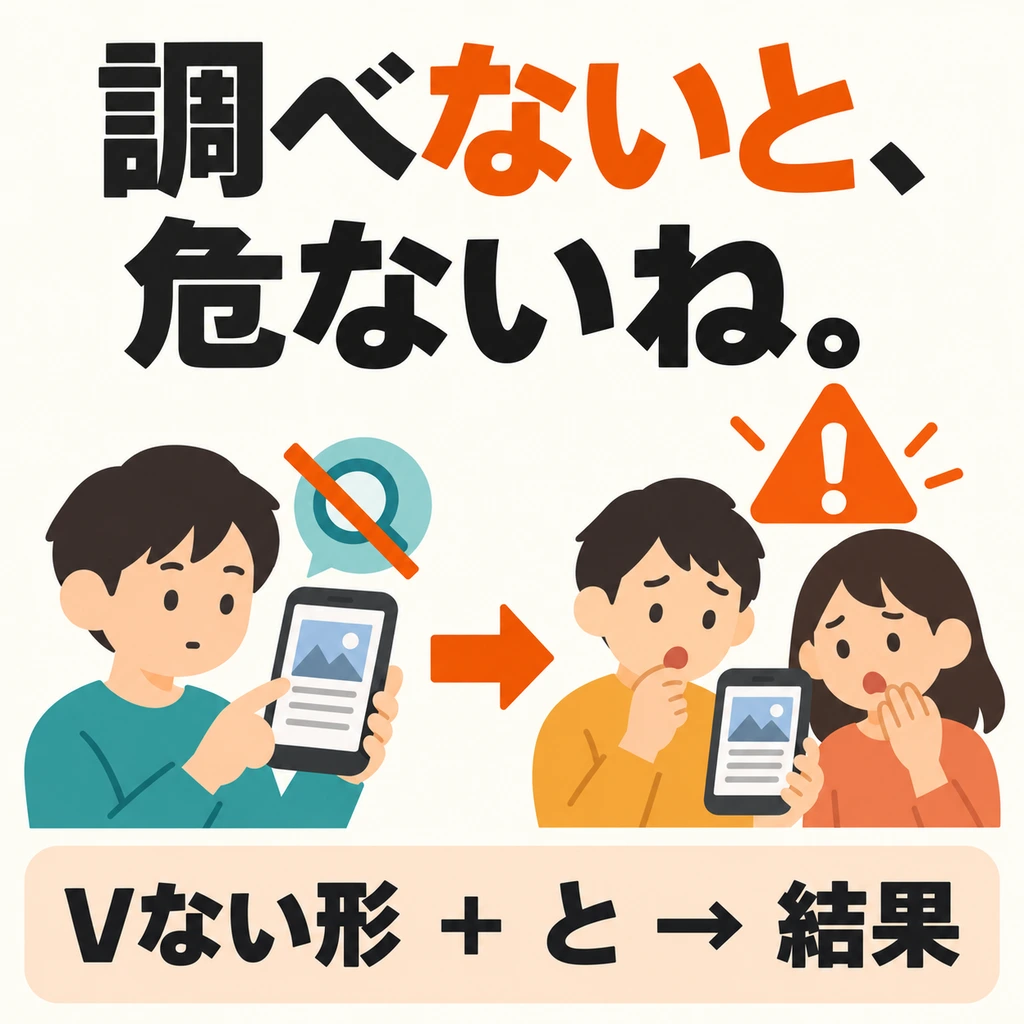
Look at the picture: what risks could you and your friends face if you do not check the news source?
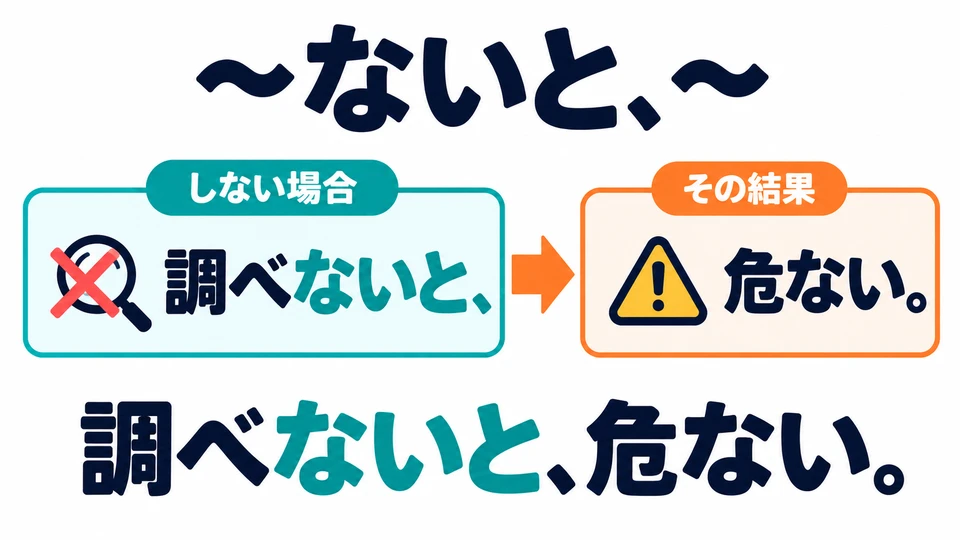
「~ないと、~」 means “if you do not…, then…”. The first clause gives a negative condition.
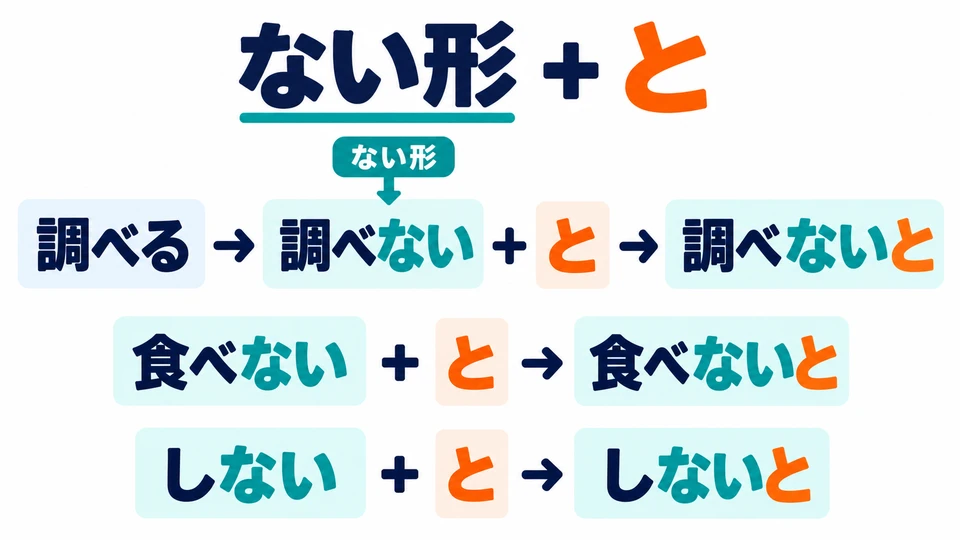
Use the verb’s ない form, then add 「と」. For example, 「調べない」 becomes a condition when you add 「と」.
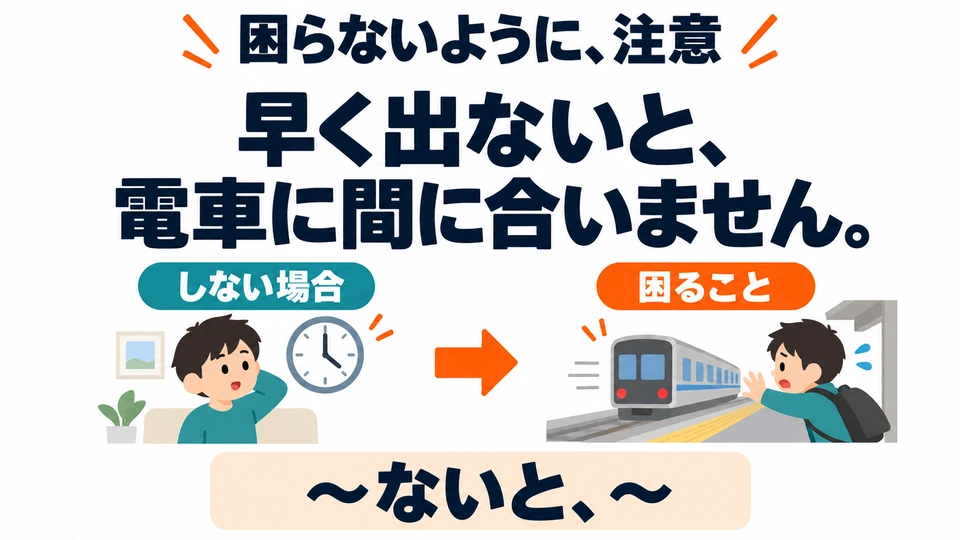
The second clause explains the consequences of not acting. This pattern often warns someone to avoid trouble or danger.
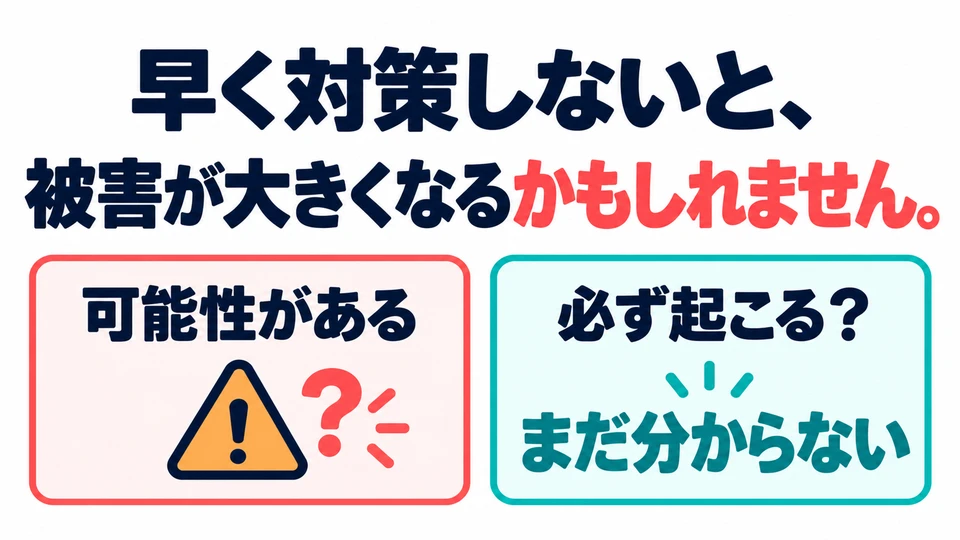
The first example uses 「かもしれません」: the damage might worsen. It does not say this will definitely happen.
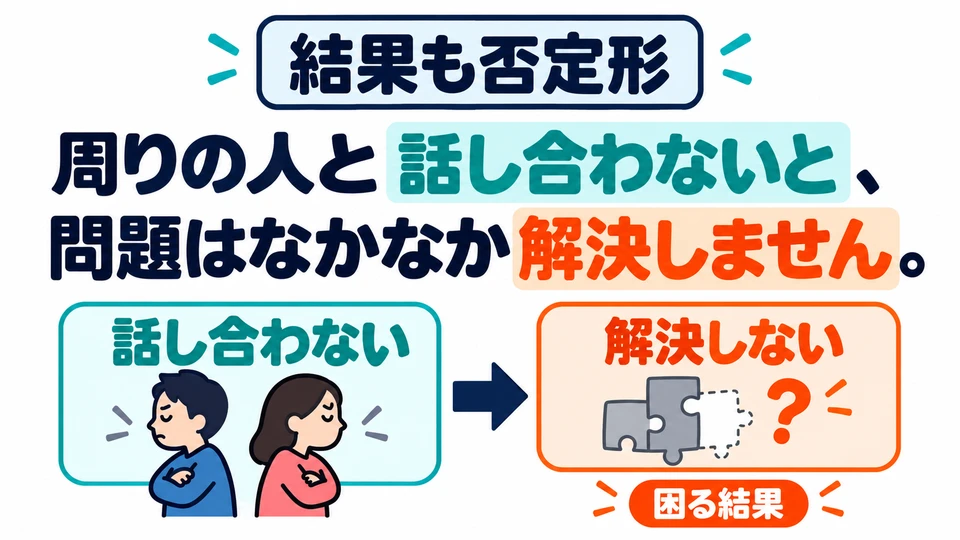
In the second example, the result is that the problem is hard to solve. The second clause can also use a negative form to describe an unfavorable result.
Example sentences
- 早くhayaku対策taisakuしないshinaiと、to、被害higaiがga大きくookikuなるnaruかkaもmoしれません。shiremasen。
If we don't take action quickly, the damage might worsen.
In a conversation

- Aあのニュース、実は本当の事実じゃないかもしれないよ。
A: That news might actually not be the real fact.
- Bえっ、そうな
Check yourself
Level 1 · Recognise
Which sentence is correct?
Level 1 · Recognise
Listen and choose the meaning
Level 2 · Build
Put the words in order
If we do not take action quickly, the damage may become greater.
Level 3 · Use
What goes in the blank?
早く対策____、被害が大きくなるかもしれません。
If we don't take measures quickly, the damage could get worse.
More grammar in this theme
- 〜ないと、〜if you don't…, then…