
Japanese grammar · ≈ JLPT N4 · Intermediate 1
〜からです~kara desu
giving a reason
Use 「〜からです」 at the end of a sentence to explain the reason for something.
How it works
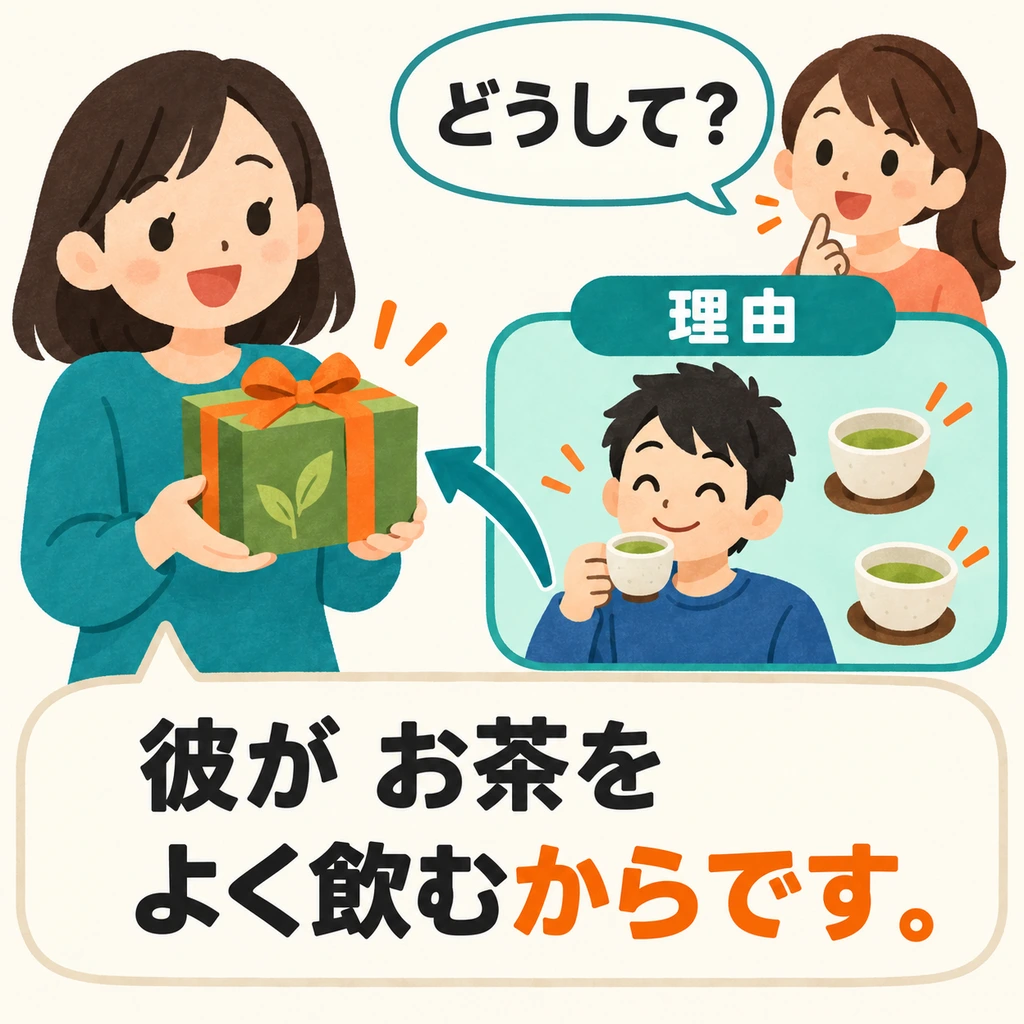
Tea is chosen as a gift. Look at the picture: he often drinks tea. How would you answer “Why?”
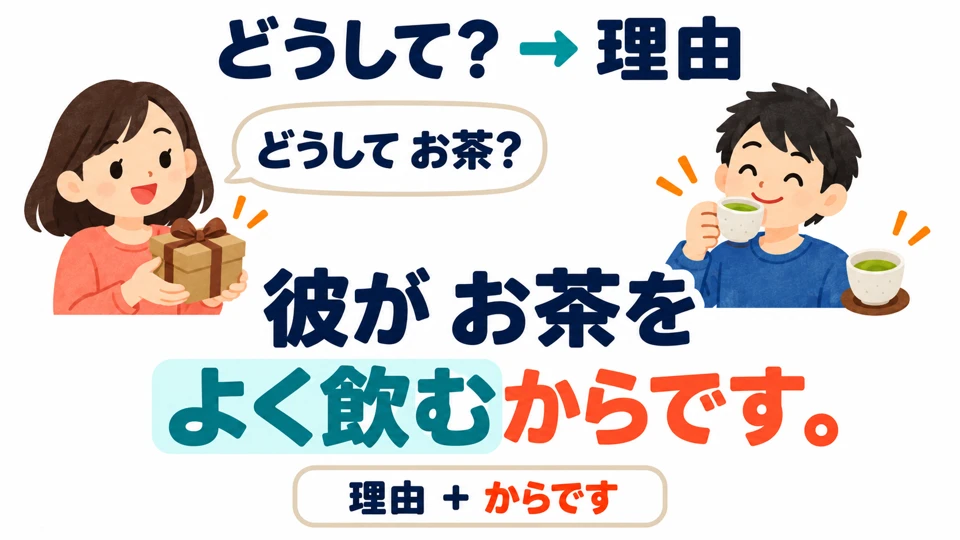
At the end of a sentence, 「からです」 explains a reason or cause. It means “It is because…”
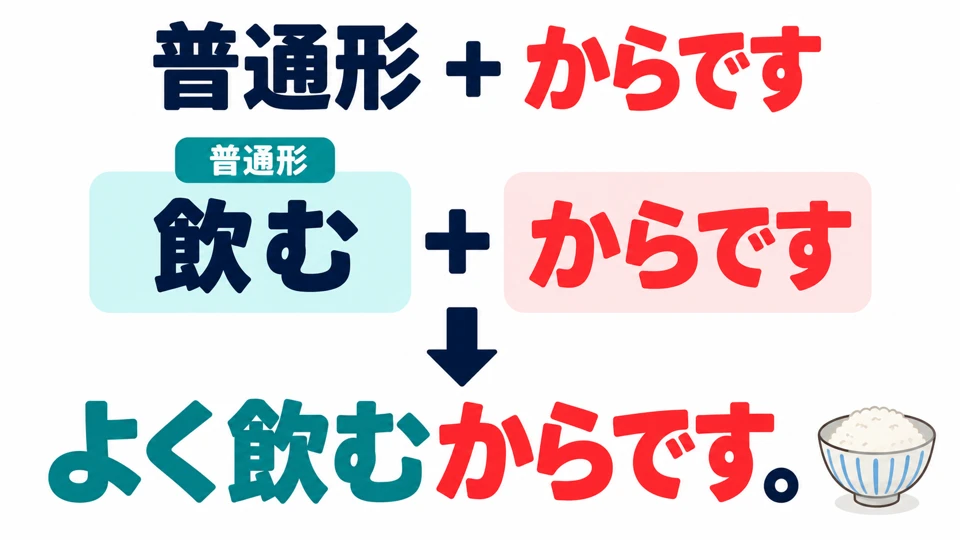
Use the plain form before 「からです」 in the reason clause, as in 「飲むからです」 in the picture.
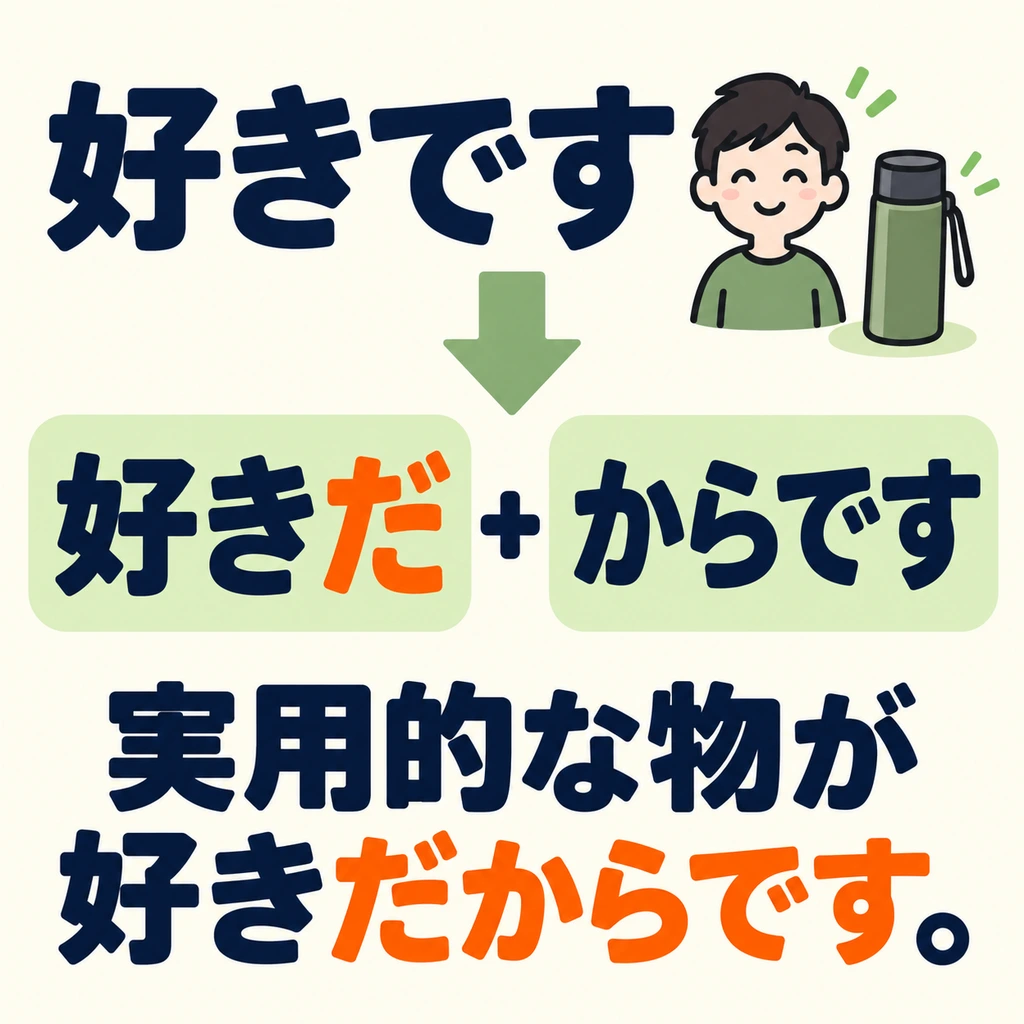
「好き」 is a な-adjective. Before 「からです」, use 「好きだ」 and keep 「だ」.
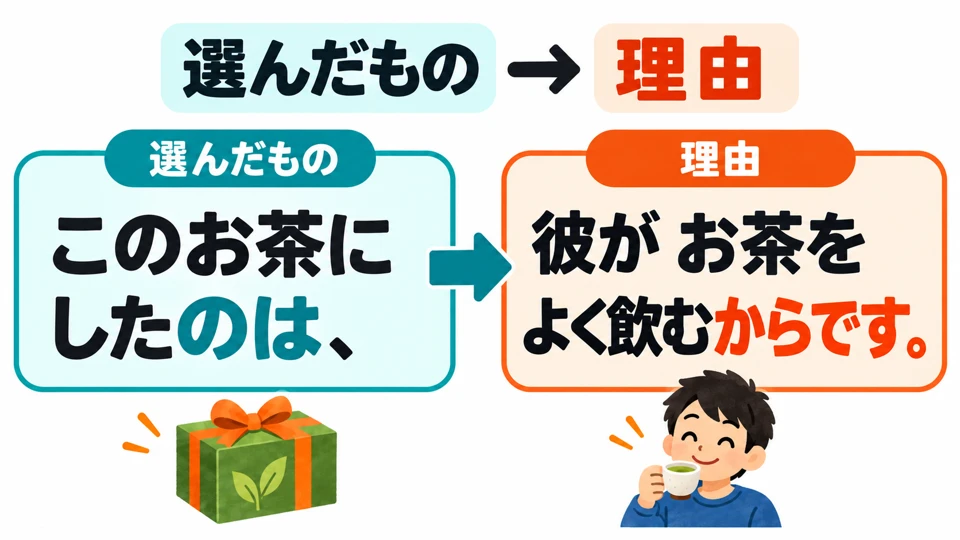
In the tea example, 「のは」 introduces the chosen gift, and 「からです」 explains the reason for that choice.
Example sentences
- このkono時計tokeiはwa贈らないほうokuranaihouがgaいいです。iidesu。不吉fukitsuだdaとto考えるkangaeru人hito
In a conversation

Check yourself
Level 1 · Recognise
Which sentence is correct?
Level 1 · Recognise
Listen and choose the meaning
Level 2 · Build
Put the words in order
You should avoid that gift. Because it is considered rude in this country.
Level 3 · Use
What goes in the blank?
この時計は贈らないほうがいいです。不吉だと考える人もいる____。
It's better not to give this watch. It's because some people consider it unlucky.
More grammar in this theme
- 〜からですgiving a reason