
〜というのは〜です~to iu no wa ~ desu
To iu no wa desu (〜というのは〜です) means “explain what a term means”.
The Coming-of-Age Ceremony is an event to celebrate people who have turned 20 years old.
Use 「〜というのは〜です」 to explain the meaning or introduce the nature of a term.
In the course
How it works
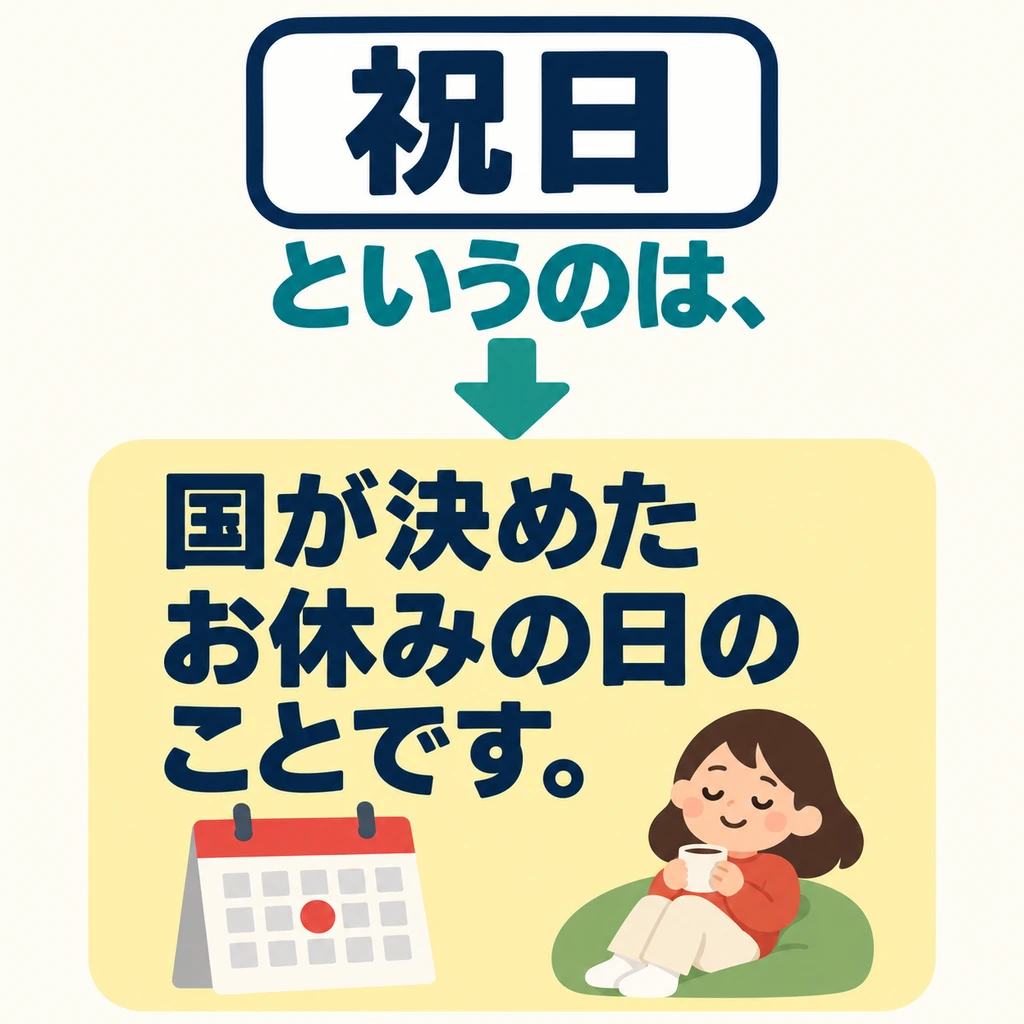
What does 「祝日」 on the calendar mean? Follow the arrow to the explanation.
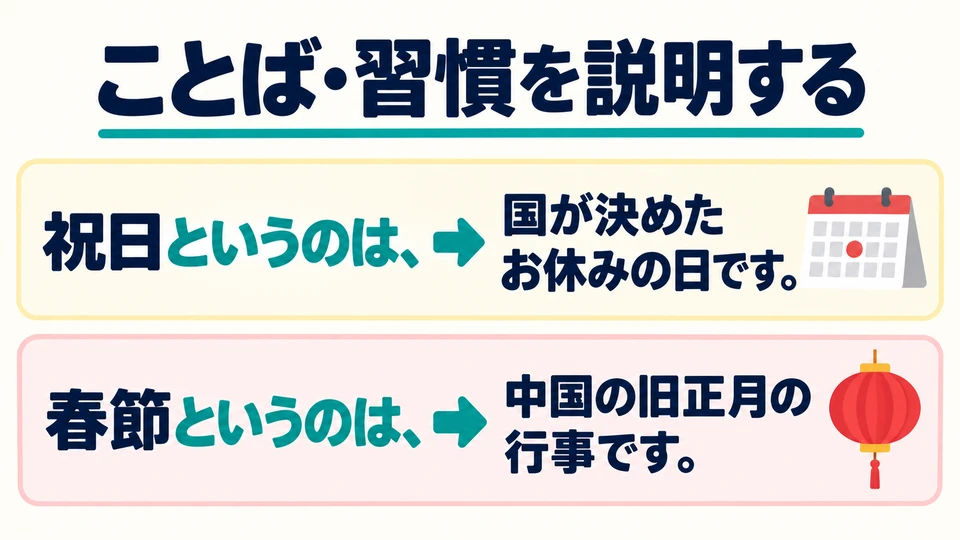
「というのは」 explains what a word means. You can also use it to introduce customs.
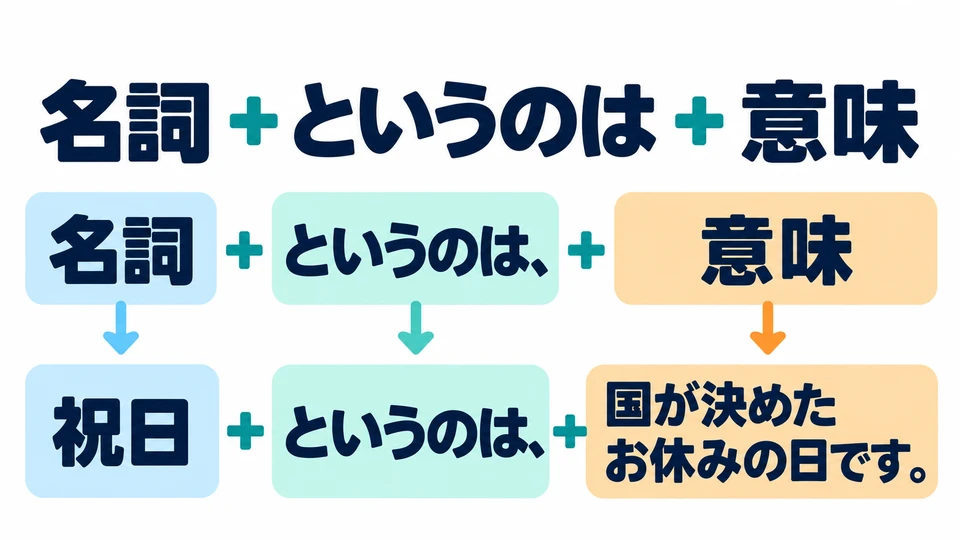
Put the noun you want to explain before 「というのは」, then give its meaning after it.
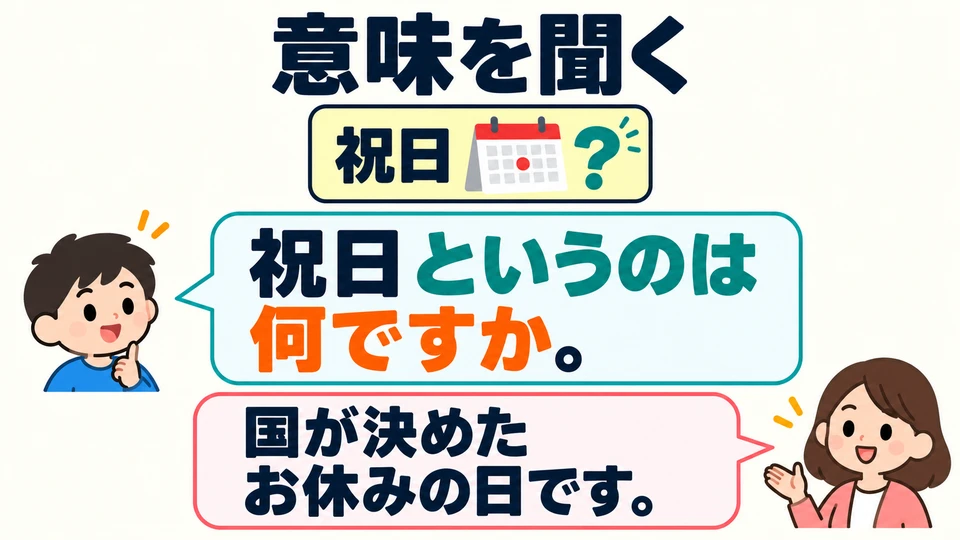
If you don’t understand a word, ask what it means with 「Nというのは何ですか」.
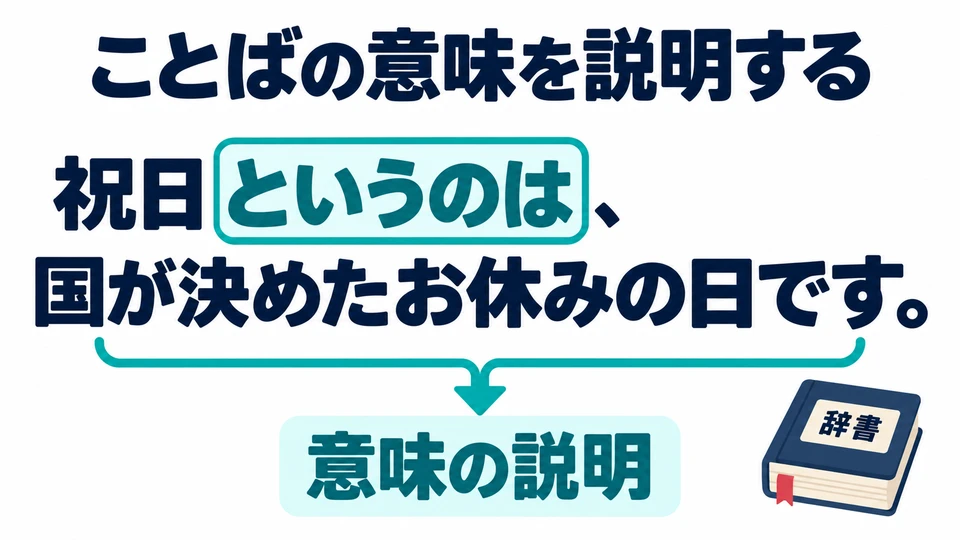
Here, 「いう」 does not mean that someone is speaking. The whole pattern explains a word’s meaning.
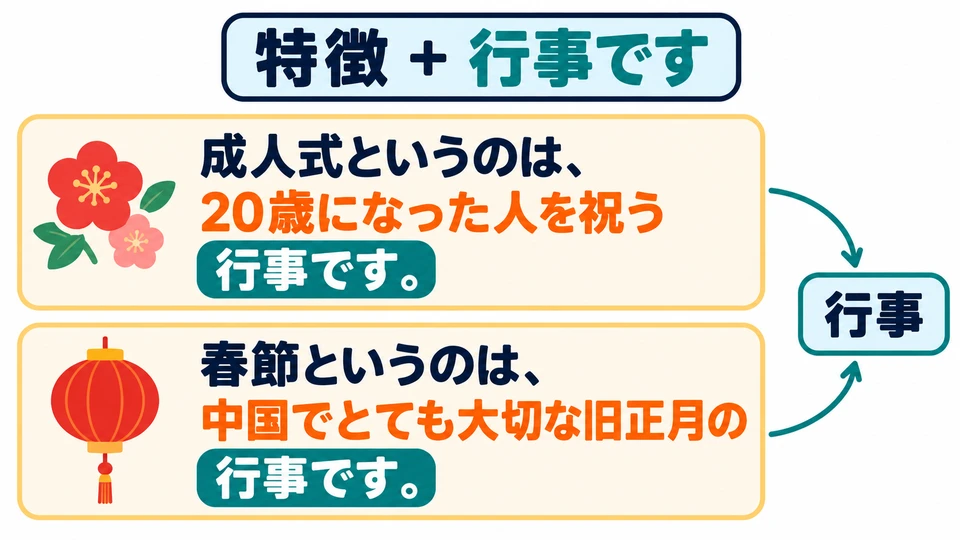
Both sentences use 「行事です」 to identify the category, then describe who is celebrated or what makes the festival special.
Example sentences
- 成人式seijinshikiとtoいうiuのnoは、wa、20歳nijuusaiにniなった人nattahitoをo祝うiwau行事gyoujiです。
In a conversation

- Aカレンダーにある「祝日」というのはなんですか。
A: What does the "Shukujitsu" on the calendar mean?
- B国が決めた
Check yourself
Level 1 · Recognise
Which sentence is correct?
Level 1 · Recognise
Listen and choose the meaning
Level 2 · Build
Put the words in order
A bow is the act of lowering your head when greeting someone to express politeness.
Level 3 · Use
What goes in the blank?
収穫祭____、秋の実りに感謝するお祭りです。
A harvest festival is a festival to express gratitude for the autumn harvest.
More grammar in this theme
- 〜というのは〜ですexplain what a term means