JPEdLab iconJPEdLab
Save history

Create an account and play

Explore first, then save your progress whenever you are ready. No email address is required.

Start free
  1. Japanese grammar
  2. JLPT N3 grammar
  3. 〜って何ですか

〜って何ですか~tte nan desu ka

Tte nan desu ka (〜って何ですか) means “ask what something is”.

春節しゅんせつshunsetsuってtteなんnanですdesuか。ka。

What is Shunsets (Spring Festival)?

Use 「〜って何ですか」 in conversation to ask what an unfamiliar name or thing means.

In the course›

How it works

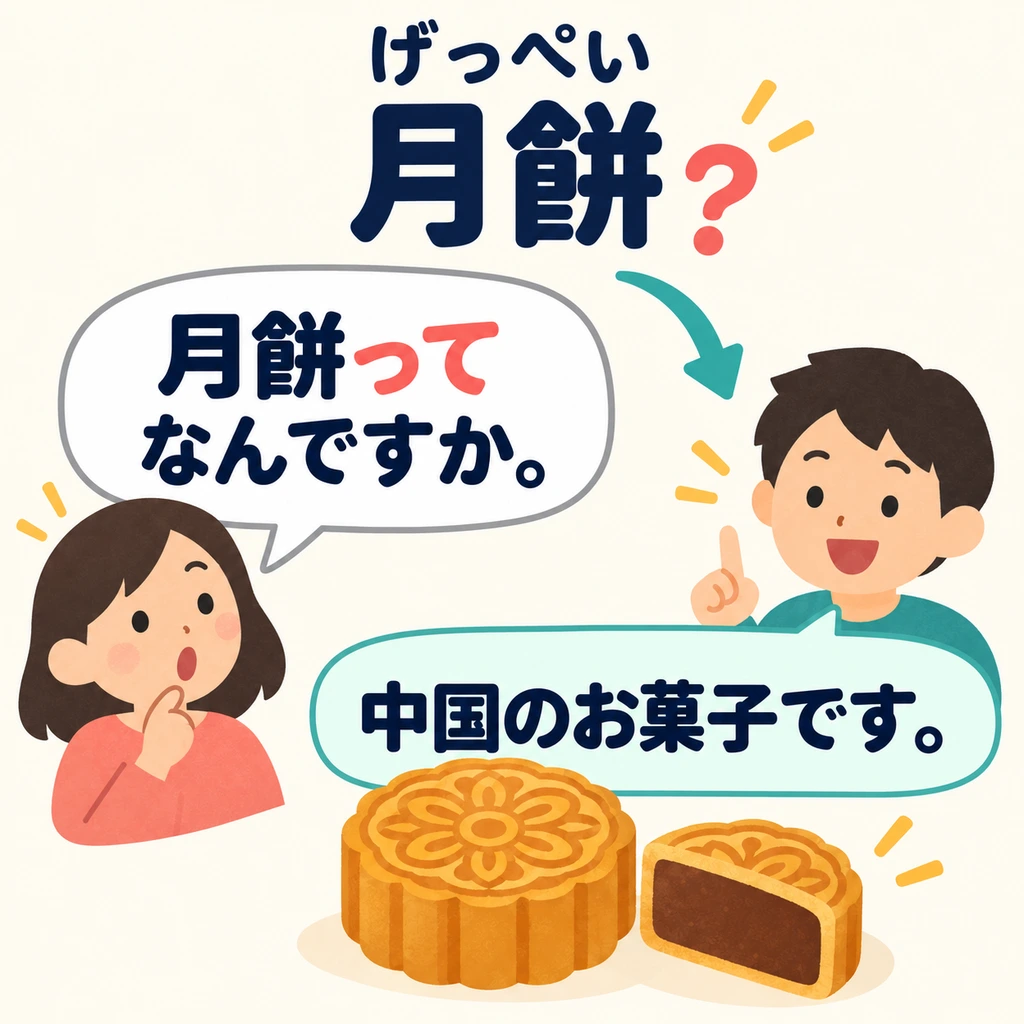
  1. When you hear an unfamiliar name and want to know what it refers to, use this pattern to ask.
    When you hear an unfamiliar name and want to know what it refers to, use this pattern to ask.

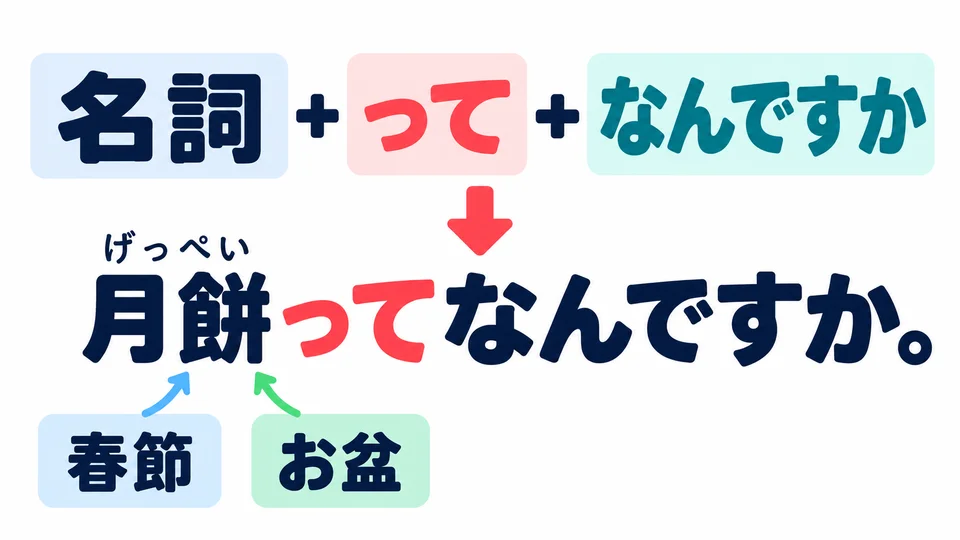
  2. Put the noun you want to ask about before 「って」, then add 「なんですか」.
    Put the noun you want to ask about before 「って」, then add 「なんですか」.

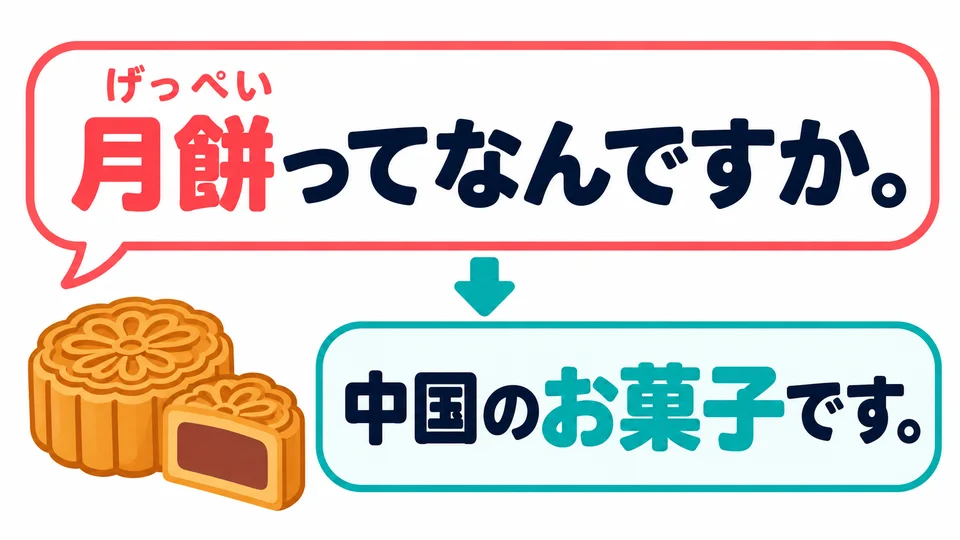
  3. Look at the answer in the picture: explaining what kind of thing a mooncake is helps the other person understand the name.
    Look at the answer in the picture: explaining what kind of thing a mooncake is helps the other person understand the name.

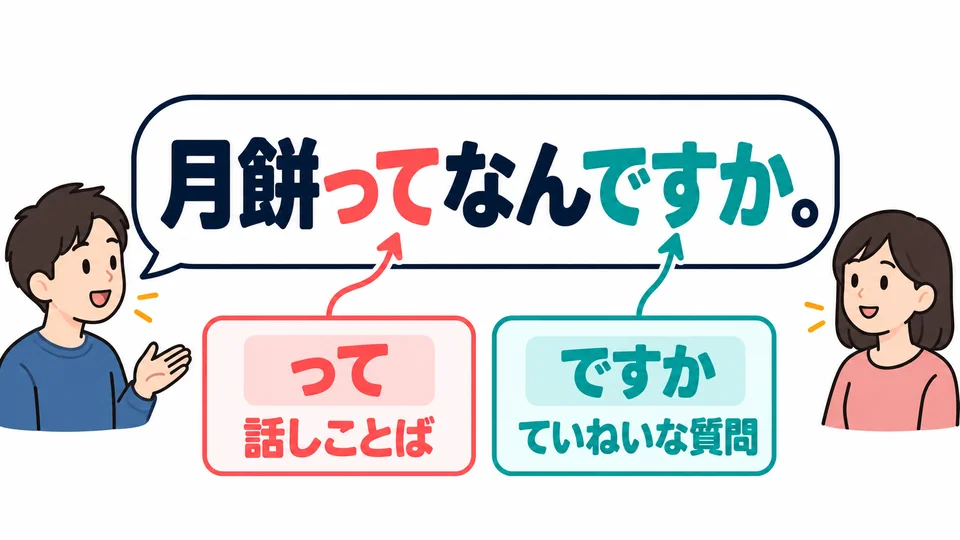
  4. 「って」 is conversational. Ending with 「ですか」 makes this a suitable way to ask in everyday conversation.
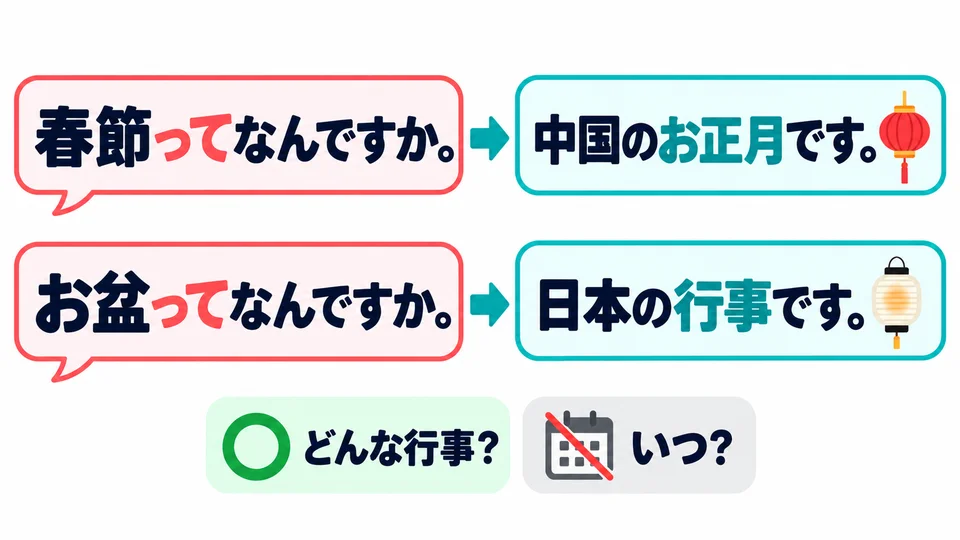
    「って」 is conversational. Ending with 「ですか」 makes this a suitable way to ask in everyday conversation.

  5. The examples ask what kind of festivals Chinese New Year and Obon are. They call for an explanation of the festivals, rather than their dates.

    The examples ask what kind of festivals Chinese New Year and Obon are. They call for an explanation of the festivals, rather than their dates.

Example sentences

  • 春節しゅんせつshunsetsuってtteなんnanですdesuか。ka。

    What is Shunsets (Spring Festival)?

  • お盆おぼんobonってtteなんnanですdesuかka

In a conversation
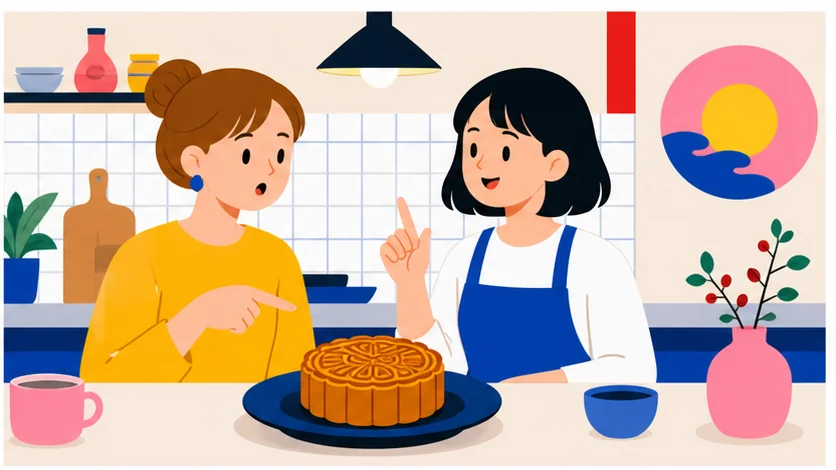
  • A
    ねえ、「ねえ、月餅」げっぺいってなんですか。

    A: Hey, what is "Geppei" (a mooncake)?

  • B
    中国ちゅうごくの古いふるいお菓子おかしですよ。満月まんげつの

Check yourself

  1. Level 1 · Recognise

    Which sentence is correct?

  2. Level 1 · Recognise

    Listen and choose the meaning

  3. Level 2 · Build

    Put the words in order

    What is the Spring Festival?

  4. Level 3 · Use

    What goes in the blank?

    春節____。

    What is the Spring Festival?

More grammar in this theme

  • 〜って何ですかask what something is

More JLPT N3 grammar

Keep practising

Test your Japanese vocabulary12 adaptive questions, freeCheck your pronunciationRead aloud and get a scorePractise verb forms10-question conjugation quizSee the whole courseGrammar, vocabulary and quizzes by theme

What is Obon?

時とき
に
食べます。たべます。

B: It's a traditional Chinese sweet. People eat them during the full moon.

  • A
    へえ、一度いちど食べたべてみたいです。

    A: Oh, I'd love to try one sometime.

  • Intermediate 1
    Customs and Gifts
    More quizzesOpen this lesson’s quizzes in the course
    〜というのは〜ですexplain what a term means
    〜と言われていますwidely reported saying
    〜のような〜something like; comparison
    〜かなI wonder if…
    〜ようかなconsidering whether to…
    〜なんかどうですかgentle suggestion
    〜がっていますshowing a feeling
    〜からですgiving a reason
    Next〜というのは〜です
    See all 114
    Nばかり/Vてばかりいますkeep doing the same thing
    〜させられますbe made to do
    〜させてくれますkindly let me do
    〜させてもらいますgratefully be allowed to
    〜んだってcasual hearsay
    〜だけじゃなくて、〜もnot only A but also B
    〜てきましたchange continuing until now
    〜ためにcause: because of