JPEdLab iconJPEdLab
Save history

Create an account and play

Explore first, then save your progress whenever you are ready. No email address is required.

Start free
  1. Japanese grammar
  2. JLPT N3 grammar
  3. 〜のような〜

〜のような〜~no youna ~

No youna (〜のような〜) means “something like; comparison”.

春節しゅんせつshunsetsuは、わ、wa、日本にっぽんnipponのnoお正月おしょうがつoshougatsuのnoような行事ようなぎょうじyounagyoujiです。desu。

Shunsetsu (Spring Festival) is an event like New Year's in Japan.

Use 「〜のような〜」 to describe a noun by comparing it with something familiar.

In the course›

How it works

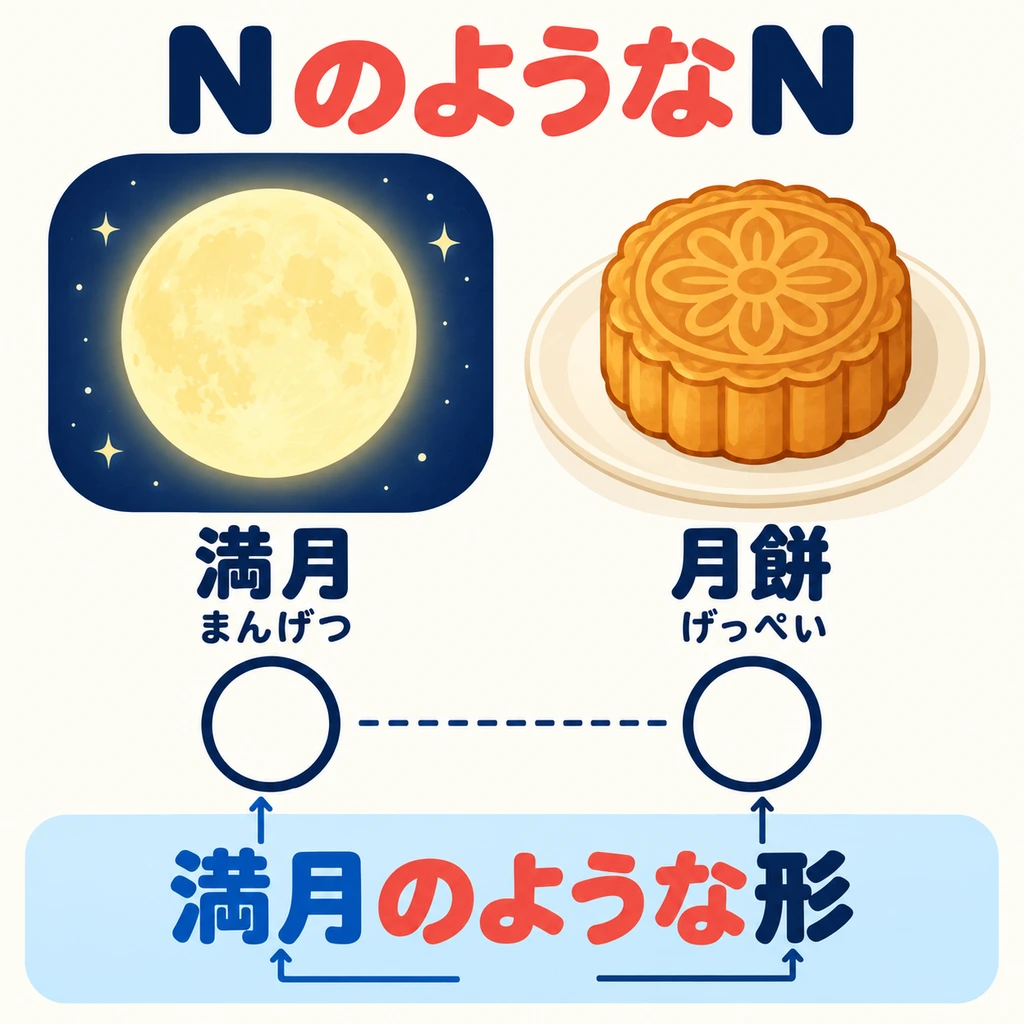
  1. What does the mooncake’s shape look like? Compare it to the familiar full moon to help the listener picture its shape.
    What does the mooncake’s shape look like? Compare it to the familiar full moon to help the listener picture its shape.

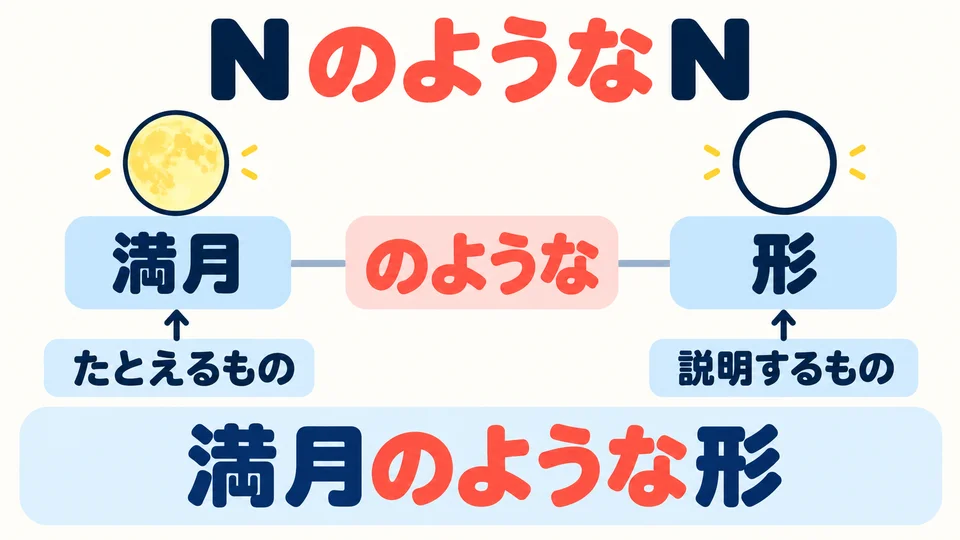
  2. Put 「のような」 between two nouns. The first is the reference for the comparison; the second names what you are describing.
    Put 「のような」 between two nouns. The first is the reference for the comparison; the second names what you are describing.

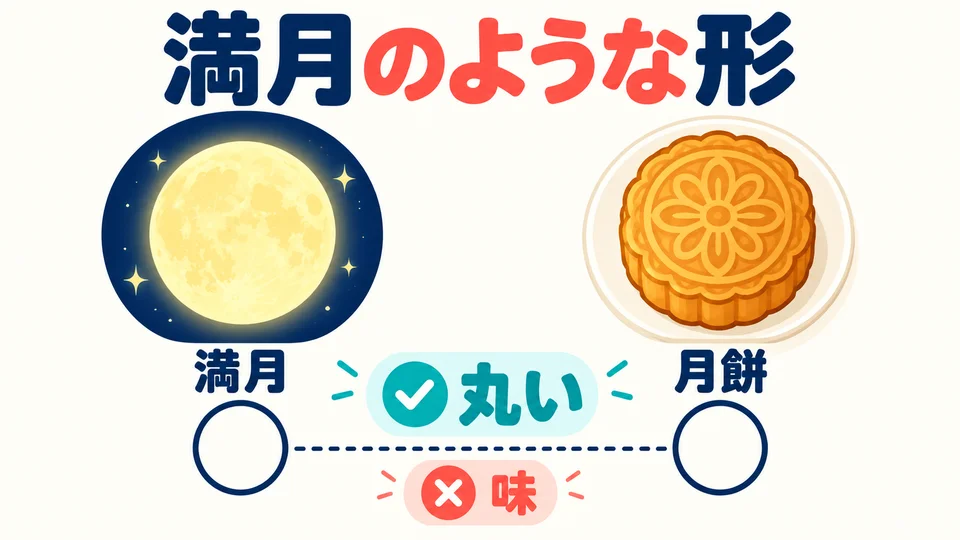
  3. 「満月のような形」 describes a shape like a full moon. The similarity is roundness, not taste.
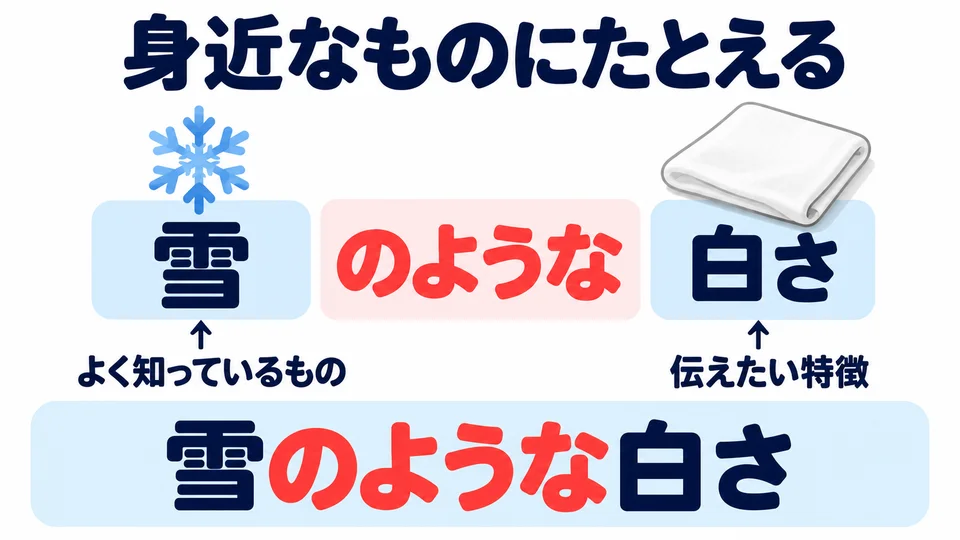
    「満月のような形」 describes a shape like a full moon. The similarity is roundness, not taste.

  4. You can also give a familiar thing with similar features as an example to explain the characteristics of the following noun.
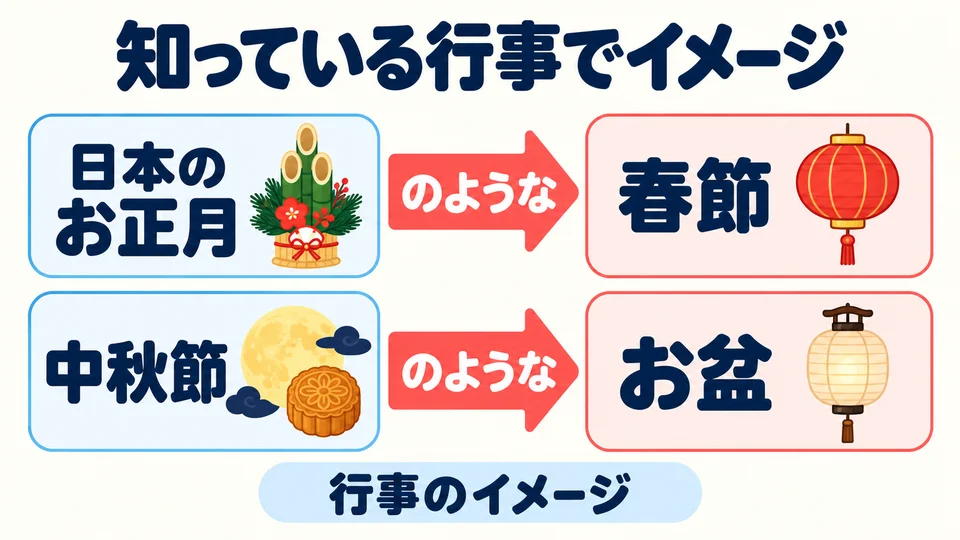
    You can also give a familiar thing with similar features as an example to explain the characteristics of the following noun.

  5. The examples compare a celebration to the familiar New Year or Mid-Autumn Festival to help the listener picture another celebration.
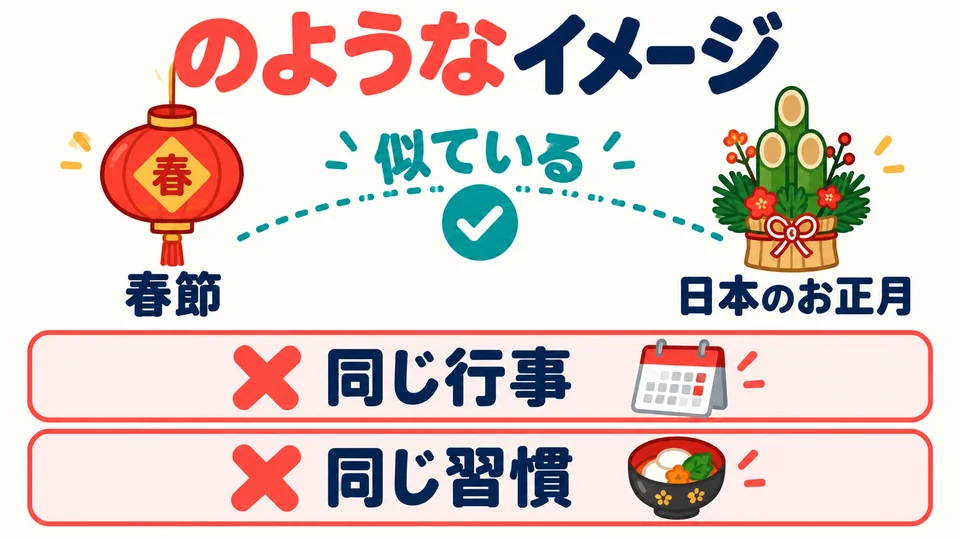
    The examples compare a celebration to the familiar New Year or Mid-Autumn Festival to help the listener picture another celebration.

  6. Here, the celebration helps convey an impression. This does not mean they are the same festival or have the same customs.

    Here, the celebration helps convey an impression. This does not mean they are the same festival or have the same customs.

Example sentences

  • 春節しゅんせつshunsetsuは、わ、wa、日本にっぽんnipponのnoお正月おしょうがつoshougatsuのnoような行事ようなぎょうじyounagyoujiです。desu。

    Shunsetsu (Spring Festival) is an event like New Year's in Japan.

  • お盆おぼんobon

In a conversation

  • A
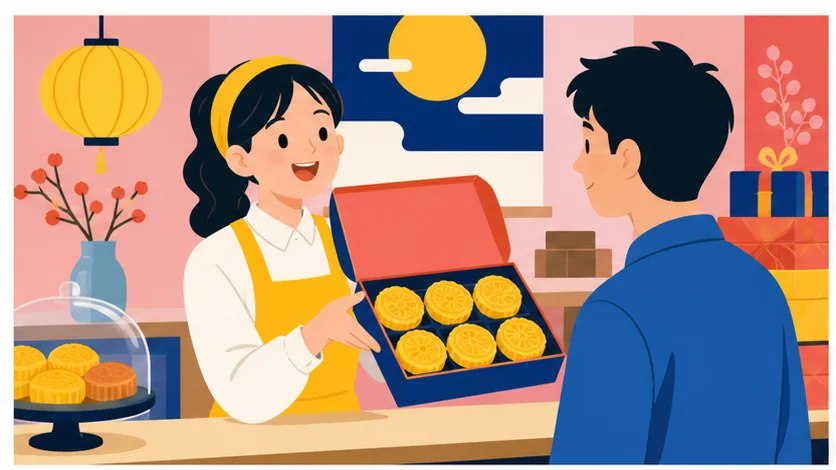
    あの丸くまるくて黄色いきいろいお菓子おかしはわなんですか。

    A: What is that round, yellow sweet?

  • B
    あれはわ満月まんげつのような形ようなかたち

Check yourself

  1. Level 1 · Recognise

    Which sentence is correct?

  2. Level 1 · Recognise

    Listen and choose the meaning

  3. Level 2 · Build

    Put the words in order

    Spring Festival is an event like Japanese New Year.

  4. Level 3 · Use

    What goes in the blank?

    春節は、日本のお正月____行事です。

    Spring Festival is an event like the Japanese New Year.

More grammar in this theme

  • 〜のような〜something like; comparison

More JLPT N3 grammar

Keep practising

Test your Japanese vocabulary12 adaptive questions, freeCheck your pronunciationRead aloud and get a scorePractise verb forms10-question conjugation quizSee the whole courseGrammar, vocabulary and quizzes by theme
はわwa
中秋ちゅうしゅうchuushuu
節せつsetsu
のno
ような行事ようなぎょうじyounagyouji
です。desu。

Obon is an event like the Mid-Autumn Festival.

の
月餅げっぺい
と
いう
お菓子おかし
です
よ。

B: That is a sweet called a mooncake, shaped like a full moon.

  • A
    とても綺麗ですきれいですね。私わたしも食べたべてみたいです。

    A: It's beautiful. I'd love to try one too.

  • Intermediate 1
    Customs and Gifts
    More quizzesOpen this lesson’s quizzes in the course
    〜って何ですかask what something is
    〜というのは〜ですexplain what a term means
    〜と言われていますwidely reported saying
    〜かなI wonder if…
    〜ようかなconsidering whether to…
    〜なんかどうですかgentle suggestion
    〜がっていますshowing a feeling
    〜からですgiving a reason
    Previous〜と言われています
    Next〜かな
    See all 114
    Nばかり/Vてばかりいますkeep doing the same thing
    〜させられますbe made to do
    〜させてくれますkindly let me do
    〜させてもらいますgratefully be allowed to
    〜んだってcasual hearsay
    〜だけじゃなくて、〜もnot only A but also B
    〜てきましたchange continuing until now
    〜ためにcause: because of